The best luxury cake pan brands do not sell you a prettier version of a supermarket tin. They sell you a pan that heats evenly, releases cleanly, and holds its shape for decades, making the difference between a cake that rises level and one that domes in the middle and sticks at the edges. That difference is not about the logo on the base. It is about the metal, the thickness, the coating, and the way the pan was made.
Most home bakers buy cake pans in a hurry and in a set, then wonder why their sponge is dry at the rim and raw in the centre. A luxury pan fixes the specific problems that cause that: thin metal that warps and creates hot spots, coatings that flake into the batter, and pans a fraction off in size. The brands in this guide have earned their prices by solving those problems, not by decorating them.
Below are nine brands worth considering in 2027, from heavy American cast aluminium to French copper and German springforms. Each one is described by what it is good at, what to watch for, and who it suits best.
Key takeaways
- A luxury cake pan earns its price through even heat, a true size, and a durable release surface, not through decoration or branding.
- Heavy-gauge aluminium is the most forgiving material for layer cakes, while steel suits everyday baking and ceramic suits slow bakes.
- Dark pans bake faster and brown more, so the same recipe needs a lower temperature or a shorter time in a dark pan.
- Springform pans suit cheesecakes and tortes, but a one-piece pan gives a cleaner release and a neater edge for classic layer cakes.
- No cake pan, however expensive, fixes an unlevel oven, an inaccurate recipe, or a pan scratched by metal utensils, and a warped pan should be replaced.
What a luxury cake pan actually is
A luxury cake pan is not defined by its price, but by how precisely it is made. The metal is thicker than a budget pan, usually 1 millimetre or more, so it resists warping and holds a steady temperature while the batter sets. The corners are square and true, the rim is rolled or reinforced, and the stated size is the actual size, measured inside the pan rather than across the lip. Those details sound small, and they decide whether a cake comes out level.
The second difference is the release surface. A good pan releases a cake with a light greasing and a round of parchment, and keeps doing so after hundreds of bakes. That can come from a well-made non-stick coating, from properly sealed anodised aluminium, or from a bare metal surface finished smooth enough to release with butter and flour. A poor pan releases well for a month, then starts to grab, because the coating is thin or the metal underneath is rough.
The third difference is consistency. A luxury brand makes the same pan the same way, batch after batch, so the 20-centimetre round you buy today bakes like the one you bought five years ago. That matters when you are building a set of matching layers, and it is why professional bakers stay loyal to one or two brands: they have learned the timing of their pans, and they do not want to relearn it.
How we chose these brands and what to look for
Look first at the material and the gauge. Heavy-gauge aluminium, usually 18-gauge or thicker, is the standard for layer cakes because it heats quickly and evenly and cools fast. Steel is heavier and slower, which suits pound cakes and fruit cakes, and ceramic holds heat gently, which suits delicate sponge. Our guide to baking pan materials, sizes and finishes explains how those choices change your results, and it is worth reading before you spend serious money on a single pan.
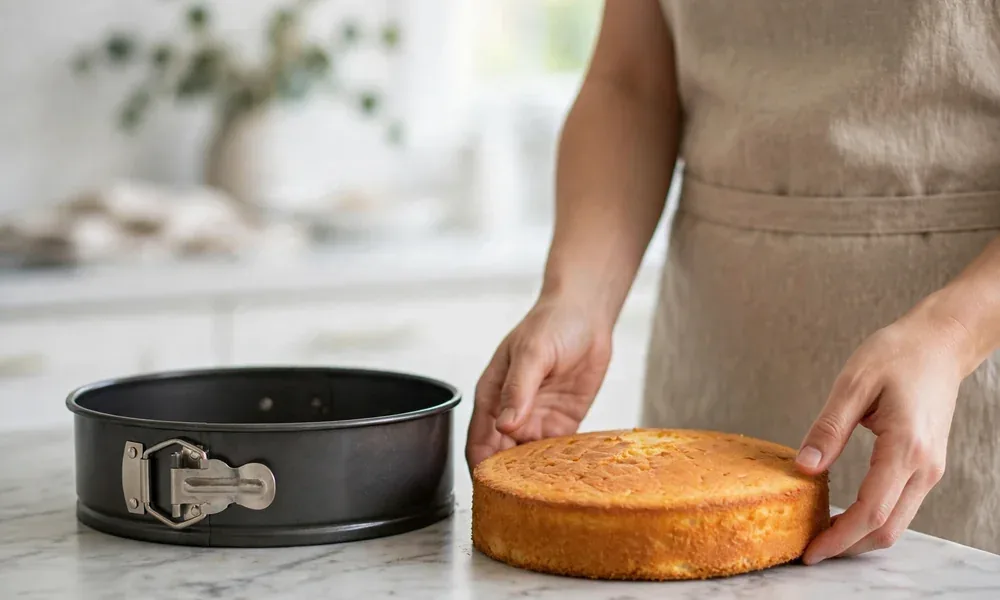
Look next at the size and the shape. A 20-centimetre round is the most useful cake pan size, with 23 centimetres close behind, and a set of two or three matching pans matters more than a single beautiful one, because most layer cakes need at least two. Check that the size is measured inside the pan, that the sides are straight, and that the depth is at least 5 centimetres, so a rising sponge has room.
Finally, look at the coating and the care it needs. Non-stick is convenient, but it wears out first, so check the coating type, whether it is metal-utensil safe, and whether the pan is dishwasher safe or hand-wash only. Anodised aluminium and uncoated steel last longer but need greasing and parchment every time. A pan you wash by hand and dry properly will last twenty years; one you throw in the dishwasher every night will last three.
The 9 best luxury cake pan brands of 2027
Nordic Ware
What we like: Heavy cast aluminium made in Minneapolis since 1946, with the most even heat of any aluminium pan here and a Bundt range that is genuinely unmatched. The Naturals line is uncoated.
What to consider: Uncoated aluminium needs greasing and flouring every time and should not be soaked for hours. Material: Cast and heavy-gauge aluminium. Best for: Layer cakes and Bundt cakes. Care: Hand wash, dry immediately. Price range: Mid to premium.
Nordic Ware is the brand most professional bakers reach for first: its cast aluminium spreads heat so evenly that doming is rare.
Le Creuset
What we like: A French brand with more than a century of bakeware making, offering carbon steel pans with a durable non-stick coating and stoneware that goes from oven to table beautifully.
What to consider: The stoneware range is heavy and heats slowly, so it suits gentle bakes rather than a quick sponge, and the steel pans should be kept away from metal utensils. Material: Carbon steel with non-stick, and glazed stoneware. Best for: Everyday layer cakes and presentation bakes. Care: Hand wash recommended. Price range: Premium.
Le Creuset is the most versatile name in this guide: its steel pans are reliable daily workhorses, and its stoneware suits cakes served at the table.
USA Pan
What we like: American-made aluminised steel with the Americoat silicone non-stick finish, which releases better than almost any other coating here, and a corrugated base that improves air flow and resists warping.
What to consider: The dark finish bakes faster, so reduce the oven temperature by about 10 degrees or check five minutes early. Material: Aluminised steel with silicone non-stick. Best for: Layer cakes, sheet cakes and loaf cakes. Care: Hand wash, no metal utensils. Price range: Mid.
USA Pan is the quiet professional of the group: built for daily use, it releases reliably and costs less than the European names.
Fat Daddio’s
What we like: Professional-grade anodised aluminium, made in the United States, with a smooth sealed surface that releases cleanly with parchment and straight sides that decorators rely on for sharp-edged layer cakes.
What to consider: No non-stick coating at all, so greasing and parchment are not optional, and the light finish means a slightly longer bake. Material: Anodised aluminium. Best for: Tall layer cakes and wedding cakes. Care: Hand wash, dry immediately. Price range: Mid.
Fat Daddio’s is the brand cake decorators name for the straightest sides, and the range includes tall 7.5 and 10-centimetre depths that are hard to find elsewhere.
Emile Henry
What we like: French Burgundy clay, fired at high temperature, that holds heat gently and evenly, with a glazed interior that releases well and a finish good enough to serve from.
What to consider: Ceramic heats more slowly than metal, so it suits fruit cakes, almond cakes and slow bakes rather than a fast sponge, and it is heavy and breakable if dropped. Material: Glazed Burgundy clay ceramic. Best for: Fruit cakes, tortes and table presentation. Care: Dishwasher safe, but hand washing extends the glaze. Price range: Premium.
Emile Henry is a specialist, not an everyday pan: its gentle heat suits cakes that need time, and the ceramic holds warmth at the table.
de Buyer
What we like: A French metalware house founded in 1830, known for precise, heavy-gauge steel and copper bakeware, with springform and tart pans that close cleanly.
What to consider: The steel range needs proper greasing, and the copper pieces are premium-priced and need polishing to keep their shine. Material: Heavy-gauge steel and copper. Best for: Tarts, tortes and cheesecakes. Care: Hand wash, dry at once, polish copper as needed. Price range: Premium to high.
de Buyer is the connoisseur’s choice: its springform clasp is strong, the base sits flat, and the seal holds a wet cheesecake batter.
Mauviel
What we like: French copper bakeware made in Normandy since 1830, with exceptional heat conduction that responds to temperature changes faster than any other material here.
What to consider: Copper is the most expensive material here, it needs polishing, and most Mauviel cake pans are lined with tin or stainless steel. Material: Copper with tin or stainless-steel lining. Best for: Precision bakes and showpiece cakes. Care: Hand wash, polish copper, never overheat an empty pan. Price range: High.
Mauviel is for a baker who already owns good pans and wants the best control: copper heats and cools faster than aluminium or steel.
Kaiser
What we like: A German brand that has specialised in springform pans for generations, with a leak-resistant seal, a smooth-releasing non-stick coating, and bases that stay flat.
What to consider: The non-stick coating is the part that ages, so avoid metal utensils and harsh scouring, and check the clasp before each use. Material: Steel with non-stick coating. Best for: Cheesecakes, tortes and mousse cakes. Care: Hand wash, no metal utensils. Price range: Mid to premium.
Kaiser is the springform specialist: its seal is tighter and its clasp stronger than on cheaper springforms, so no batter leaks and no cheesecake cracks.
Williams Sonoma Goldtouch Pro
What we like: A gold-coloured, ceramic-reinforced non-stick coating over heavy-gauge aluminised steel, with a corrugated surface that helps air circulate and a release that stays reliable.
What to consider: The gold finish bakes slightly faster than a light pan, so check early, and the coating needs gentle care and wooden or silicone utensils. Material: Aluminised steel with ceramic-reinforced non-stick. Best for: Everyday layer cakes and loaf cakes. Care: Hand wash recommended, no metal utensils. Price range: Mid to premium.
Goldtouch Pro is the most forgiving pan in this guide for a baker who wants non-stick convenience without a budget feel.
Materials explained: aluminium, steel, ceramic and copper
Aluminium is the default for a reason: it heats quickly, spreads that heat evenly, and cools fast, which is exactly what a sponge needs. Heavy-gauge and anodised aluminium are the best versions of it, with extra thickness that resists warping and a harder, smoother surface that releases better and lasts longer. Its weakness is that it is soft, so it dents, and it reacts with acidic ingredients, so line it with parchment and never store food in it.
Steel is the workhorse. Aluminised steel, steel coated with an aluminium-silicon alloy, combines the strength of steel with some of aluminium’s even heating, and it is the material behind most professional layer pans. Plain carbon steel is heavier and slower, which suits pound cakes and fruit cakes that need a long, steady bake. Steel is tougher and less likely to dent, but a dark steel pan browns faster, so the oven temperature usually needs to come down by about 10 degrees.
Ceramic and copper are the specialists. Ceramic holds heat gently and releases it slowly, which suits cakes that bake for a long time at a moderate temperature, and it goes straight to the table. Copper responds to temperature changes faster than any other material, which gives the most precise control, but it is expensive, heavy, and needs polishing. If you are building a first set, start with aluminium and steel, and add ceramic or copper later. A matching set of good steel pans, such as our guide to the best pots and pans, is a useful companion read, because the same ideas about gauge and coating apply across the kitchen.
The caveats that matter
A luxury pan does not fix a bad recipe or an unlevel oven, and it will not save a cake that has been overmixed or baked at the wrong temperature. What it does is remove the pan as a variable. The most common mistake with an expensive pan is treating it like a cheap one: cutting a cake in the pan, stacking pans without protection, or putting a non-stick pan in the dishwasher every night. Each shortens the life of the coating, and a scratched non-stick pan should be replaced, not kept in service.
| Detail | What is known |
|---|---|
| Best all-round material | Heavy-gauge aluminium, 18-gauge or thicker |
| Best for layer cakes | Straight-sided, one-piece rounds, 20 or 23 centimetres, in matching pairs |
| Best for cheesecakes | Springform pans with a tight seal and a flat base |
| Dark vs light pans | Dark pans bake faster and brown more; reduce the temperature by about 10 degrees |
| Non-stick care | Hand wash, no metal utensils, replace once the coating scratches |
| Uncoated pans | Grease and flour, or line with parchment, every time, without exception |
| When to replace a pan | When it warps, when the coating flakes, or when cakes start sticking |
| What a pan cannot fix | An unlevel oven, an inaccurate recipe, overmixing, or a wrong baking temperature |
Size matters more than most buyers expect. A pan a centimetre smaller than the recipe assumes makes a taller cake that takes longer to bake through, and a larger pan makes a thinner cake that dries out. Check the inside measurement of any pan you buy, and if a recipe was written for a different size, adjust the baking time rather than the temperature.
Checklist: choosing a luxury cake pan honestly
Use these checks before you buy, and again before you replace a pan you already own.
- Check the material and gauge: heavy-gauge aluminium or aluminised steel, 18-gauge or thicker, with no flex in the base.
- Check the size inside the pan, not across the lip, and make sure the sides are straight and 5 centimetres deep.
- Check the release: non-stick, anodised or bare metal, and be honest about whether you will grease and line it.
- Check the care: hand wash or dishwasher safe, and metal-utensil safe or not.
- Check the set: buy matching pairs for layer cakes before a single unusual shape you will use once a year.
- Check the warranty and the weight: a brand that stands behind a pan for years is a good sign.
Frequently asked questions
Are luxury cake pans worth the price?
Yes, if you bake often. The difference is in even heating, true sizing, and a release surface that lasts, and those show up in every cake you bake. If you bake once a year, a mid-priced pan is enough.
What size cake pan should I buy first?
A 20-centimetre round, then a second one to match it, so you can bake two layers at once. A 23-centimetre round and a standard loaf pan are the next most useful additions.
Is a springform pan better than a one-piece pan?
For cheesecakes, tortes and mousse cakes, yes, because the sides release without turning the cake out. For classic layer cakes, a one-piece pan gives a cleaner edge, so own both if you bake both kinds.
Why do my cakes stick to an expensive non-stick pan?
Usually because the coating is worn, scratched, or overheated, or because the pan was not greased and lined. Even a good non-stick pan benefits from a light greasing and a round of parchment, and a scratched coating should be replaced.
Can I put luxury cake pans in the dishwasher?
Some are rated dishwasher safe, but hand washing extends the life of every coating and finish in this guide. If you do use the dishwasher, skip the heated dry cycle and dry the pan promptly.
How do I build a cake pan collection without wasting money?
Start with two matching 20-centimetre rounds and a loaf pan, add a springform when you bake cheesecakes, and only then buy specialist shapes. The right cookware set for your kitchen matters more than a shelf of pans you use once.
The bottom line
The best luxury cake pan brands in 2027 make baking more predictable: Nordic Ware and USA Pan for everyday layer cakes, Fat Daddio’s for tall, straight-sided layers, Kaiser and de Buyer for springforms, Le Creuset and Goldtouch Pro for reliable non-stick, and Emile Henry and Mauviel for the specialist bakes where ceramic or copper earn their price. None will make you a better baker alone, but each removes a variable between you and a level, cleanly released cake.
Start with two matching heavy-gauge aluminium rounds, learn their timing in your oven, grease and line them every time, and wash them by hand. That single habit is what turns a good pan into one that bakes well for twenty years.