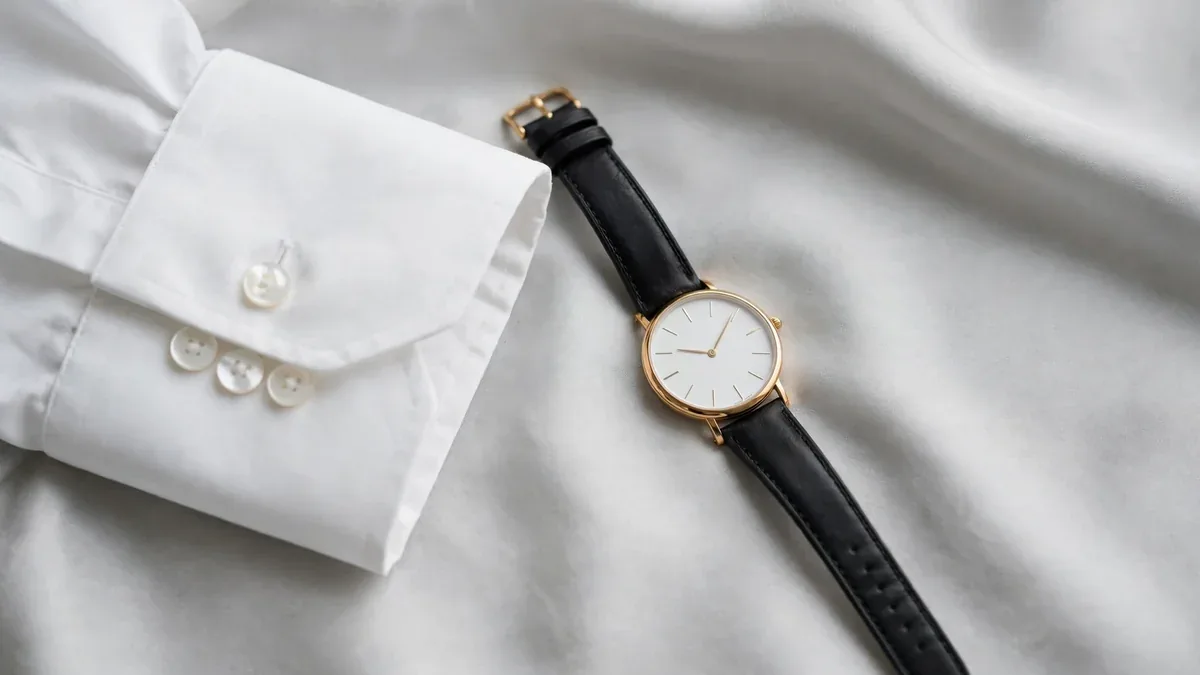
The Best Luxury Dress Watch Brands understand a simple truth: a dress watch is not meant to shout. It is meant to whisper. Slim enough to slide under a cuff and refined enough to reward a closer look, the dress watch is the most disciplined corner of fine watchmaking. While other watches chase complications and spectacle, the great dress watch brands focus on proportion, finish, and restraint.
Choosing among them is not about picking the most famous name. It is about matching a philosophy to your wrist, your wardrobe, and your budget. Some brands build ultra-thin movements that feel like nothing at all. Others lean on enamel dials, hand-guilloché patterns, or a century of quiet heritage. All share one standard: nothing on the dial that does not earn its place.
This guide covers the dress watch brands that consistently deliver that standard, from the storied Geneva houses to the modern masters of thinness. Each brand is judged on the same measures: case thinness, dial discipline, movement quality, strap and finishing, and how the watch wears with formal dress. No chronographs, no divers, no oversized sports cases. Only slim, elegant, leather-strap dress watches.
Key takeaways
- A true dress watch is slim, usually under 9 mm thick, with a clean dial and a leather strap.
- Patek Philippe, Vacheron Constantin, and A. Lange & Söhne set the standard for traditional dress watchmaking.
- Jaeger-LeCoultre and Piaget offer the best value among the great houses for ultra-thin dress watches.
- Cartier proves a dress watch does not have to be round, and Grand Seiko proves it does not have to be Swiss.
- Buy the thinnest, simplest watch you can afford from a brand with real finishing, and it will outlast every trend.
At a Glance: The Best Luxury Dress Watch Brands Compared
| Brand | Signature Dress Watch | Typical Case Size | Typical Thickness | Starting Price |
|---|---|---|---|---|
| Patek Philippe | Calatrava | 36–39 mm | 8–9 mm | From around $21,000 |
| Vacheron Constantin | Patrimony | 36–42 mm | 7–9 mm | From around $19,000 |
| A. Lange & Söhne | Saxonia Thin | 36–40 mm | 6–7 mm | From around $24,000 |
| Jaeger-LeCoultre | Master Ultra Thin | 34–39 mm | 7–8 mm | From around $9,000 |
| Cartier | Tank | 33–41 mm | 6–8 mm | From around $3,000 |
| Breguet | Classique | 36–40 mm | 8–10 mm | From around $20,000 |
| Piaget | Altiplano | 36–41 mm | 6–8 mm | From around $12,000 |
| IWC | Portofino | 39–40 mm | 9–10 mm | From around $5,000 |
| Grand Seiko | Elegance Collection | 36–39 mm | 10–11 mm | From around $5,000 |
What Makes a Dress Watch a Dress Watch
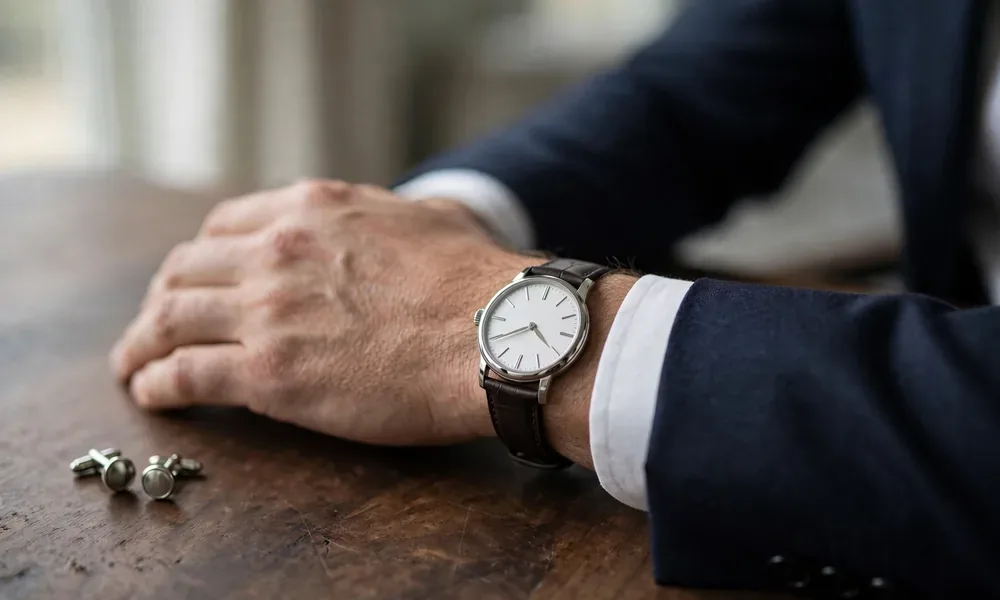
A dress watch earns the name through discipline, not decoration. The case should be thin, generally under 9 mm, so it slips beneath a cuff without catching. The diameter should stay modest, usually 34 to 40 mm, because a dress watch sits on the wrist rather than dominating it. The dial should be uncluttered: hours, minutes, and perhaps a small seconds sub-dial or a discreet date. Anything more is a complication looking for attention.
The strap matters as much as the case. A dress watch belongs on leather, most often alligator or calfskin in black or dark brown, with a simple buckle. A metal bracelet turns the same watch into something else, and a rubber strap removes it from the dress category altogether. The best dress watch brands treat the strap as part of the design, matched in tone and texture to the case metal.
Movement quality is the quiet test. Many dress watches use manual-winding movements, which allow the thinnest cases and reward the owner with a small daily ritual. Automatic movements appear too, but the finest dress watches keep the rotor slim or use micro-rotors to preserve the profile. Look for finishing you can see through a display back: polished bevels, Geneva stripes, and screws that are blued rather than painted.
Finally, a dress watch should be versatile within formality. It should look right with a dark suit, a blazer, or a simple shirt. If a watch needs a specific outfit to make sense, it is a statement piece, not a dress watch. The brands below understand that difference, and it shows in every model they make.
The Best Luxury Dress Watch Brands
Nine brands define the modern dress watch, each with a distinct character and a signature model. Some are the obvious answers, the Geneva houses every collector names first. Others are quieter choices that reward the buyer who looks beyond the obvious. Together they cover every budget from a few thousand to well into five figures, and every taste from the strictly classical to the gently modern.
Patek Philippe
Patek Philippe is the reference point against which every other dress watch is measured. The Calatrava, introduced in 1932, defined the modern round dress watch: a clean white or silvered dial, slim applied markers, and a case with no flourish that does not serve the whole. Nearly a century later, the formula has barely changed, because it has never needed to.
What sets Patek apart is the consistency of its finishing. Every Calatrava, from the simplest time-only model to the most elaborate, is finished to a standard that survives a loupe. The movements are Geneva-sealed, the cases are polished by hand, and the dials are made with a restraint that cheaper brands imitate but rarely match. The trade-off is price and availability: a Calatrava is a serious purchase, and the most desirable references can be hard to find at retail. For the buyer who wants the single most respected name in dress watches, there is no substitute.
Vacheron Constantin
Vacheron Constantin is the oldest continuously operating watchmaker in the world, and the Patrimony is its purest expression. The Patrimony takes the dress watch down to its essentials: a perfectly round case, a dial with almost nothing on it, and a movement thin enough to make the whole watch feel weightless.
The current Patrimony range includes manual-winding models under 8 mm thick, alongside automatic versions with a date. The dials come in silvered, blue, and salmon tones, each with the same disciplined layout. Vacheron’s finishing is among the finest in Geneva, with hand-bevelled bridges and a Geneva Seal on its movements. For buyers who find Patek too familiar and want a house with equal heritage and slightly more understatement, Vacheron is the natural choice.
A. Lange & Söhne
A. Lange & Söhne builds dress watches with a German eye: precise, architectural, and unapologetically mechanical. The Saxonia Thin is the brand’s most understated model, a slim manual-winding watch with a solid silver dial and blued steel hands. At around 6 mm thick in its 37 mm case, it is one of the thinnest luxury dress watches available at any price.
The Saxonia line also includes the Saxonia Automatic and the Saxonia Moon Phase, both of which keep the same restrained dial language while adding useful complications. What distinguishes Lange is the movement finishing: German silver plates, hand-engraved balance cocks, and detail visible through the sapphire back and felt in the winding. Lange watches are produced in small numbers, which keeps them exclusive but also means buyers should expect to wait for certain references. For the connoisseur who values movement craft above brand recognition, Lange is often the final answer.
Jaeger-LeCoultre
Jaeger-LeCoultre is the watchmaker’s watchmaker, the house that has supplied movements to many of its rivals, and the Master Ultra Thin is its gift to dress watch lovers. The range covers time-only models, moon phases, and perpetual calendars, all in cases that live up to the name. The Master Ultra Thin Moon, at under 10 mm thick, remains one of the most elegant complicated watches ever made.
The appeal of Jaeger-LeCoultre is value in context. The finishing, movement quality, and design are close to the Geneva greats, while prices start considerably lower. The brand’s dials are models of clarity, with dauphine hands and applied markers that catch light without shouting. A Master Ultra Thin is the watch many collectors buy first and keep longest, and it pairs naturally with the broader world of fine timepieces, including the pieces covered in our guide to the best luxury watches for men. For a first serious dress watch, it is the smartest purchase in this guide.
Cartier
Cartier is the exception that proves every rule of the dress watch. The Tank is rectangular, instantly recognisable, and entirely unbothered by convention. Designed in 1917 and inspired by the silhouette of a military tank viewed from above, it has been worn by royalty, artists, and statesmen for more than a century.
The modern Tank range includes the Tank Must, the Tank Louis Cartier, and the Tank Américaine, in sizes from small to large and in steel, gold, and platinum. All share the same virtues: a slim profile, a clean Roman-numeral dial, and a strap that sits flat against the wrist. Cartier’s strength is design heritage; its movements are reliable rather than extraordinary, and the brand is honest about that. For the buyer who wants a dress watch with unmistakable character and a century of cultural weight, the Tank is unmatched.
Breguet
Breguet invented much of the language of the dress watch. Abraham-Louis Breguet created the tourbillon, the pare-chute shock protection, and the guilloché dial patterns that still define the genre. The Classique collection carries that heritage, with hand-engraved guilloché dials, blued pomme hands, and coin-edged cases.
A Classique is a watch for the buyer who notices details. The guilloché dial alone is made on a rose engine lathe, a process that takes hours and cannot be faked by stamping. The movements are beautifully finished, with silicon components in modern calibres that improve accuracy. Breguet cases run slightly thicker than some rivals, and the styling is more ornate, which suits buyers who want their dress watch to show its craft openly. Few watches in this guide reward close inspection as richly as a Breguet Classique.
Piaget
Piaget has spent more than half a century chasing thinness, and the Altiplano is the result. The brand set records for ultra-thin movements in the 1950s and 1960s, and the modern Altiplano continues that pursuit with cases as slim as 6 mm. Its dial is famously spare, often with only two hands and a small seconds sub-dial.
Piaget also brings a jeweller’s eye to dress watches. The brand’s history in high jewellery shows in its stone dials, gold bracelets, and gem-set cases, though the purest Altiplano models keep decoration to a minimum. The movements are manufactured in-house and finished to a high standard. For the buyer who wants the thinnest possible dress watch from a house with genuine horological credibility, Piaget is the specialist.
IWC
IWC is best known for pilot’s watches, which makes the Portofino a pleasant surprise. The Portofino is a clean, round dress watch with a simple dial, slim applied markers, and a leather strap. The current Portofino Automatic 40 is a well-proportioned 40 mm watch with an in-house automatic movement and a five-day power reserve.
The Portofino’s appeal is its approachability. It offers genuine Swiss watchmaking, a respected manufacture movement, and classic styling at a price well below the Geneva houses. The finishing is good rather than extraordinary, and the watch is slightly thicker than the thinnest rivals, but on the wrist it wears beautifully and looks right in any formal setting. For buyers entering luxury watches for the first time, the Portofino is a confident and sensible choice, and it sits comfortably alongside the pieces in our guide to the best luxury watches for women.
Grand Seiko
Grand Seiko proves that a great dress watch does not have to come from Switzerland. The Elegance Collection applies the brand’s famously exacting standards to classical dress watch design: hand-polished Zaratsu cases, dials with a depth and texture that photographs cannot capture, and movements finished to a standard that embarrasses many Swiss rivals at twice the price.
The Elegance Collection includes manual-winding, automatic, and Spring Drive models, all with slim profiles and leather straps. The dials are the highlight, with textures inspired by Japanese nature and lacquer work that takes genuine craft. Grand Seiko’s movements are accurate, robust, and beautifully finished, and the brand’s quality control is famously strict. For the buyer who values craftsmanship over heritage marketing, Grand Seiko is the most interesting choice in this guide.
How to Choose the Right Dress Watch Brand
Start with the wrist, not the brand. Measure your wrist and try watches in the 36 to 40 mm range before deciding. A dress watch should sit flat, with the lugs inside the edges of your wrist, and the strap should close without a gap. A watch that is too large will look like a sports watch no matter how thin it is.
Next, set a firm budget and think about what it buys. Under $6,000, the strongest choices are IWC and Grand Seiko, with Cartier offering the most design heritage for the money. Between $6,000 and $15,000, Jaeger-LeCoultre and Piaget offer the best balance of finishing and thinness. Above $15,000, the Geneva houses and Lange compete on heritage and hand-finishing, and the differences become matters of taste rather than quality. Remember that a dress watch is also a long-term purchase, and the best pieces hold their value best, a point worth weighing alongside the broader picture in our guide to luxury fashion investments.
Consider the movement last, not first. A manual-winding watch is thinner and more traditional, but it asks for a daily wind. An automatic is more convenient but adds thickness and weight. Neither is better in the abstract; the right choice depends on how you will actually wear the watch. If it will be a daily companion, an automatic makes sense. If it is a special-occasion piece, a manual wind is part of the pleasure.
Finally, buy the watch you will wear, not the watch you admire on a screen. The dial you can read at a glance, the case that never catches on a sleeve, and the strap that stays comfortable after eight hours matter more than any specification sheet. Visit a boutique, try the shortlist on your wrist, and let comfort decide between finalists.
Your Dress Watch Checklist
Use this checklist before you buy, and keep it for the next time a dress watch catches your eye.
- Case thickness under 9 mm, so the watch slides cleanly under a shirt cuff.
- Case diameter between 34 and 40 mm, with lugs that sit inside your wrist.
- A clean dial with hours and minutes only, or one discreet complication at most.
- A leather strap in black or dark brown, matched to the case metal.
- A movement with visible hand-finishing, ideally seen through a display back.
- A brand with a real service network, so the watch can be maintained for decades.
Frequently Asked Questions
What is the best luxury dress watch brand overall?
Patek Philippe is the most respected name, and the Calatrava is the benchmark dress watch. For value, Jaeger-LeCoultre offers the closest quality at a lower price, and for pure thinness, Piaget and A. Lange & Söhne lead the field.
How thin should a dress watch be?
A true dress watch should be under 9 mm thick, and the best examples are between 6 and 8 mm. Thickness matters because the watch must slide under a shirt cuff without catching or bunching the fabric.
Can a dress watch have a date window?
Yes, a discreet date window is acceptable on a dress watch, and many classic models include one. Purists prefer no date at all, but a small date at three o’clock does not break the dress watch rules. Avoid large date displays, day-date windows, and any complication that crowds the dial.
Should a dress watch be on a leather strap or a bracelet?
Leather is the correct choice for a dress watch. A metal bracelet makes the watch read as a sports or everyday piece, while leather keeps the profile slim and the look formal. Black alligator or calfskin suits dark suits best, and dark brown works well with navy and grey.
Is a quartz dress watch worth buying?
A quartz dress watch can be excellent if thinness and accuracy matter most to you, and several respected brands offer quartz models in the Tank and Altiplano lines. Most collectors prefer mechanical movements for the craft and the ritual, but a well-made quartz dress watch is a legitimate choice, not a compromise.
How much should I spend on my first luxury dress watch?
Between $3,000 and $10,000 buys a genuinely excellent first dress watch from Cartier, IWC, Grand Seiko, or Jaeger-LeCoultre. Spending more buys finer finishing and greater heritage, but the jump in quality narrows sharply above $10,000, so buy the best watch in your budget rather than stretching for a name.
The Bottom Line
The best luxury dress watch brands share one belief: restraint is the hardest thing to make well. Patek Philippe, Vacheron Constantin, and A. Lange & Söhne set the standard. Jaeger-LeCoultre and Piaget deliver that standard at a fairer price. Cartier, Breguet, IWC, and Grand Seiko each offer a different kind of character, from design icon to quiet craftsman. Choose the thinnest, simplest watch that fits your wrist and your budget, wear it with confidence, and it will serve you for decades.