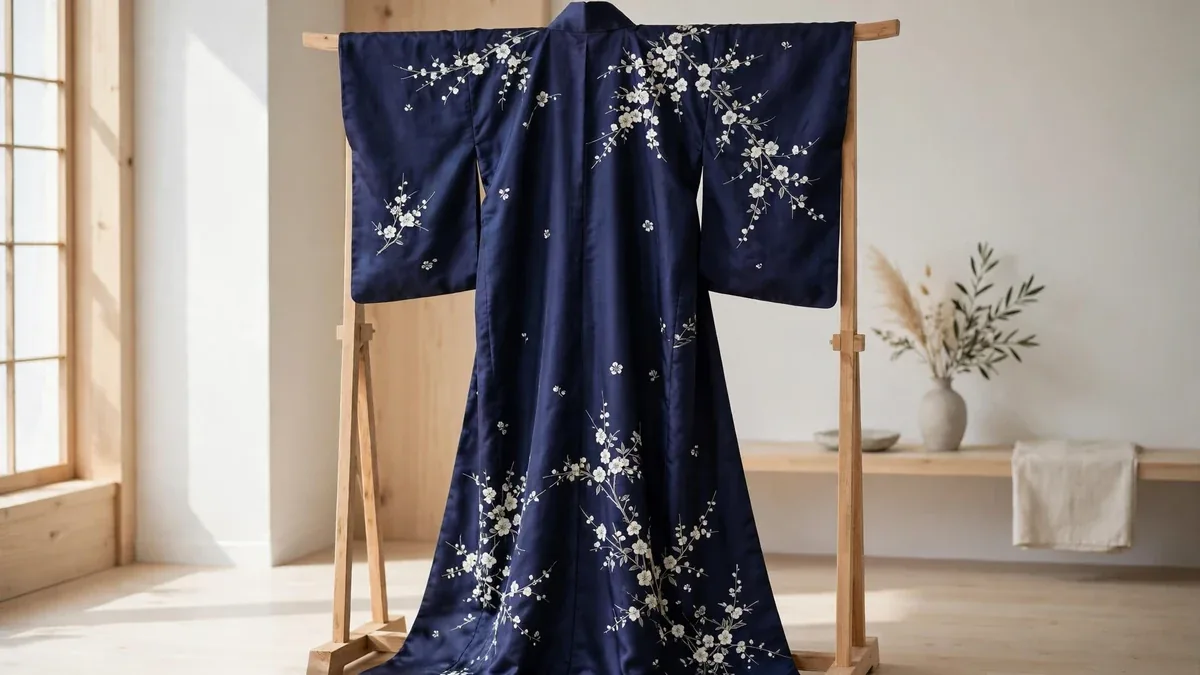

The best luxury kimono brands understand that a kimono is not a costume, a robe, or a loose dress. It is a garment built from straight lines and a single length of cloth, shaped on the body by wrapping, folding, and the obi that holds it together. Made well, from fine silk with a hand-painted or stencil-dyed pattern, it drapes in a way no tailored garment can imitate. Made badly, from thin printed polyester, it looks flat, feels clammy, and loses its shape.
That difference is why the label matters more with kimonos than with most fashion: a good kimono house knows its silk, the weight of chirimen crepe, the sheen of rinzu damask, the soft slub of tsumugi pongee. It knows how to place a motif so a branch of cherry blossom lengthens the body, and how to dye a pattern that flows across the seams as if the cloth had never been cut: skills learned over centuries, not bought in a season.
Below are the nine luxury kimono brands that deliver on fabric, craftsmanship, and longevity, from centuries-old Kyoto silk houses to modern labels reworking the kimono for everyday wear. Each one is described by what it does best, what to watch for, and who it suits.
Key takeaways
- The best luxury kimonos are made from silk, not polyester: look for chirimen crepe, rinzu damask, or tsumugi pongee with a pattern that flows across the seams.
- Chiso, Ginza Motoji, and Y. & Sons lead for authentic silk kimonos, while Kenzo, Tsumori Chisato, and Dries Van Noten lead for kimono-inspired fashion.
- Formality matters more than size: a formal black tomesode and a casual cotton yukata are different garments with different rules.
- Always wrap left over right, check the care label before you buy, and budget for specialist dry cleaning, because fine silk kimonos cannot be machine washed.
- No kimono suits every occasion or every body, and a high price does not guarantee wearability: some of the most beautiful formal silks are also the most fragile.

What a luxury kimono actually is
A kimono is a T-shaped, straight-seamed garment with wide sleeves, a long overlapping front, and a sash, the obi, holding it closed. It is cut from a single bolt of cloth about 36 centimetres wide, so the pattern must be planned across narrow panels joining at the shoulders, sides, and sleeves. The front always wraps left over right; right over left is reserved for dressing the dead.
Formality is built into the garment. At the formal end sits the kurotomesode, a black silk kimono with a patterned hem worn by married women at weddings, and the furisode, with long flowing sleeves, worn by unmarried women on formal occasions. Below them sit the homongi, a semi-formal visiting kimono, and the komon, for everyday outings. At the casual end is the yukata, an unlined cotton kimono worn in summer and at festivals. Our guide to Japan fashion, from kimono tradition to global street style traces how these forms entered modern fashion.
What separates a luxury kimono from a cheap one is rarely the silhouette, which is simple by design; it is the fabric, the dyeing, and the finishing. A luxury kimono uses silk woven and dyed by master craftsmen: Kyo-yuzen hand painting, katazome stencil dyeing, shibori tie-dyeing, or a fine woven pattern in the cloth itself. The seams are finished cleanly, the lining is silk, and a motif that begins on the shoulder continues naturally across the sleeve and down the body.
What to look for
Before the brand profiles, here is what separates a great kimono from a pretty one. Hold the fabric up to the light: fine silk should have a soft, even sheen, and a woven pattern should be visible in the cloth itself, not only printed on the surface. Check the seams and the lining, because a luxury kimono is finished as carefully inside as outside. Look at how the pattern crosses the seams: on a well-made kimono, a branch continues from one panel to the next, while on a cheap one it stops dead at the stitching. And check the care label, because most fine silk kimonos need specialist dry cleaning, and some need traditional arai-hari cleaning.
Chiso
What we like: Chiso is the most historic kimono house on this list, a Kyoto silk house founded in 1555, and its Kyo-yuzen hand-painted dyeing is among the finest in Japan.
What to consider: Chiso kimonos are formal and priced accordingly, running into several thousand dollars. They are not everyday garments, and they need specialist care and storage in tatoushi paper. Signature fabric: Hand-painted Kyo-yuzen silk. Best for: Formal silk kimonos and ceremonial dress. Care: Specialist dry cleaning only.
Y. & Sons
What we like: Y. & Sons is the best modern kimono label for people who want to wear a kimono rather than admire one. Based in Tokyo, it makes kimonos for men and women in contemporary colours and patterns, keeping the traditional silhouette but removing the intimidation. Its menswear is particularly strong.
What to consider: Y. & Sons is modern rather than ceremonial, so it is the wrong choice for a formal wedding or a tea ceremony. Some styles are made in limited runs and sell out quickly. Signature fabric: Modern silk and silk blends. Best for: Contemporary kimonos and menswear. Care: Dry clean.
Ginza Motoji
What we like: Ginza Motoji is the most polished luxury kimono retailer in Tokyo, known for its eye for craftsmanship and modern, wearable designs. It works closely with weavers and dyers across Japan, choosing cloth quality first and pattern second.
What to consider: Ginza Motoji is firmly in the luxury price range, and its most desirable pieces are one-offs that cannot be reordered. A first-time buyer will need guidance on formality and fit. Signature fabric: Fine woven silk and hand-dyed silk. Best for: Investment kimonos and exceptional obi. Care: Specialist dry cleaning only.
SOU・SOU
What we like: SOU・SOU is the most joyful kimono label in Kyoto, turning traditional Japanese textile patterns into modern, wearable clothing with bold, graphic motifs in clear colours.
What to consider: SOU・SOU is contemporary and casual rather than formal, closer to kimono-inspired fashion than to a traditional kimono. The bold patterns are not for everyone, and popular designs sell out fast. Signature fabric: Printed cotton and modern textiles. Best for: Casual kimono-inspired style and gifts. Care: Machine wash or hand wash, check labels.
Ichiroya
What we like: Ichiroya is the best place in the world to buy a vintage silk kimono online. The Japanese dealer stocks thousands of antique and vintage kimonos, with clear photographs and honest condition notes, at prices that make a real silk kimono accessible to a first-time buyer.
What to consider: Vintage means variation: sizes, colours, and condition differ from piece to piece, and a kimono may need cleaning or minor repair. A heavy lined winter silk is the wrong choice for a summer festival. Signature fabric: Vintage silk, wool, and cotton. Best for: Vintage silk kimonos and first-time buyers. Care: Dry clean; check condition notes first.
Robe Japonica
What we like: Robe Japonica turns the kimono into a dress without losing what makes it beautiful. The Tokyo label, founded by designer Yoshimasa Hoshiba, remakes vintage kimono silk into gowns, jackets, and robes, each carrying a pattern dyed decades ago that will never be made again.
What to consider: Every piece is one of a kind, cut from a single vintage kimono, so sizes and patterns cannot be reordered. Prices reflect the handwork and the rarity of the cloth. Signature fabric: Repurposed vintage kimono silk. Best for: One-of-a-kind kimono silk dresses. Care: Dry clean only.
Kenzo
What we like: Kenzo is the luxury fashion house most closely tied to the kimono: its founder, Kenzo Takada, was Japanese and built his Paris label on the kimono silhouette. Wide sleeves, straight cuts, bold floral prints, and an easy, unstructured fit run through the house, and its kimono jackets and robes are among the most wearable on this list.
What to consider: Kenzo is kimono-inspired fashion, not a traditional kimono, so it will not satisfy a purist or serve at a formal Japanese occasion. The best pieces are seasonal and sell quickly. Signature fabric: Silk and cotton with bold prints. Best for: Kimono jackets and printed robes. Care: Dry clean.
Tsumori Chisato
What we like: Tsumori Chisato brings a playful, romantic sensibility to kimono-inspired fashion, with hand-drawn prints, embroidered motifs, and silhouettes that borrow the wide sleeve and wrap front. Her pieces are the most feminine on this list.
What to consider: Tsumori Chisato is a fashion label, not a kimono house, so its pieces are seasonal and the fit is Western rather than traditional. Prices are firmly in the designer range. Signature fabric: Printed silk and cotton. Best for: Romantic kimono-inspired dresses and jackets. Care: Dry clean.
Dries Van Noten
What we like: Dries Van Noten is the designer most associated with the modern kimono jacket, returning to the silhouette season after season in rich brocades, embroidered silks, and unexpected colour combinations. His jackets are cut to be worn open over simple clothes, the most practical way to wear kimono style every day.
What to consider: Dries Van Noten is designer-priced, and his most elaborate brocades are delicate and need careful handling and dry cleaning. The jackets are generous in cut, so petite buyers should try before they buy. Signature fabric: Brocade and embroidered silk. Best for: Kimono jackets and layering pieces. Care: Dry clean only.
Choosing fabric, fit, and formality
Fabric is the first decision. Silk is the classic choice: chirimen crepe has a fine, pebbled surface that holds a dye beautifully, rinzu damask has a woven pattern in the cloth itself, and tsumugi pongee has a soft, slubbed texture for everyday wear. Wool kimonos are warmer for winter, cotton is right for a summer yukata, and synthetic kimonos are cheaper but rarely drape or breathe like silk. Our guide to linen dresses covers the same fabric test: hold the cloth, feel its weight, and look at how it falls.
Fit is the second decision, and it works differently from Western clothing. A kimono is made in a standard length and adjusted by folding the excess at the waist into the ohashori, the fold hidden under the obi. Sleeve length signals formality: the long sleeves of a furisode belong to unmarried women on formal occasions. The shoulder seam should sit on your shoulder, the collar should cross neatly at the throat, and the hem should fall to the ankle.
Formality is the third decision, and it is the one most buyers outside Japan get wrong. A tomesode is for weddings and ceremonies, a homongi for visiting, a komon for a day out, and a yukata for summer festivals. Wearing a formal silk to a casual lunch is like wearing a ball gown to a picnic. When in doubt, choose the less formal option, and ask the shop, because a good kimono dealer will tell you honestly what an occasion calls for.
Kimono brands at a glance
| Brand | Best for | Signature fabric | Price range | Care level |
|---|---|---|---|---|
| Chiso | Formal kimonos | Kyo-yuzen silk | $$$$ | Specialist clean |
| Y. & Sons | Contemporary kimonos | Modern silk | $$$ | Dry clean |
| Ginza Motoji | Investment kimonos | Woven silk | $$$$ | Specialist clean |
| SOU・SOU | Casual style | Printed cotton | $$ | Machine wash |
| Ichiroya | Vintage kimonos | Vintage silk | $ to $$$ | Dry clean |
| Robe Japonica | Silk dresses | Vintage kimono silk | $$$ | Dry clean only |
| Kenzo | Kimono jackets | Printed silk | $$$ | Dry clean |
| Tsumori Chisato | Romantic fashion | Printed silk | $$$ | Dry clean |
| Dries Van Noten | Kimono jackets | Brocade silk | $$$$ | Dry clean only |
Price ranges use a simple scale: one dollar sign means the most accessible pricing, two means mid-range, three means designer, and four means the top of the range.
The caveats that matter
The first caveat is care. Fine silk kimonos cannot be machine washed, and many cannot be cleaned by an ordinary dry cleaner. Traditional arai-hari cleaning means unpicking the kimono, washing the panels, and sewing it back together: slow and expensive. Before you buy, find out who will clean it and what it will cost, because a silk kimono folded badly in a damp cupboard will crease, stain, and fade.
The second caveat is authenticity: the market is full of polyester kimonos printed with a cherry blossom pattern and sold as luxury, and they are not. Check the fibre content, look for a woven rather than printed pattern, and buy from a dealer you trust. The third caveat is occasion: wearing a formal silk to a casual event, or wrapping it right over left, will be noticed. A well-chosen bag completes the look, which is why the season’s best summer designer bags are worth considering alongside a kimono.
Checklist: choosing a luxury kimono honestly
Use these checks before you buy, and again before you first wear a kimono.
- Check the fibre first: silk, wool, or cotton, with a woven or hand-dyed pattern.
- Check the pattern across the seams: a branch should continue from one panel to the next, not stop at the stitching.
- Check the formality: tomesode for ceremonies, homongi for visiting, komon for a day out, yukata for summer.
- Check the length and the fold: the hem should fall to the ankle, and the ohashori should sit neatly under the obi.
- Check the care label before you pay: if it needs specialist cleaning, find the cleaner first.
- Wrap left over right, every time, and check the collar, sleeves, and obi in a mirror before you leave the house.
Frequently asked questions
What is the difference between a kimono and a kaftan?
A kimono is a Japanese T-shaped garment cut from a single bolt of cloth, wrapped left over right and held with an obi, with formality rules for when each type is worn. A kaftan is a loose, flowing garment from North Africa and the Middle East, worn as resort dressing. Both are wide and elegant, but they come from different traditions.
How much does a luxury kimono cost?
A new formal silk kimono from a Kyoto house can cost several thousand dollars, and a hand-painted Kyo-yuzen piece far more. A contemporary kimono or a designer kimono jacket is usually in the high hundreds to low thousands, while a vintage silk kimono from Ichiroya can start under a hundred dollars.
Can I wear a kimono if I am not Japanese?
Yes. Kimonos are sold to and worn by people all over the world, and Japanese kimono houses welcome international customers. Wear it correctly, left over right, choose the right formality for the occasion, and treat it as a garment with a history rather than a costume.
What fabric is best for a first kimono?
For a first kimono, choose a silk komon or a good cotton yukata. A komon is versatile and forgiving in formality, while a yukata is washable, affordable, and right for summer festivals. Avoid a formal tomesode or furisode as a first purchase: both are expensive and occasion-specific.
How should I care for a silk kimono?
Store it folded in tatoushi paper, in a cool, dry place; never hang it, because hanging stretches the shoulders. Air it after wearing, keep it away from perfume and sunscreen, and have it cleaned by a specialist dry cleaner. For a valuable piece, ask about arai-hari, the traditional unpicking, washing, and re-sewing method.
What is an obi, and which one do I need?
The obi is the wide sash that holds a kimono closed and sets its formality. A fukuro obi suits formal and semi-formal kimonos, a Nagoya obi is the everyday choice for a komon, and a hanhaba obi is the casual choice for a yukata. Match the obi to the kimono, not to your outfit.
The bottom line
The best luxury kimono brands treat the kimono as a serious garment, not a costume. Chiso leads for formal hand-painted silk, Ginza Motoji for investment pieces and exceptional obi, Y. & Sons for contemporary kimonos, Ichiroya for vintage silk at an honest price, Robe Japonica for dresses cut from antique cloth, and Kenzo, Tsumori Chisato, and Dries Van Noten for kimono style in modern fashion.
Buy for the fabric first and the pattern second, choose the right formality for the occasion, and check the care label before you pay. A kimono chosen on those three tests will serve you for many years.
Meet Our Experts
Our fashion editors and stylists cover luxury fashion and Japanese dress.
Why Trust BrassSmile
BrassSmile covers beauty, fashion, and luxury lifestyle with practical, specific guidance: what to buy, what it costs, and what to watch out for. We do not accept payment for placement, and we flag the honest trade-offs of the products we cover.
Sources
Vogue, Harper’s Bazaar, Elle, Marie Claire, Who What Wear, The Cut, Chiso, Y. & Sons, Ginza Motoji, SOU・SOU, Ichiroya, Robe Japonica, Kenzo, Tsumori Chisato, Dries Van Noten, Net-a-Porter.