
Best Luxury Hair Colour Brands 2027: 8 Premium Picks for Salon-Quality Colour
The best luxury hair colour brands do more than change the shade of your hair. They deliver richer pigment, gentler formulas, and a finish that looks expensive rather than flat. Whether you book a colourist or colour at home, the brand sets the ceiling for the result, and the gap between budget dye and premium formula shows most clearly after the third or fourth wash.
Luxury in hair colour is not simply a higher price tag. The brands here earn their position through pigment technology that resists fading, conditioning systems that protect the hair shaft, and shade ranges designed by colourists rather than marketers. Many were developed for salons first, so their formulas are built to be mixed, layered, and customised — the precision behind the multi-dimensional colour seen on runways.
This guide covers the eight luxury hair colour brands with the best results in 2027, from salon-only professional lines to the two at-home brands that belong in the same conversation. For each, you will find what it does best, who it suits, and what to watch out for — plus grey coverage, fade resistance, and upkeep.
Key takeaways
- Luxury hair colour earns its price through pigment density, conditioning technology, and fade resistance — not packaging or marketing.
- Salon brands such as Wella, L’Oréal Professionnel, and Davines still lead for grey coverage and multi-dimensional results.
- At-home luxury from Josh Wood Colour and Christophe Robin can rival salon colour when the shade is chosen conservatively.
- Colour-safe aftercare matters as much as the dye: sulphate-free washing and weekly masks extend any colour by weeks.
- No brand can guarantee a result on previously coloured, bleached, or very dark hair — a strand test is always worth it before a dramatic change.
What this guide covers
This guide focuses on permanent and demi-permanent colour from premium brands — the formulas colourists actually reach for and the at-home products that meet the same standard. It does not cover temporary rinses, colour-depositing shampoos, or root sprays, which solve a different problem. Every brand below is widely available through salons or the brand’s own stores, with several years in the premium market.
You will find eight brand profiles, each with its signature lines, its strongest shades, and an honest look at its limitations, ordered by overall strength rather than price. The guide also explains how colour is judged, so you can read any shade chart with confidence, and closes with a comparison table, a checklist, and answers to the most-asked questions.
How we chose
We judged each brand on five criteria: colour accuracy against the shade chart, fade resistance over four to six weeks, condition of the hair after processing, grey coverage, and the breadth and realism of the shade range. Brands scored highest when colour stayed true between visits, hair felt soft rather than stripped, and the range included nuanced tones — cool ash, warm caramel, deep espresso — that make colour look expensive.
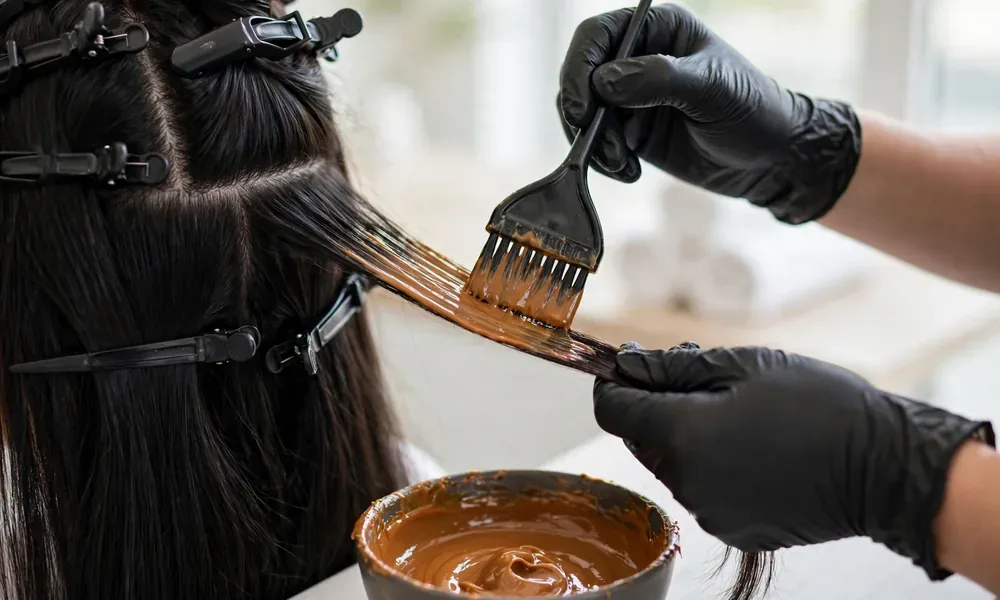
We also weighed professional reputation: colourists are brutally honest about the products they use daily, and brands that appear again and again in top salons earned extra credit. A formula that performs when mixed fresh and applied in sections has real technology behind it, not just a pleasant fragrance.
Finally, we considered accessibility and honesty: a brand that is hard to buy, or that hides its limitations, scored lower. Price counted only as value — whether the result justifies what you pay.
What to look for
Before the profiles, it helps to know what separates premium colour from ordinary colour. Look for even pigment distribution — colour that looks the same at roots, mid-lengths, and ends. Look for conditioning agents — oils, lipids, bond-building ingredients — built into the formula, not added as an afterthought. And look for cool, warm, and neutral versions of each level, so a colourist can match your skin tone instead of forcing a generic shade.
Ammonia-free is not automatically better, and ammonia is not automatically worse. Ammonia opens the cuticle so pigment can enter, which is why the best grey coverage still uses it in controlled amounts. Ammonia-free formulas are gentler and often shinier, but may cover resistant grey less completely. The right choice depends on your hair, not one ingredient.
1. Wella Professionals — Koleston Perfect Me+
Wella’s Koleston Perfect Me+ is the workhorse of luxury salons. Its Me+ technology reduces the risk of developing a new allergy to hair colour while delivering up to 100 percent grey coverage and a remarkably even result. With more than 100 shades, it is known for depth in rich browns, coppers, and cool blondes that resist brassiness.
What We Like: Exceptional grey coverage, a huge and nuanced shade range, and colour that fades gracefully rather than turning brassy. The salon Metal Purifier pre-treatment protects hair from minerals in tap water that dull colour.
What to Consider: Salon-only, so you need a colourist. The price reflects professional application, and very dark or previously coloured hair may need more than one session to reach light blonde.
2. L’Oréal Professionnel — Majirel and Inoa
L’Oréal Professionnel’s Majirel is arguably the most used permanent colour in salons worldwide, and its oil-based sibling Inoa is the gentlest premium option here. Majirel covers grey completely with a rich, reflective finish, while Inoa’s oil system leaves hair noticeably softer and shinier — a real advantage for fine or already processed hair.
What We Like: Majirel’s reliability on grey and luminous finish; Inoa’s ammonia-free, oil-powered formula that conditions as it colours. Both offer a wide shade chart colourists can customise precisely.
What to Consider: Professional-only, and Inoa can be slightly less effective on very resistant grey than Majirel. Results depend heavily on the colourist’s skill, as the formulas are designed to be mixed, not used straight from the tube.
3. Redken — Chromatics and Shades EQ
Redken pairs two strengths: Chromatics, an ammonia-free permanent colour with a protein-based formula, and Shades EQ, the glossing treatment colourists use to refresh, tone, and add shine between full colours. Together they make Redken the best luxury choice for low-damage colour with a high-gloss finish.
What We Like: Chromatics is genuinely gentle for a permanent colour, and Shades EQ extends the life of any colour while adding mirror shine. The brand is a favourite for balayage because its toners are so predictable.
What to Consider: Chromatics covers grey well but may need a stronger formula for very resistant white hair. Shades EQ is a gloss, not a full colour, so it refreshes rather than transforms — and it requires a professional.
4. Davines — Mask with Vibrachrom
Davines brings Italian luxury and a sustainability ethos to hair colour. Its Mask with Vibrachrom line uses a patented colour molecule for vivid, long-lasting colour with a conditioning base. It is strongest in warm, natural-looking shades — honey, chestnut, soft copper — and its low-impact manufacturing appeals to anyone who wants premium results without the environmental guilt.
What We Like: Beautiful, natural-looking warm tones, excellent conditioning, and a philosophy that prioritises sustainability and ingredient transparency. Colour fades evenly and holds its warmth well.
What to Consider: The shade range is smaller than Wella’s or L’Oréal’s, and cool ash blondes are less of a strength. Availability is limited, so you may need to seek out a Davines salon.
5. Aveda — Full Spectrum
Aveda’s Full Spectrum is the luxury choice for plant-powered formulas. Up to 96 percent naturally derived, it uses plant oils — sunflower, castor, jojoba — to condition hair as it colours. The result is a soft, healthy-looking shine and a gentler processing experience, which is why it is the go-to for sensitive scalps.
What We Like: A genuinely plant-based formula that still delivers reliable grey coverage and rich colour, plus the signature Aveda salon experience. The colour looks soft and natural rather than harsh or artificial.
What to Consider: The shade range leans natural and may feel limited if you want fashion shades or very cool platinum. Colour can fade a little faster than the most durable salon formulas, so glossing helps.
6. Goldwell — Topchic and Elumen
Goldwell is the quiet favourite of many top colourists. Topchic is its reliable permanent colour with excellent grey coverage and a clean, even result, while Elumen is a direct dye that deposits pure pigment without developer, producing an almost unreal shine on healthy hair. For high-shine brunettes and rich reds, Elumen is one of the most impressive formulas in the luxury market.
What We Like: Topchic’s even, dependable coverage and Elumen’s extraordinary shine and intensity. Goldwell’s shade system is logical and precise, which colourists appreciate for custom blending.
What to Consider: Elumen works best on healthy, uncompromised hair and can be less forgiving on damaged ends. Goldwell salons are less common than Wella or L’Oréal stockists, so availability varies.
7. Josh Wood Colour — The At-Home Luxury Pick
Josh Wood Colour is the rare at-home brand created by a genuinely famous colourist, and it shows. The kits are designed to be foolproof — one shade, a conditioning formula, clear instructions — while Shade Shot glosses refresh and tone between colours. The shades are deliberately realistic: expensive-looking browns, soft blondes, glossy blacks, not the flat colours that make at-home dye obvious.
What We Like: The most salon-like result available at home, with shades designed by a colourist who understands undertones. The glosses are excellent for maintaining colour and shine between full applications.
What to Consider: The shade range is intentionally narrow, so dramatic transformations are not the point. At-home application still carries the usual risks — uneven roots, missed sections — and cannot replicate a colourist’s balayage or corrective work.
8. Christophe Robin — Shade Variation Care
Christophe Robin is a Parisian luxury name, and its Shade Variation Care masks are the finishing touch that keeps expensive colour looking expensive. These are not full dyes but colour-enhancing masks that deposit a veil of pigment — warm golden, cool ash, rich chestnut — while deeply conditioning. Used weekly, they neutralise brassiness, revive faded colour, and add gloss that rivals a salon visit.
What We Like: The most elegant colour maintenance product on the market, with a beautiful texture and a genuinely visible toning effect. Ideal for blondes fighting brass and brunettes who want to keep their colour warm and rich.
What to Consider: This is maintenance, not colour — it will not cover grey or change your base shade. The price per tube is high, and the effect builds over several uses rather than appearing in one application.
Whichever brand you choose, aftercare decides how long the result lasts. Colour-treated hair needs gentler washing and regular deep conditioning, and the best hydrating hair masks that repair colour-treated hair can add weeks to a fresh colour. A good mask is not optional after luxury colour — it is part of the investment.
Background
Hair colour has come a long way from the harsh, single-process dyes of a generation ago. The turning point was conditioning colour systems in the 2000s, when brands began building oils, lipids, and bond-protecting ingredients directly into the dye. That shift made modern luxury colour possible: pigment that penetrates evenly without stripping the hair’s structure.
Premium formulas fall into three types. Permanent colour uses a developer to open the cuticle and deposit pigment inside the shaft, which is why it covers grey and lasts until it grows out. Demi-permanent colour uses a gentler developer and fades over four to six weeks, ideal for glossing, toning, and first-time colour. Direct dyes, like Goldwell Elumen, deposit pigment on the surface for intense shine, though they wash out faster.
The other major development is customisation. Salon colour is routinely mixed from two or three shades to match skin tone, eye colour, and natural base — why salon colour looks multi-dimensional while a box dye looks flat. Even the best at-home brands have narrowed their ranges to the tones that work most reliably.
Your hair’s history matters too. Hair that has been bleached, coloured dark, or chemically straightened absorbs pigment unevenly and fades faster at the ends. That is why colourists ask about your colour history before mixing, and why a strand test is standard before any dramatic change. If you want dimension rather than one flat shade, the best curly hair highlights that keep dimension show how placement and tone create movement in the hair.
The caveats that matter
Luxury colour is an investment, and like any investment it has trade-offs. The table summarises the points that catch people out most often, so you can go in with realistic expectations.
| Caveat | What it means in practice |
|---|---|
| Grey coverage varies | Resistant white hair may need a stronger formula or double application. |
| Lightening has limits | Dark brown to blonde usually takes more than one session and may need bleach first. |
| Colour fades fastest on damaged hair | Porous ends lose pigment quickly; masks and glossing slow the fade. |
| Patch tests are essential | Always patch test 48 hours before a new colour, even a familiar brand. |
| At-home colour cannot do balayage | Dimensional techniques need a colourist’s placement skill, not just a better product. |
| Hard water dulls colour | Minerals in tap water build up on coloured hair; a purifying treatment helps restore shine. |
| Sun and heat fade colour | UV light and hot tools accelerate fading, especially for reds and coppers. |
| Upkeep costs add up | Root appointments every four to six weeks are part of the true cost. |
Checklist
- Book a consultation before a major colour change, and bring photos of the exact shade you want.
- Patch test 48 hours before any new colour, even if you have coloured your hair many times before.
- Arrive with unwashed hair — natural oils protect the scalp during processing.
- Choose a shade within two levels of your natural colour for the most believable result.
- Switch to sulphate-free shampoo and a weekly mask the day you colour, not weeks later.
- Learn how to wash your hair properly to protect colour.
FAQ
What is the best luxury hair colour brand overall?
Wella Professionals leads for most people: Koleston Perfect Me+ combines the strongest grey coverage, the widest shade range, and colour that fades gracefully. L’Oréal Professionnel is a close second, especially for the gentler Inoa formula.
Is luxury hair colour worth the extra money?
Yes, when the colour is applied well and maintained properly. Premium formulas fade more slowly and evenly, which means fewer appointments and less corrective work, and the difference in shine and dimension is visible. Skip aftercare and even the best colour fades fast.
Can I get salon-quality colour at home?
You can get close with Josh Wood Colour if you stay within two shades of your natural colour and follow the instructions exactly. What you cannot replicate is dimensional work — balayage, highlights, corrective colour — which depends on a colourist’s placement and timing, not just the product.
Which luxury brand is best for grey coverage?
Wella Koleston Perfect Me+ and L’Oréal Majirel are strongest for grey coverage, both offering up to 100 percent coverage on resistant hair. If your grey is very resistant, tell your colourist — they may use a dedicated formula or a double application.
How long does luxury hair colour last?
Permanent colour lasts until it grows out, but vibrancy peaks in the first three weeks and softens over four to six weeks. Demi-permanent colour and glosses last four to six weeks. Reds and coppers fade fastest; deep browns and blacks hold richness longest.
Does ammonia-free colour work as well as traditional colour?
Ammonia-free formulas such as Inoa and Chromatics work very well for most people and leave hair softer, but can be slightly less effective on very resistant grey. Traditional ammonia-based colour still has the edge for complete grey coverage and lifting hair lighter. The best choice depends on your hair type and goal.
The bottom line
The best luxury hair colour brands — Wella, L’Oréal Professionnel, Redken, Davines, Aveda, and Goldwell in the salon, with Josh Wood Colour and Christophe Robin at home — earn their premium status through better pigment, better conditioning, and colour that stays true for weeks rather than days. The brand matters, but the colourist matters just as much: a great formula in skilled hands always beats a great formula applied badly.
If you are booking a salon appointment, start with Wella or L’Oréal Professionnel and ask your colourist which line suits your hair history. If you are colouring at home, choose Josh Wood Colour, stay close to your natural shade, and spend what you save on a weekly mask and sulphate-free shampoo. Either way, protect the colour you paid for — the most expensive colour only looks expensive while it is properly cared for.
Meet Our Experts
Our beauty editorial team works with professional colourists and trichology consultants to research hair colour products. Every recommendation is checked against professional salon practice and current product information.
Why Trust BrassSmile
BrassSmile covers beauty, fashion, and luxury lifestyle to the same standard in every guide: specific, accurate, and honest. We name every product’s limitations, never accept payment for placement, and update guides when formulas or availability change.
Sources
Wella Professionals; L’Oréal Professionnel; Redken; Davines; Aveda; Goldwell; Josh Wood Colour; Christophe Robin; Vogue; Elle; Allure; Byrdie.