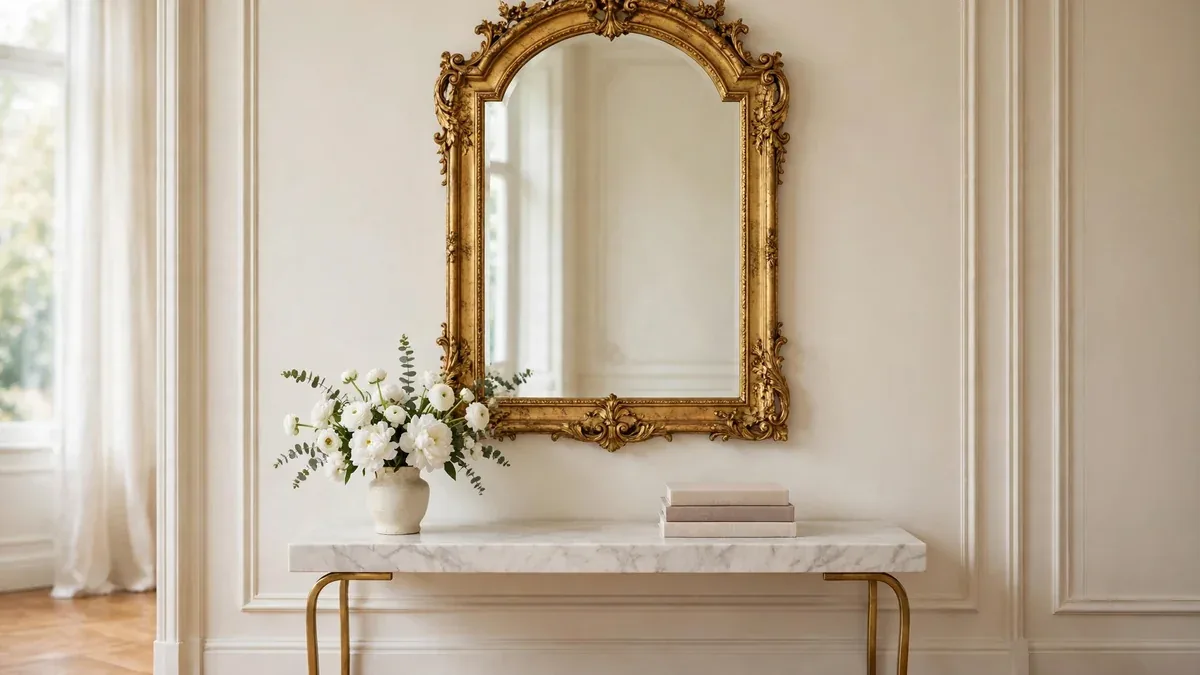

Best Luxury Mirror Brands
The best luxury mirror brands do far more than reflect a room. They shape it. A well-made mirror pulls daylight deeper into a hallway, makes a small sitting room feel generous, and gives a plain wall the presence of a piece of art.
This guide looks at the brands that deliver most consistently at the luxury end of the market, from heritage glassmakers in Italy to contemporary design houses in Denmark and London. Some make sculptural statement pieces, others quiet classics that work in almost any room.
Before spending several hundred or several thousand on a mirror, it helps to know what you are paying for. Glass quality, frame craftsmanship, hanging hardware, and aftercare all matter, and they are exactly where cheaper mirrors cut corners.
Key takeaways
- The best luxury mirror brands are separated by glass clarity, frame craftsmanship, and proper hanging hardware, not by branding alone.
- Italian glass houses and Danish design brands lead the field, with British makers offering some of the finest hand-finished frames.
- Size and placement matter as much as the mirror itself: it should reflect something worth looking at and sit at a height that suits the room.
- Low-iron glass, bevelled edges, and solid brass or hardwood frames are the clearest signs of genuine luxury construction.
- The caveat is that luxury prices do not guarantee a perfect fit: lead times can stretch to months, oversized pieces need professional installation, and returns on bespoke sizes are often limited.
What this guide covers
This guide covers eight luxury mirror brands across the main styles of high-end interiors: classic, contemporary, sculptural, and quietly traditional. Each is profiled with what it does best, what to watch out for, and the background behind its reputation. The brands are GUBI, AERIN, Restoration Hardware, Soho Home, Cattelan Italia, Glas Italia, Porta Romana, and Julian Chichester. The guide also explains how to judge a mirror before buying, the background of luxury mirror-making, the caveats that catch buyers out, and a checklist for measuring, hanging, and caring for a piece. The same eye for proportion that shapes the best celebrity home decor looks will serve you well when choosing a mirror.
How we chose
The brands here were chosen on their materials, manufacturing, and staying power in the luxury interiors market. Glass quality came first: the best brands use low-iron or carefully silvered glass that reflects without the green tint of standard float glass, with edges finished cleanly. Frame construction came next: a luxury frame should be solid brass, bronze, hardwood, or hand-applied gilding, joined and finished by hand. Weight is a useful clue, since a well-made mirror feels substantial and its hanging hardware is engineered for that weight.

What to look for
Four things separate a luxury mirror from an ordinary one. First, the glass: low-iron glass or high-quality silvering, a flat reflection with no ripples, and polished or bevelled edges. Second, the frame: solid brass, bronze, hardwood, or hand-gilded finishes, with invisible joins and a back finished as carefully as the front. Third, the hanging system, which must be engineered for the mirror’s weight. Fourth, proportion: a mirror over a console should usually be narrower than the console.
GUBI
GUBI is a Danish design house founded in 1967, best known for the Adnet mirror, a round mirror hung from a leather strap designed by Jacques Adnet in 1950.
What We Like: The Adnet is a genuine design classic, made in several sizes and finishes, with clear flat glass and a thick, well-stitched leather strap.
What to Consider: Prices are firmly luxury, and the Adnet is widely copied, so buy from an authorised stockist. The leather darkens with age.
Background: GUBI was founded in Copenhagen by Gubi and Lisbeth Olsen, reviving forgotten designs alongside new work.
Caveats: The strap hangs from a single point, so the wall fixing must be secure. Condition the leather occasionally, and keep the mirror out of very humid bathrooms.
AERIN
AERIN is the lifestyle brand founded by Aerin Lauder in 2012, built around effortless, polished living. Its mirrors are decorative in the best sense: elegant frames in brass, shagreen, and lacquer, designed as jewellery for a room.
What We Like: AERIN mirrors have a distinctive polish that is hard to find elsewhere. The brass frames are warm rather than brassy, and the proportions are carefully judged so even a large mirror feels light.
What to Consider: AERIN mirrors are decorative first, so for a large functional bathroom or gym mirror, other brands here may suit better. Prices reflect the luxury positioning.
Background: Aerin Lauder grew up inside the Estee Lauder beauty business and founded AERIN as a separate brand covering home, accessories, and beauty.
Caveats: Shagreen and lacquered finishes should be kept away from prolonged damp and direct sunlight. Clean frames with a soft, dry cloth, and check the hanging hardware before installation.
Restoration Hardware
Restoration Hardware, known as RH, is an American luxury home brand founded in 1979 that grew from a hardware store into one of the largest names in high-end furniture. Its mirror collections cover French, Belgian, English, and Italian styles.
What We Like: The range is the strength here, from vast arched mirrors to small accent pieces, with many designs in several sizes and finishes.
What to Consider: Quality can vary between collections, so inspect the specific piece rather than relying on the brand name alone. Some designs are heavily distressed, which can look out of place in a modern room.
Background: RH began in California as a supplier of restoration hardware for old houses and grew into a luxury interiors business with large gallery stores in historic buildings.
Caveats: Very large RH mirrors are extremely heavy and need two people and professional fixings to hang safely. Check the dimensions and weight before ordering, and confirm the returns policy.
Soho Home
Soho Home is the interiors line of Soho House, the members’ club group, and its mirrors are drawn directly from the furniture used in Soho House clubs and hotels around the world.
What We Like: Soho Home mirrors have a relaxed, club-like character that works well in real homes. Frames are often in dark wood, aged brass, or simple black metal, and the shapes are classic rather than fashionable.
What to Consider: The range is smaller than the big furniture houses, and popular pieces can go out of stock. The warm, layered aesthetic suits some interiors better than others.
Background: Soho House began in London in 1995 as a private members’ club and grew into a global group of clubs, hotels, and restaurants.
Caveats: Check the finish on arrival, as aged and distressed finishes vary from piece to piece. Measure doorways and stairwells as well as the wall.
Cattelan Italia
Cattelan Italia is an Italian furniture maker founded in 1979 by Giorgio Cattelan, known for sculptural tables and for mirrors that behave like art.
What We Like: Cattelan Italia mirrors are genuinely distinctive. Designs use bevelled glass, metal inlays, and unusual shapes to create pieces that change as you move around the room.
What to Consider: These are statement pieces, so they need space and a room that can carry them. Prices are high, and many designs are made to order, which means longer waits.
Background: Cattelan Italia began as a small workshop in Italy and grew into an international luxury brand by combining traditional craftsmanship with bold contemporary design.
Caveats: Made-to-order pieces often cannot be returned, so confirm dimensions, finishes, and hanging requirements before ordering. Sculptural mirrors can distort reflections at the edges by design.
Glas Italia
Glas Italia is an Italian glass specialist founded in 1972, and the purest glassmaker on this list. Its mirrors are designed by leading names in contemporary design.
What We Like: The glass quality is exceptional, with a clarity and flatness that is immediately visible next to ordinary mirrors. Designs range from minimal frameless pieces to mirrors with coloured glass.
What to Consider: Glas Italia mirrors are often frameless or minimally framed, which gives a clean look but means the glass must be handled with care. Prices are firmly luxury.
Background: Glas Italia grew out of the Italian glass industry around Milan and has built its reputation on technical mastery of glass: cutting, bevelling, laminating, and finishing.
Caveats: Frameless glass mirrors need precise hanging and a perfectly flat wall, as any unevenness will show. Protect edges during delivery and installation.
Porta Romana
Porta Romana is a British luxury lighting and furniture maker founded in 1988, known for hand-finished pieces made in its own workshops.
What We Like: Porta Romana mirrors have a warmth and hand-made quality that is rare at any price. The gilded and painted finishes are layered and subtle, and the shapes are elegant without being fussy.
What to Consider: The range is deliberately small, so choice is limited compared with larger brands. Prices reflect hand finishing, and lead times can be several weeks.
Background: Porta Romana was founded in London by Andrew and Sarah Hills, with workshops where craftspeople hand-finish each piece.
Caveats: Hand-applied finishes vary slightly from piece to piece, so the mirror you receive may differ subtly from a showroom sample. Dust gilded finishes rather than polishing them.
Julian Chichester
Julian Chichester is a British luxury furniture house founded in the late 1980s, known for hand-crafted furniture mixing classic forms and contemporary finishes.
What We Like: Julian Chichester mirrors have a depth of finish that is hard to match. The antiqued and smoked glass options are particularly good, giving a soft, atmospheric reflection rather than a harsh one.
What to Consider: The brand is sold mainly through showrooms and interior designers, so it can be harder to find than brands with large online stores. Prices are at the top end.
Background: Julian Chichester founded his company in London and built it around traditional craftsmanship, with furniture made by hand in workshops that still use time-honoured techniques.
Caveats: Antiqued and smoked glass reflects less brightly than standard mirror glass, which is intentional but worth seeing in person before ordering. Made-to-order pieces need careful measuring.
Background
Mirror-making was centred for centuries on Murano, the island near Venice where glassmakers developed the techniques for flat, clear glass and for silvering it to create a true reflection. Venetian mirrors were among the most expensive objects in a wealthy household, framed in carved and gilded wood and passed down through generations.
The craft spread across Europe in the seventeenth and eighteenth centuries, with French makers at Saint-Gobain developing cast plate glass that allowed much larger mirrors than before. The techniques changed, with silver replacing mercury and modern coatings replacing silver, but the skills that matter, flat glass, clean silvering, and a frame made to last, have stayed the same. Today’s brands inherit that tradition in different ways: Italian makers draw on the Murano and Milan glass heritage, British makers on hand-finished frames and gilding, and Danish designers on a modernist belief that a simple, well-made object is the most luxurious of all.
The caveats that matter
The main caveat with luxury mirrors is that the purchase does not end at the checkout. Large mirrors are heavy, fragile, and awkward to move, and a mirror that arrives safely still needs to be hung on a wall that can hold it. Plasterboard, old plaster, and tiled walls each need different fixings.
Lead times are the second caveat. Many luxury mirrors are made to order, and a wait of eight to twelve weeks is common for bespoke sizes and finishes, so order early. Returns are the third caveat: bespoke and made-to-order mirrors are often non-returnable, so measurements and finish choices need to be right the first time.
Light is the final caveat, and the one most often overlooked. A mirror reflects whatever is opposite it, so a mirror hung facing a blank wall or a cluttered corner will double the least attractive part of the room. The best results come from hanging a mirror opposite a window, a garden view, or a beautiful piece of furniture. Hotel suites show the same lesson, and the interiors of a luxury hotel like Hotel Emma show how well-placed mirrors can make a room feel larger and brighter.
| Brand | Best for | Signature style | Price level | Lead time |
|---|---|---|---|---|
| GUBI | Modern and classic rooms | Leather-strap round mirrors | High | Short to moderate |
| AERIN | Bedrooms and dressing rooms | Brass and shagreen elegance | High | Short to moderate |
| Restoration Hardware | Large-scale statement pieces | French and Belgian grandeur | High to very high | Moderate to long |
| Soho Home | Relaxed, lived-in luxury | Club-inspired classics | Moderate to high | Short to moderate |
| Cattelan Italia | Sculptural focal points | Asymmetric Italian design | Very high | Long, often made to order |
| Glas Italia | Minimal modern interiors | Frameless and coloured glass | Very high | Long, often made to order |
| Porta Romana | Hand-finished traditional rooms | Gilded and painted frames | High | Moderate, small batches |
| Julian Chichester | Layered, atmospheric rooms | Antiqued and smoked glass | Very high | Long, often made to order |
Checklist
- Measure the wall, the furniture below the mirror, and the doorways and stairwells it must travel through before you order.
- Check the wall type and weight limit, and buy the correct fixings for plasterboard, solid plaster, brick, or tile.
- Stand where the mirror will hang and look at what it will reflect, choosing a position opposite a window, a view, or a piece you love.
- Confirm the glass type, frame material, and finish in writing, especially for antiqued, smoked, or hand-gilded surfaces.
- Ask about lead time, delivery, installation, and the returns policy before paying, since bespoke mirrors are often non-returnable.
- Plan the cleaning routine for the specific finish, using a soft dry cloth on gilded and lacquered frames and glass cleaner only on the glass.
FAQ
What is the best luxury mirror brand overall?
There is no single best brand, because the right choice depends on the room and the style of the home. GUBI is the strongest choice for a modern classic, Glas Italia for a minimal contemporary interior, and Porta Romana or Julian Chichester for a traditional room that needs hand-finished warmth.
How much should a luxury mirror cost?
Luxury mirrors typically start at several hundred for a well-made piece from a design brand and rise into the thousands for large, hand-finished, or made-to-order mirrors from Italian and British makers. Very large or sculptural pieces can reach five figures.
What size mirror should I choose?
As a guide, a mirror over a console or mantel should be about two-thirds to three-quarters as wide as the furniture below it, leaving a clear margin on either side. A full-length mirror should be at least 120 centimetres tall to reflect the whole body.
Is low-iron glass worth paying for?
Yes, if you care about the quality of the reflection. Standard glass has a green tint that becomes visible at the edges and in thicker pieces, while low-iron glass is clearer and more neutral.
Can luxury mirrors be used in bathrooms?
Some can, but not all. Mirrors made for bathrooms need moisture-resistant backing and frames that will not tarnish, swell, or corrode in steam. Many decorative mirrors with gilded, lacquered, or shagreen frames are not suitable for bathrooms, so check the manufacturer’s guidance first.
How do I hang a heavy luxury mirror safely?
Use fixings rated for at least twice the mirror’s weight, anchor into solid wall material or a stud rather than plasterboard alone, and use two fixings rather than one where the design allows. For mirrors over about 20 kilograms, professional installation is the safest choice.
The bottom line
The best luxury mirror brands earn their reputation the same way: clear glass, solid frames, honest materials, and designs that still look right years after they are hung. GUBI offers the most versatile modern classic, AERIN the most polished decorative mirror, and Soho Home the most relaxed luxury, while Cattelan Italia and Glas Italia lead for sculptural and minimal contemporary design, and Porta Romana and Julian Chichester offer the finest hand-finished traditional pieces. Restoration Hardware covers the largest range of all.
Choose by the room, not by the brand name alone. Measure carefully, check what the mirror will reflect, confirm the lead time and returns policy, and budget for proper fixings and installation. A luxury mirror is one of the few purchases that changes a room every day, in every light, for years. The same principles behind luxury fashion investments apply just as well to interiors: buy the best you can afford, choose pieces that last, and let quality rather than fashion decide.
Meet Our Experts
Our interiors and luxury lifestyle editors research and write every guide, drawing on showroom visits, designer interviews, and years of covering the luxury home market.
Why Trust BrassSmile
BrassSmile covers luxury homes, fashion, beauty, and travel with the same standard: specific, accurate reporting, no invented claims, and recommendations based on materials, craftsmanship, and real-world use.
Sources
GUBI, AERIN, Restoration Hardware, Soho Home, Cattelan Italia, Glas Italia, Porta Romana, Julian Chichester, Architectural Digest, Elle Decoration, House & Garden, The World of Interiors, Vogue Living.