A diamond pendant is the easiest fine jewellery to wear daily. It needs no occasion, no matching earrings, no special outfit. You put it on in the morning and it catches the light at your desk, at dinner, on a walk, and still looks right. That is why so many people buy one as a first diamond, a birthday gift, or a treat after a promotion. It is also why so many end up disappointed: the pendant they loved in the shop looks smaller at home, the chain flips, the stone looks cloudy in daylight, or they realise months later they paid a premium for a brand name rather than a better diamond.
The problem is not a lack of choice but too much of it, and everything looks similar in a photograph. A solitaire, a halo, a cluster and a bar pendant can all be described as a diamond on a chain, yet they sit differently on the neck, suit different necklines, and hold their value differently. Prices run from a few hundred to five figures, and the gap is rarely explained plainly. What you actually need to know is how the pendant will look on you, how it will wear over years, and what you are really paying for.
Below are nine diamond pendant styles, each with what it does well and what to watch out for, then a plain guide to choosing chain, setting and stone, why prices vary so much, and the caveats that matter before you spend. No jargon without an explanation, and no pressure to buy the biggest stone in the case.
Key takeaways
- A solitaire is the safest first pendant; a halo makes a smaller stone look bigger, but adds cost and cleaning.
- Cut matters more than carat: a well-cut half-carat stone can outshine a dull one-carat.
- Chain length changes the whole look: 16 inches sits high, 18 inches is the standard, 20 inches suits layering.
- Always buy a certified stone from a seller with a clear returns policy, and keep the certificate.
- Prices vary widely for near-identical pendants — compare the same carat, cut grade and metal before deciding.
What diamond pendants actually cover
Pendants divide into a few clear families, and the family matters more than the brand on the box. A solitaire holds one stone front and centre; a halo surrounds a centre stone with smaller diamonds; a cluster groups several stones together. A bar, a drop, a cross and a heart are shapes, not settings, each suiting a different neckline. Below are the nine styles most people buy in 2027.
1. The classic solitaire pendant
The solitaire is one diamond, usually round, held by four or six prongs on a fine chain. It suits everyone and goes with everything, from a white shirt to a black dress, which is why it is the most common first diamond purchase. A round brilliant between 0.5 and 1 carat is the sweet spot: big enough to notice, small enough for daily wear. It also holds its value better than fussy designs, because the stone can be reset later.
What we like: timeless, versatile, easy to clean, and the stone is the star so the quality is easy to judge. What to consider: a plain setting shows the stone honestly, so a poorly cut or yellowish diamond has nowhere to hide; spend on cut first.
2. The halo pendant
A halo places a centre stone inside a ring of small pavé diamonds, making the whole pendant look larger and brighter than the centre stone alone. A 0.5-carat centre in a halo can read like a one-carat solitaire from across a room, which makes it a clever way to get presence on a smaller budget. Halos suit evening looks and photograph beautifully.
What we like: maximum sparkle for the money, a glamorous look, and the halo protects the centre stone. What to consider: small stones collect lotion and dust, so a halo needs more cleaning, and it can overwhelm a very fine chain or petite frame.
3. The three-stone pendant
Three-stone pendants carry a larger centre diamond flanked by two smaller stones, a design often said to stand for past, present and future, making it a popular anniversary or milestone gift. The side stones add width and balance, so the pendant sits flat. It works best in white gold or platinum, where the metal disappears and the stones do the talking.
What we like: meaningful symbolism, balanced proportions, and side stones that add sparkle without a full halo’s upkeep. What to consider: the three stones should match in colour, or the centre will look yellow or grey beside its neighbours; check them in daylight.
4. The cluster pendant
A cluster groups a dozen or more small diamonds into one shape, often a flower, a square or a round bloom. It is the most affordable way to get a large-looking pendant, because many small stones cost less than one large stone of the same total weight. Clusters feel vintage and romantic, suiting people who like jewellery with personality rather than minimalism.
What we like: generous size for the price, a charming vintage feel, and plenty of sparkle. What to consider: small stones are harder to grade individually, so ask for total carat weight and average colour and clarity; clusters can look busy on a very short chain.
5. The diamond bar pendant
A bar pendant is a slim horizontal bar set with a row of small diamonds, worn close to the collarbone. It is the modern, minimal option, and the default everyday pendant for tailoring, knitwear and clean lines. It layers well with a longer solitaire, and suits a crew neck or shirt collar better than a round pendant.
What we like: sleek, modern, sits flat and never flips, and one of the most comfortable pendants to wear all day. What to consider: the stones are small, so the effect is subtle rather than showy; a curved bar follows the neckline better than a rigid straight one.
6. The drop pendant
A drop pendant lets the diamond hang below the chain, often as a teardrop or pear shape, sometimes with a smaller stone above it. The movement is the point: it swings gently as you move, catching light in a way a fixed setting cannot. Drop pendants suit V-necks and open collars, and are a natural choice for evening events and weddings. If you are choosing jewellery for a celebration outfit, a drop pendant is often the most flattering option, and our guide to wedding guest dresses for 2027 shows the necklines it pairs with best.
What we like: elegant movement, flattering with open necklines, and a pear shape that looks larger than a round stone of the same weight. What to consider: a drop pendant can swing and tangle with longer necklaces, and pear shapes vary in outline, so look for a symmetrical teardrop.
7. The diamond cross pendant
A diamond cross sets small stones along a cross shape, and it is one of the most gifted pendants, given for confirmations, christenings, graduations and birthdays. The design is simple enough to wear daily and meaningful enough to keep for decades. Smaller crosses suit everyday wear, larger pavé crosses suit evening. The key detail is the bail, the loop joining pendant to chain, which should be solid and smooth.
What we like: deeply personal, easy to wear daily, and a classic gift that rarely misses. What to consider: the stones are small, so colour matching matters more than size; a thin chain can look out of proportion under a heavy cross.
8. The diamond heart pendant
A heart pendant is the romantic choice, and in 2027 it is as often bought for yourself as given as a gift. The best versions are pavé-set, with small diamonds covering the whole heart, or a single stone set into a heart-shaped outline. A small heart on a fine chain is sweet and everyday; a larger pavé heart is a statement. Heart pendants suit round and scoop necklines, where the shape has room to sit.
What we like: instantly romantic, widely available at every price, and one of the easiest pendants to wear daily. What to consider: heart shapes vary a lot in quality, and a lopsided or squat heart looks cheap at any price; check the symmetry before buying.
9. The bezel-set pendant
A bezel setting wraps the diamond in a thin rim of metal instead of holding it with prongs, giving a clean, modern look and the best protection a stone can get. It is the practical choice for people who are hard on jewellery: the stone cannot snag on jumpers, catch on hair, or chip at the edges. Bezel pendants suit active lifestyles and anyone wanting a pendant they never have to think about.
What we like: the most secure setting, a sleek modern profile, and a metal rim that makes the stone look slightly larger. What to consider: a bezel covers the stone’s edges, so less light enters from the sides; choose a bright, well-cut stone to compensate.
How to choose a diamond pendant
Choosing well comes down to three decisions in order: the stone, the setting, and the chain. Start with the stone, because it sets the price. Cut matters most for a pendant, since a well-cut diamond returns more light and looks brighter on the neck; colour and clarity have sweet spots, where a near-colourless, slightly included stone looks identical to a flawless one to the naked eye, for far less money. If the four Cs still feel confusing, our plain-language diamond buying guide for 2027 explains cut, colour, clarity and certification in the order you need them.
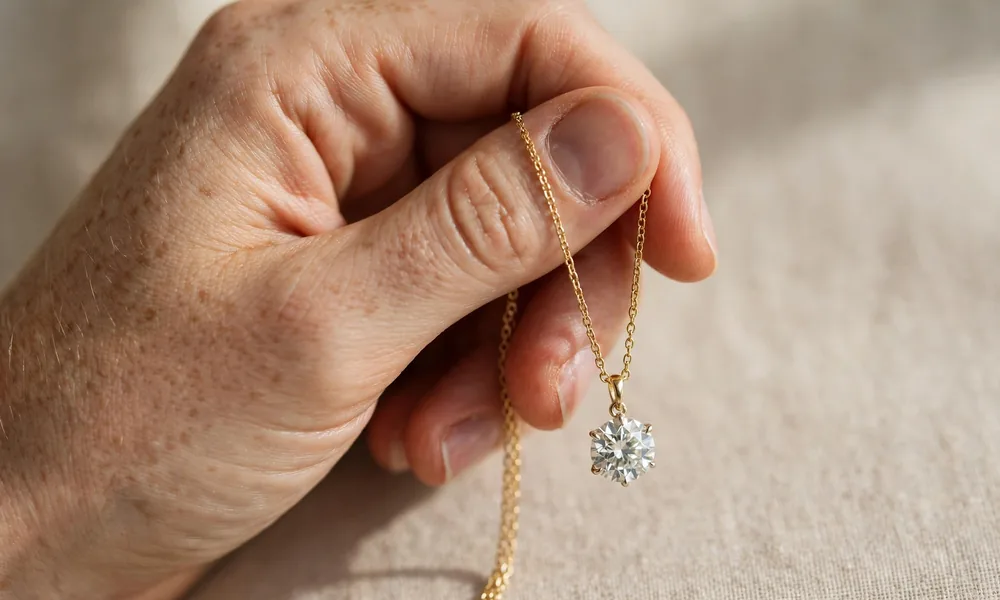
Next, the setting. Prongs show the most stone and sparkle; a bezel is the most secure; a halo adds size and glamour but needs more cleaning. Match the setting to your life, not just to the photograph: if you wear knitwear, swim, or work with your hands, a bezel or low-profile prong setting will serve you better than a high, exposed one. Then the chain. Eighteen inches is the standard length and sits at the collarbone on most people; sixteen inches suits open necklines; twenty inches or more suits layering and higher necklines. A chain too fine for the pendant will kink and snap, so ask the seller to confirm the chain weight suits the pendant weight.
Finally, the metal. White gold and platinum keep the focus on the stone and suit cool skin tones; yellow gold warms the look, suits warmer skin tones and hides small scratches well; rose gold is softer and more romantic but less common, which can matter for repairs. Whatever metal you choose, make sure the chain and the setting match, because mixed metals wear at different rates and look mismatched up close.
Why diamond pendant prices vary so much
Two pendants that look identical in a photograph can differ by thousands, and the reasons are almost always in details you cannot see. Cut grade, colour, clarity and carat weight each move the price, and a certificate from a respected laboratory proves those grades are real. Lab-grown diamonds, chemically identical to mined diamonds, now cost far less than mined stones of the same size, and many 2027 pendants use them; neither is better in absolute terms, but they should never be priced the same.
The setting and the brand add the rest. Hand-finished settings, solid gold rather than plated metal, and small workshops with proper guarantees all cost more than mass-produced pieces, and usually last longer too. A well-known brand can add a large premium for the same stone and metal, which is fine if the service and guarantee matter to you, but worth knowing before you pay it. Comparing pendants by total carat weight alone is also misleading: many tiny stones and one large stone can share a carat weight and look nothing alike. If you are building a collection rather than buying a single piece, think about how a pendant works with what you already own; our roundup of the best diamond earrings for 2027 covers the studs, hoops and drops that pair most naturally with the styles above.
The caveats that matter
Most diamond pendant regrets are avoidable, and they share a pattern: a stone bought without a certificate, a chain too fine for the pendant, or a design chosen from a photograph without trying it on. The table below covers the points worth checking before you pay, online or in a shop.
| Detail | What to check |
|---|---|
| Certification | A certificate from a recognised laboratory, matching the stone’s weight and grades |
| Cut grade | Excellent or very good cut for round stones; brightness matters more than size |
| Colour | Near-colourless grades look white on the neck and cost far less than colourless |
| Clarity | Slightly included grades are usually eye-clean on a pendant; check in daylight |
| Chain strength | Chain weight suited to the pendant; a fine chain under a heavy pendant will snap |
| Setting security | Prongs even and tight, bezel smooth with no gaps, bail solid and soldered closed |
| Returns policy | At least 14 to 30 days, with a full refund, not just an exchange or credit |
| Lab-grown vs mined | Ask directly which it is; the price should reflect the answer, not hide it |
One more caveat: never buy from a seller who will not put the stone’s grades, the metal and the returns policy in writing. A reputable seller does all three without being asked.
Checklist: before you buy
- Decide your budget first, then your stone size, so the setting and chain fit inside it.
- Choose cut first, then colour, then clarity; carat last, not first.
- Try the pendant on with the neckline you will wear it with, or measure your chain length at home.
- Ask for the certificate and check the grades match what you were told.
- Check clasp, bail and prongs by hand: nothing should snag, wobble or feel sharp.
- Keep the receipt, certificate and valuation together, and insure the pendant if it is valuable.
Frequently asked questions
How much should a good diamond pendant cost?
A few hundred buys a small cluster or bar pendant in gold; several thousand buys a certified one-carat solitaire. Cut, colour, clarity and origin set most of the price, so compare pendants with matching grades rather than matching price tags.
What size diamond pendant looks best?
For everyday wear, a centre stone between 0.5 and 1 carat suits most people, with a halo or cluster for presence. Larger stones suit evening wear and taller frames; smaller stones suit petite frames and layered looks.
Which chain length should I choose?
Measure around your neck and add the drop you want: 16 inches sits high at the base of the neck, 18 inches rests at the collarbone and suits most necklines, and 20 inches or longer works for layering and high necklines. Adjustable chains are safest if you are buying a gift.
Are lab-grown diamond pendants worth buying?
Yes, if the price reflects it. Lab-grown diamonds are real diamonds with the same sparkle and hardness, and cost far less than mined stones. They may hold less resale value, so buy one to wear and enjoy, not as an investment.
How do I clean a diamond pendant?
Soak it in warm water with a drop of mild washing-up liquid, brush gently with a soft toothbrush, rinse and pat dry. Clean a halo or cluster more often, since small stones trap lotion and dust, and have the setting checked once a year.
Can I wear a diamond pendant every day?
Yes: diamonds are the hardest natural gemstone and a pendant takes little wear. Choose a secure setting such as a bezel or low prongs, remove it for heavy exercise or swimming, and store it in a soft pouch away from other jewellery.
The bottom line
The best diamond pendant for 2027 is not the biggest or most expensive in the case. It is the one with a well-cut, certified stone, a setting that suits your life, and a chain that sits right on your neckline. A solitaire is the safest first choice, a halo the smartest way to get presence on a smaller budget, and a bezel the most practical for everyday wear. Decide your budget, prioritise cut, and try it on before you commit.
Take your time, because a pendant is a piece you will reach for for years. Compare like with like, ask for everything in writing, and buy from a seller with a clear returns policy. The right pendant should feel effortless the first time you put it on, and every time after that.
Note: Prices and availability change often, and diamond grades should always be confirmed on the certificate supplied with the stone you buy, not a listing photograph.
Meet Our Experts
Our jewellery coverage is written by editors who follow the fine jewellery market year-round, speaking with independent jewellers and gem specialists about cut, certification and setting craft, so buying advice stays practical rather than theoretical.
Why Trust BrassSmile
BrassSmile covers jewellery as it covers fashion and lifestyle: with honest comparisons, clear explanations of what drives price, and no pressure to buy. We do not accept payment to feature a piece, and we flag the caveats before you spend.