

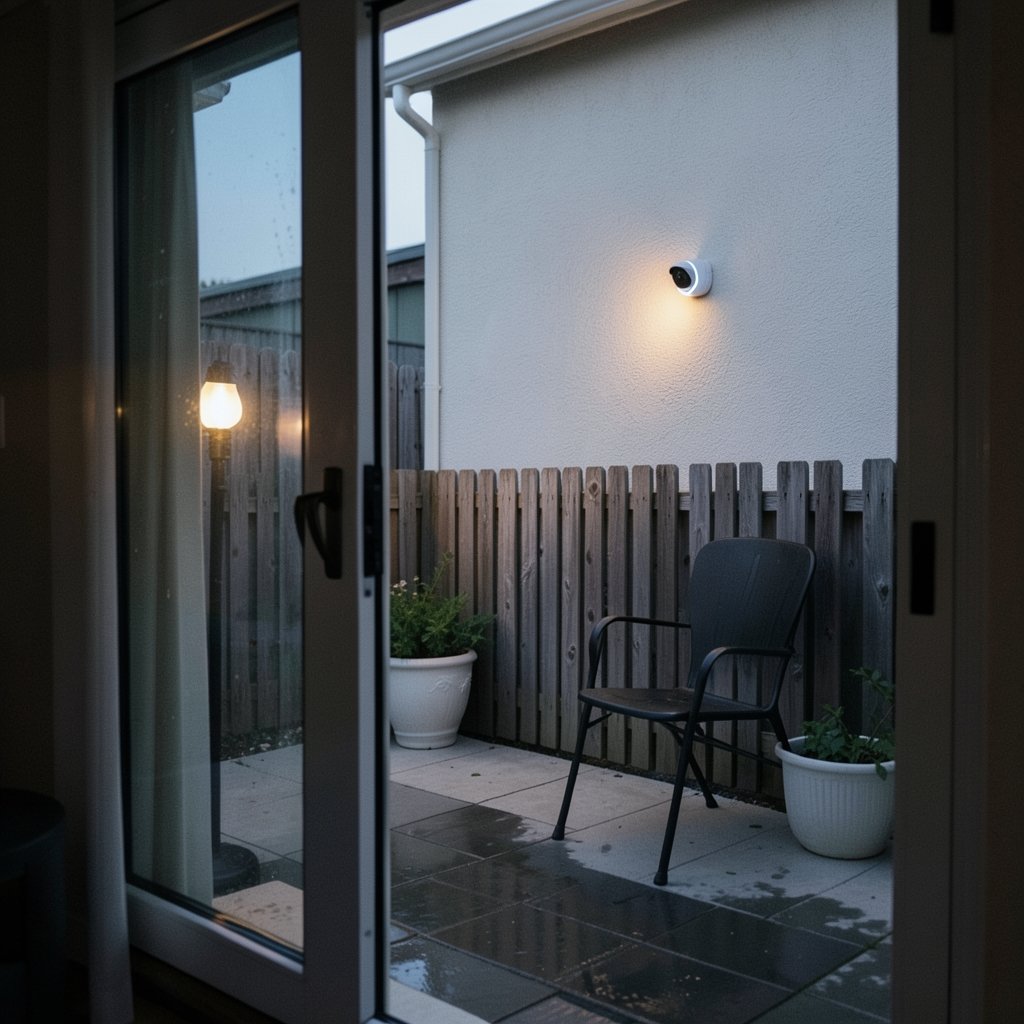
What good is a camera that misses the one moment you needed it? That is the question to ask before buying any outdoor security camera system. Resolution numbers on a box tell you very little. What matters is whether the camera catches a face at 30 feet in the rain, whether the app wakes you at 2 a.m. without a subscription nag, and whether the thing still works two winters from now.
This roundup cuts to specific, named options. Each one gets a plain answer to three questions: who it suits, what it does well, and where it falls short. Prices and tiers appear only where they were confirmed in published testing.
Comparison at a Glance
| Camera | Best for | Power | Standout strength | Main limitation |
|---|---|---|---|---|
| Arlo Pro 6 2K | Overall image quality | Battery | Sharp 2K video, deep object detection | Subscription needed for full features |
| Reolink Solar Floodlight Cam | Driveways and yards | Solar | Light plus camera in one unit | Bulky mounting |
| Eufy EufyCam S4 | Solar charging | Solar | Strong battery life | Feature set varies by kit |
| Reolink Atlas | Battery flexibility | Battery | Wire-free placement anywhere | Fewer frills than pricier rivals |
| Blink Outdoor 4 | Tight budgets | Battery | Low cost, simple setup | Basic image detail |
| Philips Hue Secure Wired Camera | Hue smart homes | Wired | Fits existing Hue lighting | Wired power run required |
| Arlo Ultra | Maximum detail | Battery or wired | Top-tier video quality | Premium price |
1. Arlo Pro 6 2K: The Best All-Rounder for Video Quality

Reviewers who test cameras for a living keep landing on the same conclusion: Arlo’s Pro line is the one to beat on pure picture quality. The Pro 6 2K earns that reputation with crisp 2K footage and a detection system that can tell a person from a passing cat.
Who it suits: homeowners who want one dependable camera at the front door and are willing to pay for polish.
What it does well: the app is flexible and powerful, and object detection is genuinely deep. Setup is straightforward for a battery camera.
The catch: Arlo subscriptions are expensive, and several of the smartest features sit behind that paywall. Budget for the plan and the hardware.
If you are comparing this against indoor or multi-camera setups, the same logic applies as when you choose best home security cameras for real protection: spend on detection accuracy, not megapixels.
2. Reolink Solar Floodlight Cam: Light and Lens in One
A floodlight camera solves two problems at once. It lights up the driveway when something moves, and it records what triggered the light. Reolink’s solar floodlight version removes the wiring headache entirely.
Who it suits: people with a dark driveway, side yard, or back gate where running power is a pain.
What it does well: the solar panel keeps the battery topped up in most climates, and the floodlight doubles as a real deterrent.
The catch: these units are chunky. On a narrow fascia or a listed building, the mount can look clumsy. Check the bracket dimensions before ordering.
3. Eufy EufyCam S4: The Solar Charging Standout
Solar charging is the quiet hero of outdoor cameras. Nobody wants to climb a ladder every six weeks to swap batteries. The EufyCam S4 was singled out as the best solar charging security camera in recent testing, and the reasoning is simple: it holds a charge well and keeps recording without fuss.
Who it suits: anyone mounting a camera high up or far from an outlet.
What it does well: continuous top-ups mean fewer maintenance trips, and Eufy’s local storage options appeal to people who dislike cloud fees.
The catch: solar performance depends on where you live. A camera under a deep eave or in a shaded courtyard will not charge as fast as one on a south-facing wall. Aim the panel deliberately.
The same principle applies to any vehicle-mounted gear, where weather exposure decides whether a device lasts. Anyone weighing detection options for a car will find the trade-offs familiar in this comparison of parking sensors vs reversing camera detection weather cost.
4. Reolink Atlas: Battery Freedom Without the Frills
The Atlas takes the opposite approach to the floodlight model. It is a battery-powered camera built for flexible placement, and testers named it the best battery powered security camera in their roundup.
Who it suits: renters and anyone who wants to move a camera around without an electrician.
What it does well: wire-free mounting means you can test angles before committing. Put it on a fence post, move it to the shed, then settle on the spot that actually catches foot traffic.
The catch: fewer premium features than the Arlo line. If you want the richest detection options, this is not the pick.
5. Blink Outdoor 4: The Budget Entry Point
Not every household needs a flagship. The Blink Outdoor 4 was named the best budget outdoor camera in the same testing, and it earns that spot by doing the basics without drama.
Who it suits: first-time buyers, garage monitoring, or a second camera covering a side gate.
What it does well: low cost, simple setup, and long battery life. It is the camera you buy to learn what you actually want.
The catch: image detail is basic compared with 2K and 4K rivals. A face at distance will be softer. For package-drop confirmation at the door, that is fine. For identifying a plate at the end of a long drive, it is not.
6. Philips Hue Secure Wired Camera: For Homes Already on Hue
If the house already runs on Hue bulbs, this camera slots into the same app. That integration was flagged as its defining strength in testing.
Who it suits: existing Hue users who want one app for lights and cameras.
What it does well: wired power means no battery swaps, and the lighting integration lets motion trigger scenes.
The catch: it is wired, so you need a power run to the mounting point. That is a job for an electrician in most homes.
7. Arlo Ultra: The Detail Monster
When identification matters more than budget, the Ultra is the reference point. Testers rated it best for video quality, and the difference shows in fine detail at distance.
Who it suits: large properties, long driveways, or anyone who needs a clear read on faces and vehicles.
What it does well: top-tier resolution and a mature app ecosystem.
The catch: premium price, and the best features again lean on a subscription.
How to Choose Without Overpaying
Work through these steps in order. Most buyers skip straight to resolution and regret it.
- Map your blind spots first. Walk the property at night. Note where a person could approach unseen. Put cameras where the gaps are, not where the wiring is easiest.
- Decide on power before model. Battery and solar mean freedom but periodic charging. Wired means reliability but an installation cost. Solar suits exposed walls; wired suits porches with an outlet nearby.
- Check what the subscription covers. Several top cameras gate person detection, cloud history, or rich alerts behind a monthly fee. A cheap camera with a mandatory plan can cost more over three years than a pricier one without. The trap: subscription costs can quietly exceed the hardware price.
- Match storage to your needs. Local storage on a card or hub avoids fees. Cloud storage survives a stolen camera. Some buyers run both.
- Look at night performance alongside daytime clips. Colour night vision and infrared range vary widely. Read sample footage before buying.
- Plan for weather. Check the IP rating and the operating temperature range. A camera rated for light rain will fail in a hard freeze.
The same discipline applies to bigger installations. A yacht or a warehouse needs a layered approach, which is why a proper review of yacht security systems looks at coverage zones rather than single devices. Home buyers can borrow the method: layer cameras, lights, and sensors instead of relying on one gadget.
One more practical note. If you are handy with tools and plan to wire your own cameras, treat cable routing as the hard part, not the camera. The step-by-step lessons in this guide to installing a reversing camera without cutting the wrong wire translate directly: measure twice, seal every penetration, and leave a service loop.
What About Local Storage and No-Fee Options?
Subscription fatigue is real, and it drives a lot of buying decisions. Cameras with local storage, either on a microSD card or a home hub, record without a monthly bill. The trade-off is access: if the camera disappears, so does the footage unless you also back up to the cloud.
A sensible compromise for most homes is a camera that supports both. Record locally day to day, and pay for cloud only if the property is high-risk or frequently unattended.
Where Cameras Fit in a Wider Security Plan
A camera is one layer. It records, but it does not stop anyone. Pair outdoor cameras with motion lighting, sturdy locks, and a visible alarm box. For commercial sites, the same logic scales up, and the career paths described in this look at jobs in the security sector show how much of professional security work is about layering deterrents rather than watching screens. (Security virtual appliance it when it actually makes sense)
For anyone running a small business from home, the buying logic overlaps with software decisions: pick the tool your household will actually use daily. That is the same test applied in this guide to choosing CRM software your team will actually use. A camera app nobody opens is wasted money.
Conclusion
The best outdoor security camera system is the one that catches what matters and keeps running without constant attention. For most people, that means the Arlo Pro 6 2K if budget allows, the Reolink Atlas if flexibility matters more, or the Blink Outdoor 4 if the goal is simple coverage at low cost. Solar models like the EufyCam S4 suit high or remote mounting points, while the Philips Hue Secure earns its place only in homes already invested in Hue lighting. Map the blind spots, decide on power, and read the subscription terms before checkout. Do that, and the camera you mount will still be earning its keep years from now.
FAQ
How much should I budget for an outdoor security camera system?
Hardware ranges from budget models like the Blink Outdoor 4 up to premium options like the Arlo Ultra. The bigger variable is subscriptions: several top cameras require a paid plan for full object detection and cloud history, and those fees can exceed the hardware price over a few years. Factor in three years of plan costs before deciding.
Do outdoor security cameras need Wi-Fi to work?
Most consumer cameras connect over Wi-Fi to send alerts and stream video. Wired systems can run on Ethernet, which is more stable over long distances. If your Wi-Fi is weak at the far end of the garden, a wired or local-hub system will be more reliable than a battery camera fighting a weak signal.
Are battery or solar cameras as good as wired ones?
They can be. Battery and solar models now match wired cameras on resolution and detection. The trade-offs are maintenance and charging. Solar models reduce ladder trips, but panel placement matters: shade from eaves or trees slows charging significantly.
What is the difference between 2K and 4K outdoor cameras?
4K captures roughly four times the pixels of 1080p, and 2K sits in between. More resolution helps identify faces and plates at distance, but only if the lens and sensor are good. A well-tuned 2K camera often beats a cheap 4K one, especially at night.
Can I use an outdoor camera without a subscription?
Yes. Cameras with local storage on a microSD card or home hub record without monthly fees. The catch is that footage stored only on the camera is lost if the camera is stolen. Many buyers record locally and add cloud backup only for high-risk areas.
Where should I mount an outdoor camera for the best coverage?
Mount at around head height or slightly above, angled down toward the approach path. Too high and you get the top of heads rather than faces. Cover entry points first, then driveways and side gates. Test the angle with the app before drilling any holes.











