

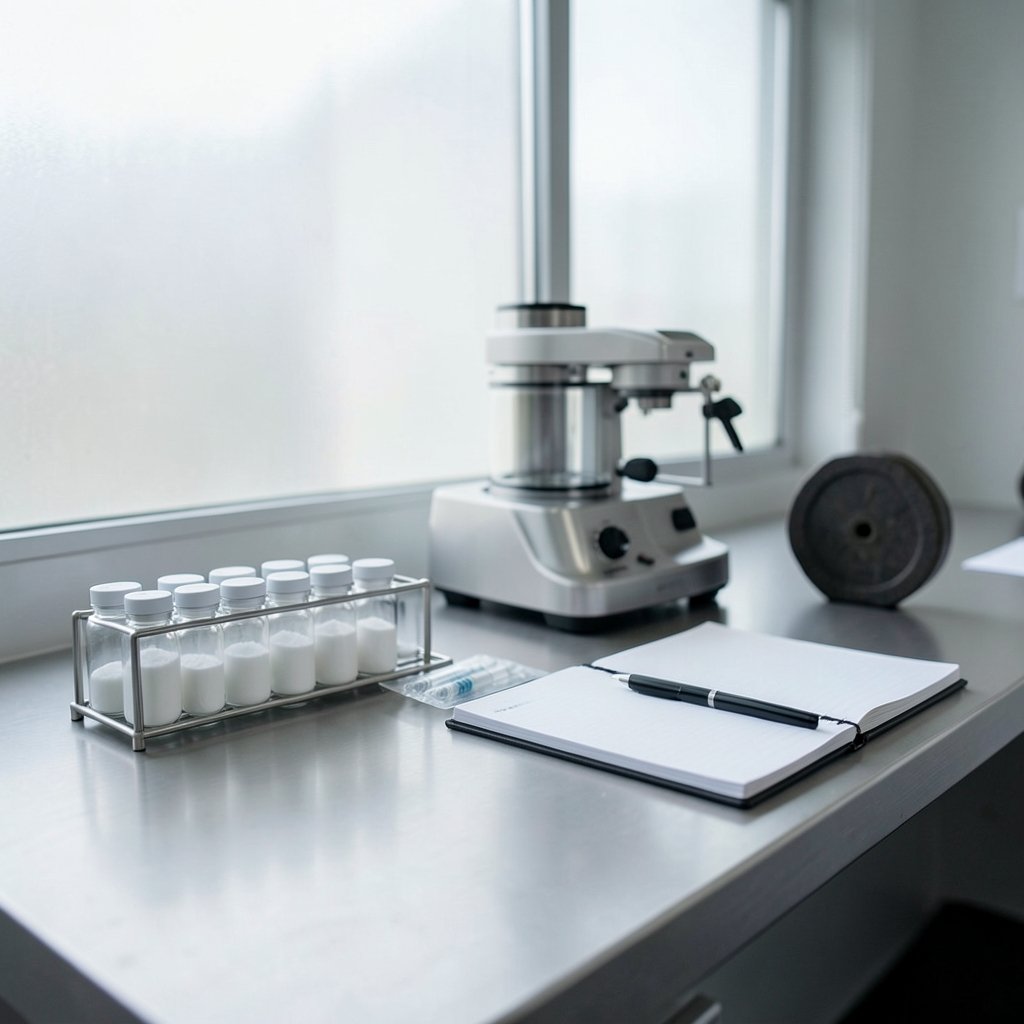
Can a tiny chain of amino acids really build muscle? That is the pitch flooding gym forums, podcast ads, and supplement storefronts. Peptides marketed for muscle growth promise faster recovery, bigger lifts, and a shortcut around years of hard training. The reality is far less dramatic, and far more interesting. (Muscle twitching when its harmless when get it checked)
Here is the honest version: no peptide has been approved as a muscle-building drug anywhere in the United States or the European Union. The compounds most often named in these discussions are growth hormone secretagogues and repair peptides sold online, often without approval for human use. Some have real biology behind them. None have the kind of large human trials that would justify the hype. This article walks through what each compound is, what the research actually measured, where the risks sit, and how to think about the question without getting sold a story.
Why “best peptides for muscle growth” is a marketing question
Search that phrase and you will find ranked lists with confident numbers. Almost none of them cite a head-to-head human trial, because none exists. There is no study that put ipamorelin against CJC-1295 against BPC-157 in trained adults and measured muscle hypertrophy. Any ranking you read is opinion dressed as data.
What does exist is a patchwork of small studies. Most look at growth hormone secretion, body composition in specific patient groups, or recovery markers. That is a very different thing from “builds muscle in healthy lifters.” Keep that gap in mind, because the entire peptide market depends on readers not noticing it.
The peptides people actually mean
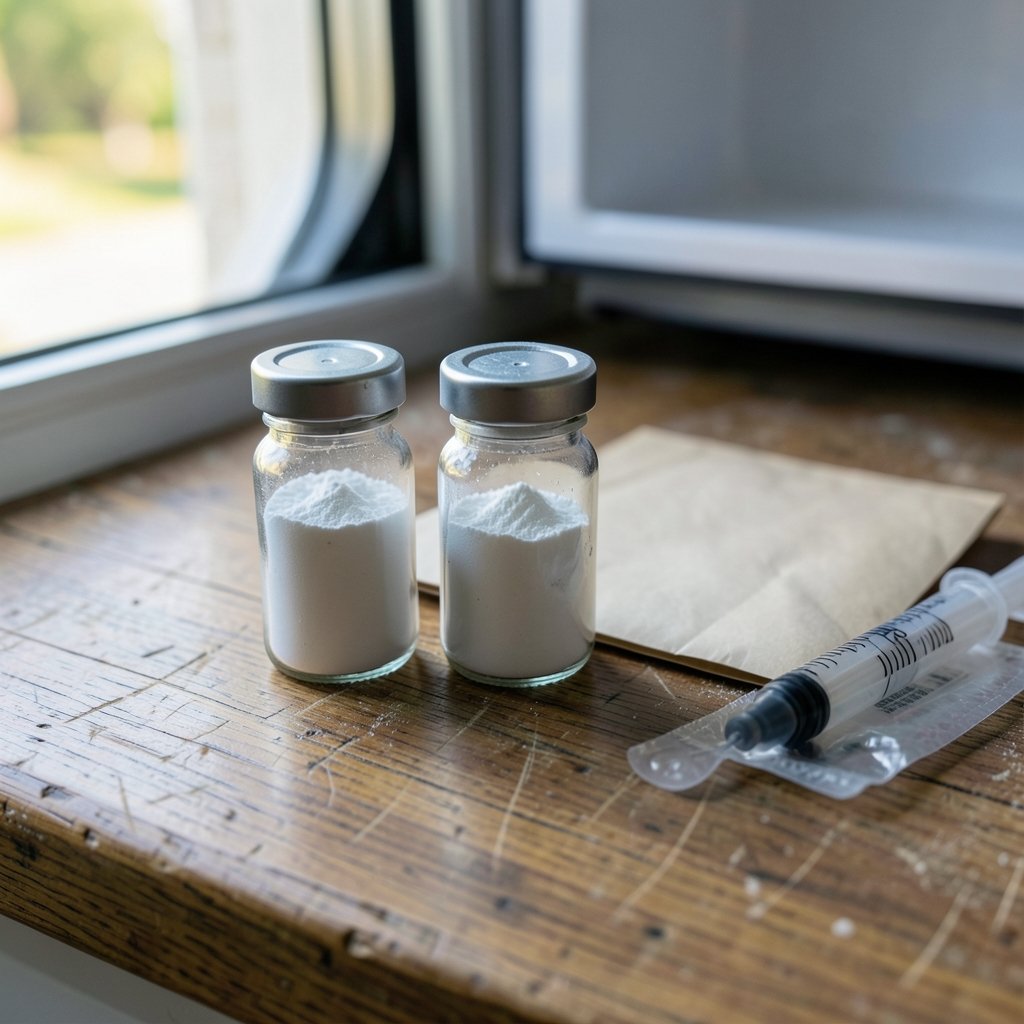
The list is short and repetitive. Nearly every “muscle peptide” article circles the same handful of compounds.
| Peptide | Class | What it is marketed for | Approval status |
|---|---|---|---|
| Ipamorelin | Growth hormone secretagogue | Lean mass, recovery | Not approved for human use |
| CJC-1295 | GHRH analogue | GH release, body composition | Not approved |
| GHRP-2 and GHRP-6 | Growth hormone secretagogues | Appetite, GH release | Not approved |
| Hexarelin | Growth hormone secretagogue | GH release, strength | Not approved |
| Tesamorelin | GHRH analogue | Fat reduction | Approved for HIV-associated lipodystrophy only |
| BPC-157 | Repair peptide | Tendon and gut healing | Not approved for human use |
| TB-500 | Thymosin beta-4 fragment | Recovery, flexibility | Not approved for human use |
Notice the pattern. Exactly one compound on this table has any approved human indication, and that indication is fat reduction in a specific patient population, not muscle growth. Everything else is sold as a research chemical or grey-market vial.
Growth hormone secretagogues: ipamorelin, GHRP-2, GHRP-6, hexarelin
These peptides tell the pituitary to release more growth hormone. Ipamorelin is often described as the “cleanest” because early animal work suggested it released GH without spiking cortisol or prolactin as much as older compounds. GHRP-6 is famous for a different reason: it makes people hungry, which is why it shows up in bulking discussions.
The logic sounds tidy. More growth hormone means more IGF-1, and IGF-1 supports tissue growth. But the leap from “raises GH” to “builds muscle” is where the argument collapses. Growth hormone given directly to healthy adults has been studied for decades, and the results are consistent and unhelpful for bodybuilding claims. It increased lean mass and reduced fat, but it did not increase strength or muscle protein synthesis the way resistance training does. Side effects in those studies included fluid retention and carpal tunnel syndrome.
If injected GH itself does not reliably build strength in healthy adults, a peptide that nudges your own GH output upward for a few hours is unlikely to outperform it. The pharmacokinetics do not support the fantasy.
CJC-1295 and tesamorelin: the GHRH analogues
CJC-1295 extends the half-life of growth hormone-releasing hormone signaling, which is why it is often stacked with a secretagogue in forum protocols. Tesamorelin is the pharmaceutical cousin, and it is the only one here with an FDA approval, granted in 2010 for HIV-associated lipodystrophy. That approval covers reducing visceral fat in a defined patient group. It says nothing about muscle growth in healthy people, and the label does not support bodybuilding use.
This is a useful reality check. Even the most legitimate compound in the category was never studied or approved for the outcome people are chasing.
BPC-157 and TB-500: recovery, not hypertrophy
These two dominate the “healing” side of the market. BPC-157 is a synthetic pentadecapeptide derived from a protein found in gastric juice. TB-500 is a fragment of thymosin beta-4. Both are marketed for tendon, joint, and gut repair, and both are frequently bundled into muscle-growth discussions because better recovery can mean more training volume.
That is a reasonable chain of logic and an unreasonable leap of evidence. Neither compound has FDA approval for any human indication. Both sit on the World Anti-Doping Agency Prohibited List under S0, the category for non-approved substances. In 2023, the FDA sent warning letters to companies selling unapproved peptides, including these two, for human use, citing safety concerns and the absence of approval.
What the human evidence actually shows
Strip away the marketing and the evidence base is thin in a specific, predictable way. Most data come from small studies on GH secretion, body composition, or narrow patient groups such as people with HIV lipodystrophy or healthy older adults. No large randomized trial shows substantial muscle hypertrophy from these peptides in healthy trained adults.
That absence matters more than any single positive finding. In nutrition and training science, the interventions that work tend to accumulate big, replicated trials. Creatine has them. Protein timing has them. Resistance training has decades of them. Peptides have small mechanistic studies and a lot of anecdote.
If you want to compare this with better-established approaches, the same scrutiny applies to topical products. Guides on hair growth serums make the point well: a plausible mechanism is not the same as a proven outcome, and ingredient quality varies wildly between products.
The legal and anti-doping picture
Availability is not legality. In the US, selling unapproved peptides for human use is illegal, and the FDA has acted on that. Similar restrictions apply in the UK and the EU. A vial that arrives in discreet packaging with a “not for human consumption” label is a legal workaround, not a quality signal.
For athletes, the stakes are concrete. GHRPs, GHRH analogues, BPC-157, and TB-500 all fall under WADA’s prohibited categories. A positive test can end a season or a career, and the “I didn’t know” defense has never worked.
Risks worth weighing before anything else
The safety profile of most of these compounds is genuinely unknown in the long term. That is not a scare tactic; it is what happens when a substance skips the trial process. Specific concerns include:
- Injection-site reactions and infection risk from unregulated vials with no sterility guarantee.
- Hormonal side effects from altering GH and IGF-1 signaling, including effects on glucose metabolism.
- Unknown long-term risk from chronically elevated growth factor pathways, which researchers have flagged as a theoretical concern for tumor promotion.
- Product identity risk, since grey-market peptides are frequently mislabeled or underdosed.
Anyone weighing injectable compounds against simpler interventions should also consider how much of the “recovery” conversation is really about basic recovery. Sleep, protein intake, and load management do more than most peptides claim to. The same principle applies to physical therapy topics like the gastrocnemius calf muscle that powers every step: understanding the actual tissue often beats chasing a shortcut.
What actually works for muscle growth
The boring answer keeps winning. Progressive resistance training, adequate protein, sufficient calories, and sleep drive hypertrophy. These are not glamorous, but they have the trials behind them.
For readers who like optimizing, the useful frontier is not peptides. It is getting the fundamentals right and measuring them. Track your lifts. Hit roughly 1.6 to 2.2 grams of protein per kilogram of body weight. Sleep seven to nine hours. Add volume gradually.
If you are drawn to the research side of ingredient claims, apply the same filter you would to any supplement. A solid hair growth serum guide shows how to separate actives with human data from actives with only a mechanism, and the best hair growth ingredients follow the same rules of evidence. Muscle peptides deserve identical skepticism, and they get less of it because the marketing is aimed at people who train hard and want an edge.
Common mistakes people make
The same errors show up again and again in peptide discussions.
- Treating mechanism as proof. “It raises GH” is a mechanism. “It builds muscle” is an outcome. They are not the same claim.
- Trusting a certificate of analysis from the seller. A COA is only as good as the lab behind it, and buyers rarely verify.
- Stacking multiple compounds at once. This makes it impossible to attribute effects or side effects, and it multiplies unknown interactions.
- Ignoring anti-doping status. Recreational athletes sometimes assume the rules do not apply to them until a tested competition appears on the calendar.
- Skipping bloodwork. Anyone altering hormonal signaling without baseline and follow-up labs is flying blind.
- Assuming online reviews equal evidence. Reviews measure enthusiasm and shipping speed, not hypertrophy.
A practical way to think about the category
If someone wants to evaluate a peptide claim, a short checklist helps. Ask what the outcome measure was, who the participants were, how many there were, and whether the study was randomized and controlled. Then ask whether the seller has any incentive for you to skip those questions. The answer is usually yes.
For those working on hair or nail goals alongside training, the same discipline pays off. Guides on natural nail growth and general nail growth emphasize consistency over miracle actives, and the 4c hair growth literature stresses realistic timelines. Biology rewards patience and consistency in every tissue, including muscle.
Conclusion
The best peptides for muscle growth, judged by evidence, are none of them. No peptide is approved to build muscle, the human data are small and indirect, and the most popular compounds are unapproved, prohibited in sport, and sold without sterility guarantees. Growth hormone itself has repeatedly failed to increase strength in healthy adults, which undercuts the entire secretagogue premise.
That does not mean the biology is uninteresting. It means the marketing has outrun the science by a wide margin, and the gap is where people spend money and take risks. The lifters who get bigger are still the ones who train progressively, eat enough protein, sleep, and stay patient. If a peptide ever clears rigorous trials for hypertrophy, the evidence will be loud and easy to find. Until then, treat the ranked lists as advertising.
FAQ
Do any peptides actually build muscle in humans?
No peptide has been approved for muscle growth, and no large randomized trial shows substantial hypertrophy from these compounds in healthy trained adults. Most available data look at growth hormone secretion or body composition in specific patient groups. Growth hormone given directly to healthy adults increased lean mass but did not increase strength, which makes the muscle-building claims for GH-releasing peptides hard to support.
Is tesamorelin approved for bodybuilding?
No. Tesamorelin is approved for HIV-associated lipodystrophy, a fat-reduction indication in a defined patient population. Its approval says nothing about muscle growth or use in healthy people. It is the only compound in the common peptide list with any approved human indication, and that indication is narrow.
Are BPC-157 and TB-500 legal?
Neither is approved for human use in the US, and selling them for that purpose is illegal. Both appear on the WADA Prohibited List under S0, the category for non-approved substances. In 2023 the FDA sent warning letters to companies selling unapproved peptides, including these, citing safety concerns and lack of approval. Online availability does not equal legality or safety.
What are the side effects of growth hormone peptides?
Reported and theoretical risks include injection-site reactions, fluid retention, carpal tunnel symptoms, and effects on glucose metabolism from altered GH and IGF-1 signaling. Long-term safety is not well characterized because these compounds skipped the trial process. Grey-market products add risks around sterility, mislabeling, and dosing accuracy.
Can peptides help with recovery even if they do not build muscle?
That is the more plausible claim for compounds like BPC-157 and TB-500, but it remains unproven in controlled human trials. Better recovery could theoretically support more training volume, yet the evidence for the peptides themselves is thin. Sleep, protein intake, and load management have far stronger support and no anti-doping consequences.
What should someone do instead of buying peptides?
Focus on progressive resistance training, roughly 1.6 to 2.2 grams of protein per kilogram of body weight daily, a modest calorie surplus, and seven to nine hours of sleep. Track lifts to confirm progress. These fundamentals have the trials behind them. Anyone considering injectable compounds should speak with a physician and check anti-doping rules first.














