A silver nose bar is a small, straight piece of jewellery that sits through a piercing with a decorative end on each side, and it is one of the coolest, cleanest ways to wear metal on the face. Silver has a bright, white shine that suits every skin tone, and it costs far less than gold, which means you can own several bars in different styles without spending a fortune. The trade-off is that silver needs more care than gold, because it tarnishes when it meets air, moisture, and skin oils.
The appeal is practical as well as visual. A silver nose bar is light, comfortable, and easy to match with other silver jewellery, from small hoops to a simple chain. The risk is equally clear. A bar made from low-quality silver can tarnish within days, irritate sensitive skin, or bend out of shape, and a bar in the wrong length will press into the skin or catch on everything.
Below are nine silver nose bars worth considering in 2027, from a classic polished bar to oxidised and gem-set options. Each one is described by what it does well, what to watch for, and who it suits best, so you can choose a bar that fits your piercing, your skin, and the way you actually wear jewellery.
Key takeaways
- A silver nose bar is a straight bar with a decorative end on each side, and it suits nostril and bridge piercings best when the length and gauge match the piercing.
- Sterling silver, marked 925, is the best choice for daily wear, while silver-plated bars wear through quickly and are only for short-term use.
- Measure your piercing before buying: a bar that is too short presses into the skin, and a bar that is too long catches and moves too much.
- Silver tarnishes in air and moisture, so it needs regular cleaning, and it should be stored dry when you are not wearing it.
- No nose bar suits a fresh piercing, and no metal makes a poorly fitted bar comfortable, so fit and healing come before finish.
What silver nose bars actually are
A nose bar, sometimes called a barbell for the nose, is a straight post with a ball, gem, or flat disc on each end. One end usually unscrews so the bar can be inserted, and the other stays fixed. The bar passes through the piercing channel, and both ends sit visible on the skin. That two-ended design is what separates a bar from a stud, which shows one end, and from a hoop, which is a closed curve.
Silver nose bars are made in several forms. Sterling silver, marked 925, is 92.5 percent pure silver mixed with other metals for strength, and it is the best choice for a bar worn every day. Fine silver is purer but too soft to hold its shape in a thin bar. Silver-filled bars have a thick layer of silver bonded to a base metal core, which is a reasonable middle ground, while silver-plated bars have a thin coating that wears away within weeks on a piece that is touched and cleaned daily.
The ends of the bar do most of the styling. A plain ball end is the most discreet and the easiest to clean. A small crystal end adds sparkle without much extra weight. A flat disc end sits close to the skin and works well for people who wear glasses or sleep on their side. The bar itself matters too: a smooth, well-polished bar slides through a piercing without dragging, while a rough or poorly finished bar can irritate the channel every time it moves.
How we chose these silver nose bars and what to look for
Look first at the metal. Sterling silver marked 925 is the safest starting point for a bar you plan to wear daily, because it holds its shape and can be polished back to brightness when it tarnishes. Check whether the listing says sterling, silver-filled, or silver-plated, and treat plated bars as short-term wear only. If your skin reacts to jewellery, look for nickel-free sterling silver and ask the seller to confirm the alloy before you buy. Our guide to the best nose hoops for women covers the same silver quality checks, because the metal rules are the same whatever the shape.
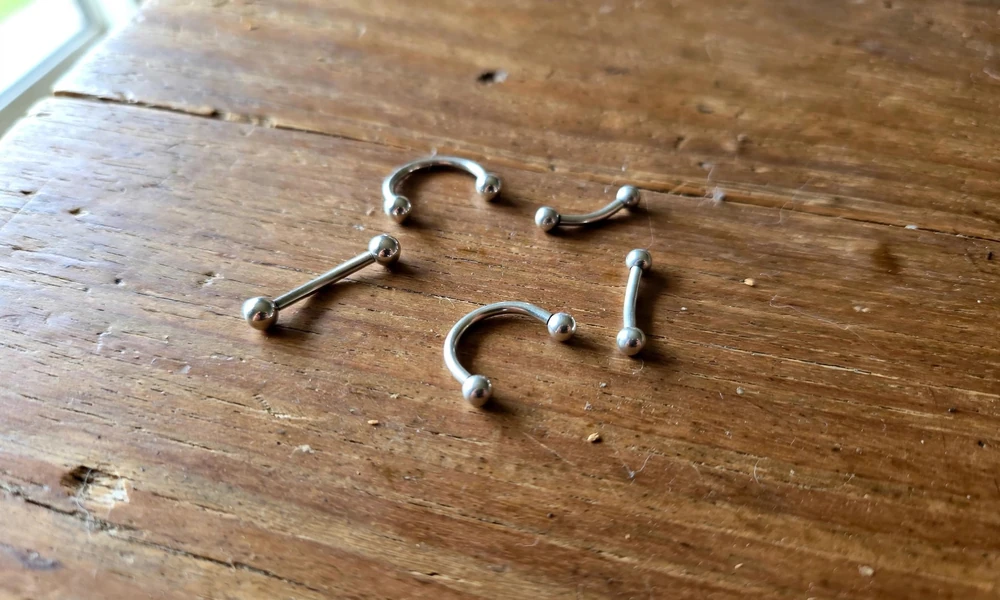
Look next at the fit. Nose bars are sold by gauge and length, and both matter. Most nostril piercings take 18 or 20 gauge, while a bridge piercing usually needs a longer bar in 16 or 14 gauge. Measure the length your piercing needs by checking the bar you already wear, or ask your piercer to measure the channel. A bar 1 to 2 millimetres longer than the channel gives the piercing room to move without pressing.
Finally, look at the ends and the threading. Internally threaded bars, where the end screws into the bar, are smoother to insert than externally threaded bars, where the thread is on the outside of the post. A bar with one fixed end and one removable end is easier to handle than a bar with two removable ends, which can come apart in the piercing.
The 9 best silver nose bars of 2027
The Classic Polished Silver Bar
What we like: A smooth, mirror-polished sterling silver bar with plain ball ends, comfortable to wear all day, easy to clean, and bright enough to suit any outfit.
What to consider: Polished silver tarnishes faster than brushed silver, so it needs wiping every few days, and plain ends can look too simple if you want a statement piece. Best For: Everyday wear and first silver bars. Material: Sterling silver, 925. Price Range: Affordable. Standout Feature: A bright, mirror finish that polishes back to new in seconds.
This is the bar to buy if you want one silver nose bar that does everything. It is the least likely to irritate a healed piercing, the easiest to look after, and the one that pairs with every other piece of silver jewellery you own.
The Silver Bar with a Tiny Crystal End
What we like: A slim silver bar with a small crystal set into one end, which adds a point of light without the cost of a diamond, and reads as fine jewellery rather than body jewellery.
What to consider: The crystal setting needs checking now and then, and the stone can loosen if the bar is dropped. Best For: Dressier days and special occasions. Material: Sterling silver, 925, with a small crystal. Price Range: Mid-range. Standout Feature: A single small crystal that catches light with every turn of the head.
The Brushed Silver Bar
What we like: A matte, brushed finish that softens the look of silver, hides fine scratches and early tarnish, and gives a quiet, modern feel.
What to consider: The brushed finish can wear shiny on the ends over time, and it is less formal than a polished bar. Best For: Minimal and modern looks. Material: Sterling silver, 925, brushed finish. Price Range: Affordable. Standout Feature: A soft matte surface that stays looking new longer than a mirror polish.
The Oxidised Silver Bar
What we like: A darkened, oxidised finish in the recesses of the ends that gives a vintage, handmade look and hides tarnish better than any other finish.
What to consider: The darkening can fade with heavy polishing, so clean it gently, and the look is not for everyone. Best For: Vintage and bohemian styling. Material: Sterling silver, 925, oxidised finish. Price Range: Mid-range. Standout Feature: A dark, aged finish that makes the silver look like an antique.
This is the bar for people who want their jewellery to look worn and storied rather than brand new. Wipe it gently and avoid silver dip, which strips the darkening away.
The Silver Bar with Flat Disc Ends
What we like: Flat disc ends that sit close to the skin, stay out of the way of glasses and bedding, and give a clean, architectural look.
What to consider: Discs show fingerprints and need wiping, and they suit a shorter bar better than a long one. Best For: Glasses wearers and side sleepers. Material: Sterling silver, 925. Price Range: Affordable. Standout Feature: Low-profile discs that never catch on fabric.
The Silver Bar with a Pearl End
What we like: A small freshwater pearl on one end, which softens the cool shine of silver and adds a classic, romantic touch to a modern piercing.
What to consider: Pearls are softer than metal and scratch easily, so handle the bar gently and keep perfume away from the pearl. Best For: Soft, romantic styling and weddings. Material: Sterling silver, 925, with a freshwater pearl. Price Range: Mid-range. Standout Feature: A pearl end that turns a simple bar into something special.
The Slim Silver Bar
What we like: A fine 20-gauge bar with small ends, barely-there on the face, ideal for a subtle first silver bar or for stacking with other piercings.
What to consider: Fine bars bend more easily than thicker ones, so they need gentle handling and are not ideal for a bridge piercing. Best For: Subtle wear and delicate styling. Material: Sterling silver, 925. Price Range: Affordable. Standout Feature: A fine gauge that almost disappears while the silver still shines.
The Silver and Gold Two-Tone Bar
What we like: One silver end and one gold end, which lets you wear both tones at once and mix metals without clashing.
What to consider: Two-tone bars are harder to find in the right length, and the two metals tarnish at different rates. Best For: Mixed-metal wardrobes. Material: Sterling silver, 925, with a solid gold end. Price Range: Higher. Standout Feature: Two tones on one bar, so it works with silver and gold jewellery alike.
A clever solution if your jewellery box is split between gold and silver. This bar bridges both, and it looks intentional rather than mismatched.
The Tiny Silver Bar
What we like: A short, fine bar with small ball ends, the most discreet silver nose bar in this list, ideal for workplaces and for very small piercings.
What to consider: Small ends are fiddly to screw on, and the bar is too short for a bridge piercing. Best For: Discreet wear and small nostril piercings. Material: Sterling silver, 925. Price Range: Affordable. Standout Feature: The smallest, neatest silver bar you can wear every day.
Which silver nose bar is right for you
Start with your piercing. A nostril piercing suits a shorter bar in 18 or 20 gauge, while a bridge piercing needs a longer bar in 16 or 14 gauge. If you are unsure, ask your piercer to measure the channel rather than guessing from a listing. The right length leaves a millimetre or two of movement, and the right gauge fills the channel without stretching it. Our guide to the best diamond nose bars is a useful comparison if you want to see how different lengths and gauges look, since the sizing rules are the same whatever the metal.
Then think about your skin. If your skin reacts to jewellery, sterling silver with a confirmed nickel-free alloy is the safest choice, and silver-filled is a reasonable second. Avoid plated bars for daily wear, because the coating wears through and exposes the base metal underneath.
Finally, match the bar to your routine. If you wear glasses, sleep on your side, or change your jewellery often, flat disc ends or a short polished bar will be the most comfortable. If you want one bar for everything, the classic polished bar is still the best answer, and it is cheap enough to replace if it ever tarnishes beyond polishing.
The caveats that matter
Silver is well tolerated, but a nose bar is still a piece of jewellery that sits through living tissue, and it needs respect. A bar that is too short can press into the skin and cause irritation or embedding, while a bar that is too long moves too much and delays healing. Never put a new bar into a fresh piercing, and never change a bar while the piercing is still healing unless your piercer tells you to. Silver does not make a bad fit safe.
| Detail | What is known |
|---|---|
| Best metal for daily wear | Sterling silver, marked 925, strong enough to hold its shape and polishable |
| Metal to avoid for daily wear | Thin silver plating, which wears through in weeks on a bar worn every day |
| Common gauges | 18 or 20 gauge for nostrils, 16 or 14 gauge for bridge piercings |
| Right length | 1 to 2 millimetres longer than the piercing channel, so it can move slightly |
| Who should check the alloy | Anyone with reactive skin, as nickel in some silver alloys can cause irritation |
| Cleaning | Warm water and mild soap, plus a silver cloth for tarnish; avoid silver dip on oxidised bars |
| When to avoid wearing one | While a piercing is fresh or healing, or while it is swollen or infected |
| What it does not do | Silver does not heal a piercing faster, and it does not fix a bar that fits badly |
If your piercing becomes red, swollen, painful, or starts to discharge, remove the jewellery only if your piercer advises it, and seek professional advice promptly. Do not try to treat an infected piercing with home remedies, and do not force a bar through a piercing that has started to close.
Checklist: buying a silver nose bar honestly
Use these checks before you buy, and again when the bar arrives.
- Check the metal: sterling silver marked 925 is best for daily wear, and the listing should say sterling, silver-filled, or plated clearly.
- Check the gauge and length against your piercing, and ask your piercer to measure if you are unsure.
- Check the alloy: ask whether it is nickel-free if your skin reacts to jewellery.
- Check the threading: internally threaded bars are smoother to insert than externally threaded ones.
- Check the ends: they should be smooth, secure, and easy to grip when you change the bar.
- Check the return policy: a reputable seller will exchange a bar that does not fit, since sizing is easy to get wrong.
Frequently asked questions
Can I wear a silver nose bar every day?
Yes, if it is sterling silver and fits well. A sterling silver bar is made for daily wear, though it will tarnish and need regular wiping. Plated bars are not suitable for daily wear, because the coating wears away and exposes the base metal.
What gauge should I choose for a silver nose bar?
Most nostril piercings take 18 or 20 gauge, and most bridge piercings take 16 or 14 gauge. Match the gauge your piercing was done at, and do not stretch a piercing by forcing in a thicker bar.
Will a silver nose bar tarnish?
Yes, all sterling silver tarnishes in air and moisture. A quick wipe with a silver cloth restores the shine, and storing the bar dry when you are not wearing it slows tarnish.
Can I wear a silver nose bar in a fresh piercing?
No. A fresh piercing needs the jewellery your piercer fitted, and changing it early can cause irritation, infection, or closure. Wait until the piercing is fully healed before switching to a silver bar.
How do I clean a silver nose bar?
Warm water and mild soap are enough for most bars, followed by a silver cloth for tarnish.
Is sterling silver safe for sensitive skin?
Usually yes, if the alloy is nickel-free. Most people who react to cheap jewellery react to the nickel in the base metal, not to the silver itself. Ask the seller to confirm the alloy, and patch-test by wearing the bar for a day. Our guide on how to wear a nose bar also covers first-week care, which matters just as much as the metal.
The bottom line
The best silver nose bar in 2027 is a sterling silver bar marked 925, in the right gauge and length for your piercing, with ends that suit your life. A polished bar is the safest all-rounder, a crystal or pearl end is worth it for occasions, and a flat disc end is the most comfortable if you wear glasses or sleep on your side. Sterling silver costs less than gold, so you can afford to own more than one.
Measure first, choose sterling silver, and keep a silver cloth nearby, because tarnish is the one thing silver asks of you. A well-fitted silver nose bar is easy to forget you are wearing.