

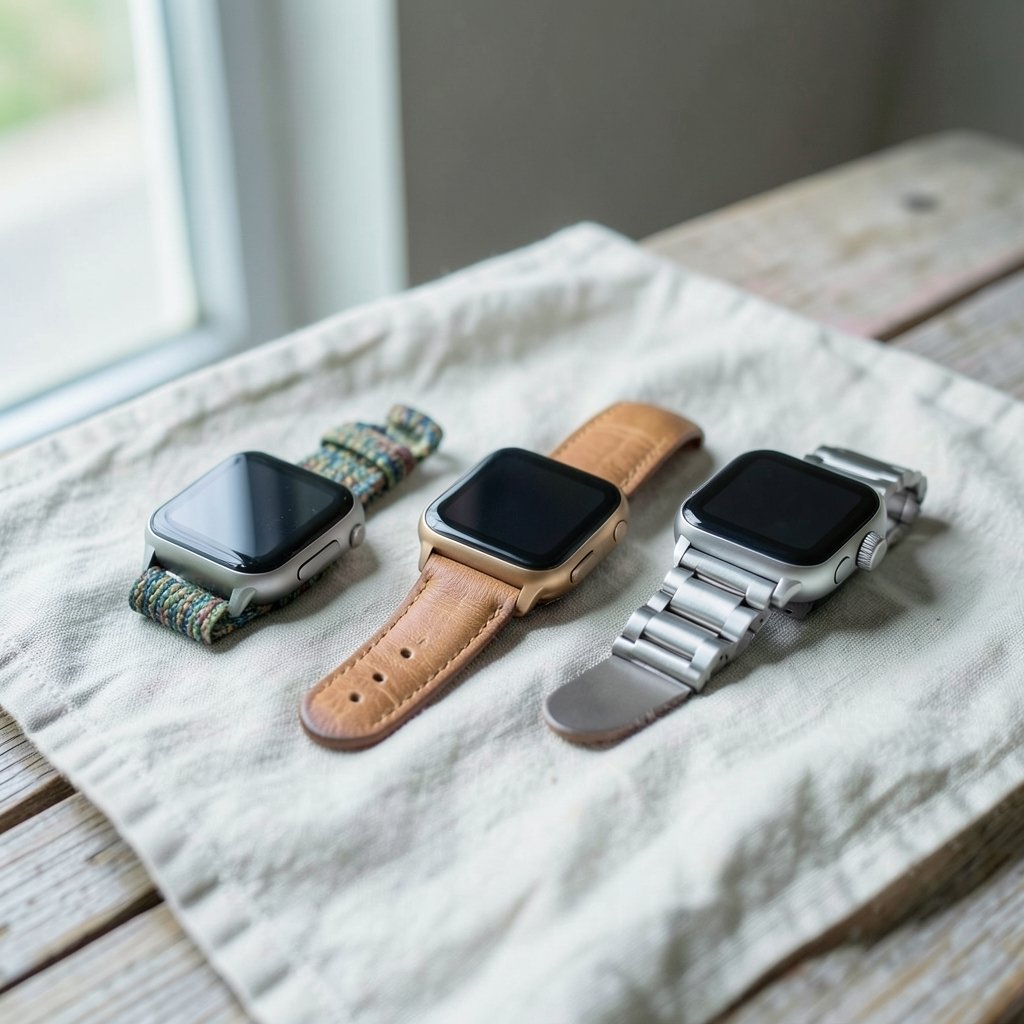
What if the most useful gadget you own this year is the one strapped to your wrist? Smartwatches have quietly become health devices, safety tools, and phone extensions all at once. They count steps, flag irregular heart rhythms, track sleep, and let you answer a text without fishing a phone out of a pocket. The catch: the shelves are crowded, and the wrong pick can feel like a tiny computer you resent charging.
This shortlist cuts through the noise. Each entry names who it suits, what it does well, and the one thing that might annoy you. Prices appear only where a current review states them, so treat any figure as a starting point and confirm on the official product page before buying.
The Shortlist at a Glance
| Watch | Best for | Standout strength | Main trade-off |
|---|---|---|---|
| Apple Watch Series 12 | iPhone owners who want it all | Fast charging, improved sensors | Thicker display bezels |
| Apple Watch SE 3 | Budget iPhone buyers | Same processor as Series 11, two-day battery | No ECG, blood oxygen, or hypertension sensors |
| Apple Watch Ultra 4 | Rugged iPhone users | Dive and mountain features | Size and price |
| Google Pixel Watch 5 | Android fans who want style | Bright curved AMOLED, Gemini help | Some health features not live in every market |
| Samsung Galaxy Watch 9 | Galaxy phone owners | Slim design, full Wear OS app access | Best experience locked to Samsung phones |
| Samsung Galaxy Watch 8 | Affordable Samsung option | Lower price, familiar features | Fewer upgrades than the Watch 9 |
| Samsung Galaxy Watch Ultra 2 | Rugged Android users | Tough build for outdoor use | Bulk on smaller wrists |
| Garmin Fenix 9 Pro | Serious athletes | Training depth and endurance | Smart features feel secondary |
| Withings ScanWatch Nova | Watch lovers who hate charging | Hybrid analog look, 30-day battery | Some metrics need a subscription |
| Huawei Watch Fit 5 Pro | Tight budgets | Low price, strong display | Limited app selection |
Apple Watch Series 12: The Default Choice for iPhone Owners

If someone owns an iPhone and wants one watch that handles everything, this is the safest recommendation. Reviewers note that the Series 12 keeps the same battery life as the Series 11 but adds improved sensors, better step tracking, and very fast charging. That charging speed matters more than spec sheets suggest: a short top-up while getting dressed covers a full day.
The limitation is cosmetic but real. Testers flag thicker display bezels compared with earlier models, which makes the screen look slightly less edge-to-edge. It is not a dealbreaker, just a visible step sideways in design.
Who should skip it? Anyone on Android, and anyone who cannot stomach a daily charge. The Series 11 remains an excellent buy even a year on, since the battery life is identical. If you are weighing a watch against other big purchases, the same discipline that helps with a smart thermostat that actually saves energy and money applies here: pay for the features you will use weekly, not the ones that impress on day one.
Apple Watch SE 3: The Sensible Budget Apple Pick
The SE line exists to answer one question: do you need the flagship health sensors or just a great watch? The SE 3 delivers a sharp always-on display, the same processor as the Series 11, nearly two days of battery life, 5G support, and gesture controls, all at the same price as its predecessor.
The trade-offs are specific. It lacks sensors for blood oxygen, ECG, and hypertension detection, and there is no QWERTY keyboard for typing replies. For a runner who wants notifications and music, none of that matters. For someone buying a watch specifically to monitor heart health, it does.
Practical tip: if you are upgrading from an older SE, check whether your current band fits before ordering a new one. Apple has kept band compatibility stable across generations, and a spare band is one less cost.
Apple Watch Ultra 4: Built for Rough Terrain
The Ultra line is the top of Apple’s lineup, often described as one of the best rugged smartwatches on the market alongside only the toughest Garmin models. The Ultra 3, its predecessor, earned smartwatch of the year honors for balancing elite dive and mountain features with the best app selection in the business, powered by the S11 chip for faster on-device processing.
Who it suits: divers, hikers, and anyone whose watch regularly meets rock. Who should skip it: people with small wrists, light activity, or a strong preference for a slim profile. The Ultra is a statement piece, and it wears like one.
Google Pixel Watch 5: The Best-Looking Android Watch
The Pixel Watch 5 is the pick for Android users who care how a watch looks. Its Actua 360 AMOLED LTPO display hits up to 3,000 nits of adaptive brightness, and the curved display with domed glass gives it a silhouette no other watch matches. Reviewers note it is fully serviceable if durability worries you.
Gemini integration is the practical hook. The watch can surface flight information on your wrist on the way to the airport or pull up a restaurant’s phone number mid-conversation. Gesture controls are well integrated, satellite connectivity lets you call for help outside cell range, and Wear OS now offers almost as many third-party apps as Apple’s platform.
One honest caveat: several headline health features Google promoted ahead of launch were not yet live in the UK at review time, marked as coming soon. Battery life is a genuine improvement, though. The 45mm model runs around 45 to 50 hours per charge, enough to wear overnight and top up in the morning.
Samsung Galaxy Watch 9: The Android All-Rounder
For anyone with a Galaxy phone, the Watch 9 is the natural first choice. It pairs a slim, lightweight build with Wear OS, Google Play apps, Google Wallet, maps, music controls, and Samsung Health in a watch designed for continuous all-day wear. The Snapdragon Wear Elite platform, 2GB of RAM, 32GB of storage, dual-frequency GPS, and a sensor suite covering heart rate, ECG, bioelectrical impedance, SpO2, skin temperature, and more make it a full-featured package.
The limitation is phone lock-in. It works best with a Samsung phone, and some of the best integration weakens on other Android devices. If you switch phones often, that is worth knowing before you commit.
Samsung Galaxy Watch 8: The Value Samsung Option
The Galaxy Watch 8 earns its place as the best affordable Samsung watch in current testing. It keeps the familiar Galaxy Watch experience at a lower price, which makes it the smart pick for someone who wants Samsung health tracking and contactless payments without paying flagship money.
The trade-off is straightforward: fewer upgrades than the Watch 9. If you find a deal on the Watch 8, the gap is mostly about refinement, not missing core functions. This is the same logic that makes Labor Day makeup sales worth shopping smart rather than impulse-buying: the previous generation is often the real bargain.
Samsung Galaxy Watch Ultra 2: Android’s Tough Guy
The Galaxy Watch Ultra 2 is the rugged Android answer to Apple’s Ultra. It is named the best rugged smartwatch in current roundups, built for people who treat trails, water, and weather as normal conditions rather than exceptions.
The limitation is size. Rugged watches are chunky by design, and on a smaller wrist the Ultra 2 can feel like wearing a hockey puck. Try one on before ordering if you can, or check the case dimensions carefully against your current watch.
Garmin Fenix 9 Pro: Training Comes Before Tracking
The Fenix 9 Pro is the pick for serious athletes, named the best option for that group in current testing. Garmin’s strength is depth: training metrics, endurance tracking, and battery life that outlasts most smartwatches by a wide margin.
The trade-off is that smart features come second. App ecosystems, voice assistants, and phone-free messaging are not the point here. If you want a wrist coach that happens to show notifications, this is your watch. If you want a phone on your wrist that happens to count steps, look elsewhere.
Withings ScanWatch Nova: The Hybrid That Looks Like a Watch
Some people want health tracking without a glowing rectangle on their wrist. The ScanWatch Nova is the best hybrid smartwatch in current testing: analog hands that adapt to a digital display, 30-day battery life, and support for both Android and iOS. It looks like a luxury watch with the included metal band, yet tracks activities when you switch to the included silicone strap.
Two limitations matter. Some advanced metrics require a subscription, and third-party app support is limited. If you live in Apple Health or Google Fit, check compatibility before buying.
Huawei Watch Fit 5 Pro: The Budget Standout
The Watch Fit 5 Pro is named the best budget smartwatch in current roundups. Earlier models in the Fit line punched well above their price class, pairing bright AMOLED displays with dual-band GPS that tested close to far more expensive watches for accuracy.
The catch is app selection. Expect a smaller app library and fewer integrations than Wear OS or Apple’s platform. For step counting, workouts, notifications, and basic health tracking, it covers the essentials at a fraction of flagship prices.
How to Choose Without Overthinking It
Start with your phone, not the watch. The single biggest factor in daily satisfaction is how well the watch talks to the device in your pocket. An iPhone pairs best with Apple Watch; a Galaxy phone pairs best with Galaxy Watch; other Android phones work well with Pixel Watch and Wear OS devices.
Then rank what you actually need:
- Health sensors: ECG, blood oxygen, and hypertension detection are flagship features. Budget models cut them first.
- Battery habits: two days is comfortable, 30 days is freedom, and one day is fine only if fast charging is genuinely fast.
- Size and weight: a heavy watch gets left in a drawer. Try before you buy.
- App needs: if you rely on specific apps, confirm they exist on your platform.
- Ruggedness: divers and hikers should pay for durability; desk workers should not.
One common mistake: buying for the features on the box rather than the ones you will use on a Tuesday. Another: ignoring subscription costs that arrive after purchase. A third: assuming a newer model is always better. The Series 11 is still an excellent buy because the battery life did not change, and the Watch 8 remains a smart buy next to the Watch 9.
If you enjoy pairing purchases with good background research, the same approach that helps you choose documentaries worth watching on Netflix works for wearables: read two or three independent tests, check the limitations section, and ignore the marketing.
Conclusion
The best smartwatch is the one that matches your phone, your wrist, and your week. iPhone owners are best served by the Apple Watch Series 12, with the SE 3 as the value pick and the Ultra 4 for rough conditions. Android users should start with the Pixel Watch 5 for style and Gemini help, or the Galaxy Watch 9 if they own a Samsung phone, with the Watch 8 as the budget route and the Ultra 2 for toughness. Athletes should look at the Garmin Fenix 9 Pro, traditionalists at the Withings ScanWatch Nova, and tight budgets at the Huawei Watch Fit 5 Pro.
Pick one, confirm the current price on the official page, and give yourself a week to adjust. The first few days of charging and notification tuning are the hardest part. After that, most people stop thinking about their watch and start relying on it.
Frequently Asked Questions
Which smartwatch is best for most people?
For iPhone owners, the Apple Watch Series 12 is the safest all-round pick thanks to improved sensors, better step tracking, and very fast charging. For Android users, the choice depends on the phone: Galaxy Watch 9 for Samsung owners, Pixel Watch 5 for everyone else.
Is the Apple Watch SE 3 worth it over the Series 12?
Yes, if you do not need advanced health sensors. The SE 3 has the same processor as the Series 11, an always-on display, 5G, and nearly two days of battery life. It lacks ECG, blood oxygen, and hypertension sensors, plus the QWERTY keyboard.
Do I need a subscription to use a smartwatch fully?
Not usually, but some models gate advanced metrics behind one. The Withings ScanWatch Nova, for example, requires a subscription for some advanced metrics. Check the manufacturer’s feature list before buying if deep health data matters to you.
How long does a smartwatch battery really last?
It varies enormously. The Pixel Watch 5’s 45mm model runs around 45 to 50 hours per charge, the Apple Watch SE 3 lasts nearly two days, and the Withings ScanWatch Nova claims 30 days thanks to its hybrid design. Rugged and fitness-focused watches generally last longest.
Can I use an Android smartwatch with an iPhone?
Technically sometimes, but the experience is compromised. The Pixel Watch 5 works with iPhones but is best suited to Android users. Samsung’s watches are designed around Galaxy phones. Pairing across ecosystems usually costs you features and app support.
Are rugged smartwatches worth the extra size and cost?
Only if your activities demand it. The Apple Watch Ultra 4 and Samsung Galaxy Watch Ultra 2 are built for diving, hiking, and rough handling. If your watch mostly sees a desk, a standard model will feel lighter, look sleeker, and cost less.











