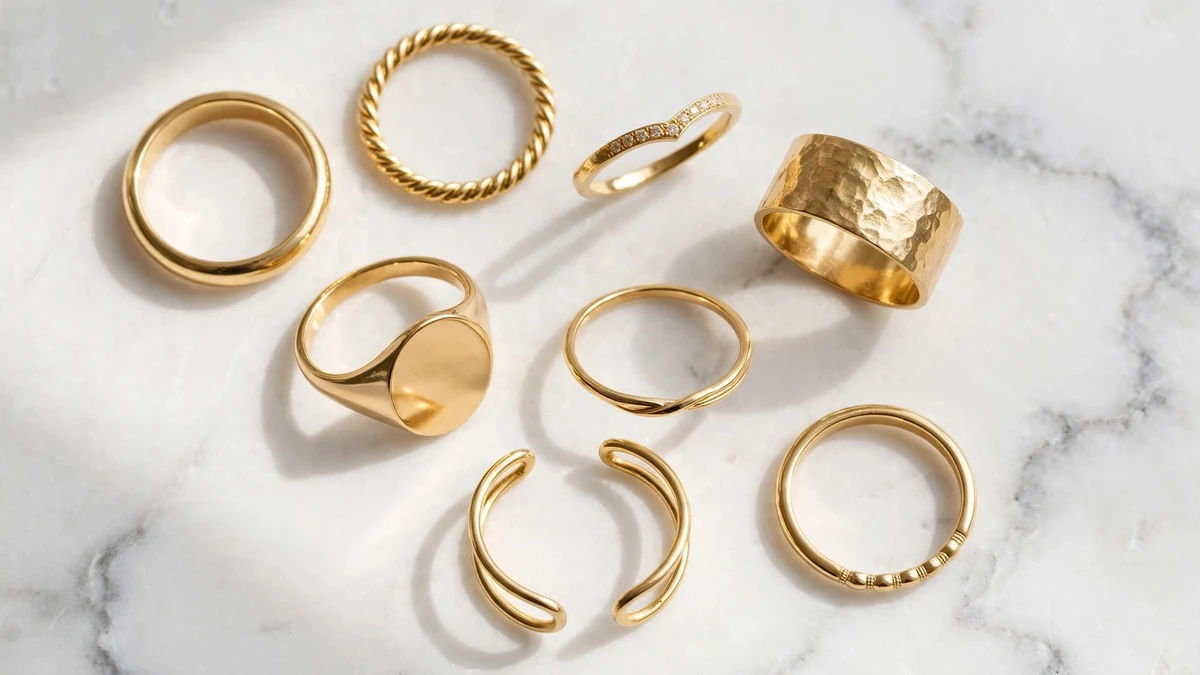

Yellow gold rings have never really gone away, but in 2027 they are firmly back at the centre of jewellery. Warm, unmistakably classic and flattering on most skin tones, yellow gold suits everything from a slim everyday band to a bold cocktail ring. The problem is not finding a yellow gold ring. It is finding one made well enough to wear every day, in a karat that matches your life, at a price that reflects the gold rather than the name on the box.
That is why this guide is organised by karat, setting and wearability, not just by popularity. An 18-karat ring is richer in colour and softer than a 14-karat one, which makes it feel luxurious but also easier to scratch. A slim band in 10-karat gold is tough and affordable, but the colour is paler and the alloy content is higher. Price is a poor guide on its own. Some of the best-made rings are mid-priced, and some of the most expensive are the hardest to live with.
Below are nine yellow gold rings worth considering in 2027, from a classic solitaire to everyday stacking bands. Each one is described by what it is good at, what to watch for, and who it suits best, so you can choose with your hand and your habits in mind, not just a bestseller list.
Key takeaways
- Yellow gold is an alloy, not pure gold: 18k is 75 percent gold, 14k is 58.3 percent, and 10k is 41.7 percent, and the karat decides both colour and hardness.
- Higher karat means richer colour and a softer metal, so 18k suits occasional wear and 14k suits daily wear better.
- Bezel and halo settings protect centre stones far better than tall prongs on a soft gold band.
- Check the hallmark inside the band, and ask whether the price is based on the current gold price or a fixed brand price.
- Yellow gold is not an investment, it scratches and can bend, and a ring that is too soft for your work will need reshaping sooner than you expect.
What yellow gold actually is
Yellow gold is gold mixed with other metals, usually copper and silver, to make it hard enough to wear. Pure gold, at 24 karat, is too soft for a ring. The alloys give yellow gold its warm colour and its strength, and the proportions decide how the ring behaves. An 18-karat ring is 75 percent pure gold, so the colour is deep and rich, but the metal is soft enough to scratch with a key. A 14-karat ring is 58.3 percent gold, so it is noticeably harder, paler, and better suited to a ring you never take off.
Colour also changes with the alloy mix. More copper makes a rosier gold, more silver makes a paler one, and two rings both stamped 14k can look quite different side by side. That is why it is worth seeing a ring in daylight before buying, and why a ring that looks rich in a shop window can look washed out next to your other jewellery at home.
Yellow gold has one practical advantage over white gold: it never needs rhodium plating. White gold is coated to look bright white, and that coating wears away and needs redoing. Yellow gold keeps its colour for life, though it will develop fine surface scratches with wear, which a jeweller can polish out during a routine clean. That permanence is part of its appeal, and a large reason it keeps coming back into fashion.
How we chose these rings and what to look for
Look first at the karat and the weight of the band. A band that feels feather-light is often hollow or very thin, and thin gold bends. A solid band with a little weight to it will hold its shape for years. For a ring you plan to wear daily, 14-karat gold is usually the sensible middle ground, hard enough to resist dents, rich enough in colour to read as gold.
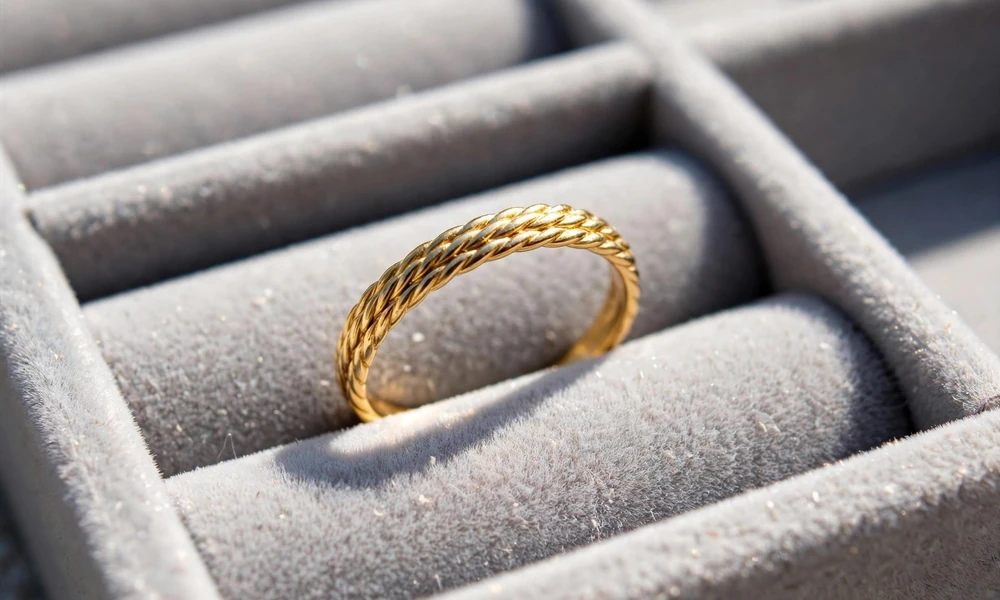
Look next at the setting. A bezel setting wraps the stone in gold and protects its edges, which matters on a soft metal. A halo setting surrounds the centre stone with small diamonds and hides wear well. Tall prongs look elegant but catch on fabric and can bend on a soft gold band, so they need checking every year. Our guide to gold jewellery for everyday wear explains how to judge a piece you plan to live in, because a ring that is beautiful in the box is not always a ring you can wear every day.
Finally, look at the hallmark and the price. Every genuine gold ring should be stamped with its karat, such as 14k or 750 for 18k. If there is no stamp, walk away. Gold is priced by weight and karat against a daily market price, so a ring that costs far more than its gold weight suggests is charging you for the brand, which is fine if you know that, and a trap if you do not.
The 9 best yellow gold rings of 2027
Tiffany & Co. Yellow Gold Solitaire
What we like: A classic six-prong solitaire in 18-karat yellow gold, cleanly finished, with a diamond that sits high enough to catch light from every angle.
What to consider: Premium price, and the tall prongs need an annual check on a soft 18k band. Metal: 18k yellow gold. Setting: Six-prong solitaire. Best for: Engagements and milestone gifts. Price range: £3,000 to £12,000 depending on the stone.
This is the ring other solitaires are measured against. It is not the toughest daily ring, and it is not cheap, but for a classic engagement ring in rich yellow gold, it remains a strong first choice.
Cartier Love Ring in Yellow Gold
What we like: A smooth, screw-motif band in 18-karat yellow gold, instantly recognisable, comfortable to wear, and equally at home alone or stacked.
What to consider: The plain band shows fine scratches quickly, and sizing is limited once engraved. Metal: 18k yellow gold. Setting: Plain band with screw detail. Best for: Anniversaries and everyday luxury. Price range: £1,800 to £3,500.
A quiet icon. It does not shout, which is the point, and the warm gold suits skin tones that find white gold too stark.
David Yurman Cable Ring in Yellow Gold
What we like: A twisted cable band in 18-karat yellow gold with a gemstone top, hand-finished, with a weight that feels substantial rather than hollow.
What to consider: The cable texture traps hand cream and needs a soft brush to clean. Metal: 18k yellow gold. Setting: Cable band with bezel-set stone. Best for: Statement everyday wear. Price range: £900 to £2,500.
The cable design is Yurman’s signature for a reason. It catches light along the twists and reads as jewellery from across a room, not just up close.
Mejuri Yellow Gold Bezel Ring
What we like: A simple bezel-set ring in 14-karat yellow gold, fairly priced, with a low profile that does not catch on sleeves or pockets.
What to consider: The stone is small, so it is a quiet ring rather than a showpiece. Metal: 14k yellow gold. Setting: Bezel. Best for: Daily wear and first fine rings. Price range: £250 to £600.
A practical, well-made entry into fine yellow gold. The 14-karat band is hard enough for daily wear, and the bezel keeps the stone safe.
Monica Vinader Yellow Gold Signet Ring
What we like: A polished signet in 18-karat gold vermeil over sterling silver, with an engravable face, at a price that makes trying the style easy.
What to consider: Vermeil is a gold layer over silver, not solid gold, so it will wear with heavy daily use. Metal: 18k gold vermeil. Setting: Plain signet. Best for: Trying the signet trend. Price range: £120 to £250.
Signets are back, and this is a low-risk way to wear one. Treat it as a fashion piece rather than a forever ring and it will serve you well.
Missoma Yellow Gold Stacking Ring
What we like: A slim 14-karat gold vermeil band designed for stacking, lightweight, and easy to mix with other metals and stones.
What to consider: Vermeil wears faster than solid gold, so rotate it rather than wearing it every day. Metal: 14k gold vermeil. Setting: Plain slim band. Best for: Stacking and layering. Price range: £90 to £180.
Stacking rings work best when they are slim and simple, and this one is both. Buy two or three and mix them with silver or stone bands.
Maria Black Yellow Gold Sculptural Ring
What we like: An organic, sculptural form in 14-karat yellow gold, handmade in feel, with a shape that looks different from every angle.
What to consider: The irregular shape can feel unusual at first, and it is not a ring for pairing with a wedding band. Metal: 14k yellow gold. Setting: Sculptural band. Best for: Art-led jewellery lovers. Price range: £300 to £700.
If you want a ring that starts conversations, this is it. The sculptural form suits people who buy jewellery as design, not just as decoration.
Astrid & Miyu Yellow Gold Halo Ring
What we like: A halo-set ring in 14-karat yellow gold with a central stone ringed by small pavé stones, giving the look of a much larger stone.
What to consider: Pavé stones need checking, as a loose one can be lost unnoticed. Metal: 14k yellow gold. Setting: Halo with pavé. Best for: Dressy occasions and gifts. Price range: £200 to £500.
Halos are a clever way to get presence without a large centre stone. The warm gold makes the pavé sparkle read softer than it would in white gold.
Thomas Sabo Yellow Gold Charm Ring
What we like: A playful charm ring in 18-karat gold-plated silver, affordable, with a detailed motif that suits casual and festival wear.
What to consider: Gold plating is thin and will fade with daily wear, so treat it as a seasonal piece. Metal: 18k gold-plated silver. Setting: Charm motif. Best for: Casual and fun styling. Price range: £80 to £200.
A fun, low-cost way to wear yellow gold tones. Enjoy it for what it is, a fashion ring, and it will not disappoint.
Which yellow gold ring is right for you
Daily wear calls for 14-karat gold and a low profile. A bezel-set ring or a plain band will survive desks, gym bags and handwashing far better than a tall prong setting in soft 18-karat gold. If you work with your hands, choose a thicker band and skip pavé, which is the first thing to suffer when a ring is knocked.
For engagements and milestones, 18-karat gold is the richer choice, and the colour is noticeably warmer in daylight. A solitaire or halo in 18k is a classic for a reason, but budget for an annual check, because prongs bend and stones loosen on soft gold. Our guide to the best engagement rings is a useful frame here, because the setting matters as much as the stone, and a ring that suits a proposal may not suit a daily commute.
Skin tone matters too, though less than people think. Yellow gold flatters warm and olive skin tones most obviously, but it also warms up pale skin in a way white gold does not. Try a ring on in daylight, next to the jewellery you already wear, and trust your eye over any rule about undertones. A ring you love looking at is a ring you will actually wear.
The caveats that matter
Yellow gold is durable, but it is not indestructible. It scratches, it can bend if it is thin, and it will lose its polish with wear. That is normal, and a jeweller can restore the finish during a routine clean. What is not normal is a ring that goes out of round in a month, which usually means the band was too thin for the karat.
| Detail | What is known |
|---|---|
| Best karat for daily wear | 14k, harder and more scratch-resistant than 18k |
| Best karat for rich colour | 18k, 75 percent gold, deeper and warmer in tone |
| What to check before buying | Hallmark inside the band, band thickness, and whether the price tracks the gold price |
| Who should avoid soft gold | People who work with their hands, lift weights, or rarely remove a ring |
| Allergy note | Some 14k alloys contain nickel, so ask if you have a nickel sensitivity |
| Cleaning | Warm soapy water and a soft brush, then dry fully before storing |
| When to see a jeweller | Once a year for prong checks, or sooner if the ring bends or a stone moves |
| What it does not do | It is not an investment, and its resale value is the gold weight, not the retail price |
If you have a nickel allergy, ask about the alloy before buying, especially at 14k and below, where nickel is sometimes used to harden the gold. A jeweller who cannot tell you the alloy mix is not a jeweller to buy from.
Checklist: choosing a yellow gold ring honestly
Use these checks before you buy, and again after a month of wear.
- Check the karat: 14k for daily wear, 18k for richer colour and occasional wear.
- Check the hallmark: it should be stamped inside the band, such as 14k or 750.
- Check the weight: a solid band should feel substantial, not hollow or feather-light.
- Check the setting: bezel or halo protects stones better than tall prongs on soft gold.
- Check the fit: it should slide on with slight resistance and not spin freely on your finger.
- Check the price: compare the gold weight and karat against the current gold price before paying a brand premium.
Frequently asked questions
Is 14k or 18k yellow gold better?
Neither is better in absolute terms. 14k is harder, paler and better for daily wear, while 18k is richer in colour, softer and better for rings worn on special occasions. Choose by how often you will wear the ring.
Does yellow gold tarnish?
Yellow gold does not tarnish the way silver does, but it does scratch and lose its polish with wear. A professional polish restores the shine, and regular cleaning with warm soapy water keeps it looking bright.
Can I wear yellow gold every day?
Yes, especially in 14k with a bezel setting or plain band. Remove it for heavy work, the gym and cleaning with harsh chemicals, and have the prongs checked once a year.
Is yellow gold a good investment?
No, not as jewellery. Its resale value is based on the weight and purity of the gold, which is far less than the retail price. Buy a ring because you love wearing it, not because you expect it to hold its price.
Does yellow gold suit all skin tones?
It flatters warm and olive tones most obviously, but it suits most skin tones in daylight. Try it on next to your existing jewellery rather than relying on undertone rules, and trust what you see.
How do I know my yellow gold ring is real?
Check for a hallmark inside the band, buy from a reputable jeweller, and ask for a certificate for higher-value pieces. If you are unsure, a jeweller can test the metal quickly. A guide to buying diamonds, such as our diamond buying guide, explains the same habit of verifying before you pay.
The bottom line
The best yellow gold ring in 2027 is not the most expensive or the highest karat. It is the one in the right karat for your life, with a setting that protects its stone, and a band thick enough to hold its shape. For daily wear, that usually means 14-karat gold and a bezel or plain band. For a milestone, 18-karat gold and a classic solitaire or halo is hard to beat.
Choose one ring, check the hallmark, wear it for a month, and judge it on how it feels and looks in daylight, not on how it looked in the shop. That is the honest way to buy yellow gold, without paying a brand premium for a ring that does not suit your hand.