

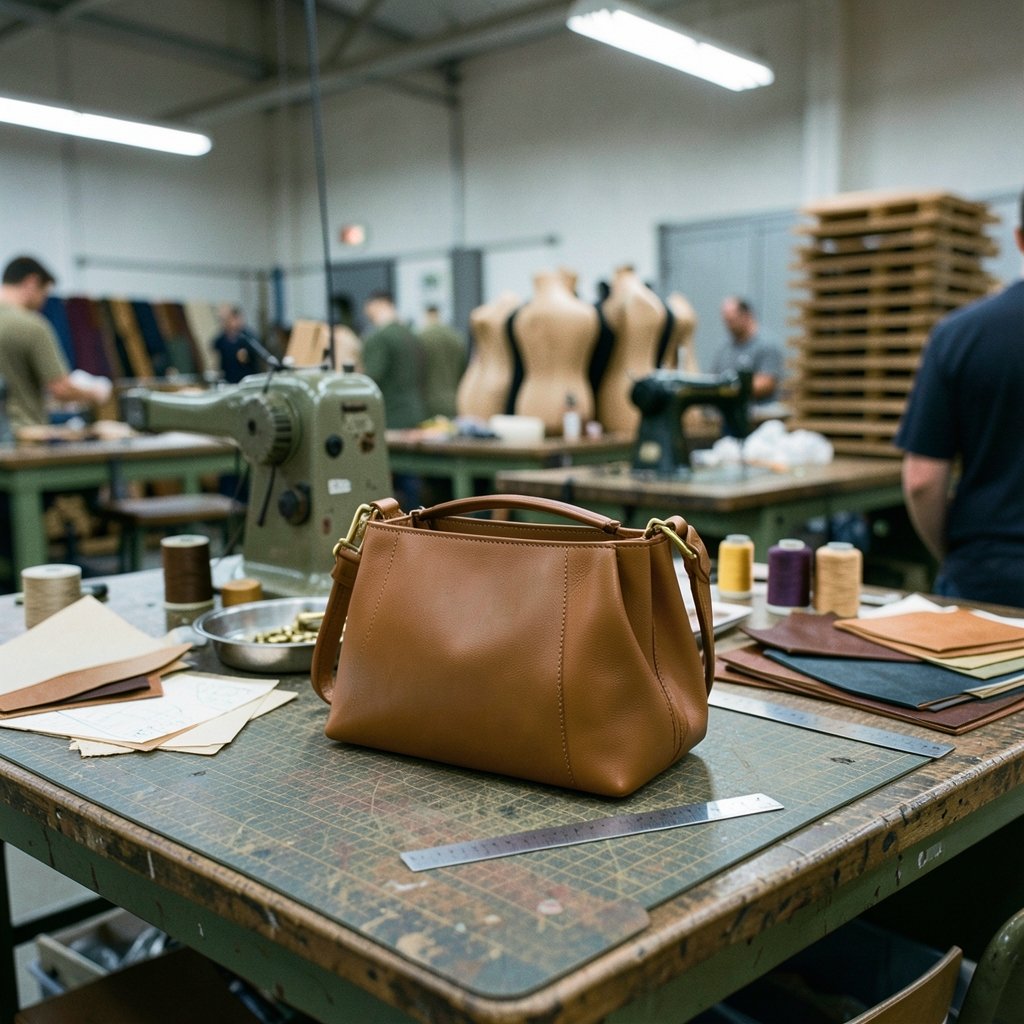
What separates a bag collection that sells out from one that sits in a warehouse? The sketches rarely explain it. The deciding work sits in the unglamorous middle, between a mood board and a manufacturing contract. Handbag design is a creative pursuit and a business; designers who succeed treat it that way from day one. (Luxury Home Remodel: Custom Design and Build Services)
Ann Saunders, a handbag and accessories designer who taught at London College of Fashion, built a 416-page guide around exactly this problem. Her book, Design, Manufacture and Sell Your Bag Collection, walks through the whole process from initial concepts through sampling, manufacturing, marketing, and retail. The table of contents alone reads like a roadmap: knowing your customer, designing your bag, the critical path, materials, hardware, bag construction, planning your range, sampling, manufacturing, branding, marketing, business planning, and sustaining your business.
That structure is worth borrowing. Below is how to build a designer bag collection from scratch, in the order the work actually happens.
Start With the Customer, Not the Sketch
Most beginners begin with a shape they love. That is backwards. Before a single line is drawn, a designer needs to know who is carrying the bag, where they take it, and what they currently use instead.
Saunders places “Knowing Your Customer” early in the process, right after researching the brief. There is a practical reason. A commuter who needs a laptop sleeve and a person shopping for an evening clutch are not the same buyer, and the materials, hardware, and price point diverge completely. Get this wrong and every later decision inherits the mistake.
A useful exercise for newcomers: write a one-page profile of the person you are designing for. Include their budget, their daily routine, and the bag they already own that almost works. If you cannot fill the page, you do not have a customer yet, you have a vibe.
Build the Design Brief and the Critical Path
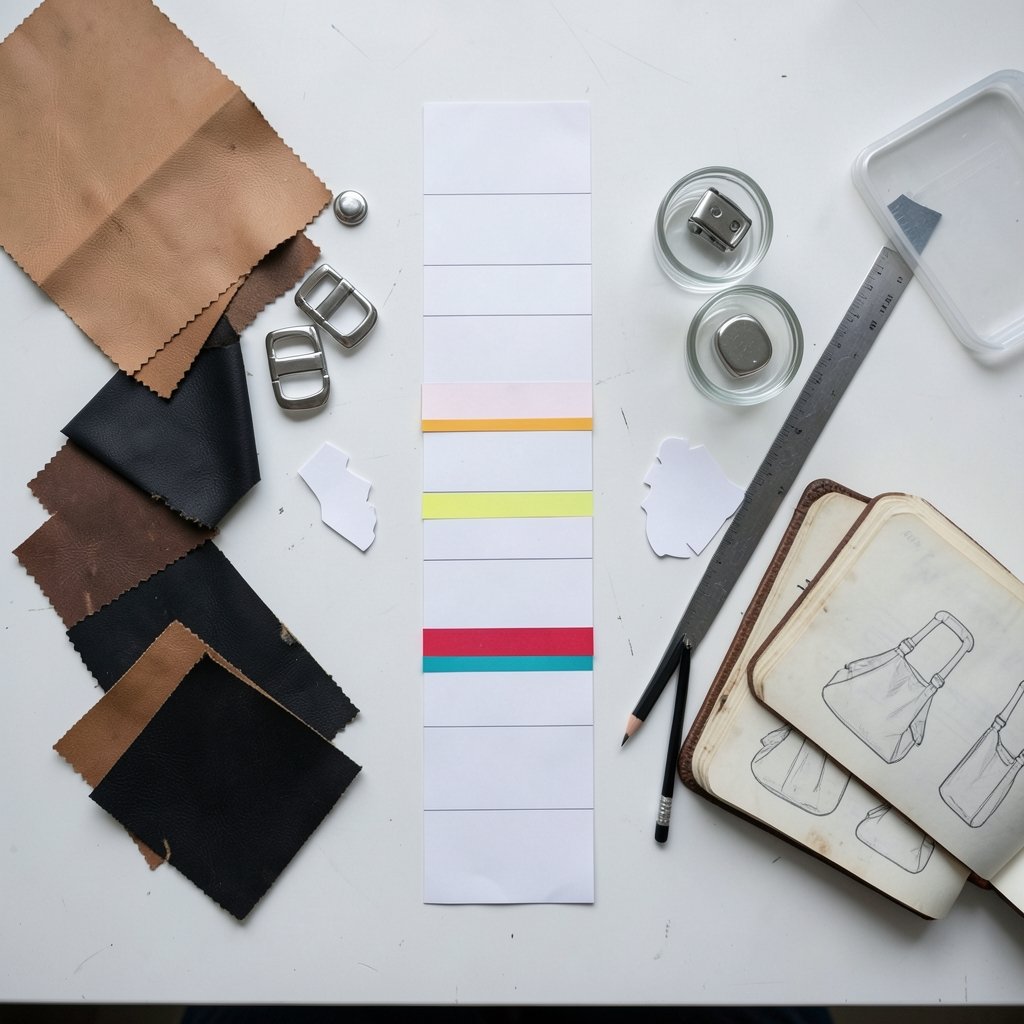
Once the customer is clear, the design work begins in earnest. The creative process moves into researching the brief, then designing the bag itself. This is where sketches, references, and material ideas come together.
Running alongside the creative work is what Saunders calls the critical path, the sequence of deadlines that keeps a collection on schedule. In practice, this is where most first-time collections fall apart. Sampling takes longer than expected. Hardware arrives late. A factory slot gets pushed back a month.
Practical tip: build your critical path backwards from your intended launch date and add buffer at every handoff. If you plan to sell into a seasonal window, the schedule is unforgiving. Designers who treat the timeline as seriously as the sketchbook avoid the classic mistake of finishing samples two weeks before a trade show.
Choose Materials and Hardware That Fit the Price
Materials and hardware are separate chapters in Saunders’s book for good reason. They are separate decisions with separate budgets.
Materials cover the body fabric, lining, backing fabrics, and reinforcement. Hardware covers zippers, rings, clasps, feet, and strap attachments. A single upgrade, say moving from a standard zipper to a polished metal one, can shift your unit cost more than you expect.
A few field-tested rules:
- Order swatches before you fall in love with a color on a screen.
- Test how a material creases, scuffs, and holds a stitch before committing to a full run.
- Keep hardware finishes consistent across the range so the collection reads as one family.
- Ask suppliers for minimum order quantities early, because they shape what is even possible.
The mistake here is designing a bag around a material you cannot source reliably. A beautiful prototype made from a discontinued fabric is not a product, it is a souvenir.
Understand Bag Construction Before You Sample
This is the chapter beginners skip and later regret. Bag construction covers gussets, collars, bases, flaps, straps, handles, pockets, and lining. Each element changes how the bag behaves in use and how it is assembled.
Why does this matter for a collection built from scratch? Because construction decisions determine cost, durability, and whether a factory can even make your design efficiently. A tote with a flat base and a tote with a structured gusset may look similar in a sketch, but they are different products on the factory floor.
If construction is unfamiliar territory, spend time deconstructing bags you already own. Turn them inside out. Look at seam allowances, interfacing, and how the lining is attached. That kind of hands-on study teaches faster than any diagram.
Plan a Range, Not a One-Off
A collection is not a single bag. Saunders devotes a chapter to planning your range, and it is one of the most commercially important steps. A range needs internal logic: shared hardware, a consistent palette, and a spread of sizes and functions that gives a buyer reasons to pick more than one piece.
A simple framework that works for small labels:
| Tier | Role in the Range | Typical Share |
|---|---|---|
| Hero piece | The statement bag that defines the brand | 1 style |
| Core carry | Everyday bags in proven shapes | 2 to 3 styles |
| Entry point | Smaller or simpler pieces at a lower price | 1 to 2 styles |
| Seasonal accent | A color or material experiment | 1 style |
The common mistake is launching with six variations of the same idea. Buyers read that as indecision. A tight range with clear roles reads as a brand.
Sample, Test, and Refine
Sampling is where the design meets reality. A sample reveals whether the strap sits right on the shoulder, whether the closure feels satisfying, and whether the lining puckers. Expect multiple rounds.
What actually works in practice: treat every sample as a test, not a trophy. Carry it for a week. Fill it with the things your customer would carry. Hand it to someone who fits your customer profile and watch how they use it without instructions. The feedback you get from observation is worth more than any opinion offered politely.
Budget for at least two sampling rounds in your critical path, and resist the urge to approve a sample because you are tired of waiting. Fixing a flaw after manufacturing is exponentially more expensive than fixing it in the sample room.
Find the Right Manufacturer
The manufacturing process is where many independent designers hit a wall. Saunders’s book covers finding a manufacturer alongside sourcing materials and creating a bespoke brand, and those tasks are linked. A factory that specializes in soft leather totes may not be the right partner for structured evening bags.
Practical guidance for this stage:
- Match the factory to your category and your budget.
- Ask for references and, where possible, see previous work in person.
- Clarify minimum order quantities, lead times, and payment terms in writing.
- Start with a small production run to test the relationship before scaling.
The mistake is choosing solely on price. A cheap quote from a factory that has never made your construction type usually costs more in rework, delays, and quality problems.
Build a Brand, Then Market It
Branding and marketing come near the end of the process in Saunders’s structure, but they should not be an afterthought. A bespoke brand means more than a logo. It covers naming, packaging, the story you tell, and the visual language that surrounds the product.
Marketing follows the same logic. The audience you defined at the start should recognize themselves in how the collection is presented. When a drop is genuinely coveted, it is usually because the brand story and the product feel inseparable. That dynamic is worth studying in how a designer bag drop becomes so coveted, where scarcity, story, and design reinforce each other.
If presentation matters to your positioning, the same principle applies to how you frame the whole label. A considered approach to building an elegant wardrobe translates directly to how a bag collection is styled, photographed, and sold. The details signal the tier.
Plan the Business and Sustain It
Business planning sits near the end of the book’s arc, but it should run quietly in the background from the beginning. Pricing, cash flow, and inventory decisions determine whether a beautiful collection survives its first year.
Two numbers deserve constant attention: your true unit cost, including sampling, shipping, and duties, and your sell-through rate. A collection that sells 60 percent at full price tells a very different story than one that sells 30 percent and discounts the rest.
Saunders closes with sustaining your business, which is the question every founder eventually faces: how do you follow a first collection with a second that grows the brand rather than repeating it? The answer usually involves listening to what sold, refining the range, and resisting the temptation to expand into categories you cannot support.
It helps to think of the whole operation the way you would think about any long build. The same discipline that goes into a design and build project, where planning, sequencing, and craft all have to line up, applies to a bag collection. Skip a stage and the whole structure feels it.
A Realistic Timeline for a First Collection
Beginners often ask how long this takes. The honest answer depends on complexity, but a first collection typically runs several months from concept to finished stock, with sampling and manufacturing consuming the largest share. Anyone promising a faster path is usually skipping quality checks.
The best approach is to plan conservatively, build buffer into the critical path, and treat the first collection as a learning run. The second one will be faster, cheaper, and better, because you will have made your expensive mistakes on a smaller scale.
Conclusion
Building a designer bag collection from scratch is a sequence, not a sprint. Know your customer first. Design with construction and cost in mind. Plan a range with clear roles, sample until the product is right, choose a manufacturer who fits your category, and build a brand that carries the story. Then run the business numbers like they matter, because they do.
The designers who make it are rarely the ones with the most inspired sketches. They are the ones who respect the critical path, budget for the unglamorous stages, and treat every sample as a chance to learn something. Start small, plan carefully, and let each collection teach you what the next one should be.
FAQ
How long does it take to build a bag collection from scratch?
It depends on complexity, but a first collection usually takes several months from concept to finished stock. Sampling and manufacturing take the longest, so build buffer into your critical path and expect at least two sampling rounds before production.
Do I need design training to start a bag brand?
Formal training helps, but it is not the only path. What matters most is understanding your customer, learning bag construction, and knowing the business side. Studying how bags are built and working with experienced sample makers can fill many gaps.
What is the critical path in bag design?
The critical path is the sequence of deadlines that keeps a collection on schedule, from design approval through sampling, materials ordering, and manufacturing. Treating it as seriously as the creative work is what separates collections that launch on time from those that slip.
How many styles should a first collection include?
A tight range of roughly four to six styles with clear roles works well: a hero piece, core everyday bags, a lower-priced entry point, and perhaps one seasonal accent. Too many variations of the same idea reads as indecision to buyers.
What is the biggest mistake beginners make?
Designing around materials or hardware they cannot source reliably, and approving samples too early because they are tired of waiting. Both problems are cheap to fix in development and very expensive to fix after manufacturing.
How do I choose a manufacturer for my bags?
Match the factory to your bag category and your budget. Ask for references, review previous work, confirm minimum order quantities and lead times in writing, and start with a small run to test the relationship before scaling up.











