



What if the dress or suit you buy for one night could carry you through a decade of them? That is the promise of a timeless evening wear collection, and it is more achievable than most people think. The trick is not spending more money. It is buying in a smarter order, choosing shapes that ignore the trend cycle, and knowing exactly which details date a garment fastest. (imPRESS Nails 101: Application, Wear Time & Removal)
Most wardrobes fail at evening because they are built backwards. People buy for a single event, panic-shop two days before, and end up with a piece that photographs well once and then sits in the closet. A better approach treats evening wear as a small, deliberate capsule: a handful of pieces that mix, layer, and repeat without anyone noticing. This guide walks through the process step by step, from the first inventory to the final alterations.
What You Need Before You Start
Before buying anything, three things need to be in place: an honest audit of what you own, a clear picture of the occasions you actually attend, and a realistic budget split between a few anchor pieces and the accessories that stretch them. Skipping the audit is the most common mistake. People buy a second black dress when they already own one that fits well, or a new tuxedo shirt when the old one only needed a collar refresh.
A useful rule from capsule wardrobe thinking: build a small set of clothes that work together rather than a large set built for specific events. As one capsule wardrobe guide puts it, the problem is rarely that there is nothing to wear. It is that the wardrobe was built for occasions rather than for how the day actually looks. Evening wear benefits from the same logic. A dress or jacket that changes character with a shoe swap is worth three pieces that only work one way. (Glamnetic Nails: Designs, Application Tips and Wear Time)
Step 1: Define Your Real Evening Calendar
Start by listing every evening event you attended in the past two years and every one you expect in the next two. Sort them into tiers.
| Tier | Typical Events | Formality | What It Demands |
|---|---|---|---|
| Formal | Galas, black tie, weddings | High | Full-length gown or dinner suit |
| Semi-formal | Cocktail parties, theater, dinners | Medium | Midi dress, tailored separates |
| Smart casual | Restaurant openings, drinks, holidays | Low | Elevated top, dark trousers, statement accessory |
The result is usually lopsided. Most people need one formal look, two or three semi-formal options, and a flexible smart-casual base. A collection built to that ratio covers real life. A collection built around one imagined red-carpet moment does not.
This step also sets your color and fabric direction. If most of your evenings are winter events, silk and wool deserve more budget than linen. If you attend summer weddings, the reverse is true.
Step 2: Choose Anchor Pieces That Ignore Trends
An anchor is the piece everything else hangs from: a floor-length dress, a dinner suit, or a beautifully cut column silhouette. Anchors should be the least trend-dependent items you own.
Designers who work in this space consistently describe the same approach. A made-to-measure evening wear house notes that evening dress should never be a compromise between etiquette and individuality, and that personal expression comes through cloth, cut, and finish. That is the anchor test in one sentence: if the piece relies on a trend for its appeal, it is not an anchor.
Practical anchors worth considering:
- A dark column dress in a matte fabric, with a neckline that flatters your shoulders. A sweetheart neckline, for example, suits a wide range of figures and reads as classic rather than dated.
- A dinner suit in a mid-weight wool, with a single-button jacket and a clean lapel. Peak or notch matters less than fit.
- A tailored bodysuit or structured top that pairs with both a skirt and trousers.
Designers building timeless occasion collections often lean on draped construction and ethereal fabrics for visual impact without heavy embellishment. The lesson for buyers is simple: structure and drape age better than decoration.
Step 3: Build the Supporting Layer
Anchors need partners. This is where most collections either become versatile or stay expensive and narrow.
The supporting layer typically includes:
- One midi-length skirt or pair of wide-leg trousers in the same color family as your anchor.
- Two tops that work with both the anchor and the separates, one matte and one with subtle sheen.
- A layer such as a tailored jacket, a fine-knit wrap, or a silk scarf that changes the register of an outfit in seconds.
- Shoes in two heights, because a heel you can walk in is worth more than a heel you admire.
A capsule approach for work and evening makes the point that changing shoes and jewelry is sometimes enough, and other times you swap a shirt for a bodysuit or trousers for another pair. The most important thing is not to build an evening outfit from scratch each time. The supporting layer is what lets you avoid that.
Step 4: Pick a Palette That Multiplies Outfits
A tight palette is the cheapest versatility you will ever buy. Two neutrals plus one accent covers almost every combination without clashing.
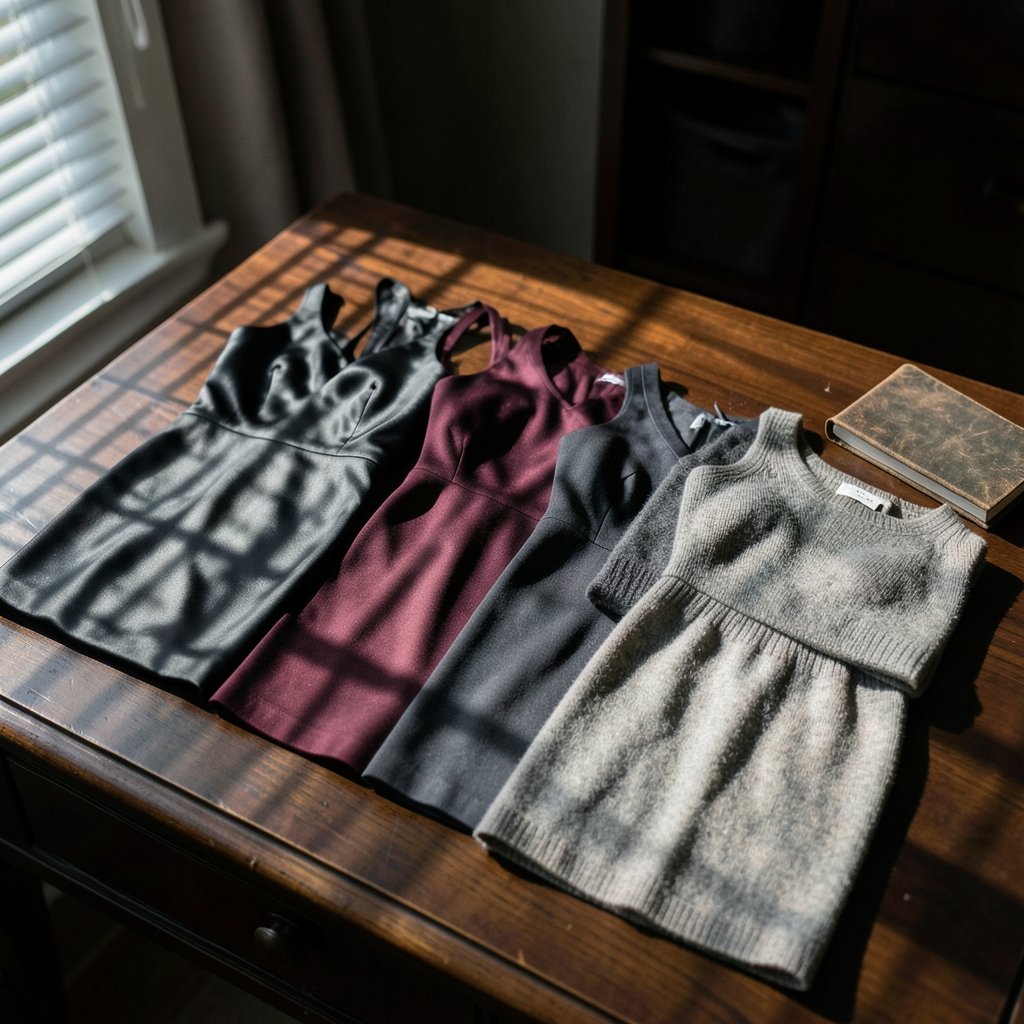
A workable formula: one deep neutral (black, navy, espresso), one light neutral (ivory, champagne, dove grey), and one accent you genuinely love. Recent designer evening collections have leaned on exactly this structure, pairing classic black and burgundy with softer blues and neutrals and letting texture do the talking rather than color blocking. Monochrome dressing with varied textures is one of the most reliable routes to looking considered.
Test the palette before committing. Lay every candidate piece on a bed together. If more than two items fail to pair with anything else, they are not supporting pieces. They are one-outfit purchases.
Step 5: Buy Fabric, Not Flash
Fabric determines how long a piece looks expensive. Two garments can share a silhouette and differ wildly in how they age, purely because of cloth.
What holds up well:
- Wool crepe and barathea for tailoring, which resist creasing through a long evening.
- Silk duchesse satin and taffeta for structure, because they hold a shape instead of collapsing.
- Matte jersey for drape, especially in travel-friendly pieces.
What dates quickly or wears poorly: heavy sequins glued rather than sewn, thin polyester satin that shines under flash photography, and embellishment concentrated in one trendy placement. Sequins are not the enemy. Cheap sequins are.
If you are choosing between a plain piece in excellent cloth and a detailed piece in mediocre cloth, take the plain one. Tailoring and accessories can add interest later. Nothing fixes bad fabric.
Step 6: Get Everything Altered
This is the step people skip, and it is the one that separates a collection from a pile of clothes. Off-the-rack fit is a starting point, not a finish line.
Budget for alterations on every anchor piece:
- Hem length adjusted to the shoes you will actually wear.
- Waist and shoulder adjustments on jackets, since shoulders are expensive to fix later and worth fixing once.
- Strap and neckline tweaks on dresses, which often cost very little and change everything.
A modest dress that fits impeccably will out-dress an expensive one that pulls at the bust. Tailors see this constantly. The clients who look best at events are rarely the ones who spent the most. They are the ones whose clothes were fitted to their bodies.
Step 7: Accessorize for Range, Not for Sparkle
Accessories are how a small collection behaves like a large one. Three well-chosen additions do more than fifteen impulse buys.
Focus on pieces that shift an outfit’s formality: a pair of sculptural earrings, a slim clutch that fits a phone, and a wrap or stole in a fabric that matches your palette. Metallic finishes work harder than colored ones because they pair with everything.
One caution: accessories are where trend pressure is strongest. A novelty bag or an of-the-moment shoe shape can date an otherwise timeless outfit in a single photograph. If you want to experiment, experiment here, but keep the experiments cheap and few.
Common Mistakes and How to Fix Them
Even careful builders hit the same snags. Here are the ones that come up most often, with fixes.
Buying for one event. The fix is a 30-day rule. If a piece cannot be worn at least three ways with items you already own, wait a month before buying. Most urges pass.
Over-indexing on black. Black is a foundation, not a whole wardrobe. An all-black collection photographs flat and offers no tonal variety. Add one light neutral.
Ignoring the season of your events. A heavy silk gown is miserable at a summer wedding. Match fabric weight to your calendar, not to what is on display in stores when you shop.
Skipping care instructions. Evening wear fails in the closet, not on the night. Silk needs breathable storage, tailoring needs brushing and airing between wears, and beaded pieces should never be pressed directly. Learn the care label before you buy, not after.
Chasing a single designer’s look. Buying an entire outfit from one collection feels cohesive in the store and repetitive in real life. Mix at least two sources per look.
Forgetting the body underneath. No garment fixes posture, comfort, or the wrong undergarments. Sort those first. A dress that requires constant adjustment will never feel timeless, no matter how good it looks on the hanger.
If you are also refining the beauty side of your routine, the same principle applies: small, well-chosen steps beat a drawer full of impulse buys. A simple pre-nap routine, for instance, is built from a few habits that actually work rather than a shelf of products.
How to Maintain the Collection Over Time
A timeless collection is not finished once it is built. It needs a light annual review.
Each year, take everything out. Check for wear at stress points: underarms, hem edges, seat seams, and buttonholes. Repair early. A re-stitched hem costs little; a torn seam discovered an hour before an event costs a lot. Store pieces clean, on appropriate hangers, and away from direct light. Moths and sunlight do more damage to evening wear than wearing it ever will. (Fake Nails: Types, Safety, Wear Time & Removal)
Then ask one question of each piece: did I wear it last year? If the answer is no for two years running, it is not part of your collection. It is storage. Donate or sell it and put the money toward an upgrade on an anchor you actually use.
Conclusion
Building a timeless evening wear collection is less about taste and more about sequence. Audit what you own, define the events you actually attend, buy anchors that ignore trends, support them with a tight palette, insist on good cloth, and get everything altered. Do those things in that order and the collection builds itself, one considered piece at a time. The reward is not a closet full of options. It is the calm of knowing that whatever the invitation says, you already have something that fits, works, and will still look right in ten years.
Frequently Asked Questions
How many pieces does a timeless evening wear collection need?
Most people function well with five to seven core pieces: one formal anchor, one semi-formal anchor, two tops, one bottom, and one layering piece. Add shoes and accessories and the combinations multiply quickly. The exact number matters less than whether every piece pairs with at least two others.
Is black the best color for timeless evening wear?
Black is a reliable foundation but a poor whole wardrobe. A deep neutral plus a light neutral plus one accent gives far more range and photographs better. Monochrome dressing in varied textures is one of the most durable approaches, and it does not require black at all.
How much should I spend on an evening wear collection?
Spend most of the budget on the two anchors and on alterations, and very little on trend-driven accessories. A common mistake is spending evenly across many pieces. Concentrating spend on fabric quality and fit produces a collection that looks more expensive than its total cost.
How do I stop buying evening wear I only wear once?
Apply a three-outfit test before any purchase: can you style the piece at least three ways with things you already own? If not, wait thirty days. Most single-event purchases fail this test, and the delay usually resolves the urge without regret.
What fabrics age best in evening wear?
Wool crepe and barathea for tailoring, silk duchesse satin and taffeta for structure, and matte jersey for drape all hold up well. Avoid thin polyester satin and glued rather than sewn embellishment, which tend to show wear and look dated quickly.
How often should I review and update the collection?
Once a year is enough. Check stress points for wear, repair early, store pieces clean and away from light, and remove anything unworn for two consecutive years. That single habit keeps the collection current without constant buying.











