Cashmere and silk are the two fabrics that define a luxury scarf, and for men they solve different problems. Cashmere is warm, soft and quietly understated, the scarf for a cold morning. Silk is lighter and more polished, the scarf that lifts a plain coat without adding bulk. Both are expensive, and the wrong one sits in a drawer instead of around your neck.
This comparison looks at cashmere and silk side by side across the things that matter in daily wear: warmth, softness, drape, ageing, care, and cost. Prices are realistic ranges for well-made scarves in 2027.
Below are nine comparisons that matter in 2027, judged on what each fabric means for a man wearing a scarf to work, to travel, and on cold weekends. There is no single winner. The right fabric depends on your climate and your coat.
Key takeaways
- Cashmere is warmer by a clear margin, while silk is the lighter option that works across more seasons.
- Silk drapes and shines more, so it suits tailored coats; cashmere looks softer.
- Cashmere needs more care and is more vulnerable to moths, while silk needs gentler washing but resists moths.
- A good cashmere scarf costs more upfront but can last many winters with care; a silk scarf is usually cheaper.
- Neither fabric is a financial investment, and a scarf in the wrong weight for your climate will stay unworn.
What cashmere and silk scarves actually are
Cashmere comes from the fine undercoat of cashmere goats, combed out once a year. A good cashmere scarf is usually made from two-ply yarn, and it should feel dense and springy rather than thin and floppy. Longer fibres pill less.
Silk comes from the cocoons of silkworms, woven from long, continuous filaments, which is why it feels so smooth and catches the light. A silk twill scarf, with a slightly grainy texture and a clean diagonal weave, holds its shape well.
For men, the difference is simple. A cashmere scarf is a piece of winter clothing, while a silk scarf is a piece of styling. Many men end up owning one of each: cashmere from November to March, silk in spring and autumn.
How we chose these comparisons and what to look for
Look first at the fibre content on the label. A scarf labelled 100 percent cashmere should be exactly that, and the same goes for silk. A cashmere scarf cut with 30 percent wool is not a cashmere scarf at the same price, and silk blended with polyester will not age the way pure silk does.
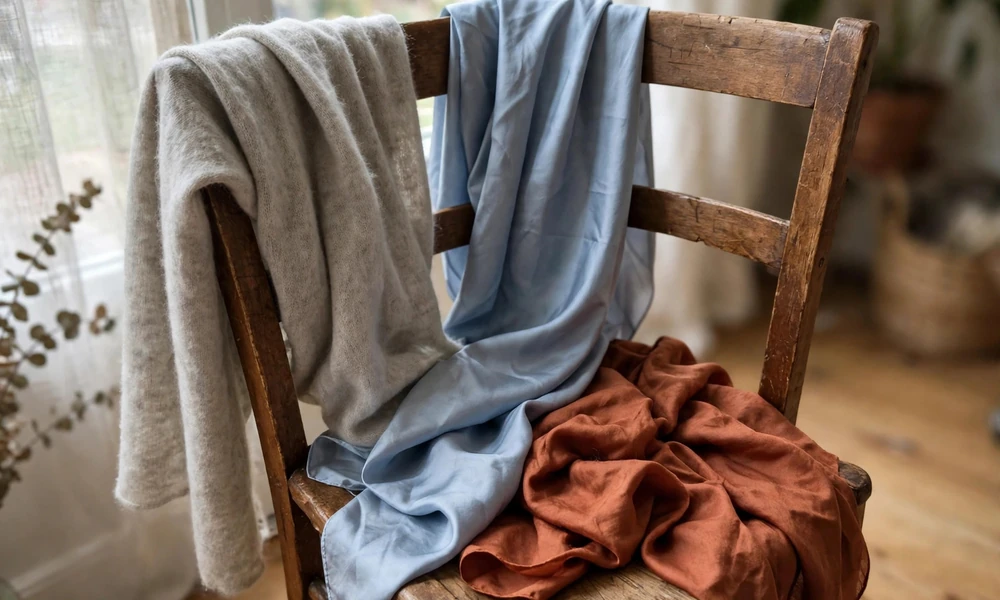
Look next at the weight and the finish. A good cashmere scarf for men is usually 30 to 40 centimetres wide and 170 to 200 centimetres long, heavy enough to stay in place but not so heavy that it pulls at a coat collar. A silk scarf is often narrower and lighter, so it knots neatly. Hold it up to the light: a dense weave is a good sign, and loose threads are a warning.
Finally, look at the edges and the label. Hand-rolled edges are a sign of a well-made silk scarf, and a fringed or neatly finished edge is normal on cashmere. The label should state the fibre content, the country of manufacture, and care instructions. Our roundup of the best silk scarves for men shows what a good one looks like at different prices.
The 9 comparisons that matter in 2027
Warmth and insulation
What we like: Cashmere is one of the warmest natural fibres for its weight and genuinely insulates on a cold day. Silk adds a useful windproof layer under a coat. What to consider: A thin cashmere scarf will not keep you warm alone, and a silk scarf on a freezing day is decoration, not protection. Best for: Cashmere for winter, silk for mild days and layering. Fabric: 100% cashmere vs 100% silk twill. Price range: £80 to £300 for cashmere, £40 to £200 for silk. Standout feature: Cashmere traps warm air in its fine fibres; silk blocks wind without bulk.
Warmth is the clearest difference. Cashmere fibres trap air, and trapped air is what keeps you warm. Silk does not trap air, but it cuts the wind.
Softness against the skin
What we like: Good cashmere is famously soft and gets softer with wear, while silk is smooth, cool and never prickles. What to consider: Cheap cashmere can feel scratchy and pill fast, and rough silk can feel stiff until broken in. Best for: Cashmere for sensitive skin in winter, silk for sensitive skin in warmer weather. Fabric: Long-fibre cashmere vs mulberry silk. Price range: £100 to £300 for soft cashmere, £60 to £200 for smooth silk. Standout feature: Cashmere feels warm and plush; silk feels cool and gliding.
Both fabrics are famously soft, but they feel different. Cashmere has a gentle, almost fuzzy softness that suits bare skin. Silk has a slick, cool softness that can slip and need retying.
Drape and movement
What we like: Silk drapes beautifully and falls into clean, elegant folds, while cashmere drapes softly and holds a loose, relaxed shape. What to consider: Silk can slide out of a knot, and heavy cashmere can look bulky under a slim coat. Best for: Silk for tailored coats and smarter looks, cashmere for relaxed coats and everyday wear. Fabric: Silk twill vs two-ply cashmere. Price range: £50 to £200 for silk, £90 to £300 for cashmere. Standout feature: Silk falls in sharp, fluid lines; cashmere falls in soft, generous folds.
Drape changes the whole look of an outfit. Silk is fluid and precise, so it works with a tailored coat: it sits flat and adds no bulk. Cashmere is softer and more generous, which suits a relaxed coat.
How each fabric handles light
What we like: Silk has a natural sheen that makes colours look richer and deeper, while cashmere has a soft, matte surface that looks understated. What to consider: Very shiny silk can look too dressy for everyday wear, and very dark cashmere can show lint. Best for: Silk for evening and formal outfits, cashmere for daytime and casual outfits. Fabric: Silk twill vs matte cashmere. Price range: £60 to £200 for silk, £80 to £300 for cashmere. Standout feature: Silk reflects light and deepens colour; cashmere absorbs light and stays quiet.
Silk looks more luxurious in photographs and cashmere looks more luxurious in person. Silk fibres reflect light, giving silk its sheen. Cashmere fibres scatter light, giving it a soft, matte surface.
Durability and ageing
What we like: A good cashmere scarf can last many winters if cared for, and silk is strong for its weight. What to consider: Cashmere pills and is vulnerable to moths, while silk weakens with sun exposure and can snag. Best for: Cashmere for long-term winter use, silk for regular use in milder weather. Fabric: Long-fibre cashmere vs silk twill. Price range: £100 to £300 for durable cashmere, £60 to £200 for durable silk. Standout feature: Cashmere improves with wear; silk keeps its colour well if kept out of strong sun.
Cashmere starts soft and gets softer, but it pills where it rubs against a coat collar. Silk starts crisp and keeps its colour well, but it is more vulnerable to sun damage and snags.
Care and cleaning
What we like: Both fabrics can be hand-washed at home with care, and both last longer when rested between wears. What to consider: Cashmere needs gentle washing and careful drying, while silk needs cool water and must not be wrung out. Best for: Men who are happy to hand-wash occasionally, or to use a trusted dry cleaner. Fabric: Cashmere vs silk. Price range: £0 to £15 per clean at home or at a cleaner. Standout feature: Cashmere can be refreshed with a soft brush; silk can be refreshed with a cool steam.
Care is the part most men underestimate. Cashmere should be hand-washed in cool water, pressed dry in a towel, and dried flat, never hung. Silk should be hand-washed in cool water too, but never wrung or left soaking.
Water and weather resistance
What we like: Silk dries quickly and handles light rain well, while cashmere stays warm even when slightly damp. What to consider: Cashmere takes a long time to dry once properly wet, and silk can water-spot if rain dries unevenly. Best for: Silk for changeable spring and autumn weather, cashmere for cold, dry winter days. Fabric: Silk twill vs cashmere. Price range: £50 to £200 for silk, £80 to £300 for cashmere. Standout feature: Silk sheds light rain; cashmere insulates when damp.
Silk is surprisingly useful in light rain because it does not absorb much water and dries quickly. Cashmere absorbs more water and takes longer to dry, but it keeps insulating when damp. Neither scarf is a raincoat.
Price and value
What we like: Silk scarves are usually cheaper than cashmere, and a good silk scarf can be found for under £100. What to consider: Very cheap cashmere is usually short-fibre and pills quickly, and very cheap silk is often a blend. Best for: Silk for a first luxury scarf, cashmere for a long-term winter staple. Fabric: 100% silk vs 100% cashmere. Price range: £40 to £200 for silk, £80 to £350 for cashmere. Standout feature: Silk gives luxury for less; cashmere gives warmth that justifies its price.
Price is the most honest difference. A good silk scarf usually costs between £60 and £150. A good cashmere scarf usually starts around £100, with the best makers charging £200 or more. Value depends on use: a £150 silk scarf worn three seasons a year is good value, and a £250 cashmere scarf worn every winter day is better still.
Versatility and styling
What we like: Silk works with a suit, a blazer and a smart coat, while cashmere works with everything from a parka to a tailored overcoat. What to consider: Silk can look too formal with very casual clothes, and cashmere too bulky with a slim suit. Best for: Silk for smart and formal outfits, cashmere for everyday and casual winter outfits. Fabric: Silk twill vs cashmere. Price range: £50 to £200 for silk, £90 to £300 for cashmere. Standout feature: Silk adds polish; cashmere adds warmth and ease.
Versatility is where most men make their final decision, and it comes down to what they already wear. A man who wears a suit most days will get more use from silk, because it sits neatly under a collar. A man who wears a parka or a roomy overcoat will get more use from cashmere. Our guide to cashmere versus linen scarves makes the same point.
Which scarf is right for you
Choose cashmere if your winters are genuinely cold and you want a scarf that feels warm the moment you put it on. A navy, charcoal or camel cashmere scarf is the most useful single choice, because it works with almost every winter coat. If you buy one, buy the best you can afford, because short-fibre cashmere pills and loses its shape fast.
Choose silk if your climate is mild, you wear tailored coats and suits, and you want a scarf that adds colour and polish without warmth you do not need. A silk scarf in deep navy, burgundy or forest green is the most useful single choice, because it works with a suit and a smart coat from autumn through spring. A good wool scarf for men is worth considering too for cashmere-like warmth at a lower price.
If you can only buy one scarf this year, let your coldest month decide. If you regularly feel cold between November and February, buy cashmere. If you rarely feel cold but want to look more polished, buy silk. If you already own cashmere, silk is the most useful second purchase, because it covers the seasons cashmere does not.
The caveats that matter
Both fabrics are sold with misleading labels, and that is the biggest risk when buying. A scarf described as cashmere may be a blend, and a scarf described as silk may be polyester. None of those things is necessarily bad, but the price should match the reality. A £30 scarf labelled 100 percent cashmere is almost certainly not what it claims to be.
| Detail | What is known |
|---|---|
| Warmest fabric | Cashmere, by a clear margin, thanks to fine crimped fibres that trap air |
| Lightest fabric | Silk, which adds colour and polish without bulk or weight |
| Best for tailored coats | Silk, because it sits flat and knots neatly under a collar |
| Best for cold winters | Cashmere, because it insulates and stays warm when damp |
| Biggest care risk | Moths for cashmere, sun fading and snags for silk |
| Typical price range | £80 to £350 for cashmere, £40 to £200 for silk |
| What to check on the label | Fibre content, ply, country of manufacture, care instructions |
| What neither fabric is | A financial investment; buy for wear, not for resale value |
Allergies are rarely a problem with either fabric. A very small number of people react to silk, and more find cheap, short-fibre cashmere irritating, although that is usually a quality problem rather than an allergy. If a scarf makes your neck itch, stop wearing it and try a different maker. As a gift, cashmere is safer for someone who feels the cold, while silk is safer for someone who dresses smartly.
Checklist: choosing between cashmere and silk honestly
Use these checks before you buy, and again after a month of wear.
- Check the label: 100 percent cashmere or 100 percent silk, with the fibre content stated clearly.
- Check the weight: hold it up and feel whether it suits your coat.
- Check the edges: hand-rolled edges on silk, neat fringing or a clean finish on cashmere.
- Check the colour: navy, charcoal, camel or burgundy work with the most outfits.
- Check the care label: make sure you will hand-wash it or pay for dry cleaning.
- Check the fit: try it with your coat on, because a scarf can look bulky or thin under a collar.
Frequently asked questions
Is cashmere warmer than silk?
Yes, by a clear margin. Cashmere fibres trap air, which is what insulates, while silk is thin and smooth. A silk scarf still helps in wind, but it will not keep you warm on a freezing day.
Can men wear silk scarves without looking overdressed?
Yes, if the colour and the knot are simple. A silk scarf in solid navy, charcoal or burgundy, worn in a simple loop or tucked under a coat collar, looks polished rather than fussy. Start with a quiet colour.
Does cashmere pill, and can it be fixed?
Good cashmere pills less than cheap cashmere, but most cashmere pills a little where it rubs against a coat collar. Pilling can be removed gently with a cashmere comb or a fabric shaver.
How do I wash a cashmere or silk scarf?
Hand-wash both in cool water with a gentle detergent, press the water out in a towel, and dry flat away from direct heat and sun. Do not wring either fabric, do not hang a wet cashmere scarf, and do not iron silk on a high heat. A trusted dry cleaner is a sensible alternative.
Which scarf lasts longer, cashmere or silk?
It depends on how it is worn and stored. Cashmere can last many winters with careful washing, brushing and moth protection. Silk can last just as long if kept out of strong sun and away from rough surfaces. Both fail faster when neglected.
Is a cashmere scarf worth the extra money over silk?
If you need warmth, yes. Cashmere costs more because the fibre is scarce and slow to collect, and that warmth is real. If you want a scarf for style, silk is the better value, because it costs less and works across more seasons.
The bottom line
Cashmere and silk are not rivals so much as partners. Cashmere is the warmer, softer, more relaxed fabric, and it earns its place in a cold winter. Silk is the lighter, smoother, more polished fabric, and it earns its place where warmth is not the point. Most men end up with one of each, because no single scarf covers a whole year.
If you buy only one this year, let your climate and your coat decide. Cold winters and roomy coats point to cashmere; mild weather and tailored coats point to silk. Buy the best fibre content you can afford, check the label, and choose a quiet colour you will wear. That is how you end up with one you reach for every day instead of one that stays in a drawer.