
A linen scarf is the most honest accessory in a wardrobe. It does not try to be warm like wool, or glossy like silk, or precious like cashmere. It is light, breathable, slightly rumpled, and it gets better the more you wear it. That is exactly why it is so easy to get wrong, too. Draped carelessly, a linen scarf can look like an afterthought. Worn with a little intention, it can lift a plain outfit into something that looks considered and relaxed at the same time.
The trick is understanding what linen does. It has a dry, matte texture and a natural slub that catches the light without shining. It holds a shape loosely rather than falling flat, which means it suits soft, unstructured knots and drapes far better than tight, fussy ones. It is also a warm-weather fabric at heart, so the best ways to wear a linen scarf are the ones that let air move and let the fabric do what it wants to do.
Below are nine ways to wear a linen scarf in 2027, from the simplest open drape to the belted wrap and the neckerchief knot. Each one is described by what it is good at, what to watch for, and who it suits best, so you can choose a look that fits your outfit, your day, and the weather, not just a picture you saw once.
Key takeaways
- A linen scarf works best with soft, loose drapes and knots, because the fabric holds shape without falling flat or shining.
- The open drape and the once-around wrap are the two most useful ways to wear one, and they suit almost every outfit and body type.
- Choose a scarf in a colour you already wear often, and a size you can fold, knot, or drape without fighting it.
- Linen softens with washing and wear, so a scarf that feels crisp at first usually becomes the one you reach for most.
- No linen scarf will keep you warm in real cold, and no knot will make a stiff, cheap scarf drape well, so buy the fabric first and the look second.
What a linen scarf actually is
A linen scarf is woven from flax fibre, one of the oldest textile fibres in use. Flax is strong, absorbent, and naturally breathable, which is why linen feels cool against the skin and dries quickly. The fibre has a slightly irregular texture, known as slub, which gives linen its characteristic matte surface and the faint, uneven lines you can see when you hold it up to the light.
That texture is the whole point of a linen scarf. It is not trying to be smooth or shiny. It looks best when it is a little rumpled, a little lived-in, and it suits outfits that are equally relaxed: a cotton shirt, a linen blazer, a simple dress, a pair of jeans. It is less at home with very formal tailoring or with high-shine fabrics, where its matte surface can look out of place.
Linen also behaves differently from other scarf fabrics. It does not stretch, so a knot tied too tightly will stay tight and look hard. It creases easily, so a scarf that has been folded in a drawer will show the folds until you shake it out or steam it. And it softens with every wash, so a new scarf that feels slightly stiff is not a bad scarf, it is just a new one. Knowing these things before you wear it makes every style below easier.
How we chose these ways to wear it and what to look for
Look first at the size of your scarf. A long, rectangular scarf, roughly 180 by 70 centimetres, is the most versatile shape, because it can be looped, wrapped, knotted, or draped open. A smaller square scarf suits neckerchief knots and bandana-style folds, but it will not wrap twice around your neck. A very wide scarf can double as a shawl, which is useful on a cool evening, but it can also overwhelm a small frame if it is worn bunched up.
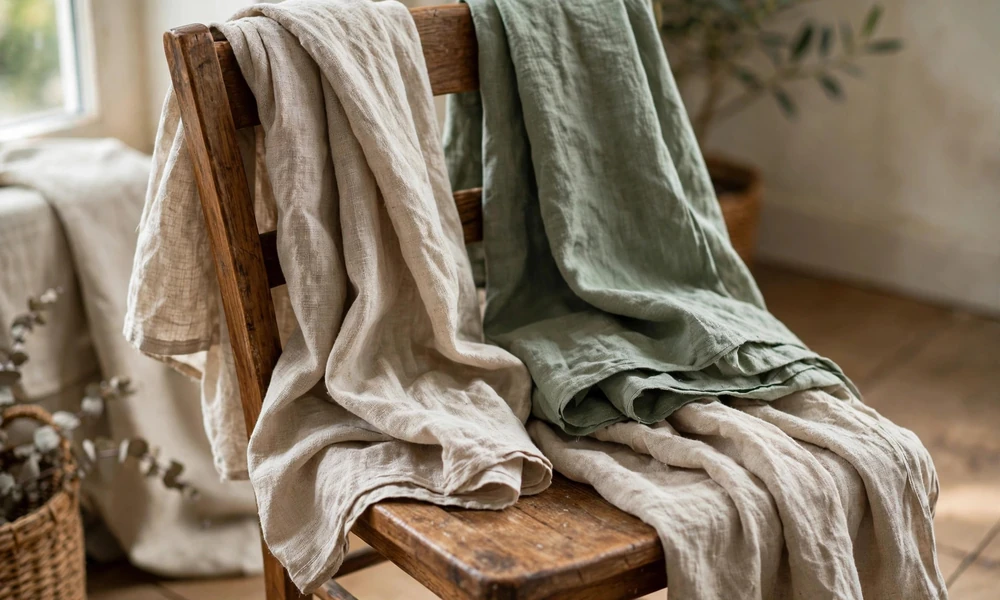
Look next at the weight and the weave. A fine, loosely woven linen scarf drapes softly and suits warm weather, while a heavier, denser linen holds its shape more and works better as a layer in spring and autumn. Hold the scarf up to the light: a good linen has an even weave with a gentle slub, not thick knots or thin patches. Our guide to natural fibres in clothing explains how linen compares with cotton, wool, and silk, and why its breathability makes it the easiest scarf fabric to wear all day.
Finally, look at the colour and the finish. Plain, undyed linen in natural, stone, or oatmeal tones goes with almost everything and shows off the texture best. A soft, muted colour, such as sage, dusty blue, or terracotta, adds interest without fighting the rest of your outfit. Avoid very bright or very dark linen for a first scarf, because a bright colour can look harsh against the matte texture, and a very dark one shows lint and creases more clearly.
The 9 ways to wear a linen scarf in 2027
The open drape
What we like: The simplest way to wear a linen scarf, and often the best-looking. It frames the outfit without hiding it, and it lets the fabric move naturally. What to consider: It can slip off your shoulders if the scarf is very smooth or very light, so it works best indoors or on a calm day. Best For: Everyday outfits, work, and warm days. Cost: Nothing beyond the scarf itself. Time Needed: A few seconds.
The once-around wrap
What we like: One loop around the neck keeps the scarf in place, adds a little warmth, and still looks relaxed. What to consider: A short scarf will not wrap comfortably, and a very thick one will bunch up, so this suits a medium-length, fine linen scarf best. Best For: Cool mornings, travel, and days when you want the scarf to stay put. Cost: Nothing beyond the scarf itself. Time Needed: Under a minute.
The loose loop knot
What we like: A simple knot that holds the scarf securely without looking tight or formal. What to consider: Linen does not stretch, so a knot tied too firmly will look hard and will be uncomfortable to undo. Best For: Windy days, walking, and outfits that need the scarf to stay in one place. Cost: Nothing beyond the scarf itself. Time Needed: Under a minute.
The shawl drape
What we like: A wide linen scarf worn as a shawl adds a light layer on a cool evening without the weight of a jacket. What to consider: It needs a wide scarf, at least 90 centimetres across, and it can slip if you move around a lot. Best For: Evenings out, weddings, and cool restaurants. Cost: Nothing beyond a wide scarf. Time Needed: A few seconds.
The neckerchief knot
What we like: A small, neat knot at the front of the neck that adds a touch of polish to a plain outfit. What to consider: It needs a smaller scarf, or a large one folded down carefully, and it can look fussy if the knot is too tight or too big. Best For: Work, smart-casual outfits, and adding colour near the face. Cost: Nothing beyond the scarf itself. Time Needed: One to two minutes.
The belted wrap
What we like: Wearing a wide linen scarf as a wrap, held in place with a belt, turns it into a light layer that actually stays put. What to consider: It needs a wide scarf and a slim belt, and it can look bulky if the fabric is too heavy. Best For: Cool spring and autumn days, and outfits that need a little structure. Cost: Nothing beyond a wide scarf and a belt you already own. Time Needed: One to two minutes.
The tucked-in drape
What we like: Tucking the ends of a linen scarf into a jacket or blazer keeps it tidy and adds a layer of texture at the neckline. What to consider: It only works with a jacket that has room at the front, and a very thick scarf will bunch up. Best For: Work, travel, and outfits with a blazer or coat. Cost: Nothing beyond the scarf itself. Time Needed: Under a minute.
The head and hair wrap
What we like: A linen scarf worn as a head wrap protects hair from sun and wind, and it looks relaxed and confident. What to consider: It needs a square or large scarf, and it can slip on smooth hair, so a little grip helps. Best For: Holidays, beach days, and bad-hair days. Cost: Nothing beyond the scarf itself. Time Needed: One to two minutes.
The colour-pop accent
What we like: A linen scarf in a strong colour is the easiest way to add interest to a plain, neutral outfit. What to consider: One bright accent is enough; a bright scarf with a bright outfit will fight for attention. Best For: Neutral wardrobes, and days when your outfit needs one lift. Cost: Nothing beyond the scarf itself. Time Needed: A few seconds.
Which linen scarf look is right for you
Start with the weather. On a warm day, the open drape, the neckerchief knot, or the colour-pop accent will keep you cool and look light. On a cooler day, the once-around wrap, the loose loop knot, or the tucked-in drape will hold the scarf in place and add a little warmth. On a cool evening, the shawl drape or the belted wrap will give you a layer without the weight of a jacket.
Then think about your outfit. A plain, simple outfit can carry a more deliberate style, such as the neckerchief knot or the belted wrap, because there is nothing else competing for attention. A patterned or detailed outfit suits a simpler style, such as the open drape or the once-around wrap, because the scarf should add texture, not another pattern. And if you are wearing a jacket, the tucked-in drape is usually the tidiest choice.
If you are starting from scratch, our roundup of the best linen scarves for women is a useful place to begin. Finally, think about your frame. A petite person usually looks best with a scarf worn close to the body, such as the neckerchief knot or the loose loop knot, because a very long, loose drape can overwhelm a small frame. A taller person can carry a longer drape or a wide shawl more easily. None of this is a rule, but it is a useful starting point, and the best way to find out is to try two or three styles in front of a mirror and see which one feels like you. A linen versus silk scarf comparison is worth a look here, because the two fabrics drape so differently that the right style for one is often the wrong style for the other.
The caveats that matter
Linen is a wonderful scarf fabric, but it has limits, and they are worth knowing before you buy. The first is warmth. Linen is breathable and cool, which is why it is so comfortable in warm weather, but it will not keep you warm in real cold. If you need a scarf for winter, wool or cashmere is a better choice, and no amount of wrapping will change that.
| Detail | What is known |
|---|---|
| Best weather for linen | Warm and mild days, spring through early autumn; cool evenings with a wide scarf |
| Best scarf size | Long rectangle, about 180 by 70 centimetres, is the most versatile shape |
| Best styles for beginners | The open drape and the once-around wrap, because they are simple and forgiving |
| What to avoid | Tight knots, which linen does not forgive, and very formal tailoring, which clashes with its matte texture |
| Creasing | Linen creases naturally; shake it out or steam it, and accept a little rumple as part of the look |
| Washing | Wash gently in cool water and air-dry; linen softens with every wash |
| Colour choice | Natural, stone, and muted tones show off the texture best; one bright accent is enough |
| What it does not do | It does not keep you warm in winter, and it does not drape like silk or stretch like wool |
The second limit is creasing. Linen creases more than any other common scarf fabric, and a scarf that has been folded in a drawer will show the folds. This is not a fault, it is the nature of the fibre, but it means a linen scarf needs a shake or a quick steam before you wear it, and it will never look as smooth as silk. If you like a perfectly pressed look, linen will frustrate you. If you like a relaxed, lived-in look, it is exactly right.
Checklist: wearing a linen scarf honestly
Use these checks before you buy, and again before you leave the house.
- Check the size: a long rectangle is the most versatile, and a wide one can double as a shawl.
- Check the weave: even, with a gentle slub, and no thick knots or thin patches when held up to the light.
- Check the weight: fine and loose for warm days, heavier and denser for spring and autumn.
- Keep knots soft: linen does not stretch, so tie loosely and loosen the knot with your fingers.
- Shake it out first: linen creases in storage, so a quick shake or steam makes a visible difference.
- Match the style to the day: open drape for warmth, once-around wrap for cool mornings, shawl drape for evenings.
Frequently asked questions
Can I wear a linen scarf in winter?
You can, but it will not keep you warm. Linen is breathable and cool by nature, so it is best in spring, summer, and early autumn. For real cold, a wool or cashmere scarf is a better choice, and a linen scarf is better kept as a light layer indoors.
How do I stop a linen scarf from slipping off my shoulders?
Choose a style that holds it in place, such as the once-around wrap or the loose loop knot, rather than the open drape. A slightly heavier linen also grips better than a very fine one, and a small brooch or pin can hold a shawl drape in place on a still day.
Why does my linen scarf crease so much?
Flax fibre creases easily, and that is normal for linen. Shake the scarf out before wearing it, or steam it lightly, and accept a little rumple as part of the look. Ironing it flat will remove the creases, but the fabric will crease again as soon as you wear it.
Can I wash a linen scarf at home?
Yes, in most cases. Wash it gently in cool water with a mild detergent, and air-dry it flat or on a line. Linen softens with every wash, so a scarf that feels crisp when new usually becomes softer and easier to wear over time. Check the care label first, because some linen blends need different care.
What colour linen scarf should I buy first?
A natural, stone, or oatmeal tone is the safest first choice, because it goes with almost everything and shows off the linen texture. If you already own a neutral scarf, a muted colour such as sage, dusty blue, or terracotta is a good second choice, because it adds interest without clashing with your wardrobe.
Does a linen scarf suit formal outfits?
Usually not. Linen’s matte, slightly rumpled texture suits relaxed and smart-casual outfits best, and it can look out of place with very formal tailoring or high-shine fabrics. For a formal occasion, a silk scarf is usually a better choice, and a linen scarf is better saved for the daytime.
The bottom line
The best way to wear a linen scarf in 2027 is the simplest one that suits your day. For most people, most of the time, that is the open drape on a warm day or the once-around wrap on a cooler one. Both are easy, both look relaxed, and both let the fabric do what it does best, which is to look natural, breathable, and a little bit lived-in.
Choose a scarf in a colour you already wear, in a size you can knot or drape without fighting it, and in a linen that feels good against your skin. Then wear it often, wash it gently, and let it soften with time. A linen scarf is not a precious object to save for best, it is an everyday one, and the more you wear it, the better it looks.