


What if the biggest difference between a great iced drink and a watery disappointment comes down to one small appliance sitting on your counter? Countertop ice makers have moved from novelty gadget to everyday kitchen tool, and the market now offers dozens of models that all promise “restaurant-quality ice.” The reality is messier. Output ratings are measured under specific lab conditions, ice types behave very differently in a glass, and a machine that shines at a party can frustrate you by month three.
This guide breaks down what actually separates a good countertop ice maker from a mediocre one, which specs matter, which marketing claims deserve skepticism, and how to match a machine to how you actually use ice.
Start With the Ice Type, Not the Brand
Before comparing any models, decide what kind of ice you want. Countertop machines generally produce one of two types, and they are not interchangeable.
Bullet ice (often called cube ice) is formed in molds and comes out as a clear-ish, hollow-centered cylinder. It melts relatively slowly, looks familiar in a glass, and works well for cocktails, pitchers, and coolers. Most budget-friendly countertop units make bullet ice.
Nugget ice (also called chewable or pellet ice) is soft, scoopable, and made by scraping a frozen cylinder into small irregular pieces. It is the ice popularized by certain fast-food chains and it is genuinely different in texture: it chews easily and absorbs the flavor of whatever it sits in. Nugget machines cost more and use more complex mechanisms, which means more to break.
A practical rule: if you mostly chill drinks and want ice that lasts, bullet ice is fine. If you chew ice or want that soft, scoopable texture for sodas and cocktails, nugget ice is worth the premium. Buying a bullet machine and expecting nugget texture is the single most common buyer’s regret in this category.
Decoding Capacity Ratings and Cycle Times
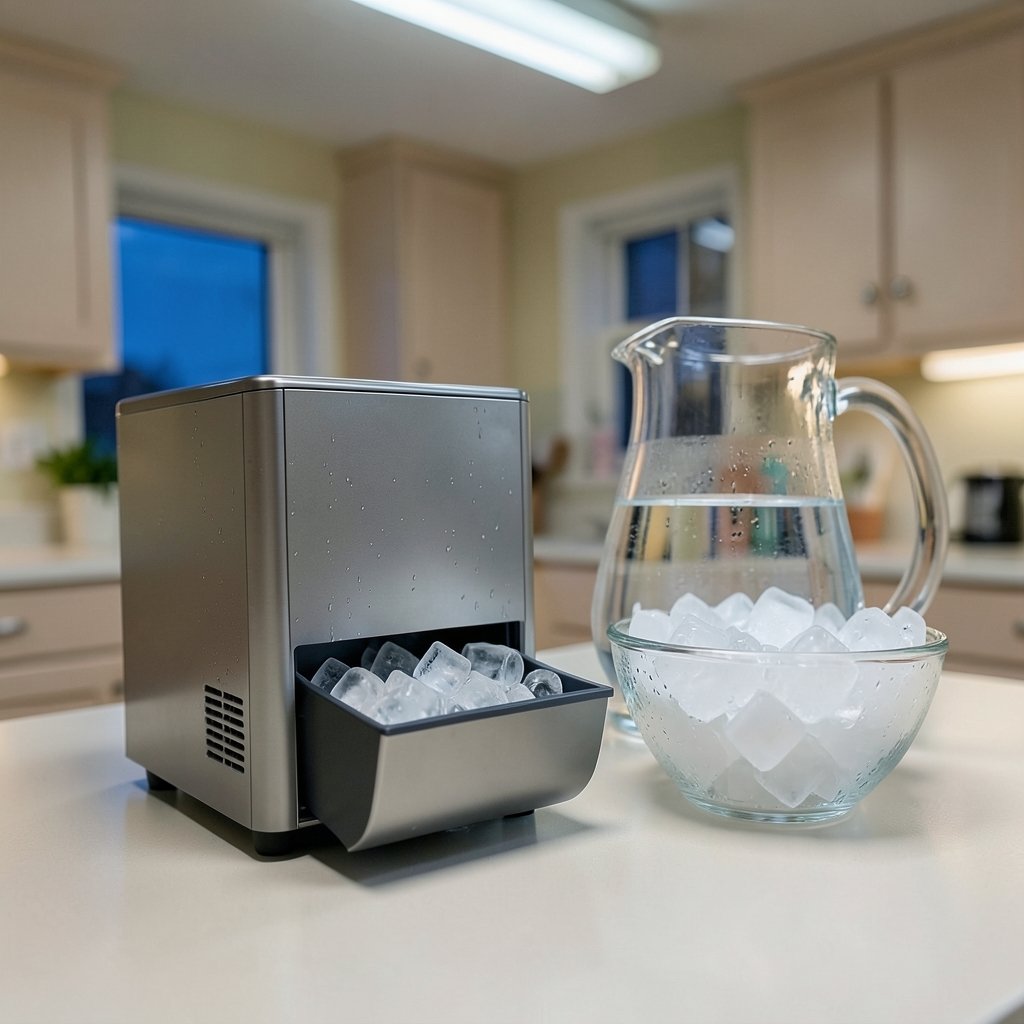
Manufacturer capacity ratings are where shoppers get misled most often. Most consumer countertop units are rated somewhere between 26 and 45 pounds (roughly 12 to 20 kilograms) of ice per 24 hours. First ice typically arrives in about 6 to 15 minutes, and internal storage bins hold only about 1 to 3 pounds.
Here is the catch: those 24-hour figures are measured under standardized test conditions, usually a specific ambient air temperature and inlet water temperature. A machine rated at 44 pounds per day in a cool room will produce noticeably less in a warm, humid kitchen in July. When you compare spec sheets, look for the stated test conditions. If a brand does not disclose them, treat the number as optimistic.
Also separate two numbers that marketing copy loves to blur:
| Spec | What it tells you | What it hides |
|---|---|---|
| Daily capacity (lb/24h) | Total output under test conditions | Real output in a warm kitchen |
| Cycle time (minutes) | Speed of the first batch | That later batches slow down as the bin fills |
| Bin capacity (lb) | How much ice sits ready | That ice melts and refreezes if unused |
| Reservoir size | How often you refill | That most units need manual filling |
A realistic expectation: a mid-range unit keeps up with a family’s daily drinks and handles a small gathering if you start it a few hours ahead. It will not keep a cooler full for a weekend party without help.
What to Check Before You Buy
Manual fill and drain
Almost no countertop ice maker is plumbed. You fill the reservoir by hand and drain it by hand, often through a plug at the bottom. This sounds trivial until you own one. A unit that is awkward to drain becomes a unit that grows mold. Look for a clear drain plug and a reservoir you can actually reach with a sponge. If you have ever dealt with the frustration of a machine that will not empty properly, you know why maintenance access matters, much like the way a proper fix matters when an ice maker repair actually fixes a broken ice machine rather than just masking the symptom.
Cleaning routine
Manufacturer manuals typically call for descaling the reservoir and evaporator regularly, often monthly, to prevent mineral buildup and mold. In hard-water areas, that schedule may need to be tighter. Practical tip: use filtered water, and run a descaling cycle with diluted vinegar or citric acid as the manual directs. Skipping this is the number one cause of “my ice maker smells weird” complaints.
Noise
Compressor-based units typically run somewhere in the range of roughly 40 to 50+ decibels, with the harvest phase (when ice drops) being the loudest moment. Marketing pages rarely publish measured noise. Look for independent measurements rather than claims. If the machine will sit near a desk, a nursery, or an open-plan living room, this matters more than any other spec.
Safety listings and refrigerant
Many units use small sealed refrigerant systems, and some use R600a (isobutane), a flammable refrigerant. Units sold in the U.S. should carry a UL or ETL listing mark. Check the label on the unit or the spec sheet before buying, and check the Consumer Product Safety Commission’s recall database for the specific model. This is a five-minute step that most buyers skip.
Energy use
Countertop ice makers are not typically covered by the ENERGY STAR program, which focuses on refrigerators and freezers rather than standalone portable ice makers. That means there is no standardized efficiency label to compare. Expect a compressor unit to draw considerable power while running, and consider whether you need ice around the clock or just for a few hours a day.
Match the Machine to Your Actual Life
The “best” countertop ice maker depends entirely on use case. Here is how the priorities shift:
Daily household use. Prioritize bin capacity, easy cleaning, and noise. A slightly slower machine with a bigger bin beats a fast machine you have to babysit. Keep the water reservoir topped up and the unit on a level surface.
Entertaining. Prioritize speed to first ice and a machine that keeps producing steadily. Start it two to three hours before guests arrive, and have a backup bag of ice in the freezer. No countertop unit keeps up with a crowd indefinitely.
Chewable-ice habit. Go nugget. Accept the higher price and the more careful maintenance schedule. Nugget machines reward regular descaling more than bullet machines do.
Small kitchens and dorms. Prioritize footprint and weight. A machine that lives in a cabinet and comes out for weekends is a different purchase than one that occupies permanent counter real estate. If you are already thinking hard about how appliances and surfaces sit together visually, the same logic that helps you pair a kitchen countertop backsplash without visual clutter applies to choosing an ice maker that does not dominate the counter.
Common Mistakes Buyers Make
Believing the daily capacity number as a real-world figure. It is a lab rating. Discount it, especially in warm climates.
Skipping the descale. Mineral scale kills output and creates odors. Put it on a monthly calendar reminder.
Leaving ice in the bin. Ice that sits and partially melts refreezes into a clump. Empty and dry the bin if you will not use the machine for a few days.
Ignoring the drain plug design. A poorly designed drain turns a ten-minute cleaning job into a twenty-minute wrestling match.
Buying for peak demand. If you need ice for two parties a year, buy for daily use and supplement with bagged ice for events.
Placing the unit in direct sun or next to the stove. Ambient heat directly reduces output. Give the machine airflow and a cool spot.
How Ice Quality Compares Across Categories
It helps to understand where countertop machines sit in the wider world of ice. Commercial and recreational ice production is held to different standards depending on context. Rinks, for example, test and maintain ice to specific safety and quality benchmarks, a process described in coverage of how ice skating rink ice is made, kept, and judged safe. Food-service ice has its own expectations for clarity and melt rate. A countertop machine is a home appliance, not commercial equipment, and its ice will be softer, cloudier, and faster-melting than what a bar produces.
That is not a flaw, just a category reality. Understanding it prevents disappointment. The same way a packaged treat has a specific composition worth knowing about, as explained in a look at what is actually inside a Drumstick ice cream cone, ice from a countertop machine has a defined structure: hollow, aerated, and quick to melt. If you want dense, clear cubes, you need a different class of machine.
A Quick Word on Brand Confusion
The appliance world is full of overlapping names, and ice makers are no exception. Before buying, confirm exactly what you are getting: the brand on the box, the manufacturer behind it, and the warranty terms. Name confusion is common across product categories, from mattresses to real estate, as a breakdown of how one purple brand name spans a mattress maker, an estate agent, and an agency illustrates. Read the warranty and the return policy before the specs. A generous return window is worth more than a slightly better capacity rating.
Conclusion
The best countertop ice maker is not the one with the highest number on the box. It is the one that matches your ice type preference, fits your counter, survives a monthly descaling, and runs quietly enough that you forget it is there. Start with ice type, treat capacity ratings as conditional, verify the safety listing, and plan for maintenance from day one. Do those four things and almost any well-reviewed machine in your budget will serve you well. Skip them, and even a premium unit will end up in a cabinet by next summer.
Frequently Asked Questions
How long does a countertop ice maker take to make ice?
Most consumer units produce their first batch in about 6 to 15 minutes, depending on the model and the starting water temperature. Later batches may slow slightly as the internal bin fills. Cold water speeds things up; warm water and a warm room slow it down.
Do countertop ice makers need a water line?
No. Nearly all countertop models are manual-fill and manual-drain. You pour water into a reservoir and empty it through a drain plug. This is why cleaning access matters so much when comparing models.
What is the difference between bullet ice and nugget ice?
Bullet ice is formed in molds into clear-ish, hollow cylinders that melt relatively slowly. Nugget ice is scraped from a frozen cylinder into soft, chewable pellets that absorb drink flavor. Nugget machines cost more and require more careful maintenance.
Why does my countertop ice maker produce less ice than advertised?
Capacity ratings are measured under specific ambient air and water temperature conditions. In a warm, humid kitchen, real output is typically lower than the rated figure. Check whether the manufacturer discloses its test conditions.
How often should I clean a countertop ice maker?
Follow the manual, but most manufacturers call for descaling the reservoir and evaporator roughly monthly. In hard-water areas, clean more often. Use filtered water and diluted vinegar or citric acid to prevent scale and odor.
Are countertop ice makers energy efficient?
They are not typically covered by the ENERGY STAR program, so there is no standardized efficiency label to compare. Compressor units draw considerable power while running, so consider running the machine when you need ice rather than continuously.











