


What if the camera that finally teaches you photography is one that can’t take a thousand shots before you notice your settings were wrong? That’s the strange gift of film. Every frame costs money, so every frame makes you think. And with film photography enjoying a genuine revival, more people are asking a practical question: which camera should I actually buy?
The honest answer is that there is no single best film camera. There is only the best camera for your hands, your budget, and the way you like to shoot. This guide breaks down the real contenders, the trade-offs nobody mentions in glossy reviews, and the mistakes that cost beginners the most money.
Start With the Format, Not the Model
Before you fall in love with a specific camera body, decide which film format fits your life. The format determines negative size, camera weight, lens cost, and how often you’ll actually carry the thing.
| Format | Film Type | Negative Size | Best For | Main Trade-off |
|---|---|---|---|---|
| 35mm | 135 | 24 x 36 mm | Everyday shooting, travel, learning | Smaller negatives, more grain |
| Medium format | 120 | 6 x 6 cm or 6 x 7 cm | Portraits, landscapes, big prints | Heavy, costly, slow to shoot |
| Rangefinder | Usually 135 | 24 x 36 mm | Street, documentary, quiet settings | Expensive, manual focus only |
35mm is where nearly everyone should start. Film is widely available, labs handle it everywhere, and the cameras are small enough to carry daily. The 35mm single-lens reflex, or SLR, dominated consumer and professional photography from the late 1950s into the 1990s, and that long production run is exactly why so many good bodies survive today.
Medium format cameras like the Mamiya RB67 (1970) and the Hasselblad 500 series (from 1957 onward) produce gorgeous, detailed negatives. They are also heavy, slower to use, and more expensive to feed. Wonderful second cameras. Brutal first cameras.
Rangefinders such as the Leica M series, starting with the M3 in 1954, are prized for compact bodies and near-silent shutters. They are also expensive, and most are manual focus only. Buy one because you love the experience, not because you think it will make you a better photographer.
The Best Film Cameras for Learning the Craft
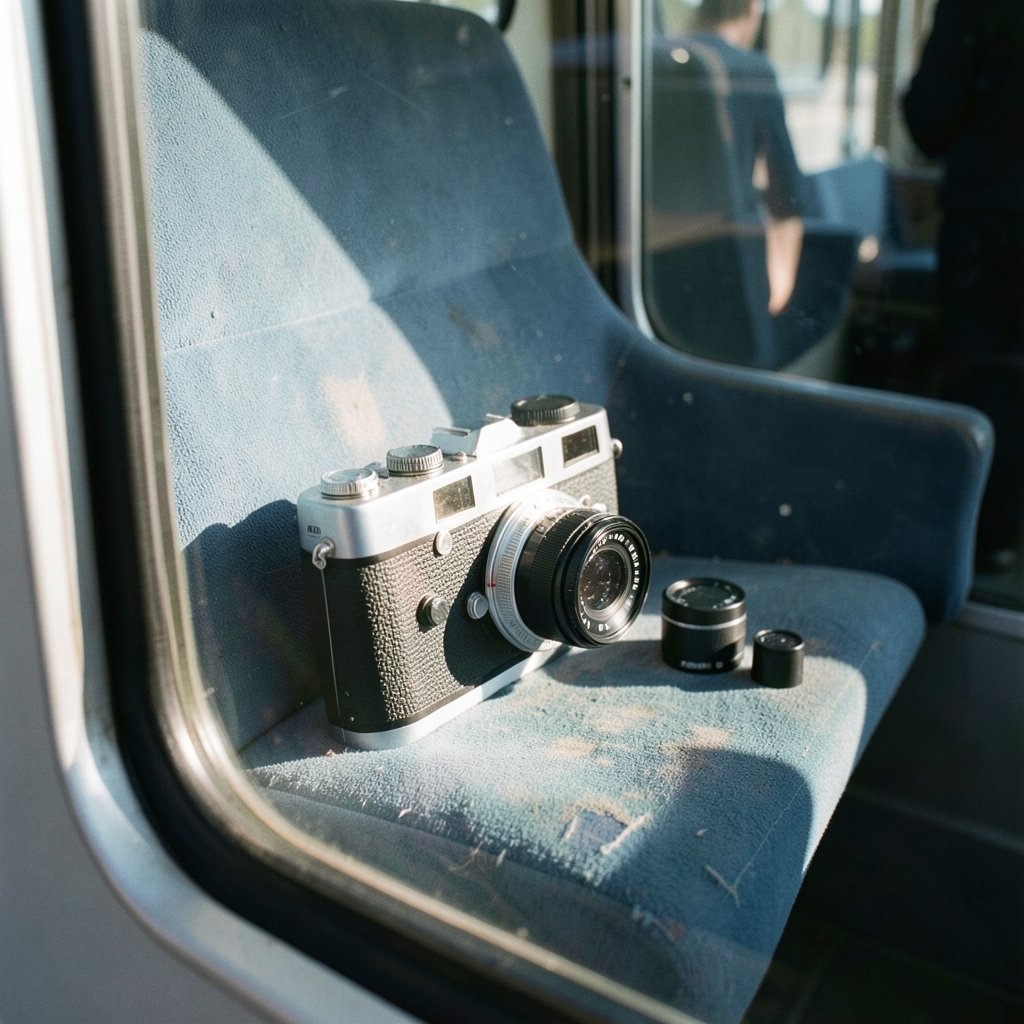
If your goal is to understand exposure, these are the bodies that teach it best.
Pentax K1000
Produced from 1976 to roughly 1997, the K1000 is fully manual and uses its battery only for the light meter. That means it keeps working when the electronics die, which they eventually do on any old camera. It’s heavy, simple, and built like a brick. The K-mount lens ecosystem is deep and cheap, so you can build a kit for very little money. If you want to learn the exposure triangle the hard way, this is the classroom.
Canon AE-1
The AE-1 arrived in 1976 as one of the first mass-market SLRs with automatic exposure, and it sold in enormous numbers. That popularity is good news for buyers: plenty of bodies and lenses exist, and most repair shops know them well. It offers shutter-priority automation, meaning you pick the speed and the camera picks the aperture. That’s a gentler on-ramp than full manual, though it also means you can coast instead of learning.
Olympus OM-1
Introduced in 1972, the OM-1 helped launch the compact SLR trend. Its viewfinder is famously bright and large, which matters more than beginners expect. A big, clear viewfinder makes manual focusing easier and composition more enjoyable. The OM-1 is also small enough to carry all day, which quietly increases how much you shoot.
The Best Film Cameras for Reliability and Longevity
Nikon FM2
The FM2, introduced in 1982, is known for a mechanical shutter and rugged build, with a flash-sync speed around 1/200 second. Mechanical shutters matter because they don’t depend on aging electronics. If you want one camera that will probably outlive your phone, your laptop, and your patience, a mechanical SLR is the answer. The FM2 is a common recommendation for exactly that reason, though clean examples command real prices.
Nikon F
The original Nikon F from 1959 is widely credited with establishing the professional 35mm SLR system. Buying one today is buying into a system with decades of compatible lenses and a reputation for surviving abuse. It’s fully mechanical in spirit and feels like a precision tool. Just budget for a service, because a camera that old deserves one.
The Best Film Cameras for Convenience
Point-and-Shoots
Cameras like the Olympus mju/Stylus line and the Contax T2 became genuinely fashionable in the 2020s, and used prices rose sharply as a result. They’re small, automatic, and easy to hand to a friend. The catch is value: you’re paying a premium for convenience, and many of these bodies have fragile electronics that are hard or impossible to repair. Buy one to carry, not to collect.
Where Automation Actually Helps
Automation is not cheating. It’s a tool. The practical rule most experienced shooters follow: use automation for subjects that move and manual control for subjects that don’t. Aperture-priority mode on a Canon AE-1 lets you chase a toddler without missing the moment. Full manual on a Pentax K1000 teaches you why the aperture you chose mattered. Both have a place.
How to Judge a Used Film Camera Before You Pay
This is where most beginners lose money. A camera can look beautiful and be functionally dead.
- Check the light seals. Open the film door and look at the foam strips along the edges. If they’re sticky, crumbly, or turning to black dust, they need replacing. It’s a cheap fix but a real annoyance.
- Fire the shutter at every speed. Listen. Slow speeds should sound slow. If 1 second sounds like 1/60, the timing is off and a service is needed.
- Test the meter against a known-good source. Compare readings in the same light. A meter off by two stops will quietly ruin rolls.
- Inspect the lens for fungus and haze. Shine a light through it at an angle. Spider-web patterns mean fungus. Hazy glass means internal condensation or separation.
- Check the battery compartment for corrosion. White crust means leaked batteries, which can damage traces.
- Advance the film lever and confirm the counter moves. A stuck counter is minor. A stuck advance mechanism is not.
- Ask about service history. “Recently serviced” with no paperwork usually means “recently dusted.”
A practical tip that saves real money: buy the lens, not the body. Good glass holds value and works across multiple bodies in the same mount. Bodies come and go.
What Film Actually Costs in Practice
Here’s the part that surprises people. The camera is the cheap part. Film and processing are the recurring cost, and they add up fast.
A single roll of 35mm film plus development and scanning typically costs more than a modest used lens over the course of a year of regular shooting. Film is still manufactured by Kodak, Ilford, Fujifilm and others as of the mid-2020s, but availability and prices fluctuate, so budget for volatility. If you shoot medium format, expect fewer frames per roll and higher per-frame costs.
The practical consequence: a $150 Pentax K1000 and a $900 Leica will cost the same to feed. Spend your money where it changes your results, which is usually lenses and practice, not prestige.
Matching the Camera to the Photographer
Different shooters genuinely need different tools. Here’s a rough map.
| If you are… | Consider | Why |
|---|---|---|
| A total beginner | Pentax K1000 or Olympus OM-1 | Fully manual, durable, cheap lenses |
| A busy parent or traveler | Canon AE-1 or a point-and-shoot | Automation keeps up with real life |
| A street shooter | A compact rangefinder or small SLR | Quiet, light, unobtrusive |
| A portrait or landscape shooter | Medium format (Mamiya RB67, Hasselblad 500) | Large negatives, rich detail |
| A collector-minded buyer | Nikon F or FM2 | Mechanical, serviceable, holds value |
There’s a useful parallel in how other niche technical fields reward patience over hype. The same instinct that makes someone research a practical guide to thin films at bench scale before buying equipment applies here: understand the process first, then buy the tool. Photography rewards the same discipline. And just as people dig into what the story of When Marnie Was There really means beneath its surface, the pleasure of film comes from the layers you only notice after spending time with it.
Common Mistakes That Cost Beginners Money
Buying a “vintage” camera with no return policy. Always buy from sellers who accept returns. A camera that arrives broken should be someone else’s problem.
Skipping the first test roll. Shoot one cheap roll and inspect the scans before trusting the camera on a trip. Light leaks show up as streaks. Shutter problems show up as uneven exposure.
Overpaying for a hyped point-and-shoot. The 2020s demand surge pushed prices up sharply. Ask whether you’re paying for capability or for a trend.
Ignoring the cost of scanning. A cheap lab scan looks flat. Budget for decent scans or learn to scan at home.
Buying too many bodies. One camera you know deeply beats five you don’t. This is the single most common beginner error, and the most expensive.
Forgetting about storage and humidity. Film and old cameras both hate damp. Silica packs in a sealed box are cheap insurance.
There’s also a quieter lesson in how technology gets repurposed. Systems built for one purpose often end up serving another, whether that’s contact tracing cameras being adapted for workplace monitoring or a 1970s SLR becoming a 2020s creative tool. Tools outlive their original intent.
Should You Buy New or Used?
Almost all film cameras are used, because mainstream production largely wound down decades ago. That’s not a problem, but it changes your approach. Buy from sellers with clear return policies, ask for shutter-speed test results, and factor a service into your budget for anything mechanical and older than about thirty years.
The good news is that repairability varies enormously, and it’s worth checking before you buy. Mechanical cameras like the K1000, FM2, and Nikon F can often be brought back to life. Complex electronic point-and-shoots often cannot. If longevity matters to you, favor mechanical simplicity.
Conclusion
The best film camera is the one that makes you want to shoot, and that will be different for a patient learner than for a parent chasing a toddler through a park. Start with 35mm, pick a body that matches how much control you actually want, buy good glass instead of a prestigious nameplate, and test everything with one cheap roll before you trust it. A Pentax K1000 will teach you more per dollar than almost anything else. A Canon AE-1 will keep up with your life. A Nikon FM2 might outlast you. Whichever you choose, the camera is the cheapest part of the journey, and the practice is the point.
Frequently Asked Questions
What is the best film camera for a complete beginner?
A fully manual 35mm SLR like the Pentax K1000 or Olympus OM-1 is the strongest starting point. Both are durable, use widely available lenses, and force you to learn exposure. If you want automation while you learn, the Canon AE-1 offers shutter-priority auto exposure and is easy to find.
Is 35mm or medium format better for someone starting out?
35mm is better for almost every beginner. Film is easier to find, labs handle it everywhere, cameras are lighter, and you get more frames per roll. Medium format cameras like the Mamiya RB67 produce larger, more detailed negatives, but they are heavier, slower, and more expensive to shoot.
Why are point-and-shoot film cameras so expensive now?
Demand for compact point-and-shoots like the Olympus mju/Stylus and Contax T2 rose sharply in the 2020s, pushing used prices up. Many of these cameras also have fragile electronics that are difficult to repair, so you’re paying a premium for convenience and trend appeal rather than durability.
How much does it cost to shoot film regularly?
The camera is the smallest expense. Film, development, and scanning are recurring costs, and a year of regular shooting typically costs more than a modest used lens. Film is still made by Kodak, Ilford, Fujifilm and others, but prices and availability fluctuate, so plan for some volatility.
Do I need a fully mechanical camera?
Not strictly, but mechanical cameras like the Nikon FM2 and Pentax K1000 are easier to keep alive because they don’t depend on aging electronics. If longevity and repairability matter to you, favor mechanical simplicity. If convenience matters more, automation is a perfectly reasonable choice.
What should I check before buying a used film camera?
Check the light seals for crumbling foam, fire the shutter at every speed, test the meter against a known-good source, inspect the lens for fungus and haze, look for battery corrosion, and confirm the film advance and counter work. Buy only from sellers who accept returns, and shoot one cheap test roll before trusting the camera.














