

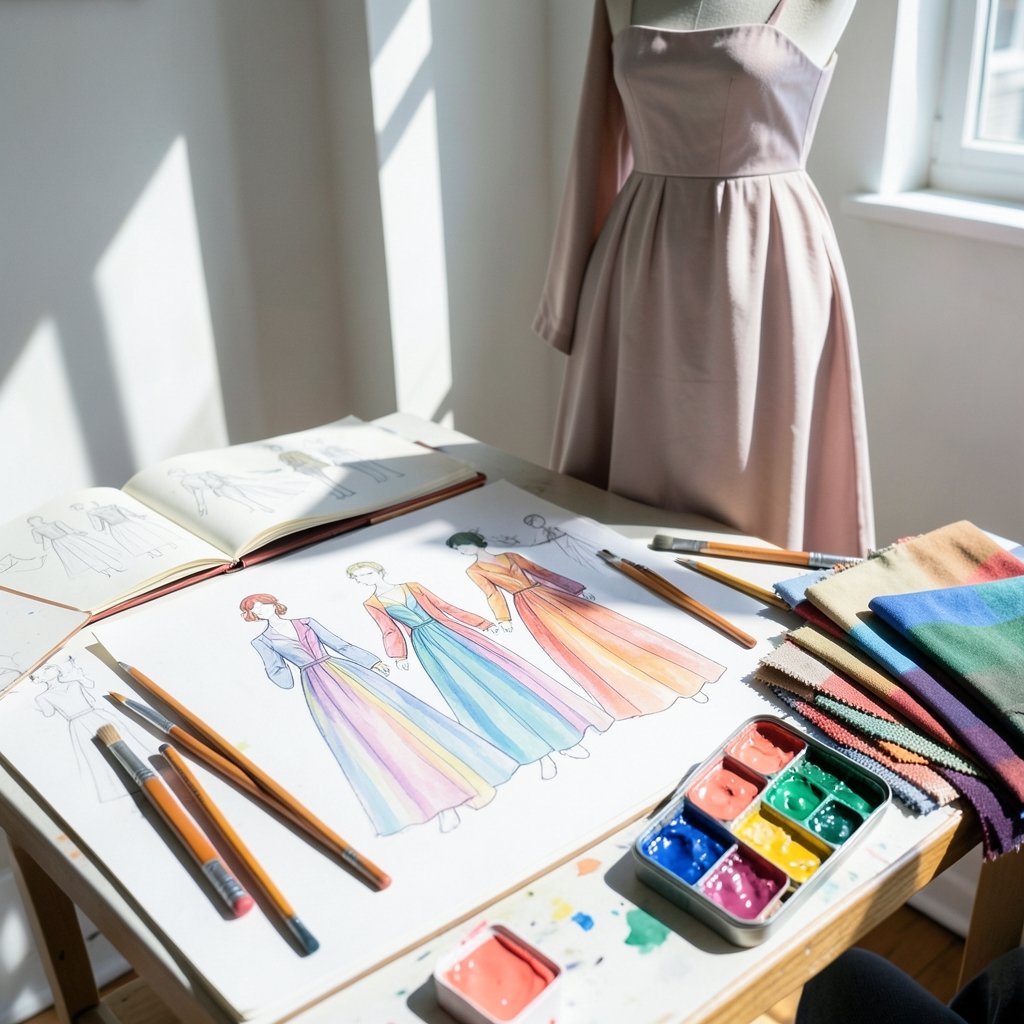
What makes a hand-drawn figure feel more alive than a photograph of a real person? That question drives fashion illustration, an art form that has outlasted photography, digital design, and social media’s endless scroll. It is older than the camera, cheaper than a photo shoot, and still able to make a dress feel like a dream rather than a product.
This guide explains what fashion illustration actually is, how it evolved from hand-colored engravings to live runway sketching, how it differs from technical drawing, and what it takes to do it well in 2026. Whether you are a design student, a brand marketer, or someone who just loves looking at beautiful drawings of clothes, there is something here for you.
What Is Fashion Illustration, Exactly?
Fashion illustration is the art of communicating fashion ideas through drawing or painting. It covers garments, figures, styling, and mood, and it is used by designers, magazines, advertisers, and retailers. The goal is not to document a garment with precision. The goal is to capture its attitude, movement, and personality.
That makes it fundamentally different from a technical flat, the precise line drawing used in garment production that shows seams, measurements, and construction details. A flat answers the question “how is this made?” An illustration answers “how does this feel?”
The boundary between terms is genuinely fuzzy. Sources use “fashion plate,” “fashion illustration,” and “fashion drawing” inconsistently, and that inconsistency has followed the craft for two centuries. Broadly, a fashion plate is a published reproduction of a dressed figure, while fashion illustration is the broader creative discipline.
From Fashion Plates to the Golden Age
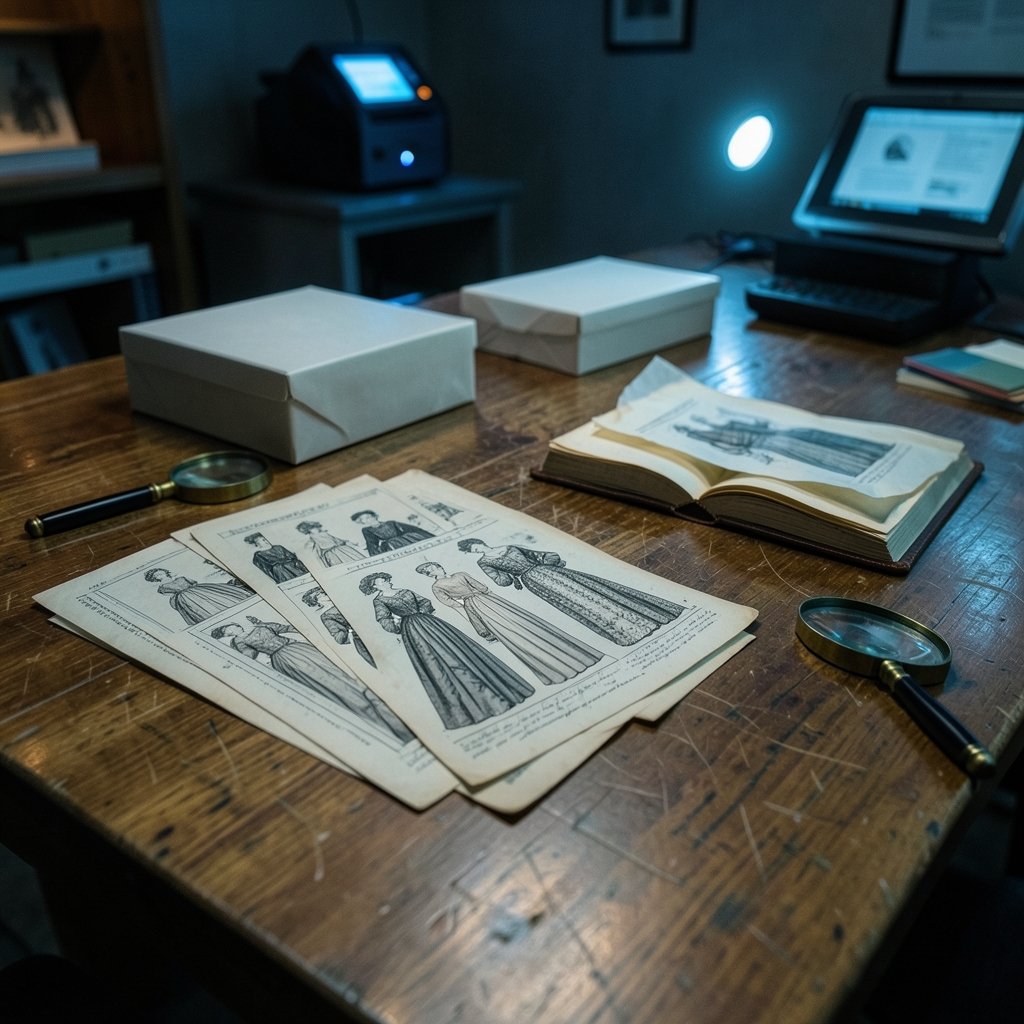
Fashion illustration’s modern form grew out of 18th and 19th century fashion plates, hand-colored engravings published in magazines such as La Mode illustrée and Journal des Dames et des Modes. These plates circulated dress styles across Europe at a time when most readers would never see the original garment in person. The drawing was the fashion industry’s first mass medium.
The craft reached a celebrated high point in the early 20th century. The French luxury publication Gazette du Bon Ton, published from 1912 to 1925, commissioned leading illustrators and is often cited as a pinnacle of the form. The so-called golden age, roughly the 1900s through the 1930s, is associated with figures including Paul Iribe, Georges Lepape, Erté, and later René Bouché and Christian Bérard. Their work treated a coat or a gown as a stage for line, color, and wit.
Major magazines were built on this work. Vogue and Harper’s Bazaar relied on illustrators as primary visual content before photography took over, and the shift toward photography in fashion magazines is generally placed somewhere between the 1930s and the 1950s. There is no single transition date, and the timing varied by publication and country.
Why Photography Didn’t Kill the Drawing
Photography largely displaced illustration in editorial fashion from the mid-20th century onward. A photograph could show fabric drape, fit, and reality in a way no drawing could match. Many predicted the end.
Instead, illustration came back. A revival took hold from the 1990s into the 2000s, driven by advertising commissions, live sketching at runway shows, and independent publishing. The reasons are practical as much as artistic:
| Factor | Photography | Illustration |
|---|---|---|
| Cost and speed | Crew, studio, lighting, retouching | One artist, one surface |
| Editorial control | Subject to reality | Can exaggerate, simplify, idealize |
| Turnaround | Days to weeks | Hours to days |
| Emotional register | Documentary, aspirational | Expressive, suggestive |
| Best use | Product truth, campaign scale | Concept, mood, speed, personality |
Illustration also solves a problem photography creates. A photo shows exactly what a garment looks like. A drawing shows what it means. That gap is where brands live, and it explains why luxury houses keep commissioning illustrators alongside their photo campaigns. The same instinct runs through Italian luxury fashion, where craftsmanship storytelling and drawn imagery tend to travel together.
How Contemporary Illustrators Actually Work
Today’s fashion illustrators work across three main lanes: editorial commissions for magazines and newspapers, commercial work for brands and retailers, and live illustration at runway shows and events. Digital tools such as Procreate have become standard alongside traditional media, and many artists move between paper and screen within a single project.
Live sketching deserves special attention because it is where the craft’s speed becomes visible. An illustrator at a show has minutes, not hours. The result is usually loose, confident, and focused on silhouette and gesture rather than detail. That constraint is a feature, not a bug. Some illustrators have built entire careers on translating runway moments into drawings that circulate faster than the official photos. The work of Angelica Hicks, whose fashion illustrations turn runway moments into shareable art, is a good example of how a single sketch can travel further than a full campaign.
Practical tips that actually work
If you are learning the craft, these habits separate steady progress from frustrated doodling:
- Draw the gesture before the garment. Capture the pose with a single flowing line, then hang the clothes on it. Most beginner drawings fail because the body is stiff, not because the dress is wrong.
- Work larger than feels comfortable. Small paper encourages timid marks. A2 or larger forces the arm to move from the shoulder, which produces the long, confident lines the genre depends on.
- Exaggerate one thing per figure. A longer leg, a sharper shoulder, a tilted head. Nine-to-ten-head proportions are a convention, not a rule, and the strongest illustrations pick a single distortion and commit to it.
- Study fabric along with figures. Spend time drawing how silk pools, how wool holds a crease, how tulle collapses. Illustrators who understand material need fewer lines to describe it.
- Build a speed habit. Set a five-minute timer and draw a full figure. Runway sketching rewards speed, and speed comes from repetition.
Common mistakes to avoid
The most frequent error is over-rendering. Beginners add shading, texture, and detail until the drawing loses its energy. Editors and art directors usually want the opposite: fewer marks, more intention.
The second mistake is treating the face as the priority. In fashion illustration, the face is often minimal because the garment and pose carry the story. A beautifully rendered face on a stiff body reads as a portrait, not a fashion drawing.
The third is ignoring the client’s actual need. A brand commissioning a concept sketch wants atmosphere. A brand commissioning a lookbook image wants clarity about the product. Confusing the two leads to rejected work, no matter how beautiful the drawing is.
Where Fashion Illustration Fits in 2026
The craft is having a visible moment, and it is tangled up with broader shifts in how fashion is consumed. Illustration suits the current appetite for personality and imperfection, which is part of why it keeps showing up in discussions of 2026 fashion trends female and the wider direction of the industry. Drawings feel human in a feed full of polished photography.
That human quality is also a marketing asset. Brands use illustration for capsule launches, invitations, packaging, and social content because it reads as craft rather than advertising. For a deeper look at where the industry is heading, the 2026 Fashion Trends Guide: What’s In, Out & Worth Wearing covers the season’s direction, and the fashion trends 2026 tag collects related coverage.
Illustration also carries cultural memory in a way photography struggles to. The Barbie world tour book that delivers the fashion movie only hinted at leans on drawn and designed imagery to build a world, and the 2010s fashion athleisure streetwear Instagram moment that rewrote the rules shows how visual language shapes what people actually wear. Illustration is part of that language.
For readers who want to follow the craft and the industry without drowning in newsletters, there are smarter ways to curate your sources, including how to find the best fashion substacks without wasting your inbox.
How to Learn Fashion Illustration
Formal training sits inside fashion design and illustration programs at art and design schools, and curricula vary widely between institutions. Some programs emphasize figure drawing and traditional media; others lean digital from day one. Neither approach is wrong, but the fit matters.
A realistic learning path looks like this:
- Fundamentals first. Figure drawing, proportion, gesture, and fabric behavior. These underpin everything else.
- Then media. Pencil and marker build control. Watercolor and gouache teach color mixing and commitment. Digital tools add speed and revision.
- Then specialization. Editorial, commercial, or live work each demand different portfolios.
- Then portfolio. Ten strong, consistent pieces beat forty scattered ones. Art directors hire for a point of view, not a range of styles.
Self-taught illustrators can absolutely succeed. The craft rewards volume of practice more than credentials, and a sketchbook filled with five-minute runway figures will teach faster than a semester of theory.
Conclusion
Fashion illustration has survived for more than two centuries because it does something photography cannot. It edits. It exaggerates. It turns a garment into a feeling and a pose into a story. From the hand-colored plates that spread European dress styles across the continent, through the golden age of Gazette du Bon Ton, past the long photography boom, and into today’s live runway sketching, the craft keeps finding new reasons to exist.
For anyone drawn to it, the path is refreshingly unglamorous: draw constantly, study fabric, exaggerate deliberately, and resist the urge to over-render. The illustrators whose work endures are rarely the most detailed. They are the most decisive. Pick up a pencil, set a timer, and draw a figure in five minutes. That is where the craft begins.
Frequently Asked Questions
What is the difference between fashion illustration and fashion design?
Fashion design is the process of creating garments, including pattern-making, construction, and production. Fashion illustration is the visual communication of those ideas, used for concept development, editorial, and marketing. A designer may illustrate their own work, but the two are separate skills with separate training.
Do fashion illustrators still get work in the age of photography?
Yes. Editorial commissions, brand campaigns, packaging, live event sketching, and social content all sustain working illustrators. Photography dominates product imagery, but illustration remains the faster and more expressive option for concept work and mood-driven marketing.
How long does it take to learn fashion illustration?
Basic competence in figure and garment drawing typically takes six to twelve months of regular practice. Developing a distinctive style and a portfolio strong enough for commissions usually takes several years. Progress depends far more on consistent daily drawing than on formal enrollment.
What tools do fashion illustrators use?
Common traditional tools include pencil, marker, watercolor, gouache, and ink. Digital tools such as Procreate and Photoshop are now standard for speed and revision. Many illustrators combine both, sketching on paper and finishing digitally.
What is a fashion plate, and is it the same thing as an illustration?
A fashion plate is a published reproduction of a dressed figure, historically a hand-colored engraving in a magazine. It is a specific output, while fashion illustration is the broader discipline. The terms are often used loosely and interchangeably in older sources.
Can you become a fashion illustrator without art school?
Yes. The craft rewards practice and portfolio quality over credentials. A self-taught illustrator needs strong figure drawing, fabric knowledge, a consistent style, and a portfolio of roughly ten strong pieces. Formal training helps with structure and feedback, but it is not a requirement.














