

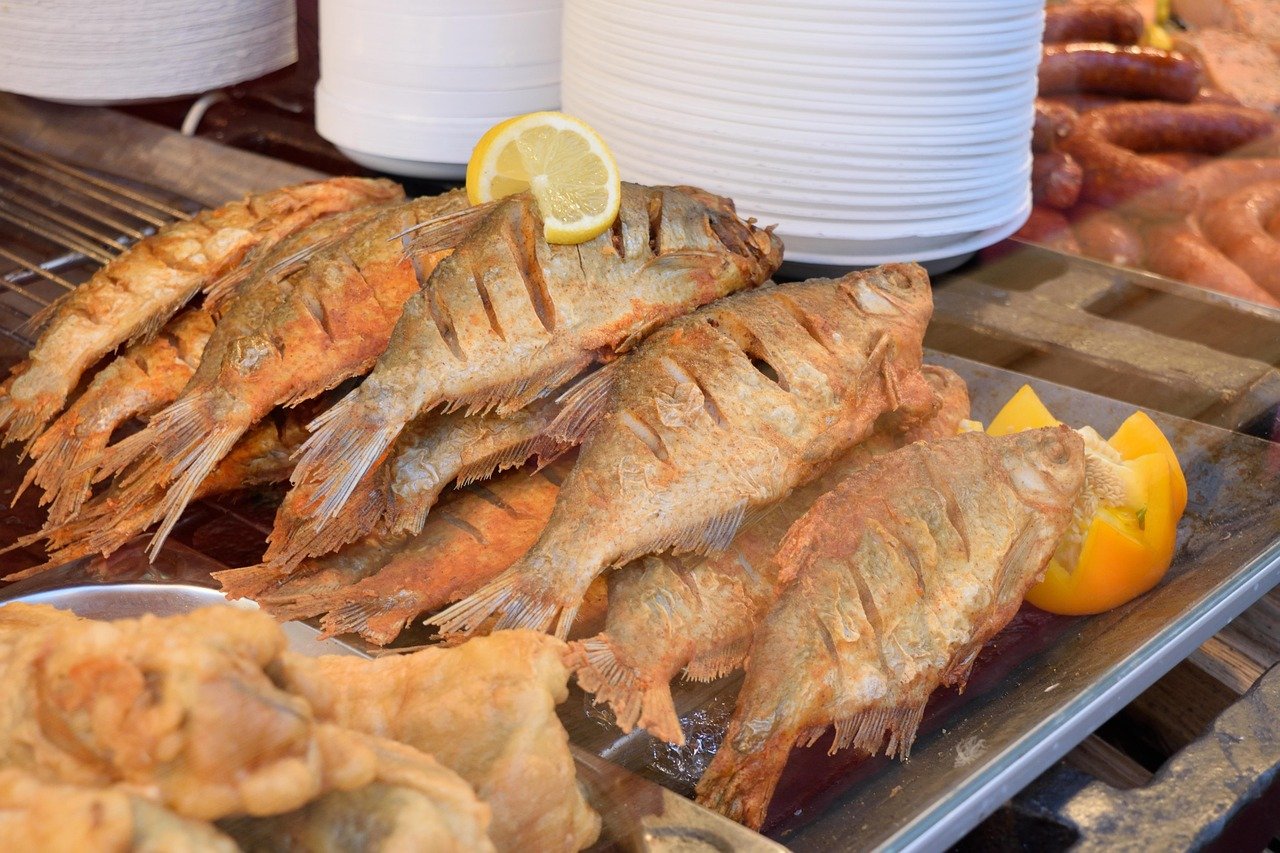

What makes a plate of fried fish with patacones worth a detour rather than a shrug? It comes down to a handful of things you can actually see, smell, and check before you sit down: how fresh the fish is, whether the plantains hit the fryer twice, and whether the place has a clean record. Finding the best pescado frito con patacones near you is less about chasing a single “top ten” list and more about knowing what signals quality and how to search for it properly.
This guide walks through what the dish actually is, how regional naming can wreck your search results, which online tools surface reliable local options, and the red flags that separate a great plate from a forgettable one. It also covers practical ordering tips, price expectations, and how to use public food-safety records as a genuine quality filter.
What pescado frito con patacones actually is
Pescado frito simply means fried fish. Patacones are green plantains sliced into thick rounds, fried once, smashed flat, then fried a second time until the edges turn crisp and golden. The double fry is the whole trick. Skip the second pass and you get something dense and greasy instead of crackly outside and tender within.
The pairing is a staple across Colombia’s Caribbean coast, Panama, and much of the Spanish-speaking Caribbean. The fish is usually a whole specimen, scored and fried until the skin blisters, served with lime, and eaten with your hands or a fork and knife depending on the setting. Patacones stand in for bread or fries. Sometimes you get coconut rice, a simple cabbage slaw, or aji sauce alongside.
That simplicity is why the dish lives or dies on execution. There is nowhere to hide behind sauce. If the fish is old or the oil is tired, you will taste it immediately.
Why your “near me” search keeps giving you the wrong results
Here is the frustration most people hit: you type the dish name, and you get a mix of recipes, travel articles about Cartagena, and a seafood chain forty minutes away. A few things cause this.
Location gating. Map and review platforms return results based on your device location and language settings. If your phone thinks you are somewhere else, or your search language is set to English while the local listings are in Spanish, you get a thinner, less accurate set of options.
Regional naming overlap. In Panama, the fried plantain rounds are almost always called patacones. In Colombia’s interior and in Venezuela, you will see tostones or plátano frito used for similar preparations. A restaurant may list the dish under a completely different name and never use the word patacones at all. If you search only one term, you will miss good kitchens.
Subjective ranking. “Best” depends on whether you care most about price, freshness, portion size, or atmosphere. An algorithm cannot know that. A cheap roadside spot with a line of locals may beat a sit-down restaurant with a polished menu and a higher bill.
The fix is to search in more than one language and more than one term. Try the dish name in Spanish, then try the components separately. Searching for a specific fish plus plantains often surfaces places that a single phrase misses.
How to search like someone who actually lives there
A few habits separate people who consistently find good local food from people who end up at whatever is closest to the hotel.
- Search in Spanish first. Try variations of the dish name and the fish type. Local spots are often listed only in Spanish, and English-language roundups tend to recycle the same handful of tourist-facing places.
- Use map results as well as review sites. Map listings show what is actually close, including small spots that never make it into editorial lists. Zoom into residential neighborhoods rather than the waterfront.
- Read the most recent reviews, not the highest-rated ones. A place with a 4.2 average and fifty reviews from the past three months tells you more than a 4.8 average frozen two years ago. Look for reviews that mention the fish specifically.
- Check photos for the fry. User photos of the patacones are your best evidence. Look for visible crisp edges and a golden color rather than pale, limp rounds sitting in oil.
- Look for a line at lunch. Busy local lunch traffic is a good sign of freshness. Fish does not keep, so high turnover matters.
If you are also sorting out other local-service searches, the same logic applies: specificity and recent, location-anchored results beat generic lists. That is true whether you are hunting for a good meal or working through something like laser hair removal near me and trying to tell a well-run clinic from a rushed one.
The quality signals that matter most
Once you have a shortlist, judge it on things you can verify rather than on marketing language.
| Signal | What good looks like | What to avoid |
|---|---|---|
| Fish freshness | Firm flesh, clear eyes if whole, no ammonia smell | Mushy texture, strong “fishy” odor, fish that tastes flat |
| Patacones | Crisp edges, fluffy center, served hot | Pale, greasy, or chewy rounds sitting under a heat lamp |
| Frying oil | Light color, no lingering burnt smell | Dark oil, smoke, a bitter aftertaste |
| Turnover | Steady local lunch crowd | Empty room at peak hours |
| Sides | Fresh lime, simple slaw, made-to-order rice | Sides that look like they have been sitting all day |
| Inspection record | Current, passing, no repeated critical violations | Recent critical violations or lapsed permits |
The oil point deserves emphasis. Reused oil is one of the most common shortcuts in fried-fish kitchens, and it shows up in the taste before it shows up anywhere else. If the patacones taste bitter or leave a coating on your tongue, the oil is past its prime.
Use public food-safety records as a real filter
Here is a step most people skip, and it is the most objective one available. In the United States, restaurant inspection results are public through city or county health department portals. Many of these let you search by restaurant name or address and see inspection dates, scores, and the specific violations found.
Fried fish is a high-risk item for temperature control. Fish needs to be held cold before cooking and cooked to a safe internal temperature, and fried food depends on oil that is changed and held at the right heat. These are exactly the areas inspectors check. A restaurant with a current passing inspection and no repeated critical violations is a safer bet than one with a pattern of temperature or storage problems.
A practical approach: shortlist three or four places from your map search, then check each one against your local health department’s public records. You will occasionally find that the most photogenic option has a spotty record. That is worth knowing before you order.
Ordering tips that improve the plate you get
A few small moves at the table make a real difference.
Ask whether the fish is fried to order. At a busy spot, it usually is. At a quiet one, it may have been holding. If the kitchen is slow, ask what is freshest that day rather than defaulting to the same fish every time.
Ask for the patacones to come out with the fish, not before. Some kitchens plate them early and they go soft while the fish finishes. If they arrive limp, send them back. A good kitchen will refry them without complaint.
Use the lime. It cuts the richness of the fry and brightens the whole plate. Squeeze it over the fish immediately, not at the end.
Eat it there. Fried fish and patacones do not travel well. The crust softens in a takeout container within minutes, and the whole point of the double fry disappears. This is a dish to eat at a table, ideally within sight of where it was cooked.
What to expect on price
Fried-fish plates at casual, local spots have historically been inexpensive relative to sit-down seafood restaurants, and they remain one of the better values in coastal cooking. Prices vary widely by country and by city, and they have moved with inflation in recent years, so treat any specific figure you read online as a rough guide only.
As a rule of thumb, a whole fried fish with patacones at a casual spot should cost meaningfully less than the same dish at a restaurant with tablecloths and a view. If the price seems high for the setting, you are often paying for location rather than food. The best-value plates tend to be a few blocks back from the waterfront.
Common mistakes people make
The biggest one is searching in only one language and one term, then concluding there is nothing good nearby. Widen the vocabulary before you widen the radius.
The second is trusting a single aggregate rating. Ratings blend in people reviewing the ambiance, the service, and the drinks. Read for mentions of the fish and the patacones specifically.
The third is choosing the closest option at peak hunger. A ten-minute walk in the wrong direction often separates a tourist-facing average plate from a genuinely good one. This same principle holds across most local searches, whether you are looking for a Chinese restaurant you can find fast or figuring out which at-home face treatments actually work and which backfire. Convenience and quality are frequently in different places.
The fourth is ordering takeout. Fried food and steam are enemies.
Conclusion
Finding the best pescado frito con patacones near you is a search-skills problem more than a luck problem. Search in Spanish as well as English, use map results to find neighborhood spots that never make editorial lists, read recent reviews for mentions of the fish rather than the vibe, and check public inspection records before you commit. Then judge the plate on what is in front of you: crisp-edged patacones, fresh fish, clean oil, and a lime wedge you actually use.
The dish rewards places that do a few simple things well and punishes places that cut corners. Once you know the signals, you will spot the difference from the doorway.
Frequently asked questions
What is the difference between patacones and tostones?
They are essentially the same preparation: green plantains sliced, fried once, smashed flat, and fried again. Patacones is the term most common in Panama and Colombia’s Caribbean coast, while tostones is more common in the Spanish-speaking Caribbean and parts of Colombia’s interior and Venezuela. If a menu uses one term and you were searching for the other, you may have skipped a good option.
Why does searching “near me” give different results on different apps?
Map and review platforms rank results using your device location, your language settings, and their own ranking signals. Two people standing on the same corner can get different lists. Searching in Spanish and checking map results directly, rather than relying on a single review site, gives you a more complete picture.
Is fried fish with patacones safe to eat?
It is safe when the kitchen handles it properly. Fish must be kept cold before cooking and cooked through, and frying oil must be changed and held at the correct temperature. These are standard inspection points. Checking your local health department’s public inspection records for a restaurant is a practical way to confirm it has a current passing record.
How can I tell if the patacones are made fresh?
Look at the edges. Freshly double-fried patacones have crisp, slightly browned rims and a fluffy interior. Pale, uniformly greasy rounds that taste flat usually mean the oil is too cool or the plantains were fried once and held. If they arrive limp and soft, ask for a fresh batch.
Should I order pescado frito for takeout?
It is better eaten at the table. The crust on both the fish and the patacones softens quickly in a closed container, and the dish loses the texture that makes it worth ordering. If you must take it away, keep the lid open on the ride home and eat it as soon as you can.
What should I look for in a good fried fish plate?
Firm flesh with no ammonia smell, a blistered and crisp skin, patacones with crisp edges served hot, clean-tasting oil with no bitterness, and fresh lime on the side. A steady local lunch crowd is a strong sign of good turnover, which matters most for a dish built on a perishable ingredient.














