A cherry blossom escape is a trip built around a flower that lasts about a week. That sounds simple, and it is, until you try to book it. The blossom opens when the weather says so, not when your holiday starts. A warm March brings it forward by days, a cold snap holds it back, and a single windy afternoon can strip a tree that was perfect the day before. Planning a blossom escape is therefore less about choosing a hotel and more about building a trip that can bend.
The good news is that blossom is predictable enough to plan around, if you plan the right way. The forecasts are published in January and updated weekly. The blossom opens in a wave, from the south of Japan to the north, so a missed week in Kyoto can become a perfect week in Hirosaki. And the season is long if you count every variety, from the early weeping blossom in March to the deep pink Kanzan in late April, and the long Vancouver season that runs into May.
This guide walks through the nine steps that make a blossom escape work, from reading the forecast to packing for blossom wind, so you can meet the trees at their best instead of arriving a week too late.
Key takeaways
- Plan around the blossom forecast, published in January and updated weekly, not around a fixed calendar date.
- Choose your region by the blossom variety it grows, because different varieties open weeks apart.
- Keep your dates flexible by a few days on either side, and have a second region in mind if the bloom shifts.
- Walk to the trees from your stay, travel by train and on foot, and visit at dawn or after dark for the quiet hours.
- No plan guarantees full bloom, and a trip that only works if the trees cooperate is a gamble, not a plan.
What a cherry blossom escape actually involves
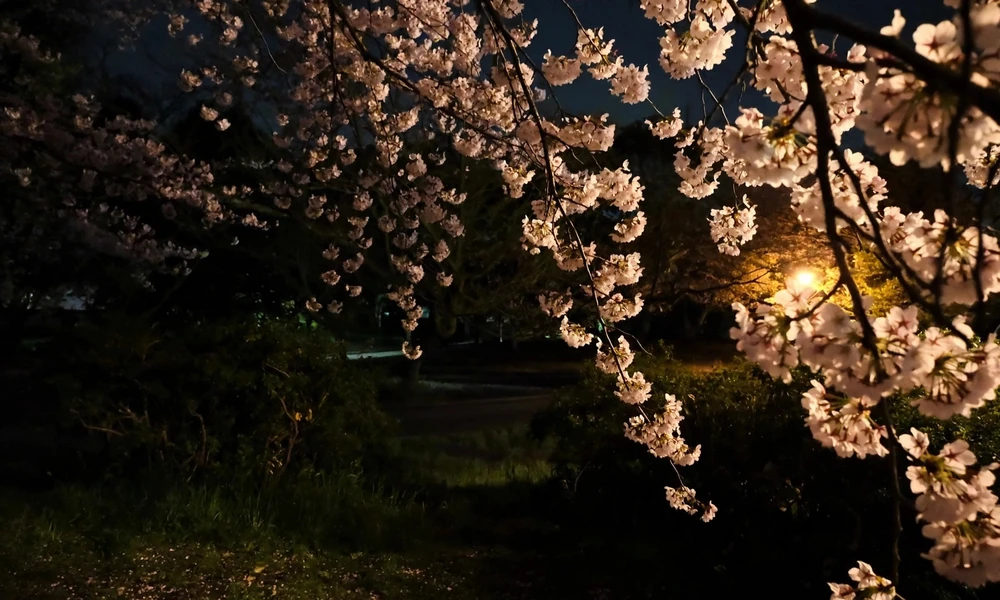
A cherry blossom escape is a short spring trip, usually three to five nights, centred on one blossom region. The days are simple. Walk under the trees in the morning, eat well at midday, rest in the afternoon, and walk again in the evening when the trees are lit. The evenings matter as much as the mornings. Blossom lit up after dark, yozakura, is quieter, cooler, and often more beautiful than the midday view, and the best escapes leave the evening free for it.
It is not a sightseeing sprint. The blossom is the sight, and everything else, the garden, the temple, the market, the kitchen, is the reason to stay when the petals fall. A good escape has two or three of those second reasons built in, so a rainy day or an early petal fall does not ruin the trip.
It also helps to understand the wave. Blossom opens first in the warm south, in late March, and moves north over the following weeks, reaching Hirosaki in late April. Within one city, the varieties open in sequence: the pale Somei Yoshino first, then the deeper pinks, then the late Kanzan.
How to plan a blossom escape and what to look for
Start with the forecast, not the flight. The official blossom forecasts are published in January and revised every week as the weather changes. Read the first one, then check it again in February, and again a week before you travel. A forecast that moves by five days is normal. A plan that cannot move by five days is a problem. Our guide to the best time to visit Japan month by month is a useful companion here, because it shows how the seasons shift across the country.
Look next at the stay itself. A good blossom base is a short walk from the trees, with a room that faces the garden or the river, and a change policy that lets you move your dates by a few days without a heavy fee. Some stays hold rooms for the forecast week and release them once the first buds open. That flexibility is worth more than a larger room or a better restaurant when the whole trip depends on a flower. The same thinking applies to other flower-led trips, and our guide to planning a tulip farm escape follows the same rule: book for the bloom, not for the calendar.
Finally, look at the journey between places. Blossom regions are best reached by train and explored on foot. The roads around the famous parks are slow in peak week, parking is scarce, and a car becomes a burden rather than a freedom.
The 9 steps to planning a cherry blossom escape
Follow the blossom forecast, not the calendar date
What to do: Read the official blossom forecast when it is published in January, then check it every week. Note the predicted opening date and the predicted full bloom date for your region, and plan your trip to arrive a day or two before full bloom.
What to avoid: Do not fix your dates in November and hope the trees agree. Best for: Every blossom traveller, first-time or returning. Time needed: An hour of reading, spread over the winter. Standout tip: The forecast for the opening date matters more than the one for full bloom, because the opening date is the one that moves first.
Choose your region by the blossom variety it grows
What to do: Learn which variety grows in each region you are considering. Somei Yoshino is the pale pink classic of Kyoto and Tokyo. Kanzan is the deep pink late bloomer. Shidarezakura, the weeping cherry, opens early and lasts longer. Pick the region whose variety matches the week you can travel.
What to avoid: Do not assume every region blooms at the same time. Best for: Travellers with a fixed week who still want full bloom. Time needed: An evening of reading before you book. Standout tip: If your week is late, look north or look for Kanzan. Both open after the classic bloom has finished.
Sleep in a blossom town and walk to the trees
What to do: Choose a stay inside the blossom town, within a short walk of the trees. Check the walking distance on a map before you book, and prefer a room that faces the garden, the river, or the park.
What to avoid: Do not stay an hour’s drive away and plan to visit by car. Best for: Anyone who wants the quiet hours, dawn and dusk, under the trees. Time needed: A morning of comparing stays on a map. Standout tip: A room with a blossom view is worth a smaller room, because you will see the trees every time you wake up.
Let the festival date set the trip, not the other way round
What to do: Find the festival dates for your region and build your trip around them. Festivals bring evening lighting, food stalls, and performances, and they are scheduled to match the bloom, so they are a useful second forecast.
What to avoid: Do not book your flights first and then discover the festival is a week earlier or later. Best for: Travellers who want the full blossom atmosphere, not just the trees. Time needed: An hour of checking festival calendars. Standout tip: The festival’s opening day is often a better guide to the bloom than any single forecast, because the organisers watch the trees closely.
Arrive before the crowds for the quiet hour
What to do: Plan your main blossom walk for the first hour after dawn, before the tour groups and the picnic crowds arrive. Eat breakfast early, walk while the light is soft, and return to your stay for a slow late morning.
What to avoid: Do not plan your only blossom walk for midday in peak week. Best for: Photographers, quiet travellers, and anyone who dislikes crowds. Time needed: One early morning, about two hours. Standout tip: The quiet hour is also the best light for photographs, soft and low, with the petals glowing rather than glaring.
Travel by train and on foot, not by car
What to do: Use the train to reach your blossom region, and walk between the trees, the garden, and your stay. Buy a rail pass if you are moving between regions, and keep your luggage light enough to carry to the station.
What to avoid: Do not drive to a famous blossom park in peak week. Best for: Travellers moving between two or more blossom regions. Time needed: A morning of planning routes and passes. Standout tip: The train window is part of the trip. In blossom season, the countryside from the window is often in bloom too.
Learn the five petal types before you buy a sapling
What to do: Before you buy a cherry sapling, a blossom print, or a souvenir, learn the five petal types: single, semi-double, double, weeping, and late. Ask the seller which one you are buying, and check whether it will grow in your climate.
What to avoid: Do not buy a sapling that needs a cold winter if you live somewhere warm. Best for: Gardeners and souvenir hunters. Time needed: Half an hour of reading before you shop. Standout tip: A blossom print or a small ceramic is a safer souvenir than a living tree, and it will not die in your suitcase.
Pack layers for blossom wind, not winter cold
What to do: Pack light layers, a windproof jacket, and comfortable walking shoes. Mornings are cool, afternoons are warm, and the wind that strips the petals will also chill you if you are standing under the trees for an hour.
What to avoid: Do not pack a heavy winter coat, or only summer clothes. Best for: Every blossom traveller, especially in the north. Time needed: An evening of packing. Standout tip: A scarf is the most useful single item. It warms you in the morning, and it catches petals in the afternoon.
Save one evening for blossoms lit up after dark
What to do: Keep one evening free for yozakura, the blossom lit up after dark. Walk the lit path slowly, eat from a stall if there is one, and stay until the crowd thins and the trees are quiet.
What to avoid: Do not fill every evening with a restaurant booking. Best for: Couples, photographers, and anyone who wants the calmest blossom of all. Time needed: One evening, about two hours. Standout tip: The lit blossom is best seen from a little distance, where the whole tree glows, rather than from directly underneath it.
Which region to choose for your dates
If you can travel in late March, start in the south. Kyoto and Tokyo open first, with the pale Somei Yoshino, and the cities are at their most beautiful. The risk is a cold snap, so keep a flexible day and a second region in mind. A sunflower farm escape is a different kind of flower trip, but it follows the same lesson: the bloom sets the date, and the traveller follows it.
If your week is in early April, you have the widest choice. Most of Japan is in bloom, Seoul and Washington DC are open, and the festivals are running everywhere. It is also the busiest week, so book early, walk at dawn, and keep your evenings free for the lit blossom.
If you can only travel in late April, go north or go west. Hirosaki is just opening, the deep pink Kanzan is at its best, and Vancouver is in full swing. The crowds have gone, the prices have dropped, and the blossom is just as beautiful, only quieter.
The caveats that matter
The first caveat is the forecast itself. It is published in January and updated weekly, but it can move by a week in either direction, and a single warm spell can bring the bloom forward by days. A trip with no flexible days is a gamble. The safest plans are the ones that can move by three or four days, or that sit in a region where the season is long enough to absorb a shift.
| Detail | What is known |
|---|---|
| First forecast | Published in January, updated weekly as the weather changes |
| Typical trip length | Three to five nights in one blossom region |
| Best time of day | The first hour after dawn, and the lit-up evening after dark |
| What moves the bloom | Warm spells bring it forward, cold snaps hold it back, wind strips petals fast |
| Best way to travel | Train to the region, then on foot between the trees and your stay |
| Who should keep dates flexible | Anyone travelling for the bloom itself, rather than for a fixed holiday |
| What to avoid | Fixing dates in November, driving to a famous park in peak week, or filling every evening |
| What a plan cannot do | It cannot guarantee full bloom, and it cannot make the petals wait |
The second caveat is the crowd. Peak week in Kyoto, Tokyo, and Washington DC brings the largest crowds of the year, and the famous parks are full by mid-morning. That does not make them unenjoyable, but it does mean the best blossom is the blossom you see at dawn or after dark.
Checklist: planning a cherry blossom escape honestly
Use these checks before you book, and again a week before you travel.
- Check the forecast: read it in January, and check it again every week until you travel.
- Check the variety: know which cherry grows in your region and when it usually opens.
- Check the stay: it should be a short walk from the trees, with a flexible change policy.
- Check the journey: plan to travel by train and on foot, not by car, in peak week.
- Check the quiet hours: keep your mornings early and one evening free for the lit blossom.
- Check the second reason: make sure the trip is worth it even if the petals fall early.
Frequently asked questions
When should I book a cherry blossom trip?
Book the stay as early as you can, but keep the dates flexible. For peak week in Kyoto or Tokyo, the best rooms sell out months ahead. For late season and smaller towns, a few months is usually enough. The key is a change policy that lets you move by a few days once the forecast firms up.
What if the blossom opens early and I miss it?
Move north, or move to a later variety. The bloom opens in a wave from south to north, so a missed week in Kyoto can become a perfect week in Hirosaki. The deep pink Kanzan also opens two or three weeks after the classic bloom, and Vancouver runs into May.
Is cherry blossom season very crowded?
At midday in peak week, yes, the famous parks are full. At dawn and after dark, they are quiet. Plan your walks for the quiet hours, use the middle of the day for food and rest, and the crowds become a background rather than a problem.
Do I need a guide for a blossom trip?
Not usually. The trees are easy to find, the parks are well signed, and the festivals are simple to join.
What is yozakura?
Yozakura is cherry blossom lit up after dark. Many parks and gardens light their trees in the evening during the season, and the effect is quieter and more dramatic than the daytime view. It is worth saving one evening for, and it is often less crowded than the daytime.
Can I plan a blossom trip outside Japan?
Yes. Seoul, Washington DC, Bonn, Vancouver, and the Jerte Valley all have serious blossom, and each one has its own character and festival. Japan has the most famous displays, but a good blossom trip does not need a long-haul flight.
The bottom line
A cherry blossom escape works when the plan bends. Follow the forecast, choose your region by the variety it grows, sleep within walking distance of the trees, and keep your mornings early and one evening free for the lit blossom. The flower will not wait for you, but a flexible plan will usually find it.
Book the stay early, keep the dates movable, travel by train, and walk. If the petals fall early, the garden, the market, and the kitchen are still there. And if you meet the trees at their best, a single quiet morning under the blossom is worth the whole trip.