


Quick Answer: What Makes Haute Couture Worth $100,000? An Honest Look?
Haute couture commands six-figure prices because it is not clothing in the ordinary sense but a legally protected French craft built on handwork, rare materials, and a personal fitting process that can stretch across hundreds of hours. The money buys multiple fittings, a dedicated atelier team, and a garment that exists only for one body.
The label itself is regulated. Only a small club of houses may legally call their work haute couture, and they must meet strict rules on staffing and seasonal output. That scarcity props up prices in a way ready-to-wear never can.
Before deciding whether the price is fair, a buyer should weigh hours of labor, fabric and embroidery cost, atelier overhead, the fitting process, resale and rental value, and what the house actually delivers beyond the dress.
Why a Dress Can Cost More Than a House Deposit
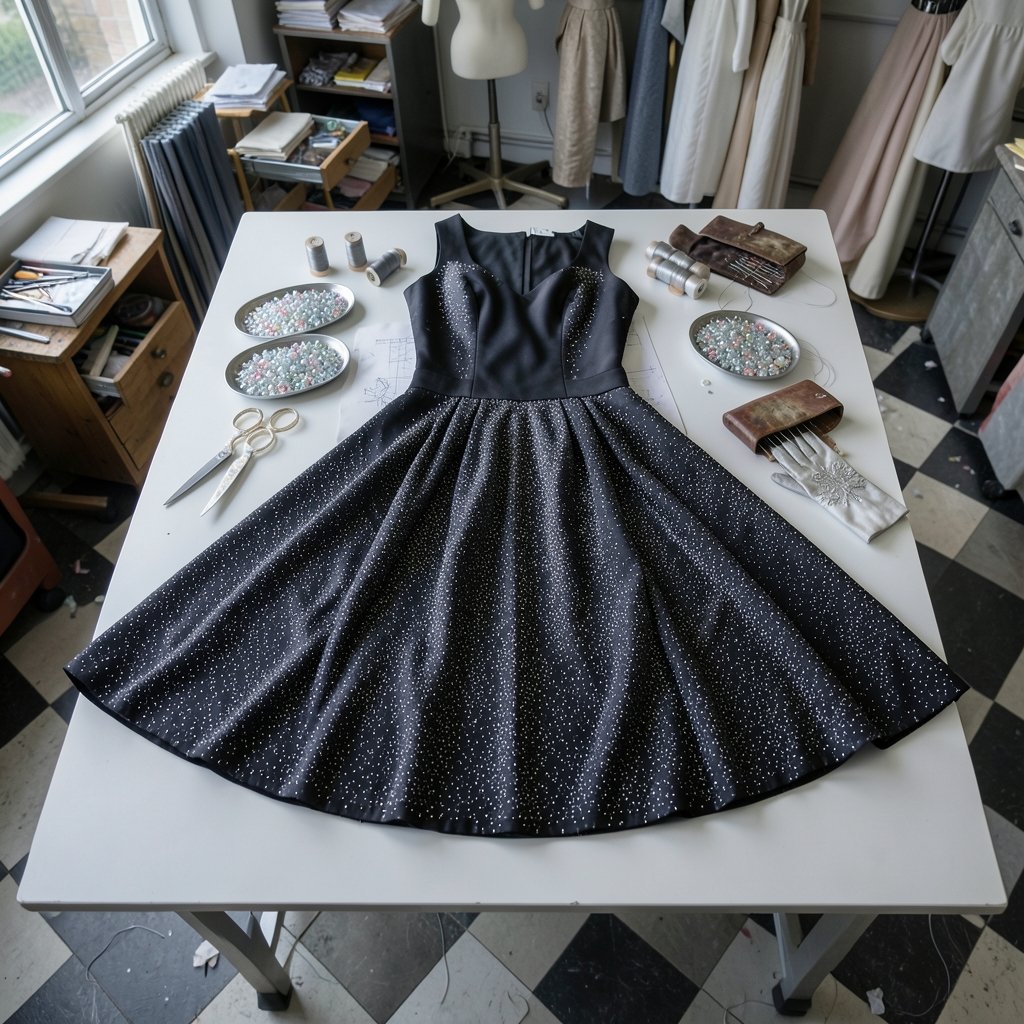
Ever wondered how a single gown ends up priced like a small apartment? The answer is less about fabric and more about time, law, and scarcity.
Haute couture sits at the very top of the fashion pyramid. The term is French, legally protected, and reserved for garments made to order for a specific client, by hand, using rare and expensive materials. A dress from a beginner couturier started at no less than $100,000 for daytime events, while heavily embroidered black-tie pieces have reached $800,000, according to a Portuguese-language encyclopedia overview of the craft.
That price range surprises people. It should. The same overview notes that roughly 4,000 people worldwide actually wear haute couture, with most clients based in China and the Middle East. When your customer base is smaller than a mid-sized town, every garment carries the weight of the entire operation.
The Legal Rules That Keep Prices High
Here is the part most shoppers never hear. Haute couture is not a marketing phrase you can slap on a label. In France, a governing body called the Chambre Syndicale de la Haute Couture oversees the designation, and its rules are famously strict.
To earn official status, a house must employ at least 20 full-time skilled technicians in France and present a minimum of 50 new designs for day and evening wear in each of the two fashion seasons. Newer houses get somewhat looser terms while they build up. This is not a gentle guideline; it is a gate that keeps most brands out entirely.
The practical effect is simple. If a house wants the label, it must carry a permanent payroll of highly trained artisans and produce two full collections a year whether or not anyone orders them. Those costs do not disappear. They get folded into the price of every gown that does sell. This is the same dynamic that makes certain niche products feel overpriced until you see the machinery behind them, much like the economics behind the best instant coffee worth drinking once you factor in sourcing and process.
Where the Hours Actually Go
A tailored Savile Row suit takes around 90 hours to make. A single couture gown can consume over 1,000 hours in the atelier. That comparison, drawn from reporting on how houses earn couture status, explains a lot about the price gap.
Those hours are not spent idly. They cover hand-sewn seams, beadwork applied one stitch at a time, draping on a live model, and multiple rounds of alteration. A wedding dress can absorb 1,000 hours on its own, and one designer dress can take hundreds of hours to complete.
Think about what 1,000 hours means in labor terms. Even at modest artisan wages, that is a substantial sum before a single meter of silk enters the equation. Add embroidery with precious metals and hand-cut crystals, and the material cost climbs fast.
The petites mains factor
The technicians who do this work, often called petites mains, are among the most skilled garment makers in the world. Many train for years before touching a couture piece. Their expertise is the product. When people ask what a $100,000 dress is made of, the honest answer is people.
What the Price Tag Really Covers
Breaking the number down helps separate myth from reality. The table below shows the main cost drivers behind a six-figure gown.
| Cost driver | What it involves | Why it matters |
|---|---|---|
| Atelier labor | Hundreds to over 1,000 hours of handwork | The single largest cost component |
| Materials | Rare fabrics, hand embroidery, precious embellishments | Can escalate quickly with beadwork and metals |
| Fittings | Multiple in-person sessions on the client’s body | Requires staff time and travel |
| Regulatory overhead | 20+ full-time artisans, 50 designs per season | Fixed costs spread across few sales |
| Scarcity | Roughly 4,000 clients worldwide | Limited volume means higher unit price |
Notice what is missing: mass production, marketing scale, and inventory. Couture has none of these. Each piece is a one-off, and there is no warehouse full of stock to amortize the cost.
The Client Experience Is Part of the Product
A couture purchase is closer to commissioning a portrait than buying a dress off a rack. The client meets the designer, gets measured, returns for fittings, and watches the garment take shape over weeks or months.
That intimacy has real commercial value. As luxury shoppers become pickier, couture is increasingly used as a tool for top-tier clients, with brands courting younger wealthy customers as long-term relationships rather than one-time sales. The personal service is the hook.
Some designers are refreshingly blunt about it. After a Balenciaga couture show, Demna said plainly that nobody really needs couture. He is right. That honesty is useful, because it reframes the question. The value is not necessity. It is craft, access, and the experience of owning something that will never be replicated.
For the few houses that play the game, the payoff goes beyond the gown itself. Couture generates press and red-carpet moments that lift sales of ready-to-wear, beauty, and fragrance. Orders from a single client can reach into the millions. The dress is the visible tip of a much larger business.
Is It Actually Worth It? An Honest Verdict
Here is where a balanced look matters. For most people, no. A $100,000 gown is not a rational purchase by any normal financial measure, and pretending otherwise insults the reader.
But worth is not only financial. For a client who values hand craftsmanship, has the means, and wants a garment built around her exact body, couture delivers something no other tier of fashion can. The question is whether those things matter to the buyer.
There is also a practical trap worth naming. Some shoppers confuse couture with high-end ready-to-wear and pay couture-adjacent prices for factory-made pieces. The label is legally protected, so check whether a house is an official member before assuming the price reflects handwork. A brand can be luxurious without being couture.
A second common mistake is underestimating the timeline. Fittings take months, and rushing the process defeats the purpose. Buyers who need a dress in three weeks should look elsewhere.
The same logic of “is the premium justified?” shows up across consumer categories, from whether the best cafes in San Francisco are worth a detour to whether a Cadillac margarita earns its upgrade price. In each case, the answer depends on what the buyer values, not on a universal formula.
How to Judge a Couture Price Before You Commit
Practical buyers can protect themselves with a short checklist. None of these steps require expertise, just attention.
- Confirm the house holds official haute couture status, not a similar-sounding marketing term.
- Ask how many atelier hours the piece will take and who does the work.
- Request a clear breakdown of fabric and embellishment costs.
- Understand how many fittings are included and what happens if the timeline slips.
- Ask about alterations after delivery and any archive or resale support.
- Compare against a bespoke tailor if you mainly want fit rather than embellishment.
That last point matters. A skilled bespoke tailor can deliver an exceptional fit for a fraction of the price. What they cannot easily replicate is the embroidery ateliers and the couture house name. Knowing which element you actually want keeps you from overpaying for the wrong thing.
The Wider Luxury Context
Couture does not exist in a vacuum. The personal luxury goods market fell to $419 billion in 2025, down 2% in current-currency terms, according to Bain & Company’s luxury report as cited in industry coverage. When the overall market softens, brands lean harder on their most exclusive clients.
That shift makes couture more strategically important, not less. Houses use it to deepen relationships with the customers who keep spending when everyone else pulls back. The gown becomes a loyalty instrument as much as a garment.
For observers, this explains why couture week keeps happening even though the client list is tiny. The shows are marketing, relationship-building, and craft showcase all at once. The dresses that sell fund the spectacle that sells everything else.
Curious readers who enjoy tracing why premium products cost what they do often find the same pattern in other industries, from open-world games that justify their price to beauty products that live up to big claims. Scarcity, skill, and story usually explain more than raw materials.
Conclusion
So what makes haute couture worth $100,000? Not the fabric alone, and certainly not necessity. The price reflects a legally protected craft, a permanent payroll of elite artisans, hundreds to over a thousand hours of handwork, multiple personal fittings, and a client base of roughly 4,000 people worldwide. Add the marketing and relationship value houses extract from couture, and the number starts to make a strange kind of sense.
Is it worth it for you? That depends on whether you want a garment built only for your body, made by hands you can name, and priced accordingly. If you want fit alone, a bespoke tailor is the smarter spend. If you want the full couture experience, go in with clear eyes about what you are buying and what you are not. The honest answer is that couture is worth its price to a very small group of people, and that is exactly the point.
Frequently Asked Questions
Can anyone buy haute couture, or is it invitation only?
Anyone with the funds can generally request a couture appointment, though houses are selective about who they take on as clients. There is no legal barrier, but practical access often depends on relationships and the house’s capacity. Many brands prioritize existing top-tier clients.
How long does a couture gown take to make?
Timelines vary widely, but months are normal. A single gown can absorb hundreds of hours, and elaborate wedding dresses have been reported at around 1,000 hours. Multiple fittings stretch the calendar further, so buyers should plan well ahead of any event.
Is haute couture the same as high-end ready-to-wear?
No. Ready-to-wear is produced in standard sizes and sold off the rack, even at luxury prices. Haute couture is made to order for one client, by hand, and the term is legally protected in France. A brand can be very expensive without being couture.
Why do only a handful of fashion houses qualify as haute couture?
The rules are strict. A house must employ at least 20 full-time skilled technicians in France and present at least 50 new designs each season. Those requirements demand permanent investment, which keeps most brands out of the official club.
What is the most expensive haute couture dress ever reported?
Prices have reached extraordinary levels. Heavily embroidered black-tie gowns have been reported at up to $800,000, with some pieces approaching $1 million. Even the simplest couture designs have started around $50,000 in reported ranges.
Does a couture dress hold its value?
Not reliably. Couture is personal, made for one body, which limits resale appeal compared with iconic ready-to-wear pieces. Some archive-worthy designs appreciate, but buyers should treat couture as a consumption choice rather than an investment.











