

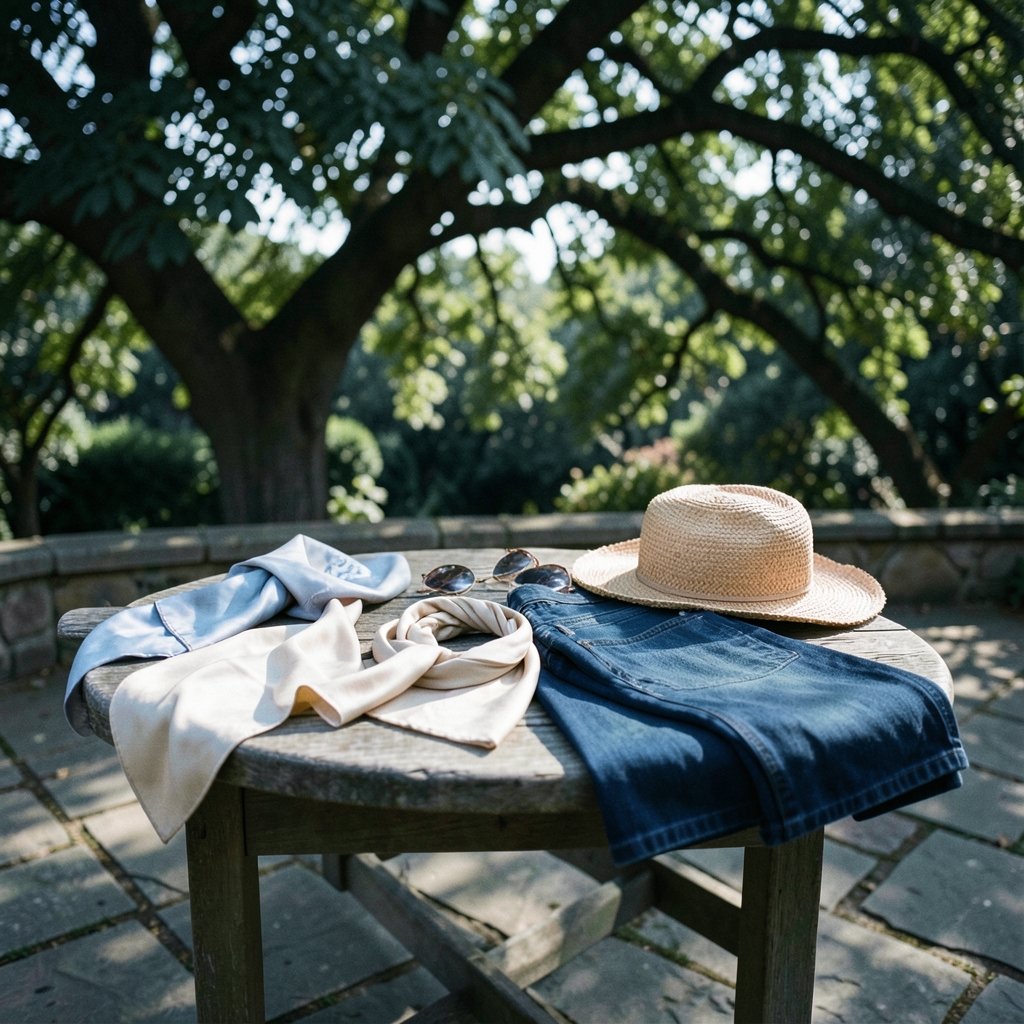
What if one square of fabric could replace half the accessories in your drawer? That is the quiet power of a silk scarf. Folded one way, it reads as a polished neckerchief. Folded another, it becomes a belt, a head wrap, or even the top half of an evening look.
The trick is knowing which fold suits which outfit, and in what order to tie it so the knot stays put. Below are ten complete looks, each with the fold, the outfit pairing, and the result you should expect. Every one of them uses pieces most people already own.
What You Need Before You Start
Three things matter more than the knot itself: scarf size, fabric weight, and a mirror at chest height.
| Scarf size | Best for | What it will not do |
|---|---|---|
| 50×50 cm (small square) | Head wraps, neck knots, bag handles | Halter tops, shawl draping |
| 70×70 cm (medium square) | Belts, headbands, shoulder bows | Full coverage wraps |
| 90×90 cm or larger | Tops, shawls, hip ties, hair wraps | Neat little neck knots |
Smooth silk causes less friction on hair than cotton, which makes a headscarf a practical choice on a windy day as well as a pretty one. That detail matters if you plan to wear the scarf in your hair for hours rather than minutes.
Before tying anything, press the scarf flat. A crease through the middle of a printed square shows up in every photo. If you are working with a slippery fabric, keep a couple of small invisible pins within reach; they hold folds at the temples and at the shoulder without damaging the silk.
1. The French Hip Tie

This is the look that replaced the prim under-the-chin knot. Tie the scarf very low on the hips, over a slightly oversize white shirt or a black spaghetti-strap dress. The key rule: it never goes through the belt loops. The ends hang to one side, the knot slips as you move, and it rarely finishes the day where you placed it. That looseness is the point.
Expected result: an outfit that looks styled rather than accessorized. Pair it with straight-leg jeans and a tucked knit for daytime, or a slip dress for evening. If you want more ways to build a wardrobe around a single bold piece, the guide to Acubi fashion’s Korean subculture look rewriting street style shows how one statement element can carry a whole outfit.
2. The Top Knot Head Wrap
Gather hair into a high bun, wrap the scarf around the base, and tie a bow at the front. Let the ends trail loosely rather than tucking them in. The proportion is what makes it work: the bow sits at the crown, which draws the eye up and lengthens the neck.
The most common mistake is tying it too tightly, which flattens the bow and makes the whole thing look like an afterthought. Give yourself a finger’s width of slack before the final knot.
Expected result: a look that reads as intentional and glamorous, especially when the fabric is smoothed flat against the head at the front and sides. Take thirty seconds after tying to smooth it; the smoothness is what creates the polished finish.
3. The Triangle Headscarf
Fold the scarf into a triangle, lay it over the head, and knot it loosely beneath the chin. Pair it with a sleeveless shift dress or a fitted midi sweater dress in ivory or camel, then add oversized black sunglasses and low block heels.
This is old-film glamour at its simplest, and it suits a daytime event or a museum visit. If the scarf slides, mist your hair lightly with hairspray underneath before tying, or secure it with invisible pins at the temples.
Expected result: a finished, ladylike look that takes under two minutes. Keep the rest of the outfit quiet; the headscarf is doing the visual heavy lifting.
4. The Silk Headband
The silk version of a headband does something a standard band cannot: it moves with the hair rather than against it, which is why the finished look reads softer. Fold the scarf into a narrow strip, wrap it around the head, and tie at the back or just off-center.
This works with a low bun, a half-up style, and hair worn down. A printed scarf works harder here than a solid one, because the pattern gives the eye something to land on at the top of the frame, which is where people look first.
Expected result: a soft, romantic finish that also handles a bad hair day. For a cut that pairs especially well with this style, the practical guide to making a mullet cut work covers the shaping details.
5. The Neck Knot, Done Properly
The classic neck knot fails for one reason: too much bulk at the throat. Start with a small square, fold it into a triangle, roll it into a slim band, and tie a single loose knot slightly off to one side rather than dead center.
A fake knot is the more elegant alternative. Tie a loose knot at one end, thread the other end through it, and you get asymmetry with built-in texture. Lightweight scarves suit this best.
Expected result: a neckline that looks considered without looking formal. Wear it over a crew-neck knit, a blazer, or a plain white tee.
6. The Belt Loop Thread
Instead of tying the scarf as a belt, thread a long, narrow one through the front belt loops of high-waisted straight-leg jeans and leave the tails loose at the hips. A tucked fitted knit in a solid neutral, pointed flats, and fine earrings finish it.
Expected result: movement and pattern without extra volume at the waist. This is the most wearable option on the list for anyone who finds hip ties fussy.
7. The Bag Handle Wrap
Fold the scarf into a strip, wrap it around a handbag handle, and tie to secure. This protects the handle from wear while adding color to a neutral bag.
Expected result: an old bag that reads as new. Keep the wrap tight and even; a loose wrap slides down the handle within an hour. If you wear glasses daily, the same logic applies to your frames: a considered accessory changes how the whole look is read, as this glasses style guide explains.
8. The Shoulder Bow
Tie one end of the scarf into a graceful bow and let the other drape free. Silk and satin carry this best, adding a luxe note to both casual and formal outfits. Drape the long end over one shoulder so it falls down the front while the shorter end sits behind.
Expected result: a soft, feminine layer that turns a simple top into a complete look for dinner. Keep the bow small; an oversized bow tips the balance from polished to costume.
9. The Halter Top
A large square scarf can be folded and tied to create a halter-style top. Wear it with high-waisted trousers, jeans, or a long skirt. Be realistic about the setting: this is not the choice for a day of constant movement, but for a holiday, a dinner, or photos, it is genuinely fun.
Expected result: a distinctive summer look at almost no cost. Test the ties at home first, and double-knot at the neck. If you want the full outfit to feel deliberate, the roundup of cute nail ideas for every style, season and occasion helps finish the details.
10. The Shoulder Wrap
Unfold the scarf completely and drape it over one shoulder, letting both ends fall on either side of the body. This is the elegant evening layer that turns a plain top into a complete look.
Expected result: instant polish with zero tying. A large square works best; anything smaller reads as a neckerchief rather than a wrap.
Common Mistakes and How to Fix Them
Most scarf failures come down to four habits.
Tying too tight. Every knot on this list needs slack. Tight knots flatten bows, crush collars, and make the silk look cheap.
Wrong size for the job. A 50×50 cm square will never make a halter top. Match the size to the style using the table above.
Ignoring the print scale. A busy print on a small fold becomes visual noise at the neck. Save bold patterns for the hip, the hair, or the bag, where there is room for them.
Skipping the press. Wrinkles show in silk more than in cotton. A thirty-second press with a cool iron, or a hang in a steamy bathroom, fixes it.
One more practical note: silk snags. Keep jewelry with prongs away from the fabric while tying, and store scarves rolled rather than folded to avoid permanent creases.
How to Choose the Right Scarf for Your Wardrobe
Start with one color that already appears in three or four outfits you wear often. A scarf with at least one color that works with your blazer does not need to match it exactly; a cream blazer with a brown and blue scarf can look far more interesting than a fully matching set.
From there, build a small rotation: one small square for the neck and hair, one medium for belts and headbands, one large for tops and wraps. That trio covers every style in this guide.
Occasion matters too. A silk scarf reads formal at the neck, casual at the hip, and playful in the hair. Treat it as a tool for shifting an outfit’s register rather than a fixed accessory. The same principle runs through menswear, where a single considered piece can carry a whole look, as this breakdown of what the Helt menswear name actually means for modern mens style explores.
Conclusion
Ten looks, one square of silk. The French hip tie and the belt loop thread are the easiest places to start, because neither depends on a perfect knot. The top knot wrap and the triangle headscarf deliver the biggest visible change for the least effort. The halter top and shoulder wrap are the ones to save for evenings and holidays.
The through-line is simple: match the fold to the scarf size, leave slack in every knot, and smooth the fabric once it is in place. Do those three things and a single scarf starts behaving like a wardrobe.
How do you keep a silk scarf from slipping off your hair?
Fold the scarf into a triangle, tie it, then secure the fabric at the temples with small invisible pins. Lightly misting the hair with hairspray underneath the scarf also adds grip. Smooth silk causes less friction than cotton, so a little mechanical help goes a long way.
What size silk scarf is best for a beginner?
A 70×70 cm square is the most forgiving starting point. It is large enough for a hip tie, a headband, and a shoulder bow, but not so large that the fabric overwhelms a neck knot. Small 50×50 cm squares suit hair and neck styles; 90×90 cm and larger are for tops and wraps.
Can you wear a silk scarf as a top?
Yes. A large square can be folded and tied into a halter-style top, worn with high-waisted trousers, jeans, or a long skirt. Double-knot at the neck and test the ties at home before wearing it out. It suits holidays, dinners, and photos better than days when you need to move constantly.
How do you tie a scarf so it looks intentional rather than fussy?
Use a loose knot placed slightly off-center, and choose a fake knot if you want asymmetry. Leave slack in the fabric, smooth it flat once tied, and keep the rest of the outfit simple. Tight, symmetrical knots are what make a scarf look fussy.
How should you store silk scarves to avoid creases?
Roll them loosely rather than folding them flat. Folds create permanent creases in silk over time, and those creases show in every photo. If a crease appears, a quick press with a cool iron or a few minutes in a steamy bathroom releases it.
What is the easiest silk scarf style for everyday wear?
The belt loop thread is the lowest-effort option. Thread a long, narrow scarf through the front belt loops of high-waisted jeans, leave the tails loose, and you are done. The French hip tie is the next easiest, tied low over a shirt or dress without using the loops.











