
Velvet and corduroy are the two fabrics that define cold-weather dressing, and they could hardly be more different. Velvet is smooth, dense and light-catching, the fabric that makes a simple dress look like an evening outfit. Corduroy is ribbed, matte and sturdy, the fabric that makes a dress feel like a reliable everyday piece. Both are warm and both suit autumn and winter, yet choosing between them is not a matter of taste alone.
The real differences show up in how each fabric drapes, creases, ages and needs to be cared for. Velvet catches the light and shows every mark, which is part of its glamour and part of its risk. Corduroy hides marks and forgives a long day of sitting, but it can look heavy and dated if the cut is wrong.
Below are nine comparisons between velvet and corduroy dresses in 2027, from texture and warmth to care, cost and styling. Each one looks at what each fabric does well and what to watch for, so you can choose the dress that fits your life, not just the one that looks best on the hanger.
Key takeaways
- Velvet is smoother, dressier and more light-catching, while corduroy is sturdier, more matte and more forgiving of daily wear.
- Corduroy is generally warmer and more practical for daytime, while velvet suits evenings, parties and occasions that call for polish.
- Both fabrics need gentle care, but velvet is more vulnerable to crushing, water marks and pressure lines than corduroy.
- A good cut matters more than the fabric itself: a well-cut corduroy dress looks modern, and a poorly cut velvet dress looks costume-like.
- Neither fabric is a financial investment, and a cheap dress in either one will show its price quickly, through pilling, fading or a flat, tired finish.
What velvet and corduroy dresses actually are
Velvet is a woven fabric with a short, dense pile that stands upright, which gives it that soft touch and the way it changes colour as it catches the light. Traditional velvet is made from silk or cotton, while most modern velvet dresses use cotton, polyester or a viscose blend, which keeps the price down and the drape soft.
Corduroy is a woven fabric with raised ribs, called wales, running down its length. Fine-wale corduroy has narrow, closely spaced ribs and looks almost smooth, while wide-wale corduroy has thick, obvious ribs and a much more casual feel. Most corduroy dresses are cotton or a cotton blend, and the ribs give the fabric a firm structure that holds a shape well.
The pile is the key to everything that follows. Velvet’s pile is what makes it beautiful and what makes it vulnerable: pressure, water and heat can flatten it, leaving shiny or pale patches that are hard to remove. Corduroy’s ribs are tougher and spring back more easily, which is why a corduroy dress can be folded, sat on and worn hard without showing the same damage.
How we chose these comparisons and what to look for
Look first at the fabric itself, not the label. Hold the dress up to the light and run your hand across it. Good velvet should feel dense and even, with no bald patches where the pile has worn away. Good corduroy should have ribs that are even and upright, not flattened or shiny, and the fabric should feel firm. If either fabric looks thin or already shiny on the hanger, it will only get worse with wear.
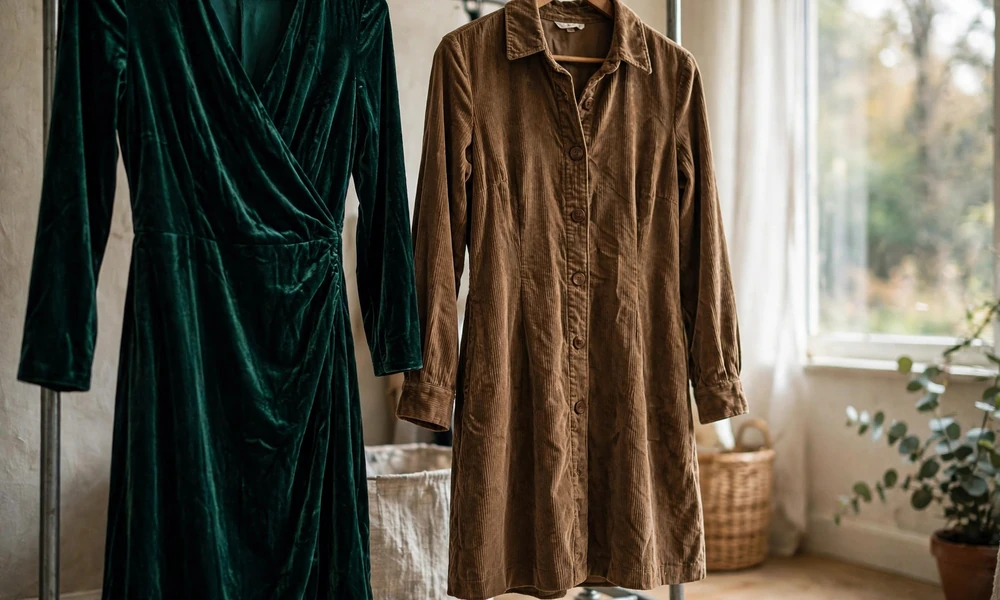
Look next at the cut and the lining. Velvet dresses usually need a lining, because the pile can cling and feel heavy against the skin. Corduroy dresses often skip the lining, which keeps them lighter but can make them feel stiff. Check the seams, too: velvet shows every pucker, while corduroy forgives small imperfections. Our comparison of velvet and corduroy trousers covers the same fabric trade-offs in a different garment, and the lessons about pile, ribs and care carry straight over to dresses.
Finally, think about when you will actually wear the dress. A velvet dress that only comes out twice a year is a different purchase from a corduroy dress you reach for three times a week, and the best fabric is the one that fits the life you have.
The 9 comparisons between velvet and corduroy dresses in 2027
Texture and touch
What we like: Velvet feels soft and smooth under the hand, with a cool, dense pile that reads as luxurious the moment you touch it. Corduroy feels warm and textured, with ribs you can feel clearly, which gives it a honest, tactile character. What to consider: Velvet can feel clingy against bare skin, especially in a fitted cut, while corduroy can feel rough or stiff until it has been worn and washed a few times. Best for: Velvet suits evenings and special occasions; corduroy suits daytime and everyday wear. Fabric: Cotton velvet, silk-blend velvet, cotton corduroy. Price range: Velvet dresses from about $60 to $400; corduroy dresses from about $50 to $300. Standout feature: Velvet’s light-catching pile against corduroy’s distinctive ribs.
How they drape and fit
What we like: Velvet drapes smoothly and falls in clean, fluid lines, which flatters simple silhouettes such as slip dresses, A-lines and wrap styles. Corduroy holds its shape, which suits structured cuts such as shirt dresses, pinafores and fit-and-flare styles. What to consider: Velvet can cling to the body and show every line underneath, while corduroy can look boxy or stiff if the cut is too straight. Best for: Velvet suits fluid, simple cuts; corduroy suits structured, tailored cuts. Fabric: Viscose-blend velvet, cotton corduroy with a little stretch. Price range: Velvet dresses from about $70 to $450; corduroy dresses from about $55 to $320. Standout feature: Velvet’s fluid fall against corduroy’s reliable structure.
Warmth and breathability
What we like: Corduroy is the warmer of the two, thanks to its dense weave and raised ribs, which trap air and insulate well. Velvet is warm too, but its pile is thinner and it breathes less, so it can feel hot indoors. What to consider: Corduroy can feel too warm in a heated room or a mild autumn, while velvet can feel cold to the touch at first and then overheated once you are moving. Best for: Corduroy suits cold days outdoors; velvet suits cool evenings indoors. Fabric: Cotton corduroy, cotton velvet. Price range: Corduroy dresses from about $50 to $300; velvet dresses from about $60 to $400. Standout feature: Corduroy’s insulating ribs against velvet’s dense, less breathable pile.
Occasion and dress code
What we like: Velvet reads as formal and polished, which makes it an easy choice for parties, weddings, dinners and evening events. Corduroy reads as relaxed and approachable, which makes it an easy choice for work, weekends and daytime outings. What to consider: Velvet can look overdressed at a casual lunch, while corduroy can look underdressed at a formal evening event, no matter how good the cut is. Best for: Velvet suits evenings and celebrations; corduroy suits daytime and casual settings. Fabric: Silk-blend velvet, fine-wale corduroy. Price range: Velvet dresses from about $80 to $500; corduroy dresses from about $50 to $280. Standout feature: Velvet’s evening polish against corduroy’s daytime ease.
Colour and sheen
What we like: Velvet takes colour beautifully, with deep jewel tones such as emerald, burgundy and navy looking especially rich, because the pile catches light from every angle. Corduroy takes colour more quietly, with earthy tones such as rust, olive and camel looking natural and warm. What to consider: Velvet’s sheen can make bright colours look louder than expected, while corduroy’s matte surface can make pale colours look flat or washed out. Best for: Velvet suits deep, rich colours; corduroy suits warm, earthy colours. Fabric: Cotton velvet, cotton corduroy. Price range: Velvet dresses from about $60 to $400; corduroy dresses from about $50 to $300. Standout feature: Velvet’s shifting sheen against corduroy’s steady matte finish.
Care and maintenance
What we like: Corduroy is the easier fabric to live with: most corduroy dresses can be machine washed on a gentle cycle and air-dried, and the ribs hide small creases. Velvet is more demanding, often needing dry cleaning, careful steaming and storage on a padded hanger. What to consider: Corduroy still needs care, because washing it inside out and avoiding high heat protects the ribs, while velvet can be marked by water, pressure and heat in ways that are hard to reverse. Best for: Corduroy suits people who want low-maintenance dressing; velvet suits people happy to dry-clean and steam. Fabric: Cotton corduroy, cotton or viscose velvet. Price range: Corduroy dresses from about $50 to $300; velvet dresses from about $60 to $400, plus cleaning costs. Standout feature: Corduroy’s wash-and-wear ease against velvet’s careful upkeep.
Durability and ageing
What we like: Good corduroy lasts for years, with ribs that wear evenly and a colour that fades slowly and gracefully. Good velvet can also last, but its pile is the weak point: it flattens at pressure points such as the seat and elbows, and it can develop shiny patches. What to consider: Cheap corduroy can go shiny and flat, and cheap velvet can lose its pile in patches, so quality matters more than the fabric name. Best for: Corduroy suits hard, frequent wear; velvet suits occasional wear with careful storage. Fabric: Heavyweight cotton corduroy, cotton velvet. Price range: Corduroy dresses from about $60 to $320; velvet dresses from about $70 to $450. Standout feature: Corduroy’s even ageing against velvet’s vulnerable pile.
Price and value
What we like: Corduroy is usually the better value, because it is cheaper to buy, cheaper to clean and lasts longer under regular wear. Velvet costs more up front and more to maintain, but for an occasion dress that is worn a few times a year, the cost per wear can still be reasonable. What to consider: A cheap velvet dress is a false economy, because the pile goes flat and the dress looks tired within a season, while a cheap corduroy dress can still look decent if the cut is good. Best for: Corduroy suits everyday value; velvet suits occasion value. Fabric: Cotton corduroy, cotton or silk-blend velvet. Price range: Corduroy dresses from about $50 to $300; velvet dresses from about $60 to $500. Standout feature: Corduroy’s low cost per wear against velvet’s occasion impact.
Styling and accessories
What we like: Velvet pairs beautifully with simple, polished accessories: fine gold jewellery, a small clutch, heeled boots or a silk scarf. Corduroy pairs beautifully with relaxed, textured accessories: a chunky knit, leather boots, a canvas tote or a wool scarf. What to consider: Velvet can be overwhelmed by heavy accessories, which fight with its sheen, while corduroy can look dull if everything you pair it with is equally matte and heavy. Best for: Velvet suits minimal, polished styling; corduroy suits layered, textured styling. Fabric: Velvet with silk accessories, corduroy with wool and leather. Price range: Velvet dresses from about $60 to $400; corduroy dresses from about $50 to $300. Standout feature: Velvet’s need for restraint against corduroy’s love of layering.
Which dress is right for you
Choose velvet if your calendar is full of evenings, parties and occasions that call for polish, and if you are happy to dry-clean and store a dress carefully. A velvet dress in a deep jewel tone, in a simple cut, is one of the easiest ways to look dressed up without trying hard. Our guide to styling a velvet dress shows nine ways to wear it, from the classic evening look to a dressed-down daytime version.
Choose corduroy if you want a dress you can wear three times a week, wash at home and not worry about. A fine-wale corduroy shirt dress or pinafore is a workhorse: warm, structured and easy to style with boots, knits and scarves. It will be the dress you reach for most often, and that is a different kind of success.
If you can only buy one, ask yourself which problem you are solving. If you need an occasion dress, buy velvet. If you need a daily dress, buy corduroy. And if you already own one of each, you have the cold season covered: velvet for the nights that matter, corduroy for the days that fill the rest of the week.
The caveats that matter
Neither fabric is perfect. Velvet’s pile is its beauty and its weakness: it crushes, it marks, and it can look tired long before the dress itself is worn out. Corduroy’s ribs are its strength and its risk: they can go shiny with wear and collect lint, and a wide wale can add visual bulk.
| Detail | What is known |
|---|---|
| Best for evenings | Velvet, for its sheen, drape and polished look |
| Best for daytime | Corduroy, for its warmth, structure and easy care |
| Warmest fabric | Corduroy, thanks to its dense weave and insulating ribs |
| Easiest to care for | Corduroy, usually machine washable on a gentle cycle |
| Most vulnerable to damage | Velvet, whose pile flattens and marks under pressure and water |
| Best colours | Velvet in deep jewel tones; corduroy in warm earthy tones |
| Longest lasting | Corduroy under frequent wear; velvet under occasional wear |
| What neither fabric does | Neither is a financial investment, and cheap versions of both look cheap fast |
Fit is the other caveat that matters more than fabric. A velvet dress that clings will look uncomfortable, and a corduroy dress that is too boxy will look dated. Try both on, sit down in them, and choose the one that moves with you.
Checklist: choosing between velvet and corduroy honestly
Use these checks before you buy, and again when the dress arrives.
- Check the fabric: velvet should feel dense and even, corduroy ribs should stand upright and feel firm.
- Check the occasion: velvet for evenings and celebrations, corduroy for daytime and everyday wear.
- Check the care label: velvet often needs dry cleaning, corduroy is usually machine washable.
- Check the fit: sit down in the dress, because velvet clings and corduroy can feel stiff when you move.
- Check the colour: deep jewel tones flatter velvet, warm earthy tones flatter corduroy.
- Check the cost per wear: divide the price by how often you will realistically wear it.
Frequently asked questions
Can I wear a velvet dress during the day?
Yes, in a simple cut and a muted colour, such as a black or navy velvet shift with flat boots and minimal jewellery. A full-length or heavily embellished velvet dress is harder to wear before evening.
Is corduroy too casual for a wedding guest?
Usually, yes, for a formal wedding, but a fine-wale corduroy dress in a dark colour, styled with heeled boots and polished jewellery, can work for a relaxed daytime wedding. For a formal evening wedding, velvet is the safer choice. Our comparison of velvet and satin dresses is useful here too, because satin is another evening option worth weighing against velvet.
How do I stop velvet from crushing?
Hang it on a padded hanger, never fold it tightly, and steam it rather than ironing it. If the pile flattens at the seat, hold a steamer a few inches away and brush the pile gently upward with a soft clothes brush.
Does corduroy shrink in the wash?
Cotton corduroy can shrink a little, especially on a hot wash, so wash it cold or warm on a gentle cycle, inside out, and air-dry it. Avoid high heat in the dryer, which flattens the ribs and can make the fabric shiny.
Which fabric is better for petite frames?
Fine-wale corduroy is usually more flattering, because the narrow ribs do not add visual bulk, and a structured cut gives shape. Velvet can work well too, but choose a simple cut, because a heavy velvet dress can overwhelm a smaller frame.
Can I wear velvet and corduroy together?
Yes: a velvet dress with a corduroy jacket, or a corduroy dress with a velvet scarf, mixes sheen and texture well. Keep one fabric as the main piece and the other as an accent, and keep the colours in the same family.
The bottom line
Velvet and corduroy are two different answers to the same cold-weather question. Velvet gives you polish, sheen and occasion dressing, and asks for careful handling in return. Corduroy gives you warmth, structure and everyday reliability, and asks for very little. The right choice depends on your calendar and your routine, not on which fabric is more fashionable this year.
Buy velvet for the nights that matter, buy corduroy for the days that fill the week, and if you can, own one of each. A wardrobe with both is a wardrobe that is ready for the whole season, and neither fabric needs to beat the other to earn its place.