Silk and chiffon are the two fabrics that make a dress feel like an occasion. Both are light, both move beautifully, and both carry a sense of softness that heavier fabrics cannot match. Yet they do it in almost opposite ways. Silk is smooth, fluid and quietly lustrous, with a weight that lets it fall in clean lines. Chiffon is sheer, airy and almost weightless, with a float that comes from its open weave rather than its substance.
That contrast is why the comparison matters. A silk dress and a chiffon dress are not interchangeable versions of the same idea. They suit different seasons, different times of day, different levels of formality, and different kinds of care. Buy the wrong one and you will either be too warm, too cold, fighting wrinkles, or wondering why a beautiful dress never seems to sit right.
Below are nine comparisons that matter in 2027, from how each fabric feels and moves to how it handles wrinkles, washing and ageing. Each comparison is judged on its own terms, so you can choose the fabric that fits your occasion, your climate and the amount of care you are honestly willing to give.
Key takeaways
- Silk is the more substantial fabric, with a smooth drape and a natural sheen, while chiffon is lighter, sheerer and more floaty.
- Chiffon is almost always layered over a lining or another fabric, because on its own it is too sheer to wear as a dress.
- Silk wrinkles and water-marks more easily than chiffon, while chiffon resists creases but can snag and fray.
- Both fabrics need gentle care, but silk is the more demanding of the two and usually needs dry cleaning or careful hand washing.
- Neither fabric is a financial investment, and a cheap dress in either fabric will look cheap or lose its shape within a season.
What silk and chiffon dresses actually are
A silk dress is made from the fibres of the silkworm, woven into a smooth, continuous cloth. The fibre is naturally strong and slightly elastic, which gives silk its fluid drape, its soft sheen and its ability to hold a shape without stiffness. Silk dresses are usually cut on the bias or in simple, flowing shapes that let the fabric move with the body.
A chiffon dress is made from a very fine, loosely woven fabric, traditionally silk chiffon, though most chiffon today is polyester. The weave is open and airy, which makes the fabric sheer, light and floaty, but also means it needs a lining underneath to be worn as a dress. Chiffon dresses are usually layered, gathered or pleated, because the fabric itself has almost no weight to hold a shape.
The two fabrics also behave differently over time. Silk softens and drapes more easily with wear, but it can fade in strong sun and mark with water or perfume. Chiffon holds its shape and colour well, but it snags easily, frays at the edges, and can look tired once the weave starts to loosen.
How we chose these comparisons and what to look for
Each comparison below is judged on how the dress actually behaves when it is worn, not on how it looks on a hanger. Feel, drape, sheerness, wrinkling, care, price and ageing are all weighed separately, because a dress that wins on drape can lose on ease of care, and a dress that looks beautiful still can disappoint once it moves. If you are comparing silk with other fabrics too, our silk versus satin comparison sets out how the two smooth fabrics differ in shine, weight and care.
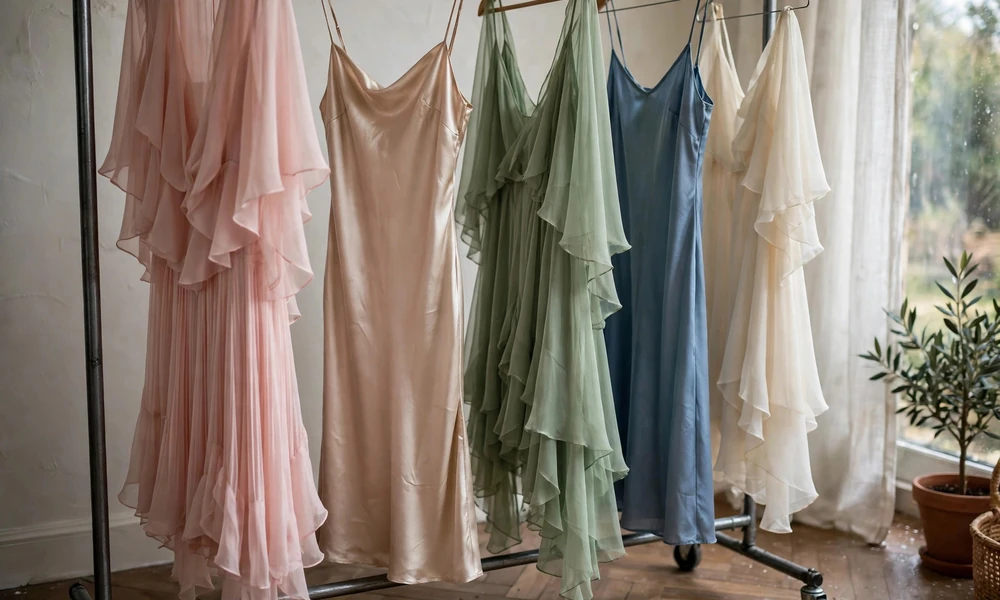
When you shop, look at the fibre content on the label first, then hold the fabric up to the light. A dress labelled silk will behave very differently from a polyester chiffon dress, and the lining matters as much as the outer fabric, because a stiff lining can ruin the drape of either one. Try the dress on and walk in it, because that is where sheerness, weight and movement are actually felt.
The 9 comparisons that matter in 2027
Feel against the skin
Silk feels smooth, cool and soft against the skin, with a slight slip that makes it comfortable to wear for hours. Chiffon feels light and airy, almost like wearing nothing, but the lining underneath is what actually touches the skin, so the comfort of a chiffon dress depends as much on the lining as on the chiffon itself.
What we like: silk feels luxurious from the first minute you put it on. What to consider: a chiffon dress with a cheap, scratchy lining will be uncomfortable no matter how pretty the outer layer looks.
Best For: all-day comfort for silk; warm evenings for chiffon. Fabric: 100 percent silk or silk chiffon. Price Range: £60 to £250. Standout Feature: silk is soft against bare skin, chiffon is weightless.
Drape and movement
Silk drapes in smooth, fluid lines and falls close to the body, which suits simple, elegant shapes. Chiffon floats and billows, catching the air as you move, which suits layered, gathered and pleated designs. Neither is wrong, but they give very different silhouettes, and the wrong fabric can fight the shape of the dress.
What we like: chiffon gives a romantic, floaty movement that silk cannot match. What to consider: silk can cling in warm weather, while chiffon can look shapeless without a good cut or lining.
Best For: clean, elegant lines for silk; soft, romantic movement for chiffon. Fabric: silk or chiffon. Price Range: £60 to £220. Standout Feature: silk falls, chiffon floats.
Sheerness and lining
Chiffon is sheer by nature, and a chiffon dress without a lining is not wearable on its own. The lining is part of the design, and a good one is cut to match the outer layer so the dress moves as one piece. Silk is opaque in most weights, though very light silk can be slightly sheer in strong light, and it usually needs no lining at all.
What we like: silk is simple to wear, with no lining to worry about. What to consider: a chiffon dress with a poorly cut lining will bunch, show through, or restrict the float of the outer layer.
Best For: simple, unlined dresses for silk; layered, occasion dresses for chiffon. Fabric: silk or lined chiffon. Price Range: £50 to £250. Standout Feature: silk stands alone, chiffon needs its lining.
Wrinkling and creasing
Silk wrinkles easily, especially in lighter weights, and it can also water-mark if it gets wet. Chiffon resists creases far better, springing back into shape after being folded or packed, which makes it a much easier fabric to travel with. If a crease-free look matters to you, this comparison alone may decide the choice.
What we like: chiffon looks neat straight out of a suitcase. What to consider: silk needs steaming or careful pressing, and a water mark on silk can be hard to remove.
Best For: travel and long days for chiffon; occasions where you can arrive fresh for silk. Fabric: chiffon or silk. Price Range: £50 to £220. Standout Feature: chiffon is crease-proof, silk creases by nature.
Care and washing
Silk is the more demanding fabric, usually needing dry cleaning or very careful hand washing in cool water, with no wringing and flat drying away from direct sun. Chiffon, especially polyester chiffon, is easier to wash and dries quickly, though silk chiffon needs the same gentle treatment as silk itself.
What we like: polyester chiffon is forgiving in the wash and dries fast. What to consider: one hot wash or a rough spin can ruin a silk dress, so silk suits people who are willing to follow the care label.
Best For: easy care for polyester chiffon; careful owners for silk. Fabric: chiffon or silk. Price Range: £50 to £250. Standout Feature: chiffon dries fast, silk needs a gentle hand.
Warmth and seasonality
Silk is a natural insulator, so it feels cool in summer and surprisingly warm in winter, and it works across more of the year than most light fabrics. Chiffon is cool and airy, which makes it ideal for warm weather, but it offers almost no warmth, so it is a summer and evening fabric rather than a year-round one.
What we like: silk adapts to the temperature better than any other light fabric. What to consider: a chiffon dress in cold weather needs layers underneath, which can spoil the float of the fabric.
Best For: year-round wear for silk; summer and warm evenings for chiffon. Fabric: silk or chiffon. Price Range: £60 to £250. Standout Feature: silk works in every season, chiffon is a warm-weather fabric.
Colour and shine
Silk takes dye richly and evenly, giving deep, saturated colours with a soft, natural sheen that changes as the fabric moves. Chiffon takes dye in lighter, softer tones, and its open weave gives colour a slightly muted, misty quality. If you want a vivid, jewel-toned dress, silk will usually give it to you more faithfully.
What we like: silk holds deep colour beautifully, season after season. What to consider: chiffon can look washed out in very bright shades, and its sheerness can dull a colour further.
Best For: rich, deep colours for silk; soft pastels and pale tones for chiffon. Fabric: silk or chiffon. Price Range: £60 to £220. Standout Feature: silk keeps colour rich, chiffon keeps it soft.
Ageing and durability
Silk is strong for its weight, but it weakens in strong sun, fades over time, and can be damaged by perfume, deodorant and perspiration. Chiffon is more resistant to sun and stains, but it snags easily on jewellery and rough surfaces, and once the weave starts to fray or loosen, it is hard to repair.
What we like: chiffon holds its colour and shape well over time. What to consider: silk needs protection from sun and chemicals, while chiffon needs protection from anything that can catch its fine weave.
Best For: a dress to keep for years with care for silk; a dress to wear often in summer for chiffon. Fabric: silk or chiffon. Price Range: £60 to £250. Standout Feature: silk fades slowly, chiffon snags easily.
Price and value
Real silk dresses cost significantly more than polyester chiffon dresses, and the price rises sharply for the best grades of silk. Polyester chiffon is widely available at every price level, which makes it the cheaper way to get a floaty, occasion look. Silk chiffon sits in between, with the float of chiffon and the feel of silk, at a price to match.
What we like: chiffon gives an occasion look at a modest price. What to consider: very cheap silk is often thin or blended, while very cheap chiffon can look shiny and flimsy.
Best For: a first occasion dress on a budget for chiffon; a long-term wardrobe staple for silk. Fabric: chiffon or silk. Price Range: £40 to £300. Standout Feature: chiffon is the cheaper entry point, silk is the bigger investment.
Which dress is right for you
If you want one dress that works across seasons and occasions, silk is the more versatile choice, and a simple silk dress in a deep colour will carry you from a daytime event to an evening one. If you want a dress for a warm-weather occasion, a wedding or a summer evening, chiffon gives a lighter, more romantic look that silk cannot quite match. For more on how chiffon behaves in other pairings, our satin versus chiffon dresses comparison looks at the same fabric from a different angle.
Think about your tolerance for care, too. If you want a dress you can wash without thinking, polyester chiffon is the safer buy. If you are happy to dry clean and store carefully, silk will repay the effort with a drape and a feel that no synthetic fabric can match. And if you travel often, chiffon is the better packing companion, because it comes out of a bag looking the same as it went in.
The caveats that matter
Both fabrics have real limits. Silk wrinkles, water-marks, fades in strong sun, and needs gentle care, so it is not a buy-and-forget purchase. Chiffon is sheer, needs a lining, snags easily, and can look cheap in low grades, so it is not the right choice for anyone who wants a simple, unlined dress or a fabric that can take rough handling. Blends can help, but a dress labelled silk and chiffon is usually layered rather than blended, so check exactly which fabric is on the outside and which is the lining before you buy.
| Detail | What is known |
|---|---|
| Most substantial fabric | Silk, with a smooth drape and natural sheen |
| Lightest fabric | Chiffon, sheer, airy and almost weightless |
| Lining needed | Chiffon almost always; silk usually needs none |
| Wrinkling | Silk wrinkles easily; chiffon resists creases |
| Washing | Silk needs dry cleaning or careful hand washing; polyester chiffon is easier |
| Seasonality | Silk works year-round; chiffon is a warm-weather fabric |
| Who should avoid silk | Anyone who wants a low-care dress or a crease-free look |
| Who should avoid chiffon | Anyone who wants an unlined dress or a fabric that resists snagging |
Checklist: choosing a silk or chiffon dress honestly
- Check the fibre content on the label and be wary of silk blends sold as pure silk.
- Hold the fabric up to the light to see how sheer it is and whether the lining is cut well.
- Try the dress on and walk in it, because that is where drape, weight and sheerness are felt.
- Match the fabric to the occasion: silk for versatility, chiffon for warm-weather romance.
- Read the care label before you buy, and be honest about whether you will follow it.
- Check the edges and seams for fraying, because chiffon frays and silk can pull at the seams.
Frequently asked questions
Can I wear a silk dress in summer?
Yes, silk is one of the best summer fabrics, because it breathes and feels cool against the skin. Choose a light weight and a simple cut, and keep it out of strong direct sun for long periods, because silk can fade.
Can I wear a chiffon dress in winter?
You can, but it needs layers underneath, and those layers can spoil the float of the fabric. Chiffon works best in warm weather or indoors, where its lightness is an advantage rather than a problem. If you love the shape of a slip dress in colder months, our guide to what a slip dress is covers how to layer one for winter.
Is silk chiffon the same as polyester chiffon?
No. Silk chiffon is made from silk fibres and feels softer, drapes better and costs more, while polyester chiffon is made from synthetic fibres, is easier to care for, and can look shinier. Both are sheer and floaty, but they feel and age differently.
How do I stop a silk dress wrinkling?
You cannot stop it completely. You can reduce it by hanging the dress rather than folding it, steaming it lightly, and choosing a slightly heavier silk, which wrinkles less than a very light one.
Can a chiffon dress be machine washed?
Polyester chiffon can usually be machine washed on a gentle cycle, but silk chiffon needs the same gentle treatment as silk itself. Always read the care label first, and when in doubt, hand wash in cool water.
Which fabric is better for a wedding guest dress?
Both work well. Chiffon suits a daytime or summer wedding, where its lightness and float feel right. Silk suits an evening wedding or a more formal occasion, where its sheen and drape carry more weight. The dress code and the season should decide it, not the fabric alone.
The bottom line
Silk and chiffon dresses are not rivals so much as answers to different questions. Silk is the fabric for versatility, for a smooth drape, for a dress that works across seasons and occasions. Chiffon is the fabric for lightness, for float and romance, for a warm-weather occasion where the dress should feel like almost nothing at all.
If you can only buy one, match it to your climate and your tolerance for care, and buy the best grade you can afford. If you can buy two, one of each will cover more occasions more honestly than any single dress, in either fabric, ever could.