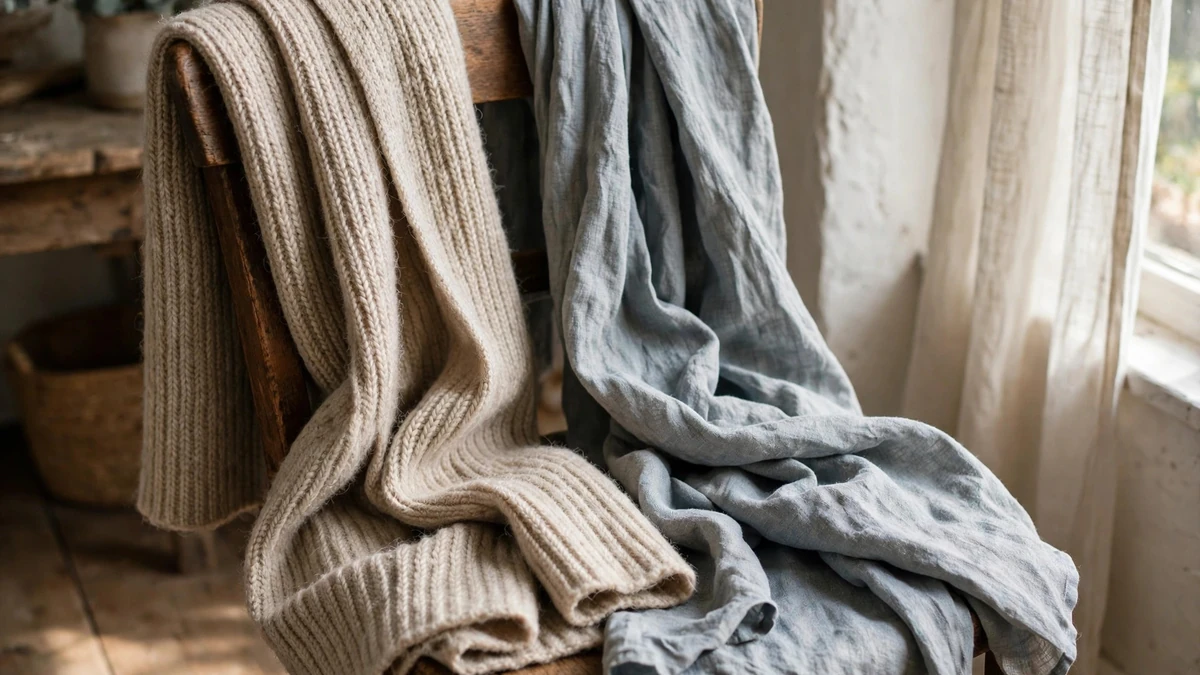
Wool and linen are the two natural fibres most people reach for when they want a scarf that feels honest rather than synthetic. Both breathe, both age well, and both have been worn for centuries. Yet they behave almost like opposites once you put one around your neck. Wool is warm, springy and forgiving, while linen is cool, crisp and famously creased, and the scarf that keeps you comfortable on a cold morning is not the one you want on a warm afternoon.
That contrast is why the choice matters more than it first seems. A wool scarf and a linen scarf are not interchangeable versions of the same idea. They suit different seasons, different outfits, different levels of care, and different budgets. Buy the wrong one and you will either be too warm, too cold, fighting wrinkles, or wondering why a beautiful scarf never seems to sit right.
Below are nine comparisons that matter in 2027, from how each fibre feels and moves to how it handles washing, wrinkles and ageing. Each comparison is judged on its own terms, so you can choose the fabric that fits your climate, your wardrobe and the amount of care you are honestly willing to give.
Key takeaways
- Wool is the warmer fibre by a wide margin, and it stays warm even when damp, which makes it the cold-weather choice.
- Linen is the cooler fibre, breathable and light, and it suits warm weather and layered looks better than wool ever will.
- Linen wrinkles far more than wool, while wool resists creases and springs back into shape after being folded or packed.
- Wool needs gentler washing and careful drying, while linen is tougher to wash but softer with every wash.
- Neither fibre is a financial investment, and a cheap scarf in either fabric will look cheap or lose its shape within a season.
What wool and linen scarves actually are
A wool scarf is made from the fleece of sheep, and in finer versions from lambswool, merino or cashmere-blended wool. The fibre is naturally crimped, which traps warm air in tiny pockets and gives the scarf its springy, insulating feel. Good wool scarves are usually woven or knitted, and the best ones feel soft against the neck rather than scratchy, though very coarse wool can irritate sensitive skin.
A linen scarf is made from the fibres of the flax plant. The fibre is smooth, strong and straight, with almost no natural elasticity. That gives linen its crisp hand, its matte finish and its cool feel against the skin. Linen scarves are usually woven in a loose, open weave, and they soften noticeably with wear and washing, though they never develop the spring or loft of wool.
The two fibres also age in opposite directions. Wool pills and felts if it is washed badly, but it keeps its shape and warmth for years when it is cared for. Linen starts out stiff and creased, then softens and drapes more easily over time, and the wrinkles that bother some people are simply part of how the fabric is meant to look.
How we chose these comparisons and what to look for
Each comparison below is judged on how the scarf actually behaves in daily wear, not on how it looks on a shop rail. Warmth, softness, drape, wrinkling, care, price and ageing are all weighed separately, because a scarf that wins on warmth can lose on ease of care, and a scarf that looks beautiful folded can disappoint once it is worn. If you are comparing other natural fibres too, our guide to the best natural fibres in clothing sets out how wool, linen, cotton, silk and cashmere differ across a whole wardrobe.
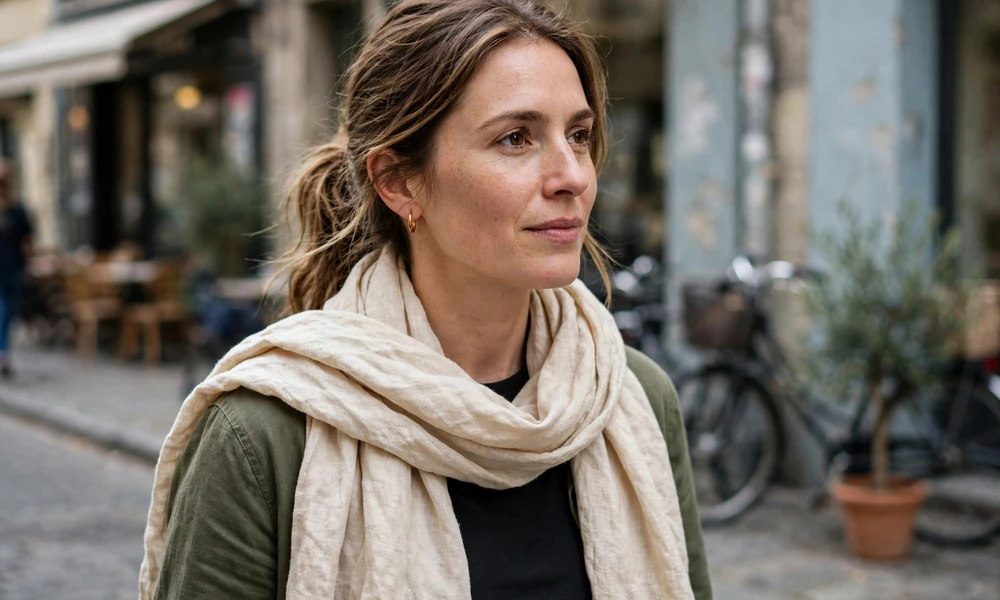
When you shop, look for the fibre content on the label first, then the weave. A scarf labelled 100 percent wool or 100 percent linen will behave very differently from a blend, and a loose weave will breathe better than a tight one in either fibre. Hold the scarf against your neck for a minute, not just in your hand, because that is where itch, weight and warmth are actually felt.
The 9 comparisons that matter in 2027
Warmth and insulation
Wool wins this one by a wide margin. Its crimped fibres trap warm air, and a thick wool scarf can make a light coat feel like a heavy one. Linen offers almost no insulation by comparison, which is exactly why it works in warm weather, but it will not keep you warm on a cold day however you wrap it.
What we like: wool gives real, noticeable warmth with very little weight. What to consider: that same warmth makes wool uncomfortable indoors or in mild weather, where linen is far easier to wear.
Best For: cold mornings and winter commutes for wool; warm days and air-conditioned rooms for linen. Fabric: 100 percent wool or lambswool. Price Range: £30 to £120. Standout Feature: wool traps heat even when damp.
Softness against skin
Fine wool, especially merino and lambswool, feels soft and smooth against the neck, while coarse wool can scratch and irritate sensitive skin. Linen starts out slightly stiff and papery, then softens with every wash until it feels smooth and cool, though it never develops the plush softness of fine wool.
What we like: good linen becomes softer the more you wear it, which is a quiet pleasure. What to consider: cheap wool can itch badly, and cheap linen can feel rough for the first few wears.
Best For: sensitive skin, choose fine merino wool or well-washed linen. Fabric: merino wool or washed linen. Price Range: £25 to £110. Standout Feature: linen softens with age, wool is soft from the start when the grade is right.
Drape and movement
Linen drapes in long, clean lines and falls flat against the body, which suits a neat, tailored look. Wool has more body and spring, so it holds its shape, stands up around the neck, and looks better in a loose loop or a chunky wrap. Neither is wrong, but they give very different silhouettes.
What we like: linen gives a relaxed, effortless drape that suits simple outfits. What to consider: wool can look bulky under a fitted coat, while linen can look limp if you want structure.
Best For: tailored outfits for linen; casual layers and chunky wraps for wool. Fabric: woven linen or knitted wool. Price Range: £25 to £100. Standout Feature: linen falls flat, wool holds its shape.
Wrinkling and creasing
Linen wrinkles more than any other common scarf fibre, and it does so within minutes of being worn. Wool resists creases almost completely, springing back into shape after being folded, rolled or stuffed into a pocket. If a crease-free look matters to you, this comparison alone may decide the choice.
What we like: wool looks neat all day with no effort at all. What to consider: linen wrinkles are part of the fabric, and trying to iron them out every morning defeats the point of wearing it.
Best For: travel and long days for wool; relaxed weekends for linen. Fabric: wool or linen. Price Range: £20 to £90. Standout Feature: wool is crease-proof, linen creases by nature.
Care and washing
Linen is the tougher fibre to wash: it can usually go in the machine on a gentle cycle and dries quickly, though it should not be tumble-dried on high heat. Wool needs more care, with hand washing or a wool cycle, cool water and flat drying, because heat and agitation can felt it permanently.
What we like: linen is forgiving in the wash and gets better with it. What to consider: one hot wash can ruin a wool scarf, so wool suits people who are willing to follow the care label.
Best For: easy care for linen; careful owners for wool. Fabric: linen or wool. Price Range: £20 to £100. Standout Feature: linen survives the machine, wool needs a gentle hand.
Price and value
Good linen scarves are usually cheaper than good wool scarves, and linen is widely available at every price level. Fine wool, especially merino or lambswool, costs more to produce, and the price rises sharply for the softest grades. Both fibres are good value when bought well, but wool asks for a bigger outlay up front.
What we like: linen gives a premium look at a modest price. What to consider: very cheap wool is often coarse and scratchy, while very cheap linen can be thin and flimsy.
Best For: a first quality scarf on a budget for linen; a long-term winter staple for wool. Fabric: linen or merino wool. Price Range: £20 to £150. Standout Feature: linen is the cheaper entry point, wool is the bigger investment.
Colour and pattern
Linen takes dye in soft, slightly muted tones and shows slub and texture in the colour, which suits natural and earthy palettes. Wool takes dye richly and evenly, giving deep, saturated colours and crisp patterns, from checks and stripes to bold colour blocks. If you want a vivid colour, wool will usually give it to you more faithfully.
What we like: wool holds deep colour beautifully, season after season. What to consider: linen fades more gently and can look washed out in very bright shades.
Best For: rich, deep colours for wool; soft neutrals and naturals for linen. Fabric: wool or linen. Price Range: £25 to £110. Standout Feature: wool keeps colour rich, linen keeps it soft.
Ageing and durability
Linen is one of the strongest natural fibres and actually becomes stronger when wet, so a well-made linen scarf can last for many years and simply gets softer. Wool is durable too, but it pills, and it can felt or thin out if it is washed badly or eaten by moths, so it needs more protection in storage.
What we like: linen improves with age in a way few fabrics do. What to consider: wool needs moth protection and gentle washing to last as long as linen does.
Best For: a scarf to keep for a decade for linen; a scarf to wear hard each winter for wool. Fabric: linen or wool. Price Range: £25 to £120. Standout Feature: linen gets better with age, wool needs care to stay good.
Versatility and styling
Wool suits cold-weather outfits, from coats and knitwear to boots and gloves, and it works as both a practical layer and a style accent. Linen suits warm-weather outfits, from cotton shirts and light dresses to sandals and open jackets, and it works best when the rest of the outfit is equally relaxed. Neither fibre crosses seasons well, which is why many people end up owning one of each.
What we like: owning one of each covers the whole year honestly. What to consider: a wool scarf in summer looks wrong, and a linen scarf in deep winter is not enough on its own.
Best For: winter wardrobes for wool; summer wardrobes for linen. Fabric: wool or linen. Price Range: £20 to £120. Standout Feature: together they cover every season, apart they each cover half the year.
Which scarf is right for you
If your winters are cold and you walk or commute outside, wool is the clear choice, and a fine merino or lambswool scarf will be the one you reach for every morning. If your climate is mild or warm, or you spend most of your time indoors, linen is the easier and more comfortable fibre. For more on how wool behaves in cold weather, our guide on why wool keeps you warm explains the science behind the warmth.
Think about your tolerance for care, too. If you want a scarf you can wash without thinking, linen is the safer buy. If you are happy to hand wash and dry flat, wool will repay the effort with warmth and longevity. If you are still weighing wool against its closest rival, our wool versus silk scarves comparison sets out how the two warm fibres differ. And if you travel often, wool is the better packing companion, because it comes out of a bag looking the same as it went in, while linen will need a steam or a press.
The caveats that matter
Both fibres have real limits. Wool can irritate sensitive skin, attract moths, and felt if it is washed in hot water, so it is not a buy-and-forget purchase. Linen wrinkles constantly, offers no warmth, and can feel stiff when new, so it is not the right choice for anyone who wants a polished, crease-free look. Blends can help, but a scarf labelled wool and linen is usually a compromise rather than the best of both, so check the exact fibre percentages before you buy.
| Detail | What is known |
|---|---|
| Warmest fibre | Wool, by a wide margin; linen offers almost no insulation |
| Coolest fibre | Linen, breathable and light in warm weather |
| Wrinkling | Linen wrinkles within minutes; wool resists creases |
| Washing | Linen is machine-friendly; wool needs cool water and flat drying |
| Softness | Fine wool is soft from the start; linen softens with wear and washing |
| Durability | Linen is very strong and improves with age; wool pills and needs moth protection |
| Who should avoid wool | Anyone with very sensitive skin or a wool allergy |
| Who should avoid linen | Anyone who wants a crease-free look or real cold-weather warmth |
Checklist: choosing a wool or linen scarf honestly
- Check the fibre content on the label and be wary of blends sold as pure wool or pure linen.
- Hold the scarf against your neck for a minute, not just in your hand, to test for itch and weight.
- Match the fibre to your climate: wool for cold winters, linen for warm weather and mild days.
- Read the care label before you buy, and be honest about whether you will follow it.
- Scrunch the fabric in your hand and see how it recovers, because that shows how it will look after a day of wear.
- Buy the best grade you can afford, because cheap wool itches and cheap linen feels thin.
Frequently asked questions
Can I wear a wool scarf in spring?
Yes, a light wool scarf works well in early spring, when mornings are still cold. A heavy knitted wool scarf will be too warm once the day warms up, so choose a fine, lightweight weave for the in-between season.
Can I wear a linen scarf in winter?
You can wear one as a light layer indoors or under a coat, but linen on its own will not keep you warm outside in cold weather. It is better used as a style accent in winter, with a wool scarf doing the real work.
Which fibre is better for sensitive skin?
It depends on the grade. Fine merino wool is often fine for sensitive skin, while coarse wool can irritate it badly. Washed linen is usually gentle, though new linen can feel rough until it has been worn and washed a few times.
How do I stop a linen scarf wrinkling?
You cannot stop it completely, and that is part of linen. You can reduce it by hanging the scarf rather than folding it, steaming it lightly, and accepting the soft creases as part of the look rather than fighting them.
Can a wool scarf be machine washed?
Some wool scarves can be machine washed on a cold wool cycle, but many cannot, and hot water or agitation can felt the fibres permanently. Always read the care label first, and when in doubt, hand wash in cool water and dry flat.
Is a wool and linen blend a good compromise?
A blend can work well, giving some of wool’s warmth and some of linen’s breathability, but it rarely matches either pure fibre at what it does best. Check the percentages on the label, because a scarf that is mostly one fibre will behave mostly like that fibre.
The bottom line
Wool and linen scarves are not rivals so much as answers to different questions. Wool is the fibre for cold weather, for warmth, for travel and for a neat look that lasts all day. Linen is the fibre for warm weather, for easy care, for a relaxed drape and for a scarf that gets softer every year you own it.
If you can only buy one, match it to your climate and your tolerance for care, and buy the best grade you can afford. If you can buy two, one of each will cover the whole year more honestly than any single scarf, in either fibre, ever could.