Green tea is one of the most misunderstood notes in perfumery. Ask ten people what a green tea perfume smells like and you will get ten answers: fresh, soapy, grassy, bitter, sweet, or barely anything at all. That confusion is not your nose failing you. It is the note itself. Green tea in a bottle is almost never tea, the smell changes fast on skin, and the same word on a label can mean very different things from one brand to another.
Understanding what green tea actually is in perfumery changes how you shop for it. Once you know that the note is a lab-built accord, that it is light by design, and that it behaves differently in heat than in cold, the disappointing bottles make sense, and the good ones become easier to find. You stop expecting a green tea perfume to behave like a woody or musky one, and you start judging it on its own terms.
This guide explains green tea as a perfume note from the ground up: what it is made of, why it smells the way it does, why it fades, what it pairs with, and how to pick a bottle that actually smells like tea on your skin. Everything here is about green tea specifically, because this is a note with its own habits, and most of them are not shared by the floral or spicy notes around it.
Key takeaways
- Green tea in perfume is almost always a lab-built accord, not tea leaves, designed to smell cool, green, and slightly bitter.
- The note is light by design: it arrives fast, smells clean and fresh, and usually fades within three to five hours.
- Green tea is not the same as matcha: matcha is creamier, more powdery, and warmer, while green tea is crisper and more leafy.
- It pairs best with citrus, white flowers, and clean musk, and it is easily smothered by heavy vanilla, amber, or strong woods.
- No green tea perfume will last all day or project strongly on its own, and a bottle that smells only of soap on you is not a good green tea perfume.
What green tea actually is in a perfume
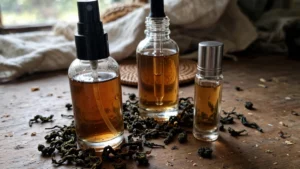
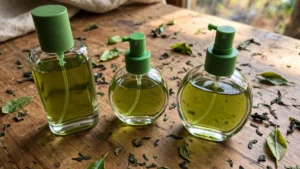
Real tea leaves are almost never distilled into perfume. The leaves are too delicate, the yield is too small, and the smell of a brewed cup does not survive the process. Instead, perfumers build green tea from individual molecules that, together, suggest the smell of tea: leafy green notes, a cool herbal edge, a faint bitterness, and a soft sweetness underneath. The result is a recognisable idea of green tea, not a literal copy of it.
It also explains why a green tea perfume rarely smells like the tea you drink. A brewed cup is warm, grassy, and tannic, with a weight to it. A perfume built around green tea is cooler and lighter, more like the smell of fresh leaves or the air over a tea field than the drink in the cup. If you buy a green tea perfume expecting it to smell like your morning tea, you will be disappointed. If you expect a clean, green, slightly bitter freshness, you will recognise it at once.
How green tea behaves on your skin
Green tea is a fast note. It arrives in the first minutes after you spray, and it is usually at its most vivid in the first half hour. After that it softens, thins, and hands over to whatever supports it: citrus, white flowers, musk, or light wood. That is why the first spray of a green tea perfume can smell wonderful and the dry-down can feel like almost nothing. The tea was never going to stay. It was designed to open the scent, not to carry it.
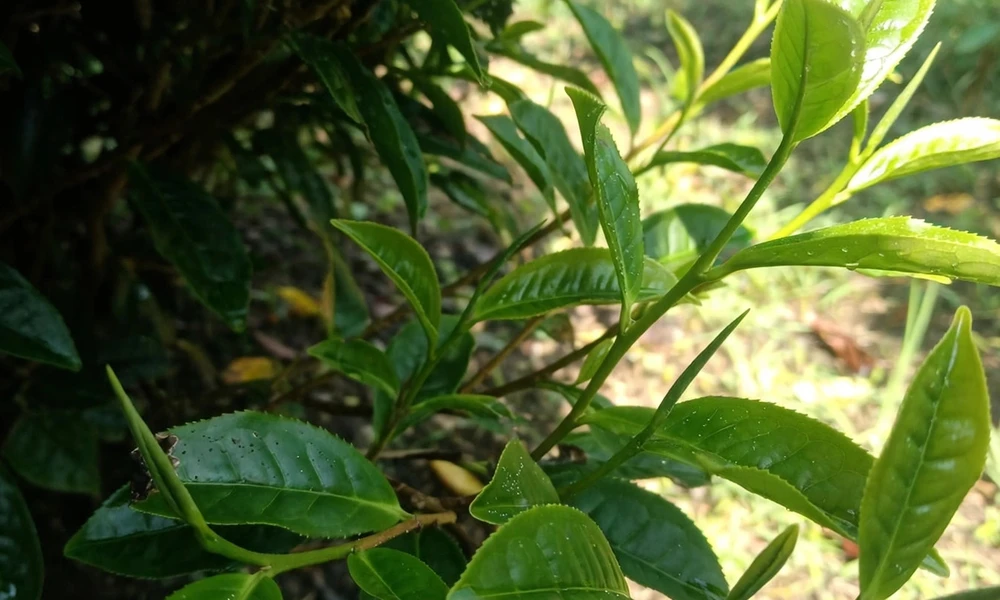
The note also changes with temperature. In warm weather and humidity, green tea perfumes open up and feel natural, because the heat lifts the fresh molecules and the air around you is already warm. In cold weather, the same perfume can feel thin and distant, as if the tea has gone quiet. This is the opposite of a heavy woody or spicy scent, which often needs warmth to soften, and it is the main reason green tea perfumes are sold as spring and summer scents. Our explainer on what a floral perfume is covers a note family that behaves differently, with flowers that hold their shape for longer, and the contrast is useful: florals linger, green tea lifts and leaves.
9 things to know about green tea in perfume
1. The tea in the bottle is almost never tea
What it shows: Green tea perfumes are built from lab-made molecules that suggest tea, rather than from tea leaves themselves, which are too delicate to distil. What to consider: Because it is an idea rather than an ingredient, two green tea perfumes can smell very different and both be honest. Best for: Anyone who wants to understand why the note varies so much between brands. Material: Leafy green molecules, citrus, soft musk. Price range: Approximately $25 to $300 depending on the brand. Standout feature: The note is a reconstruction, not an extraction, and that is what makes it so variable.
2. It smells like steamed leaves, not a brewed cup
What it shows: A green tea perfume smells cool, leafy, and a little bitter, with a faint sweetness underneath, rather than warm and grassy like the drink. What to consider: If you expect the smell of your morning tea, the perfume will feel wrong, even when it is well made. Best for: People who like fresh, clean scents and dislike sweet ones. Material: Green tea accord, bergamot, mint. Price range: Approximately $25 to $90 for most classic options. Standout feature: The cool, steamed-leaf character is what separates a true green tea perfume from a generic fresh scent.
3. Green tea arrives fast and leaves fast
What it shows: Green tea is a top-to-heart note that is most vivid in the first half hour and usually fades within three to five hours. What to consider: Judging a green tea perfume by its first spray is misleading, because the tea is already leaving by the time you decide. Best for: Anyone who wants a scent that opens bright and then settles quietly. Material: Green tea accord, citrus, white musk. Price range: Approximately $20 to $110 for most options. Standout feature: The quick arrival and quick fade are built into the note, not a flaw in the bottle.
4. Matcha and green tea are different notes
What it shows: Matcha is creamier, more powdery, and warmer than green tea, which is crisper, leafier, and more bitter. What to consider: A bottle that says matcha will usually feel rounder and last longer than one that says green tea, and it may surprise you if you expected crispness. Best for: People choosing between a light summer tea and a richer, cooler-weather green scent. Material: Matcha, fig, cedarwood, green tea accord. Price range: Approximately $80 to $300 for matcha-led perfumes. Standout feature: Matcha’s powdery warmth is the clearest sign you are smelling a different note from green tea.
5. The note fades because its molecules are small
What it shows: The fresh molecules that make green tea smell are small and volatile, so they evaporate from skin quickly, which is why longevity is the note’s main weakness. What to consider: Layering a green tea perfume over a matching body lotion can help, but it will not turn it into a long-lasting scent. Best for: Anyone wondering why their green tea perfume never lasts as long as their woody one. Material: Green tea accord, clean musk, light woods. Price range: Approximately $25 to $200. Standout feature: The short life is chemistry, not quality, and even the best green tea perfumes fade within hours.
6. It pairs with citrus, white flowers, and clean musk
What it shows: Green tea works best with light partners that brighten or soften it, and it is easily smothered by heavy vanilla, amber, or strong woods. What to consider: If a green tea perfume also lists heavy base notes, the tea may disappear underneath them within an hour. Best for: People who like fresh, light layering and want to know what to pair it with. Material: Green tea, bergamot, jasmine, musk. Price range: Approximately $25 to $110. Standout feature: The classic pairing of green tea with bergamot is what gives most of these perfumes their brightness.
7. The same name hides very different scents
What it shows: One brand’s green tea can be crisp and citrusy while another’s is soft and powdery, because each perfumer builds their own idea of the note. What to consider: Liking one green tea perfume tells you very little about whether you will like another with the same name. Best for: Shoppers who have been disappointed by a green tea perfume and assumed the whole note was not for them. Material: Varies by brand, from citrus-led to floral-led to matcha-led. Price range: Approximately $25 to $300. Standout feature: The name is a family, not a recipe, and the range inside it is wider than for most notes.
8. Green tea is at its best in heat and goes thin in cold
What it shows: Warm weather and humidity lift green tea’s fresh molecules, while cold weather makes the same perfume feel thin and distant. What to consider: A green tea perfume that smells wonderful in August can feel almost absent in January, and that is normal. Best for: Anyone choosing a seasonal scent or wondering why a summer favourite disappoints in winter. Material: Green tea accord, citrus, mint. Price range: Approximately $20 to $110. Standout feature: The note’s love of heat is the main reason it is sold as a spring and summer scent.
9. It is one of the safest notes in a shared space
What it shows: Green tea perfumes sit close to the skin, project gently, and rarely offend, which makes them one of the most office-friendly notes in perfumery. What to consider: The same closeness means nobody will notice it from across a room, so it is a poor choice if you want presence. Best for: Offices, flights, hospitals, and anyone who wants to smell clean without announcing it. Material: Green tea accord, soft musk, white flowers. Price range: Approximately $25 to $90. Standout feature: Its quietness is a feature, not a failure, and it is why green tea is a classic work scent.
Green tea, matcha, and other green notes
Green tea is often confused with other green notes, and the confusion costs people money. Grass and galbanum are much sharper and more resinous. Vetiver is earthy and smoky. Green tea is cooler and cleaner than all of them, with a bitterness that is more like a leaf than a stem. If a perfume smells green but also earthy or smoky, the green is probably not tea. Jasmine is the white flower most often paired with green tea, and our jasmine perfumes roundup shows how that softening works in practice.
The caveats that matter
| Detail | What is known |
|---|---|
| What the note actually is | Usually a lab-built accord, not tea leaves, designed to smell cool, green, and slightly bitter |
| Typical longevity | Three to five hours for most green tea scents; creamy matcha types last longer |
| Best season | Spring and summer, in warm weather and humidity, when the freshness feels natural |
| Who it suits best | People who dislike heavy, sweet, or loud perfumes, and anyone who wants a safe office scent |
| What to avoid pairing at first | Heavy vanilla or amber layers, which can smother the light tea note entirely |
| Storage | Cool place, away from light and heat; use within two to three years of opening |
| When to replace it | If it smells only of soap or alcohol, or the green note has gone flat and dull |
| What it does not do | It does not last all day, project strongly, or work well as a cold-weather evening scent |
None of this makes green tea a bad note. It makes it a specific one, with a clear personality and clear limits. The people who love green tea perfumes love them because of that lightness, not in spite of it. They want a scent that feels like clean air rather than like perfume, and they are happy to reapply. If that sounds like you, the note will reward you. If you want a scent that lasts from morning to midnight and fills a room, green tea will frustrate you, and it is better to know that before you buy. Neroli is the other classic note in this quiet, clean family, and our neroli perfumes roundup covers it in the same spirit.
Checklist: choosing a green tea perfume honestly
Use these checks before you buy, and again after a week of wear.
- Spray on skin, not paper, and wait ten minutes before judging the scent.
- Check the tea is real: after ten minutes you should still smell something green and a little bitter, not just soap.
- Decide green tea or matcha first: crisp and leafy, or creamy and powdery, because they wear very differently.
- Check the season: buy a crisp green tea for spring and summer, and a creamier matcha type for cooler months.
- Carry a travel spray, because most green tea perfumes need reapplying after three to five hours.
- Try it in heat before you commit: green tea perfumes behave very differently in warm weather than in an air-conditioned shop.
Frequently asked questions
Does a green tea perfume actually contain tea?
Almost never. Real tea leaves are too delicate to distil into perfume, so perfumers rebuild the smell from individual molecules that, together, suggest green tea. The result is a recognisable idea of tea rather than a literal copy, which is why different brands’ green tea perfumes can smell so different from each other.
Why does my green tea perfume disappear so fast?
Because the molecules that make green tea smell fresh are small and volatile, so they evaporate from skin quickly. Three to five hours is normal for most green tea scents.
Is green tea perfume good for summer?
Yes, it is one of the best notes for summer. Green tea perfumes feel clean and cool in heat and humidity, and they do not turn heavy or cloying the way sweet or woody scents can. They are also a safe choice for hot offices and crowded places, because they sit close to the skin.
Is green tea the same as matcha in perfume?
No, though they are related. Green tea in perfume is usually crisp, leafy, and a little bitter. Matcha is greener still, but creamier and more powdery, with a soft, milky depth. A matcha perfume will usually feel rounder and warmer than a green tea perfume, and it often lasts longer.
Can I wear a green tea perfume to the office?
Yes, it is one of the safest office scents. Green tea perfumes sit close to the skin, project gently, and rarely offend, because they are light, clean, and never sweet or heavy. They are a good choice for shared spaces, flights, and anywhere you want to smell fresh without announcing it.
What should I try first if I have never smelled a green tea perfume?
Start with Elizabeth Arden Green Tea. It is the original, it costs very little, and it tells you quickly whether you like the note at all. If it feels too sharp, try the Cherry Blossom or Nectarine Blossom versions, which soften the tea. If you like it and want something more refined, the Bvlgari original is the next step.
The bottom line
Green tea in perfume is a lab-built idea of tea: cool, leafy, a little bitter, and gone sooner than you expect. It is not a copy of the drink, and it is not a long-lasting evening scent. What it is, at its best, is the cleanest, most refreshing note in perfumery, one that feels like fresh air in warm weather and asks for nothing more than a second spray in the afternoon.
Judge it on its own terms. Spray it on skin, wait ten minutes, and ask whether you can still smell something green and a little bitter. If you can, and you like what you smell, you have found a green tea perfume worth keeping. If all that remains is soap, keep looking, because a good one is out there, and it is worth the search.