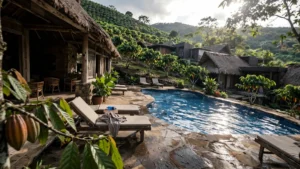
A cocoa plantation retreat is a different kind of luxury holiday. Instead of a beach club or a city hotel, you stay on a working farm where cacao grows, fermenting boxes smell faintly of chocolate, and the day is shaped by the trees rather than a timetable. Mornings begin with a walk through the groves, afternoons bring chocolate-making sessions or a slow lunch under shade trees, and evenings are quiet, warm, and far from crowds.
The appeal is not only the chocolate. Cocoa grows in some of the most beautiful tropical places on earth: the volcanic hills of St Lucia, the forested slopes of Ecuador, the old estates of São Tomé, and the river valleys of Belize. A good plantation stay puts you inside that landscape, with a comfortable room, honest food, and hosts who know their crop. The best of them feel less like resorts and more like a well-run farm that happens to have lovely guest rooms.
Below are nine cocoa plantation retreats worth considering in 2027, from island estates to rainforest lodges. Each one is described by region and type, with what it is good at, what to watch for, and who it suits best, so you can choose with your travel style in mind, not just a photo.
Key takeaways
- Cocoa plantation retreats combine a working farm stay with comfortable rooms, guided grove walks, and chocolate-making sessions.
- The best time to visit follows the harvest season, which varies by region, so check the farm calendar before booking flights.
- Look for stays that include farm tours and tastings in the price, with clear information about transfers, meals, and room type.
- Remote farms mean longer transfers and simpler rooms, so pack light, bring sturdy shoes, and expect a slower pace.
- No plantation stay can guarantee a harvest in progress on your exact dates, and chocolate-making is a hands-on workshop, not a factory tour.
What a cocoa plantation retreat actually is
A cocoa plantation retreat is a guest stay on or beside a working cacao farm. The farm grows cacao trees, harvests the pods, ferments and dries the beans, and often makes its own chocolate on site. Guests sleep in rooms on the estate, eat meals made with local produce, and join the farm’s daily life: a walk through the groves, a lesson in how pods are opened and beans fermented, and a tasting that runs from raw bean to finished bar.
That is different from a chocolate-themed hotel in a city. There is no lobby gift shop pretending to be a farm. The trees are outside your door, the work is real, and the people guiding you are usually the same people who prune, harvest, and ferment. The trade-off is simplicity. Rooms are comfortable but rarely grand, the wifi can be patchy, and the nearest town may be an hour away on a dirt road.
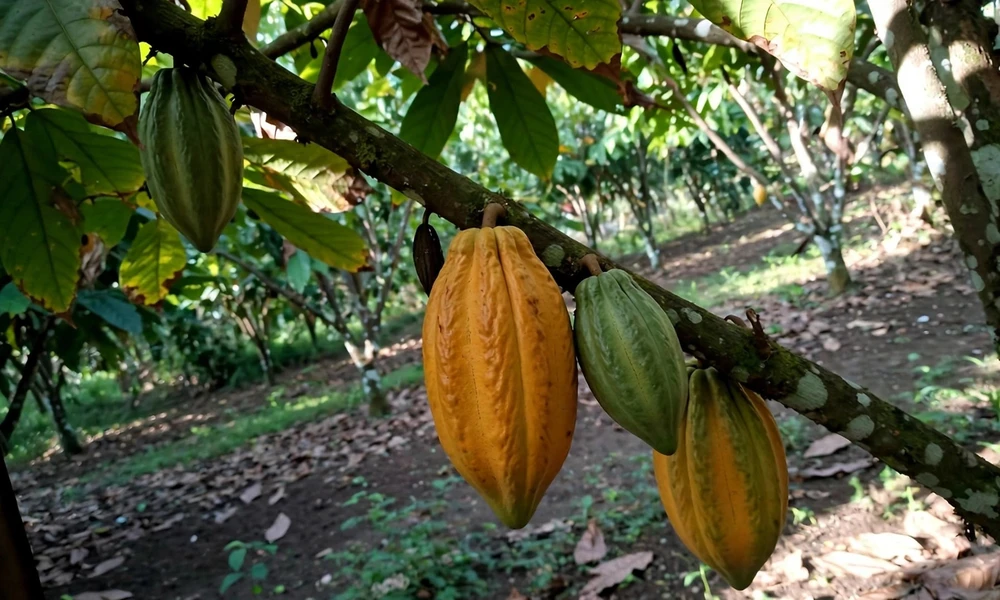
It is worth knowing what cocoa farming actually involves before you go. Cacao grows in the shade of taller trees, in warm, humid climates within about twenty degrees of the equator. The pods are cut by hand, the beans are scooped out and fermented in boxes for several days, then dried in the sun. Each step changes the flavour.
How we chose these retreats and what to look for
Look first at what is included. A strong cocoa retreat includes a guided grove walk, a fermentation and drying demonstration, and a chocolate-making or tasting session in the room rate. If those are charged as extras, add them up before comparing prices. Meals matter too. A stay that includes breakfast and dinner saves you from hunting for restaurants in a remote area, and farm cooking is often one of the highlights.
Look next at the setting and the room. Some retreats are old estates with verandas and gardens, others are small lodges built into the forest. Neither is better in itself. What matters is whether the room suits the climate: a fan or breeze for humid lowlands, a blanket for cooler highlands, and a mosquito net where the farm advises it. Our guide to coffee plantation retreats covers the same questions, because farm stays share the same practical details whatever the crop.
Finally, look at the transfer. A farm two hours from the nearest airport on a rough road is a different trip from one forty minutes away on tarmac. Ask the stay how guests usually arrive, whether a transfer is included, and what time you need to land to make it comfortably. A late arrival on a dark farm road is a poor start to any holiday.
The 9 best luxury cocoa plantation retreats of 2027
A cocoa estate stay in the hills of St Lucia
What We Like: Volcanic hills, shaded groves, and an island setting where the farm sits close to beaches and rainforest walks. What to Consider: Island prices run high, and the hills mean steep paths. Best For: Couples who want farm life with a beach nearby. Style: Estate house with verandas and gardens. Price Range: Approximately $250 to $450 per night. Standout Feature: A chocolate-making session that ends with your own bar to take home.
St Lucia grows fine-flavour cacao in small plots across its green interior, and the estates here have been welcoming guests for years. Expect a slow morning walk, a lunch of local fish and root vegetables, and an afternoon tasting that compares island beans with mainland ones.
A family-run cocoa farm stay in the Dominican Republic
What We Like: Warm, unhurried hosts, generous farm cooking, and easy access to both groves and coast. What to Consider: Rooms are simple, and English may be limited on smaller farms. Best For: Travellers who like a homely, family-run stay. Style: Farmhouse rooms with a shared terrace. Price Range: Approximately $120 to $250 per night. Standout Feature: A hands-on fermentation demonstration using the farm’s own boxes.
The Dominican Republic is one of the largest organic cocoa producers in the Caribbean, and its small farms are used to visitors who want to learn.
A chocolate-making estate in the highlands of Ecuador
What We Like: Arriba cacao, one of the world’s most prized beans, grown in cool, misty highlands with mountain views. What to Consider: Cooler nights and longer drives from the airport. Best For: Serious chocolate lovers who want to taste origin properly. Style: Highland estate lodge with a tasting room. Price Range: Approximately $180 to $350 per night. Standout Feature: A guided tasting of single-origin bars made on the estate.
Ecuador’s Arriba beans are floral and complex, and the estates that grow them take their craft seriously. A stay here is about the bean as much as the landscape, with tastings that teach you to notice the difference between plots.
A rainforest cocoa lodge in the Peruvian Amazon
What We Like: Deep forest, river trips, and cocoa grown alongside bananas, vanilla, and native trees. What to Consider: Humid heat, insects, and a boat or long road transfer. Best For: Adventurous travellers who want forest and farm together. Style: Open-sided forest lodge on stilts. Price Range: Approximately $150 to $320 per night. Standout Feature: A dawn walk to hear the forest wake, followed by breakfast under the trees.
Amazon cocoa grows in agroforestry plots that look more like forest than farm, and the lodges here are built to match. Bring light clothes, good insect repellent, and a willingness to be woken by birds.
A plantation stay on the slopes of Mount Cameroon
What We Like: Dramatic volcanic slopes, cool mountain air, and cocoa grown in rich black soil. What to Consider: A remote location with basic infrastructure, best for confident travellers. Best For: Travellers who want a genuinely off-the-map farm stay. Style: Mountain farmhouse with simple, clean rooms. Price Range: Approximately $90 to $200 per night. Standout Feature: A hike from the groves up toward the mountain’s lower slopes.
Cameroon has grown cocoa for generations, and the farms around Mount Cameroon sit in some of the richest soil in West Africa. The stay is simple, the welcome is warm, and the views are hard to forget.
A cocoa farm retreat in the hills of Ghana
What We Like: Ghana’s long cocoa tradition, friendly farm families, and groves that stretch over rolling green hills. What to Consider: Rural roads can be slow, and the heat is steady. Best For: Travellers interested in the history and people of cocoa. Style: Hillside farm stay with a garden and shaded veranda. Price Range: Approximately $80 to $180 per night. Standout Feature: A visit to a local buying station to see how beans leave the farm.
Ghana is one of the world’s great cocoa countries, and a farm stay here connects you with the people who grow the beans behind most of the world’s chocolate. The conversation is as much the point as the tasting.
A historic estate stay on São Tomé
What We Like: Old colonial estates, wild Atlantic coastline, and some of the oldest cocoa trees in Africa. What to Consider: Flights are limited and the island is small and remote. Best For: Travellers who love history and quiet islands. Style: Restored estate house with a garden and sea views. Price Range: Approximately $150 to $300 per night. Standout Feature: A walk through abandoned estate buildings where cocoa history is still visible.
São Tomé was once one of the world’s great cocoa islands, and its old roças still stand among the trees. Staying in one is like sleeping inside cocoa history, with the ocean never far away.
A cocoa and coffee farm stay in the mountains of Costa Rica
What We Like: Two crops in one stay, cloud forest walks, and Costa Rica’s easy, well-organised tourism. What to Consider: Mountain rain is common, and roads wind. Best For: First-time farm-stay travellers who want comfort and variety. Style: Mountain lodge with a terrace and garden. Price Range: Approximately $160 to $320 per night. Standout Feature: A combined cocoa and coffee tasting in one afternoon.
Costa Rica’s small farms often grow cocoa alongside coffee, and a stay here lets you compare the two crops side by side. The country is easy to travel in, the lodges are well run, and the cloud forest is a pleasure in itself. Our roundup of tea plantation retreats covers similar mountain farm stays, if you like the idea of a crop tour in a cooler climate.
A riverside cocoa lodge in the lowlands of Belize
What We Like: Maya heritage, river views, and small-batch chocolate made by local families. What to Consider: The south of Belize is remote, with limited dining outside the lodge. Best For: Travellers who want culture, river, and chocolate together. Style: Riverside lodge with wooden cabins and a cacao grove. Price Range: Approximately $140 to $280 per night. Standout Feature: A traditional Maya chocolate-making session, ground by hand.
Belize’s Toledo district is home to Maya cocoa farmers who have made chocolate for centuries, and the lodges here work closely with them. The chocolate is made the old way, on stone, and the taste is unlike anything from a factory.
Which cocoa region suits your travel style
Caribbean islands suit travellers who want farm life with a beach close by. St Lucia and the Dominican Republic both pair groves with coast, and both are easier to reach than a rainforest lodge. The trade-off is price, which runs higher on islands, and a smaller scale of farming.
South America suits the serious chocolate lover. Ecuador and Peru grow beans with real character, and the estates take tasting seriously. Expect cooler highlands in Ecuador and hot, humid forest in Peru, and plan your packing accordingly. West Africa suits the traveller who wants history and people. Ghana and Cameroon offer deep cocoa traditions and warm welcomes, but the infrastructure is simpler, so go with an open mind and a flexible schedule. São Tomé and Belize suit the traveller who wants something unusual: a quiet island with old estates, or a riverside lodge with Maya heritage.
The caveats that matter
Cocoa farms are working places, and a working farm is not a resort. Paths can be muddy, rain can change the day’s plan, and the harvest may not be in full swing on your dates. That is not a flaw in the stay, it is the nature of farming. The best retreats are honest about it, and the best trips are planned with room to adapt.
| Detail | What is known |
|---|---|
| Best season | Follow the harvest: main crops vary by region, usually once or twice a year |
| Typical price | Approximately $80 to $450 per night, with meals and tours often included |
| What to check first | Whether grove walks, tastings, and transfers are included in the rate |
| Who should avoid remote farms | Travellers who need step-free access or cannot manage uneven ground |
| Health notes | Check malaria and insect advice for your region; bring repellent and sun protection |
| What to pack | Sturdy walking shoes, light layers, a rain jacket, and clothes you can wash |
| How long to stay | Three to four nights is enough to learn the farm and relax properly |
| What it does not offer | It is not a spa resort: no guarantee of harvest activity on your exact dates |
If you have limited mobility, check the farm’s paths and rooms before booking. Many estates sit on slopes with steps and uneven ground, and a smaller farm may not have an accessible room. Ask directly, and trust a straight answer over a hopeful one. Our guide to spice plantation retreats raises the same point, because farm stays in the tropics share the same practical limits.
Checklist: planning a cocoa plantation escape honestly
Use these checks before you book, and again before you pack.
- Check the harvest calendar for your region, and book your dates around it if you can.
- Check what is included: grove walks, tastings, meals, and transfers, with prices in writing.
- Check the transfer: how long it takes, what road it uses, and what time you need to arrive.
- Check the room: fan or breeze for lowlands, a blanket for highlands, and a net where advised.
- Check health advice for your region, and pack repellent, sun protection, and any medication you need.
- Pack light and washable: sturdy shoes, a rain jacket, and clothes you do not mind getting muddy.
Frequently asked questions
When is the best time to visit a cocoa plantation?
It depends on the region. Most cocoa regions have a main harvest and a smaller mid-crop, and the farm is busiest during those windows. Ask the stay for its harvest months before booking, and plan around them if tasting fresh beans matters to you.
Do I need to know anything about chocolate before I go?
No. A good guide starts from the beginning, with the tree, the pod, and the bean. Curiosity matters more than knowledge, and asking simple questions usually gets the best answers.
Is a cocoa plantation retreat suitable for children?
Often yes, if the children are comfortable walking and do not mind mud and insects. Farm stays suit curious older children best. Check the farm’s age policy and whether the paths are safe for small feet.
Can I buy chocolate from the farm?
Usually yes, and it is often the best souvenir of the trip. Estate-made bars and beans travel well if packed carefully, but check your home country’s rules on bringing food plants or beans across borders.
How much walking is involved?
A fair amount. Grove walks are usually one to two hours on uneven ground, with stops to look at trees and pods. Wear sturdy shoes, take water, and tell your guide if you need a slower pace.
Is it safe to drink the water on a cocoa farm?
Follow the stay’s advice. Many farms provide filtered or bottled water, and most advise against drinking from taps or streams. Ask on arrival, and carry a bottle on walks.
The bottom line
A cocoa plantation retreat is a holiday for people who like to learn by doing. You walk the groves, open a pod, taste a bean, and understand where chocolate actually comes from, all while staying somewhere comfortable and unhurried. The best of them are honest farms with good hosts, and the best trips are planned around the harvest, with time to slow down.
Pick a region that matches how you travel, check what is included before you book, and go with shoes you can wash and a mind open to rain, mud, and early mornings. Do that, and a cocoa farm will give you one of the most memorable holidays in the tropics.