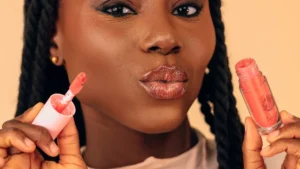
A lip oil is a lightweight liquid lip treatment built on plant oils. A balm protects and softens but rarely looks like much; a gloss shines but often feels sticky and does little for the skin underneath. A lip oil tries to do both at once: it coats the lips in a glossy, flexible layer while its oils soften the surface and slow moisture loss.
Lips need help because they have no oil glands, so they cannot make their own protective layer the way the rest of your face does. Their outer skin is only three to five cell layers thick, far thinner than anywhere else on your face, and they spend all day exposed to wind, cold, dry indoor air and sun. So they dry out fast and flake, and a product that only sits on top can feel useless an hour later.
This guide explains what a lip oil actually is, what is inside the bottle, how it works, and how it differs from balm, gloss, tint, scrub and plumper. It is a product explainer, not a shopping list or a routine, so you can decide whether a lip oil earns a place in your routine before you buy one.
Key takeaways
- A lip oil is a lightweight, oil-based liquid that conditions the lips while adding a glossy shine, sitting somewhere between a balm and a gloss.
- Lips dry out easily because they have no oil glands and their outer skin is only three to five cell layers thick.
- Most lip oils are built on plant oils such as jojoba, squalane, rosehip, cherry or camellia, often with vitamin E.
- A lip oil absorbs a little and shines; a balm seals moisture in; a gloss coats the surface for shine.
- A lip oil will not repair badly cracked lips on its own, and most formulas contain no sun protection.
What a lip oil actually is
A lip oil is a lip product whose base is oil rather than wax, and that single difference explains almost everything about it. Balms are built on waxes and butters, which give them their solid shape and sealing power. Glosses are built on thick gels and polymers, which give them their cling and mirror shine. A lip oil is built on liquid plant oils, gelled just enough to stay on the lips, in a small tube with a wand or rollerball.
A good lip oil feels slippery and silky, not waxy or tacky. It spreads in one thin layer, does not drag, and leaves no heavy, coated feeling. The shine is softer and more liquid than a gloss, closer to healthy, moisturised lips than to a painted-on glaze. Many formulas are clear; many carry a sheer tint, usually pink, berry or coral.
What a lip oil is not matters too. It is not a lip balm, though the two work well as a pair. It is not a lip gloss, though it borrows the gloss’s shine. It is not a lip scrub, which lifts dead skin, or a lip plumper, made to make lips look fuller. The defining feature is the formula: liquid oils doing the work, with shine as a side effect.
How a lip oil works on the lips
A lip oil works in two modest ways at once. First, the oils are emollients: they fill the tiny gaps between rough, dry cells on the lip surface, so lips feel smoother and look less lined. Second, the thin oily film slows water loss. It does not add water to the lips; it helps them hold on to the water they already have.
Some oils also sink in a little instead of sitting entirely on top. Jojoba oil is close in structure to the skin’s own sebum, so it spreads easily and absorbs well. That partial absorption is why a lip oil feels different from a gloss: a gloss stays on the surface, while an oil is partly taken up by the skin, so its shine fades sooner.
That shorter wear time is the honest trade-off. A lip oil usually needs reapplying every couple of hours, more often if you are eating or drinking, because the lighter formula is absorbed and worn away. In exchange you get comfort: no stickiness, no waxy build-up, and lips that feel better once the shine has faded than they did before.

What is inside a lip oil
The ingredient list of a lip oil is usually short, and reading it tells you more than the marketing on the front of the tube. The first few ingredients are almost always oils: jojoba, sunflower seed, castor seed, camellia, rosehip, cherry or almond. A formula listing a plant oil first is built on it.
Beyond the base oils, three extras appear again and again. Vitamin E and shea butter soften the lips and keep the oils stable. Humectants such as hyaluronic acid or glycerin draw moisture towards the surface, which is why some lip oils claim a plumping effect with no tingling ingredients. A few formulas add peptides, though the effect of a peptide in a product that wears off in two hours is subtle.
Some ingredients are worth noticing for the wrong reasons. Strong fragrance, peppermint, menthol and cinnamon are the usual suspects when a lip oil stings or leaves lips drier the next day. A clear or lightly tinted oil with a short list of plant oils and no added fragrance is the safest start, especially if your lips are sore. As with face oils, the best formula is usually the one with the shortest list you can understand.
Lip oil vs lip balm vs lip gloss
These three look alike on a shelf and feel similar for about ten seconds, which is why they are constantly mixed up. A lip oil is the middle ground: lighter than a balm, less sticky than a gloss.
| Aspect | Lip oil | Lip balm | Lip gloss |
|---|---|---|---|
| Base formula | Liquid plant oils | Waxes and butters | Gels and polymers |
| Texture | Thin, silky, slippery | Thick, waxy or buttery | Thick, cushiony, often tacky |
| Feel on the lips | Light, barely-there | Cushioning, sometimes heavy | Coated, sometimes sticky |
| Shine | High, soft and liquid | Low to medium sheen | High, mirror-like |
| Hydration | Conditions and softens | Seals moisture in | Minimal, mostly surface |
| Protection | Low to medium | High, forms a barrier | Low |
| Wear time | Short, one to two hours | Medium, a few hours | Medium to long |
| Best for | Everyday shine plus care | Cold, wind, cracked lips | Maximum shine and colour |
If your lips are healthy and you want gloss and softness through a normal day, a lip oil is the easiest choice. If they are cracked or facing a cold, windy day, a balm is better, because only a balm forms a proper seal: our guide to the best hydrating lip balms covers the formulas that do that job well. For the highest shine and strongest colour, a gloss wins.
Lip oil vs lip scrub, lip tint and lip plumper
A lip scrub is an exfoliant: fine grains in an oily base that lift dead, flaking skin when you rub it gently over your lips. A lip oil does not exfoliate at all, and oil over flakes will not smooth them; the flakes must be lifted first. That is why the two are partners rather than rivals.
A lip tint is a colour product first and a treatment second. It stains the lips so colour lasts through eating and drinking, usually leaving a matte or natural finish. A tinted lip oil is the overlap: a sheer wash of colour with the shine and conditioning of an oil, but the colour fades far faster than a true tint. A lip plumper makes lips look fuller, either by mildly irritating them or by drawing moisture in with hyaluronic acid. An oil can make lips look fuller because glossy lips catch the light, but for an oil that is a side effect; for a plumper it is the point.
How to choose a lip oil
You cannot properly test a lip oil in a shop, so these six checks matter most.
- Read the first three ingredients. Look for a plant oil such as jojoba, squalane or rosehip near the top, not a synthetic polymer.
- Check the texture. A true lip oil should feel thin, silky and non-sticky. If it drags or clings, it is a gloss with an oil’s name.
- Pick clear if your lips are sore. Fragrance, flavour and strong tint are the most likely to sting already irritated lips.
- Do not expect sun protection. Most lip oils contain no SPF, so on sunny days wear one under a product that does protect.
- Match the tint to your real lip colour. A shade that looks pink in the tube can read berry, or barely-there, on your lips.
- Judge it after an hour, not after a minute. The shine fades fast by design, so the real test is whether lips still feel soft once it has gone.
Who should skip it, and the mistakes that waste it
A lip oil is gentle, but it is not right for every situation. If your lips are badly cracked, bleeding or sunburned, an oil will not repair them, and anything fragranced or tingling will sting; a thick balm is better until the skin heals. The most common mistake is expecting an oil to do a balm’s job: it softens and shines but forms no strong seal, so in cold wind it wears off and lips dry out again. The second is applying it over flakes: oil over dead skin just makes shiny flakes, so exfoliate gently first, as our guide to lip exfoliation at home explains.
Frequently asked questions
Is a lip oil the same as a lip gloss?
No, although they look alike. A lip oil is built on liquid plant oils and conditions the lips while adding shine, feeling thin and non-sticky. A gloss is built on thick gels and polymers, made mainly for shine and colour, and usually feels thicker and tackier.
Does a lip oil actually moisturise lips?
It conditions and softens them, and it slows moisture loss while it is on the lips. That is real help for mildly dry lips. But it does not add water, and it does not seal them the way a balm does, so for badly cracked lips a balm is still the better treatment.
Can you wear lip oil over lipstick?
Yes, and that is one of its most useful jobs. A clear lip oil over a matte lipstick adds shine and stops it looking dry or lined. Apply the lipstick first, let it set, then add one thin layer of oil. Too much will break the lipstick down and make it slide.
Can you wear lip oil overnight?
You can, and some treatment oils are made for exactly that, but a standard lip oil is not the best overnight product. It is thin and wears away quickly, so most of it will be gone within an hour or two. A thicker balm or an overnight lip mask will stay on far longer.
Do lip oils expire?
Yes, like all oil-based cosmetics. Plant oils go rancid over time, especially once the tube has been opened and the wand has touched the lips. Most lip oils are good for about twelve months after opening, and a stale or sharp smell is the clearest sign to replace the tube.
Is lip oil good for dry lips?
For mildly dry lips, yes: it softens the surface, adds shine and makes lips look and feel healthier within minutes. For very dry, flaking or cracked lips, it is only part of the answer. Exfoliate gently first, use the oil during the day, and use a balm at night.
The bottom line
A lip oil is a simple product with a clear job: a lightweight, oil-based treatment that makes lips look glossy and feel softer. It is not a balm, so it will not seal badly cracked lips through a winter day. It is not a gloss, so it will not give the longest-lasting shine. It is not a scrub or a plumper, so it will not remove flakes or create fullness.
Note: This guide explains what a lip oil is and how it differs from similar lip products. It is general beauty information, not medical advice. Formulas vary between brands, so check the ingredient list of the product you buy, patch test a new formula if your lips are sensitive, and speak to a dermatologist if your lips are persistently cracked, painful or slow to heal.