Anise is one of the oldest flavourings in the world, and one of the most confusing notes in perfumery. It is a seed, not a fruit, from a small Mediterranean herb, and it smells of sweet licorice with a green, herbal edge. The confusion starts because it shares its defining molecule with two other plants, star anise and fennel, and because note lists use the words anise, star anise, aniseed and licorice almost interchangeably.
That confusion matters when you buy perfume. A bottle that lists anise may smell of cool green spice, or of candied sweets, or of almost nothing at all, depending on which material the perfumer actually used and what they put beside it.
Below is a plain guide to what anise is, how it gets into a bottle, and how to tell it apart from its lookalikes, so you can read a note list the way a perfumer writes it rather than the way a shop assistant sells it.
Key takeaways
- Anise is the seed of Pimpinella anisum, a Mediterranean herb, and it is not the same plant as star anise.
- Most of its smell comes from one molecule, trans-anethole, which it shares with star anise and fennel.
- Anise usually appears as a top note and fades within the hour, though a heart-note anise can last into the evening.
- Note lists use anise, star anise, fennel and licorice loosely, so the words on a list do not always match what you smell.
- No note list replaces a skin test, because anise changes with temperature, skin chemistry and the materials around it.
What anise is, and where it comes from
Anise is the seed of Pimpinella anisum, a low, feathery herb in the carrot family that grows around the Mediterranean and in parts of Asia. The plant is grown for its small ridged seeds, which are harvested when they turn grey-green and are then dried.
The oil is taken from the seeds by steam distillation, and it is dominated by trans-anethole, a single molecule that makes up most of the oil. Anethole is present in star anise, in fennel and in a handful of other plants, so the same smell can arrive from several different sources, and a note list may name any of them.
Anise is not the same thing as star anise. Our guide to what a star anise perfume is covers the fruit in detail, and the difference between the two is worth knowing before you buy either one.
How anise ends up in a perfume bottle
Anise reaches a perfume in one of three forms. The first is the natural oil, steam-distilled from the seeds, which smells green, sweet and slightly herbal, with a warmth that the synthetic versions do not quite capture.
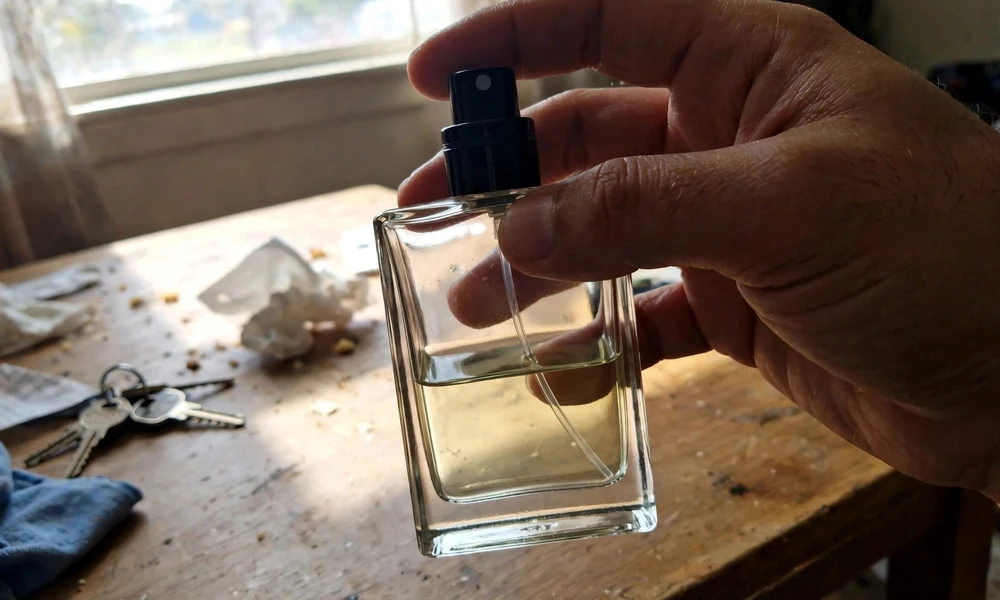
Which form a perfumer chooses changes what you smell. Isolated anethole gives a sharper, cleaner licorice that reads as cold and sweet. Anisic aldehyde gives a soft, powdery sweetness that barely reads as licorice at all. A note list that simply says anise tells you none of this, which is why two perfumes with the same listed note can smell so different.
The amount matters too. Anise is a strong material, and a little goes a long way. In most perfumes it is used in small doses, as a top note that brightens the opening or as a heart note that cools a sweet base. A fennel perfume works the same way, because fennel oil is also built on anethole, and the two notes are dosed in much the same range.
Nine facts about anise in perfume
Anise is a seed from the carrot family, not a spice pod
Anise comes from Pimpinella anisum, a herb in the same family as carrots, parsley and celery. The part that is used is the seed, a small grey-green oval with fine ridges, and it is harvested by hand when the plant dries out in late summer. This is worth knowing because it explains the smell. Anise has a green, herbal quality that star anise does not, and that greenness comes from the seed itself, not from anything added to it.
What it shows: The green edge in an anise perfume is a property of the seed, not a flaw in the blend. What to consider: If you expect the round sweetness of star anise, the greener character of true anise can come as a surprise.
The licorice smell comes from trans-anethole
Trans-anethole makes up the large majority of anise oil, and it is the molecule responsible for the licorice smell. It is also the main aroma molecule of star anise oil and a major part of fennel oil, which is why all three plants smell related even though they are not related botanically. When you smell anise in a perfume, you are mostly smelling anethole.
What it shows: The licorice character is a property of the molecule, not of any one plant. What to consider: A perfume that lists fennel or star anise may smell of anise anyway, because the same molecule is doing the work.
The same molecule shows up in anise, star anise and fennel
On a blotter, anise and star anise are easy to tell apart once you know what to look for. Anise is greener, warmer and more herbal, with a faint hay-like dryness underneath the sweetness. Star anise is cooler, sweeter and more peppery, with a faint woody warmth and a sharper edge. The difference is small, but it is consistent, and it survives into the finished perfume.
What it shows: The two notes are cousins, not twins, and a perfumer chooses between them for a reason. What to consider: A note list that says anise may still smell like star anise, because brands choose the word that suits the story.
The note is usually gone within the hour
Anise is a volatile material, which means it evaporates quickly. In most perfumes it is listed as a top note, and it is loudest in the first ten minutes, still present at half an hour, and mostly gone by the end of the first hour. What remains is not the anise itself but the sweetness it leaves behind, a faint licorice warmth in the base that can linger for hours without ever smelling of anise again.
What it shows: Anise is an opening note, not a lasting one, in most compositions. What to consider: If you want to smell anise all day, you need a bottle where it sits in the heart, not the top.
Most anise in bottles today is made, not distilled
Natural anise oil is expensive and variable, and most modern perfumes use anethole or anisic aldehyde made in a lab instead. The synthetic versions are cheaper, more consistent and easier to dose, and they smell very close to the natural oil, though not identical. Anethole is sharp and clean, anisic aldehyde is soft and powdery, and neither has the green, hay-like warmth of the distilled seed.
What it shows: The anise in a modern perfume is usually a single molecule rather than the whole oil. What to consider: A vintage perfume may smell greener and rounder than a modern one with the same listed note, because it used the natural oil.
Anise has flavoured perfume since 1906
One of the earliest perfumes to feature anise as a prominent note was Guerlain’s Après L’Ondée, launched in 1906, where anise sits beside bergamot in a soft, powdery floral. The note has been in continuous use ever since, through the fougères of the nineteen seventies, the gourmands of the nineteen nineties, and the niche ambers of today. It is one of the few spice notes that has never really gone out of fashion.
What it shows: Anise has been a working perfumery material for more than a century. What to consider: Its long history means it appears in classics and in modern niche bottles alike, and the two can smell very different.
Anise joins the bright opening to the heavy base
Perfumers use anise to connect the bright top notes of a perfume to its heavier base. Citrus and lavender are light and volatile, vanilla and amber are heavy and slow, and the gap between them can feel like a jump. Anise sits in the middle, sweet enough to belong with the base and fresh enough to belong with the top, and it smooths the transition so the perfume feels like one thing rather than two.
What it shows: Anise is often present to do a structural job, not to be smelled on its own. What to consider: A perfume where anise works as a bridge may never smell of anise at all, even though the note is listed.
The same note reads dry in a fougère and sweet in a gourmand
Anise changes character completely depending on its neighbours. With lavender, coumarin and oakmoss, the classic fougère materials, it reads as dry, herbal and clean, the smell of a barbershop rather than a sweet shop. With vanilla, praline and tonka, it reads as candied and warm, the smell of a sweet shop rather than a barbershop. The molecule is the same in both cases. The company is what changes.
What it shows: The character of anise is set by its neighbours, not by the note itself. What to consider: If you dislike anise in one style, you may still like it in the other, because the two can smell like different notes.
Skin temperature changes what you smell
Anise is more volatile than most notes, which means it responds to heat. On warm skin, or in warm weather, it evaporates faster and reads sweeter, because the green, herbal facets burn off first and the sweet anethole is what remains. On cool skin, or in cold weather, it lasts longer and reads drier, because the green facets survive and the sweetness stays in check.
What it shows: The same perfume can smell like two different perfumes on two different days. What to consider: A bottle you dislike in summer may be the bottle you love in winter, and the other way round.
Anise, star anise, fennel and licorice: telling them apart
Four words describe roughly the same smell, and they are used loosely enough that even experienced wearers mix them up. Anise is the seed of Pimpinella anisum, green and herbal. Star anise is the fruit of Illicium verum, cool and peppery. Fennel is the seed of Foeniculum vulgare, greener still, with a fresh, almost grassy edge. Licorice is the root of Glycyrrhiza glabra, and in perfume it is usually not the root at all, but anethole plus sweet, rooty materials built to imitate it.
The differences are small but real. Anise is the warmest and greenest of the four. Star anise is the coolest and sweetest. Fennel is the freshest, with a herbal lift that can read as almost minty. Licorice is the sweetest and rootiest, with a dark, syrupy depth that none of the others have.
Our guide to what an angelica perfume is makes a similar point about herbal notes in general, because angelica is another plant whose name on a note list covers more than one material.
The caveats that matter
Anise is a note that rewards curiosity and punishes assumptions. The word on a list does not tell you which plant was used, which form it arrived in, or whether you will be able to smell it at all. It also does not tell you whether you will like it, because the licorice character divides wearers more than almost any other spice note. Some people love it instantly and some people cannot stand it, and no amount of blending changes that.
| Detail | What is known |
|---|---|
| What anise is | The seed of Pimpinella anisum, a Mediterranean herb in the carrot family |
| The key molecule | Trans-anethole, shared with star anise and fennel |
| Where it usually sits | Top note in most perfumes, heart note in the richer ones |
| How long it lasts | Loudest in the first hour, faint sweetness after that |
| How it differs from star anise | Greener, warmer and more herbal; star anise is cooler and sweeter |
| What it pairs with | Lavender and woods for dry, vanilla and tonka for sweet, tobacco for dark |
| How to test it | One spray on skin, worn for a full day, in the weather you will wear it in |
| What it does not do | It does not stay loud all day, and it does not smell the same in every bottle |
Checklist: smelling an anise perfume honestly
- Check which plant the note list names: anise, star anise and fennel are different materials with different smells.
- Check where it sits: a top-note anise fades fast, a heart-note anise stays longer and smells warmer.
- Check the neighbours: lavender and woods mean dry, vanilla and tonka mean sweet, tobacco and incense mean dark.
- Smell it on skin, not on paper: anise changes on skin, and the drydown is what you will actually live with.
- Test it in the right weather: cool weather shows the dry side, warm weather shows the sweet side.
- Ask whether you like licorice: if the answer is no, pick a perfume where anise stays in the background.
Frequently asked questions
Is anise the same as star anise?
No. Anise is the seed of Pimpinella anisum, a Mediterranean herb, and star anise is the fruit of Illicium verum, an evergreen tree from southern China and northern Vietnam.
Does anise always smell like licorice?
Mostly, yes, but not always in the way you expect. In a dry fougère it reads as a cool herbal spice, in a gourmand it reads as candied sweetness, and in some perfumes it disappears into the join between the opening and the base.
Why do some perfumes list anise and I cannot smell it?
There are three usual reasons. The anise may be used as a bridge between the opening and the base, where its job is to smooth the join rather than to be smelled. It may be a top note that has already faded by the time you smell the bottle. Or the note list may name anise while the perfumer actually used a related material, like anisic aldehyde, which smells softer and less like licorice.
Is anise a masculine or feminine note?
Neither. Anise appears in perfumes made for men, for women and for everyone, and its character depends on what surrounds it rather than on who wears it. The dry, herbal versions are more common in masculine perfumes and the sweet, candied versions are more common in feminine ones, but there is no rule, and plenty of exceptions.
Can I wear anise in summer?
Yes, if you choose the right kind. The fresh, dry anise perfumes work well in warm weather, because the note reads as cool and herbal. The sweet, candied ones are better kept for cold weather, because the licorice turns heavy and cloying when it is hot.
How do I train my nose to recognise anise?
Start with the kitchen. Smell a star anise pod, a pinch of aniseed and a fennel seed side by side, and notice how the three differ. Then smell two perfumes, one dry and one sweet, that both list anise, and notice how the same note changes with its neighbours.
The bottom line
Anise is a small note with a large shadow. It is a seed, not a fruit, and it shares its defining molecule with two other plants, which is why note lists use the words anise, star anise, fennel and licorice almost interchangeably. What matters is not the word on the list but the material in the bottle, the place it sits in the pyramid, and the company it keeps.
The honest way to buy an anise perfume is to test it on your own skin, in the weather you will wear it in, and to judge it on the drydown rather than the opening. Do that, and the note stops being confusing and starts being useful, which is exactly what a good spice note should be.