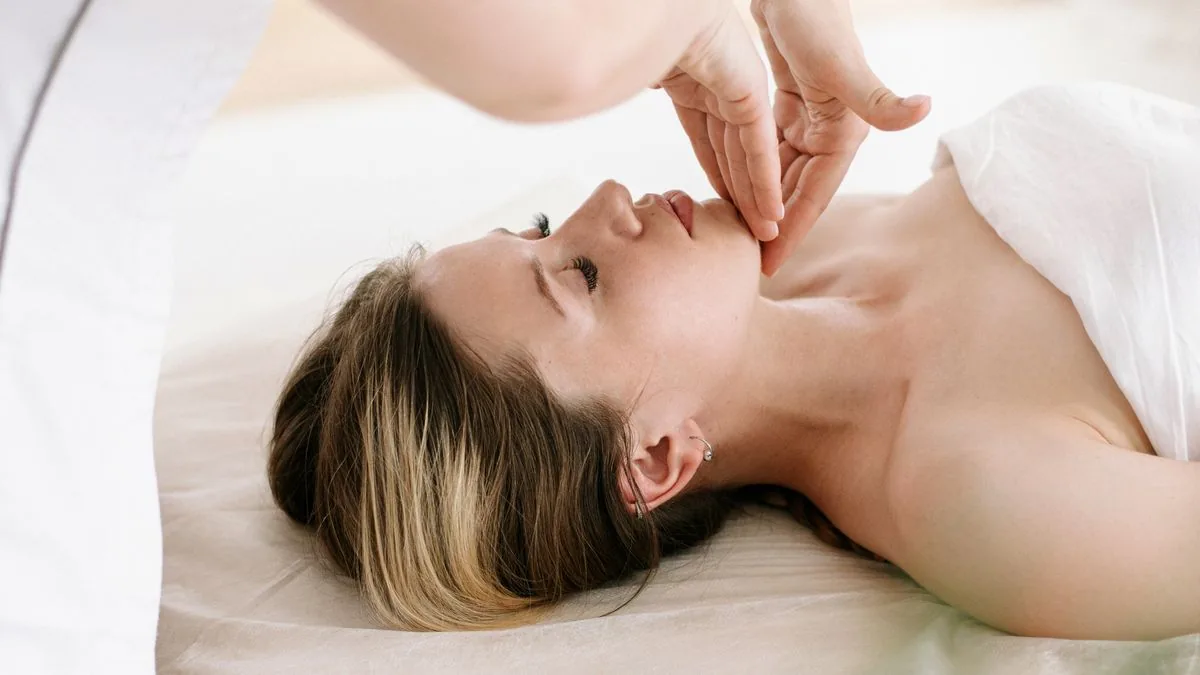

If you have spent any time on beauty and wellness feeds lately, you have almost certainly seen lymphatic drainage. A therapist’s hands glide feather-light across a jawline, a gua sha stone sweeps down a neck, and a face that looked puffy in the morning looks sculpted by lunchtime. The claims attached are enormous: detox, de-bloat, snatched jawlines, glowing skin, even weight loss.
Yet lymphatic drainage is not a new invention, and it is not only a beauty trend. The technique was formalised in the 1930s by Danish therapist Emil Vodder and his wife Estrid, who developed a gentle, rhythmic method for swollen lymph nodes. Today, a version of that same technique is used every day by hospital rehabilitation teams as part of lymphedema treatment, where excess lymph fluid collects in body tissues.
So what is lymphatic drainage, really? It is both a natural process and a hands-on technique. Your body drains lymph fluid all day unaided, and manual lymphatic drainage is a very gentle massage designed to encourage that flow when it is sluggish or blocked. This guide explains how the system works, how facial and body sessions differ, which benefits the evidence supports, and who should skip it.
Key Takeaways
- Lymphatic drainage is a gentle, rhythmic massage that encourages lymph fluid to move through the body’s vessels and nodes. It is far lighter than a regular massage, working on the skin, not the muscle.
- Your lymphatic system has no pump of its own. It relies on muscle movement, breathing, and the vessels’ own contractions to return roughly three litres of fluid to the bloodstream daily.
- The strongest evidence is for lymphedema and post-surgical swelling. Evidence for detox, fat loss, and lasting weight loss in healthy people is weak.
- Facial drainage can temporarily reduce morning puffiness from fluid retention, but it cannot change fat, bone structure, or skin laxity, and the visible effect usually lasts 24 to 72 hours.
- Some people should avoid it entirely, including anyone with a suspected blood clot, active skin infection, decompensated heart failure, or unexplained swelling never assessed by a doctor.
What Is Lymphatic Drainage?
Lymphatic drainage, also called manual lymphatic drainage or MLD, is a specialised massage technique that uses gentle, rhythmic, skin-stretching strokes to encourage lymph fluid to move through the vessels and toward the lymph nodes. A trained therapist uses only the weight of their fingertips, in slow, repeated movements following the natural direction of lymph flow.
The pressure is so light it can feel like almost nothing is happening, which is exactly the point: lymph vessels sit just beneath the skin, and pressing harder collapses them. The term covers two things: the body’s own automatic drainage of excess fluid, and the hands-on treatment used when fluid collects where it should not. A session typically lasts 45 to 90 minutes, or 30 to 60 for the face alone.
How the Lymphatic System Works
Every minute of your life, your blood capillaries leak. That is by design: plasma fluid seeps into your tissues to deliver oxygen and nutrients, and most of it is reabsorbed directly back into the blood. Roughly three litres a day is left behind between your cells, and the lymphatic system collects it, filters it, and returns it to your bloodstream near your collarbones.
Along the way, lymph passes through around 600 lymph nodes, each screening the fluid for bacteria, viruses, and abnormal cells. Unlike blood, lymph has no heart to pump it: it relies on muscle movement and deep breathing, which is why walking and stretching best support lymph flow.
How Lymphatic Drainage Massage Works
The therapist begins by opening the central drainage points, usually the nodes above the collarbones and in the neck, because fluid cannot drain into a blocked exit. Only then do they work on the swollen area, using slow, rhythmic strokes that stretch the skin just enough to stimulate the tiny vessels underneath.
The pressure matters more than the pattern. MLD uses a very light touch, often described as the weight of a coin resting on the skin. Pressing harder collapses the delicate vessels and can cause bruising and broken capillaries. A session should never hurt. It also does not burn calories or break down fat cells: any change in measurements reflects fluid moved, not fat lost.
Facial vs Body Lymphatic Drainage
Facial and body lymphatic drainage share the same principles, but differ in practice: a facial session focuses on a small, delicate area, while a body session covers large areas and often addresses a medical problem.
| Feature | Facial Lymphatic Drainage | Body Lymphatic Drainage |
|---|---|---|
| Main goal | Reduce morning puffiness, ease sinus congestion, refresh the complexion | Reduce swelling, support lymphedema care, ease post-surgical fluid |
| Pressure used | Feather-light, fingertip pressure on very thin skin | Light, but firmer than facial work, adapted to thicker skin |
| Session length | Usually 30 to 60 minutes | Usually 45 to 90 minutes |
| Key drainage route | Toward the ears, then down the neck to the collarbones | Toward the nearest large node cluster, such as the armpit or groin |
| Visible results | Temporary de-puffing, often within hours, lasting 24 to 72 hours | Reduced swelling and heaviness in the treated limb or area |
| Evidence strength | Modest, mostly for post-procedure swelling and temporary puffiness | Strongest, especially for lymphedema and post-surgical swelling |
| At-home option | Yes, a gentle five-minute self-massage or gua sha routine | Gentle self-care between sessions only |
| Typical cost | Often lower, sometimes added to a facial treatment | Often higher, reflecting longer sessions |
The facial version is the one most people encounter first, and the one surrounded by the most hype. It can genuinely make a puffy face look fresher, because a puffy face is often a fluid problem, and fluid is exactly what this technique moves. But a puffy face can also be a fat, skin, or bone problem, and drainage addresses only the first. If puffiness comes from poor sleep, salty food, or allergies, it may help for a day; if it comes from weight gain or thyroid disease, no massage will reshape it.

What Are the Benefits?
The most firmly established benefit is reducing swelling where the lymphatic system is not working properly. For people with lymphedema, particularly after breast cancer surgery or lymph node removal, MLD is a recognised part of a broader treatment plan alongside compression garments, exercise, and skin care.
For healthy people, the benefits are softer and shorter-lived: a session may temporarily reduce facial puffiness from fluid retention, ease a heavy feeling after a long flight or late night, and leave you deeply relaxed. It will not detox your body or boost your immune system; your liver and kidneys handle that around the clock.
What the Evidence Actually Supports
Clinical evidence supports MLD for lymphedema and post-surgical swelling, where it is used as part of a broader plan; the International Society of Lymphology’s 2023 consensus describes lymphedema care as a comprehensive approach, while noting the limits of the available studies. For the popular wellness claims, the evidence thins out quickly: there is no substantial evidence of lasting weight loss, detoxification, or immune benefits in healthy people, and the visible fluid effect of a single session lasts about 24 to 72 hours. If a clinic promises permanent fat loss or a full-body cleanse from one session, walk away.
Who Should Avoid Lymphatic Drainage
For most healthy adults, gentle lymphatic drainage is low risk with a trained therapist. But a suspected blood clot is an absolute reason not to book: one-sided calf pain, warmth, redness, or sudden swelling is an emergency department visit, not a massage appointment, because squeezing a clot can dislodge it. The same caution applies to active skin infections such as cellulitis and to decompensated heart failure. People with kidney disease, cancer involving the lymph nodes, head and neck radiation, or a clotting disorder should get medical clearance first. On the face, avoid drainage during an active infection or over open wounds, and after laser, microneedling, or filler, wait until your clinic clears you, usually at least two weeks.
At-Home Lymphatic Drainage: A Gentle Routine
You do not need a clinic appointment to support lymph flow. A short, gentle routine at home can do much of what a facial session does for morning puffiness, as long as you keep the pressure feather-light and the direction correct. The most common mistake is pressing too hard or stroking upward at random, which collapses the vessels. Before you start, wash your hands and apply a little facial oil so your fingers glide, and skip it if you have a breakout, rash, or broken skin.
Your At-Home Checklist
- Open the exits first: make small, gentle circles above the collarbones and on the sides of the neck for 30 seconds.
- Keep the pressure feather-light: use only the weight of your fingertips, letting the skin move a little while the muscle underneath stays still.
- Follow the drainage map: sweep from the centre of the face toward the ears, then down the neck toward the collarbones.
- Go slow and repeat: repeat each sweep five to ten times rather than rushing through dozens of quick passes.
- Use a tool gently if you like: a gua sha stone or jade roller can help, but only with the same light pressure, never hard enough to leave redness.
- Stop if something is wrong: redness, bruising, pain, or broken capillaries mean the pressure was too strong, so stop until the skin has settled.
Tools can make the routine more pleasant, but they are optional. A jade roller used lightly can feel cooling and help you keep a steady rhythm. If you are curious about electronic options, our guide to the best microcurrent facial devices explains which tools are worth the splurge. And if puffiness under the eyes is your main concern, read our roundup of the best eye creams for puffiness.
Frequently Asked Questions
Does lymphatic drainage actually work?
Yes, for lymphedema and post-surgical swelling, as part of a broader plan. It can also temporarily reduce puffiness. It does not detox the body, burn fat, or cause lasting weight loss, and the visible effect usually lasts 24 to 72 hours.
How often should you get lymphatic drainage?
It depends on why you are going. For lymphedema or post-surgical care, your doctor sets the frequency, sometimes several times a week at first. For general wellness, a monthly treatment or a short at-home routine a few times a week is enough.
Is lymphatic drainage good for your face?
It can be, for the right problem. If your face is puffy in the morning from fluid pooled overnight, a gentle session or five-minute routine can freshen it within hours. It cannot change fat, bone structure, or skin laxity.
Can lymphatic drainage help you lose weight?
No, not in any lasting way. A session may temporarily reduce measurements by moving excess fluid, but it does not burn calories, break down fat cells, or reduce body weight.
Is lymphatic drainage safe?
For most healthy adults it is low risk with a trained therapist using the correct light pressure. Avoid it with a suspected blood clot, active skin infection, heart failure, kidney disease, or unexplained swelling, and see a doctor first if swelling is new, one-sided, or persistent.
What is the difference between lymphatic drainage and a regular massage?
Pressure, purpose, and direction. A regular massage works deeply into the muscles to ease tension, while lymphatic drainage uses feather-light strokes on the skin to move fluid toward the lymph nodes. A session should never hurt.
The Bottom Line
Lymphatic drainage is a real technique with a real medical role, a pleasant short-term cosmetic effect, and a great deal of hype attached to it. If you have lymphedema or post-surgical swelling, it is a valuable part of your care. If you wake up puffy before an event, a gentle session or five-minute routine at home can make a visible difference for a day. If you are hoping for a detox, a smaller dress size, or a permanently sculpted jawline, it cannot deliver.
Book it for the right reasons, choose a trained therapist who screens your health first, and keep expectations in line with the evidence. Pair it with the habits that drive lymph flow: daily movement, deep breathing, good sleep, and hydration.
Note: This article is for general information only and is not medical advice. Lymphatic drainage is not a substitute for medical care. If you have swelling that is new, one-sided, painful, or persistent, or a heart, kidney, or clotting condition, speak to a healthcare professional first.