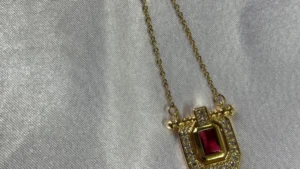
A bracelet is the hardest test an opal can face. A necklace hangs safely at the throat and an earring barely moves, but a bracelet rides on the wrist, the busiest part of the body. It brushes desks and door frames, catches on sleeves, and meets soap and water whenever you wash your hands.
Opal is a soft stone. It is hydrated silica, holding water inside its structure, usually around six to ten per cent. It rates only 5 to 6.5 on the Mohs hardness scale, with poor to fair toughness. Its beauty is play-of-colour, flashes of colour that move as the stone moves.
This guide covers the buying check for a bracelet: opal types, play-of-colour, construction, styles, fit, settings, price and care. It is a buying guide, not a list of pieces to buy.
Key takeaways
- A bracelet is the toughest home for opal: the wrist knocks, soaks and rubs against things all day.
- Boulder and black opal cope best on the wrist; white opal suits occasional wear, and hydrophane Ethiopian opal must stay dry.
- Judge play-of-colour in daylight while the bracelet moves: bright flashes in several colours, covering most of each stone.
- Ask whether every stone is solid natural opal, a doublet, a triplet or lab-grown, and get the answer in writing.
- Fit and clasp decide whether a bracelet is worn: it should slide a finger’s width and fasten one-handed, with a safety catch on a tennis style.
Why a bracelet is the hardest test for opal
Start by being honest about how you will wear it. A bracelet bought for evenings can be more delicate than one bought for daily wear. A fine crystal opal in tall prongs is a lovely evening piece; worn to type all day, it will chip far sooner.
The wrist adds risks a necklace never faces. The outer edge hits the desk every time you rest your hand, the underside rubs against a watch or a keyboard, and the bracelet swings as you move. Stones in a line knock against each other as it flexes.
The opal types you will meet while shopping
Opal is not one stone but a family. Black opal has a dark body tone, from dark grey to jet black, which makes the play-of-colour stand out sharply; it is the rarest and most expensive. White opal has a milky white to light body tone, softer in effect and far more common.
For a bracelet, the order of preference differs from the order of price. Boulder opal is the natural first choice for daily wear, because its ironstone backing supports the thin opal layer and stops it flexing and cracking. Black opal comes next: dense, with strong colour, so a small stone still makes an impact.
| Opal type | Look | On the wrist | Price note |
|---|---|---|---|
| Black opal | Dark body, vivid flashes | Strong; dense and hard-wearing | Highest |
| Boulder opal | Colour on dark ironstone matrix | Best for daily wear | Mid to high; good value |
| White opal | Milky body, soft pastel flashes | Occasional wear; beaded styles | Most affordable |
| Crystal opal | Transparent, colour floating inside | Evening wear; keep protected | Mid to high |
| Ethiopian opal | Bright colour, often very lively | Keep dry; hydrophane absorbs water | Lower |
| Doublet | Thin opal on a dark backing | Looks like black opal; never soak | Low |
| Triplet | Thin opal under a clear quartz cap | Shiny; cap can scratch and lift | Lowest |

How to read play-of-colour on a moving wrist
Play-of-colour is the first thing to judge and the hardest to describe, so judge it with your eyes, not the label. Hold the bracelet against dark cloth, tilt it slowly, and watch. Good play-of-colour is bright, covers most of each stone, and shows more than one colour.
Pattern matters too: pinfire means tiny dots of colour, broad flash means large sheets that roll across the stone, and harlequin means a mosaic of regular blocks. Harlequin is the rarest pattern, and broad flash is the most dramatic on a bracelet.
In a bracelet with many stones, check the match as well as the individual stones. A tennis bracelet should read as one continuous line of colour, with no dull stone breaking the line. Look for crazing, a network of fine cracks, and for pits or cloudy patches.
Solid, doublet, triplet or lab-grown: ask before you pay
The single most important question to ask about any opal bracelet is whether the stones are solid. A solid opal is one piece of opal all the way through. A doublet is a thin slice of opal glued to a dark backing, which makes a pale stone look like a black opal. A triplet adds a clear quartz cap on top.
On a bracelet the difference matters more than anywhere else, because the wrist is where water, knocks and flexing attack the glue line. A doublet that survives for years in a pendant can cloud and split on a bracelet worn daily. Buy one knowingly, as a fashion piece, and keep it dry.
Ask for the answer in writing, on the receipt or the certificate, before you pay: solid natural opal, doublet, triplet or lab-grown, and the origin if the seller knows it. A reputable seller will answer plainly and welcome the question. Hesitation or a price far below the market are reasons to walk away.
Bracelet styles: which shape suits your life
A tennis bracelet is a flexible line of matching stones, each in its own setting, joined so the bracelet bends freely around the wrist. It is the dressiest opal style and shows play-of-colour best. It is also the most demanding: every stone must match, and the clasp must have a safety catch, because a bracelet that opens unnoticed can slide off.
A bangle is a rigid circle with no clasp, so you slide it over your hand. A single opal set into a bangle makes a bold statement, and the rigid band protects the stones from flexing. The trade-off is fit: the bangle must pass over your knuckles, so it is sized by the hand.
A beaded bracelet is the most forgiving opal style and often the best first buy. Round opal beads are strung on elastic or wire, so the bracelet rolls on, needs no clasp, and stacks easily. Small beads keep the price and the risk down: one chipped bead matters less than one chipped centre stone.
Fit, clasp and comfort: the checks that decide everything
A bracelet that does not fit will not be worn, however beautiful the opal. Measure your wrist with a tape or a strip of paper, snug but not tight, and add about one to one and a half centimetres for a chain or tennis bracelet, so it slides about a finger’s width. A bangle is measured differently: measure around the widest part of the hand.
Test the clasp before you buy, and test it one-handed, because that is how you will fasten it every morning. A lobster clasp is secure and common, a box clasp with a safety latch suits a tennis bracelet, and a toggle clasp is the easiest to fasten alone.
Settings and metals that protect opal
Bezel settings protect opal best on a bracelet, because a thin rim of metal wraps the edge of the stone and shields it from side knocks. Deep prongs are the next best choice, holding the stone low, but tall prongs catch on sleeves. Check that every stone is level: a stone sitting higher than its neighbours takes every knock first.
Metal choice is a matter of taste and of how the bracelet will be worn. Yellow gold flatters warm flashes of orange and red, white gold or platinum suits cool blue and green fire, and rose gold warms a pale white opal. If you plan to wear the bracelet every day, a gold bracelet made for everyday wear is a useful comparison: simple, low-set pieces last longer than delicate, high-set ones.
What a fair price looks like in 2027
Opal prices vary enormously with the stone, the metal and the maker, and a bracelet multiplies the question, because you are buying many stones. A beaded bracelet of small white or Ethiopian opal beads in silver can be modestly priced, a boulder opal cuff in gold sits in the middle range, and a fine black opal tennis bracelet can cost many times more.
Be wary of any price that looks far too low for the type claimed: a “black opal” tennis bracelet at a white opal price is almost certainly a doublet, and a bracelet described only as “Australian opal” with no mention of type may be common opal, which shows no play-of-colour at all. Compare like with like, stone by stone.
The 2027 buying checklist
- Wear it first: put it on, move your wrist, and check it slides a finger’s width and does not spin underneath.
- Judge the colour in daylight: bright flashes in several colours, covering most of each stone, moving as your wrist turns.
- Match the stones: check size, tone and brightness stone by stone, including the underside.
- Ask the construction question: solid natural, doublet, triplet or lab-grown, in writing, before you pay.
- Test the clasp one-handed: it should close with a clear click, hold under a gentle pull, and have a safety catch on a tennis bracelet.
- Check the setting and the edges: bezel or deep prongs, stones set low and level, no sharp points, no crazing or cloudy patches.
How to care for an opal bracelet
Care starts with when you take it off. Remove an opal bracelet before washing your hands, showering, swimming, cooking, cleaning or exercising, and put it on last, after perfume, hand cream and hairspray have dried. That one habit prevents most bracelet damage.
Clean it gently, with lukewarm soapy water and a soft cloth only, and dry it at once with a second soft cloth. Never use an ultrasonic or steam cleaner, never use harsh chemicals, and never soak a doublet or triplet. Store it in its own soft pouch, away from heat and harder jewellery.
Frequently asked questions
Is an opal bracelet suitable for everyday wear?
Yes, if you choose the right type and style. A boulder or black opal bracelet in a bezel setting, taken off for washing and cleaning, can be worn daily for years. A delicate crystal opal tennis bracelet is better kept for occasions.
Which opal type is toughest on the wrist?
Boulder opal is the toughest practical choice, because its ironstone backing supports the thin opal layer and resists cracking. Black opal is next, dense and strong, with colour vivid enough that a small stone still makes an impact.
How tight should an opal bracelet fit?
It should slide about a finger’s width and turn freely without hanging in a loop. Measure your wrist and add about one to one and a half centimetres. A bangle must pass over your knuckles, so measure your hand, not your wrist.
Can I wear an opal bracelet in water?
No. Take it off before washing your hands, showering, swimming or cleaning. Water, soap, chlorine and heat are all bad for opal, and soaking can weaken a doublet or triplet and change the colour of hydrophane Ethiopian opal.
How do I spot a doublet or triplet in a bracelet?
Look at the side of each stone: a doublet shows a straight line where the thin opal meets its dark backing, and a triplet shows a clear cap. Ask the seller and get the answer in writing.
Should I stack an opal bracelet with other bracelets?
You can, but stack with care. Opal scratches easily, so avoid hard metal, diamonds or rough beads, and keep the opal bracelet on top of the stack where it takes fewer knocks. If you love a bold stacked wrist, our guide to the chunky bracelet trend shows how to build the look. For a matching set, our guide to the best diamond earrings is a useful starting point for earrings that will not compete with the colour at your wrist.
The bottom line
Buy the stone for the wrist, not just for the eye. Start with a tough type, boulder or black opal for daily wear, judge the play-of-colour in daylight while the bracelet moves, and check that every stone matches. Then check the fit, the clasp and the setting.
Note: Opal is a soft stone with poor to fair toughness, so treat any price or care claim as a guide, and confirm the stone type, construction and return terms before you buy.