

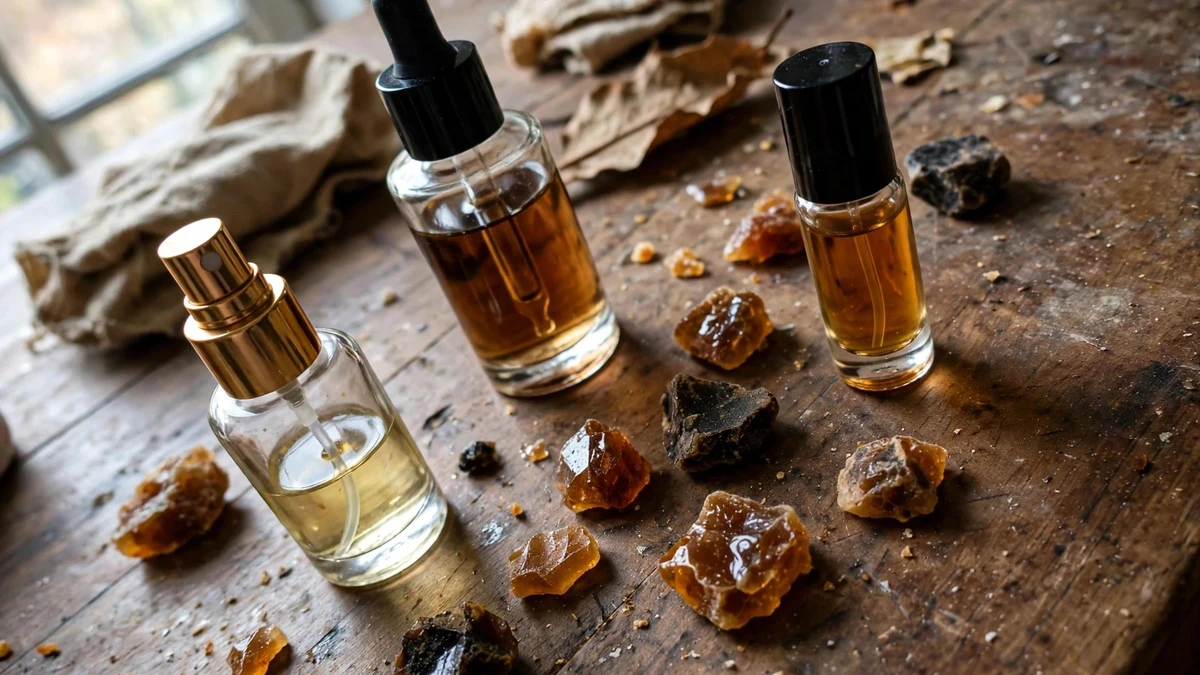

Labdanum is the note that makes a perfume smell like warm skin, old leather and sun-baked stone all at once. It comes from the sticky resin of the rockrose shrub, and perfumers have used it for centuries to give amber accords their depth, their sweetness and their staying power. If you have ever loved a perfume and struggled to name why it felt so warm and enveloping, labdanum was very likely doing the quiet work underneath.
The problem is that labdanum is rarely named on the bottle. It hides inside amber, oriental and woody compositions, and it is easy to buy a perfume that promises warmth and get something flat, powdery or far too sweet instead. The concentration matters, the quality of the resin matters, and so does everything the perfumer puts around it: a little vanilla can make it glow, too much can make it cloying, and a dry cedarwood base can keep it from turning heavy.
Below are nine labdanum perfumes worth considering in 2027, from a pure, single-note study to rich amber compositions that use labdanum as their backbone. Each one is described by what it does well, what to watch for, and who it suits best, so you can choose by the kind of warmth you actually want, not just by the word amber on the label.
Key takeaways
- Labdanum is a resin from the rockrose shrub, and it is the warm, leathery, slightly sweet heart of most amber perfumes.
- It gives a perfume depth and longevity, so labdanum perfumes often last eight hours or more on skin and even longer on fabric.
- Labdanum ranges from dry and leathery to sweet and balsamic, so the same note can smell very different from one perfume to another.
- Try it on skin, not on paper, and give it at least an hour: the dry, ambery character appears in the drydown, not in the opening.
- Labdanum is not a light note, and a rich amber-labdanum perfume can overwhelm a small room or a warm day, so one or two sprays is usually enough.
What labdanum actually smells like
Raw labdanum resin smells dark and animalic at first, almost leathery, with a balsamic sweetness underneath. On skin, in a finished perfume, that rawness softens into something warmer and rounder: amber, dried fruit, a hint of smoke, and a skin-like muskiness that makes the perfume feel close and intimate rather than loud. It is the difference between a perfume that smells good from across the room and one that smells wonderful when someone leans in.
Labdanum is often confused with amber, and the confusion is understandable, because amber is not a single ingredient. Amber is an accord, a blend, and labdanum is usually its main building block, joined by vanilla, benzoin, tonka or styrax. When a perfume lists amber in its notes, labdanum is very often the reason it smells the way it does. The same is true of many leather notes, which borrow labdanum’s dry, slightly animal warmth.
The note changes a great deal with its neighbours. With vanilla and tonka it turns sweet, round and gourmand. With cedarwood and vetiver it stays dry, woody and almost dusty. With frankincense and myrrh it becomes resinous and incense-like, the profile of a church or a desert evening. With citrus or bergamot on top, it gains lift and sparkle before settling into warmth. That is why two labdanum perfumes can smell almost nothing alike, and why the list below is organised by character, not just by brand.
How we chose these perfumes and what to look for
Look first at where labdanum sits in the composition. In some perfumes it is the star, listed first among the base notes and obvious from the first spray. In others it is a supporting player, adding depth to an amber or leather accord. Neither is better, but they are different experiences: a labdanum-forward perfume will smell resinous and dry, while a labdanum-supported amber will smell sweeter and rounder. Decide which you want before you buy.
Look next at the balance of sweet and dry. Labdanum on its own is balsamic and a little sweet, but the overall effect depends on what surrounds it. Vanilla, benzoin and tonka push it towards sweetness. Cedarwood, vetiver and smoky notes pull it towards dryness. If you find amber perfumes too sweet, look for the drier ones here. If you find them too austere, look for the ones with vanilla or tonka in the base. Our guide to how to choose a perfume explains how to weigh those trade-offs, because the right balance depends on your skin, your climate and how you like a perfume to wear.
Finally, look at concentration and longevity. Labdanum is a fixative, which means it slows down evaporation and makes a perfume last. Most of the perfumes below are eau de parfum or extrait, and most will last eight to twelve hours on skin. That is a strength, but it also means a heavy hand is hard to undo. Start with one spray on the wrist and one on the chest, wait an hour, and only then decide whether you want more.
The 9 best labdanum perfumes of 2027
Le Labo Labdanum 18
What we like: The purest labdanum study on this list, warm, resinous and musky, with a dry, almost dusty finish that smells like sun-warmed skin. What to consider: It is a city exclusive, so availability is limited and the price is high for a single-note composition. Best for: Anyone who wants to smell labdanum itself, not an amber built on top of it. Material: Labdanum absolute with musk. Price range: Around £250–£300 for 50 ml. Standout feature: The most direct, unadorned labdanum available from a major house.
Amouage Interlude Man
What we like: A smoky, incense-rich labdanum with frankincense and amber, deep, dark and hugely long-lasting, one of the most admired resinous perfumes of the last decade. What to consider: It is intense and smoky, and the opening can feel challenging before it settles. Best for: Cold weather, evenings, and anyone who likes incense and smoke. Material: Labdanum resinoid with frankincense and amber. Price range: Around £260–£300 for 100 ml. Standout feature: Twelve hours or more of smoky, resinous warmth.
Serge Lutens Ambre Sultan
What we like: The classic amber-labdanum, warm, herbal and slightly medicinal, with bay leaf and vanilla softening the resin into something regal and calm. What to consider: It is dense and old-fashioned in the best sense, and the herbal opening is not for everyone. Best for: Lovers of classic amber and anyone who wants a labdanum perfume with real history. Material: Labdanum absolute with amber and vanilla. Price range: Around £150–£180 for 50 ml. Standout feature: A benchmark amber that has defined the genre for decades.
Ambre Sultan is the reference point against which other amber perfumes are measured. The labdanum is front and centre, supported by vanilla, sandalwood and a green herbal edge that keeps it from turning syrupy. It is warm without being sweet, rich without being heavy, and it wears beautifully in autumn and winter.
Maison Francis Kurkdjian Grand Soir
What we like: A polished, luminous amber-labdanum with vanilla and tonka, smooth, elegant and easy to love, with excellent longevity. What to consider: It is sweet and smooth rather than dry or challenging, so resin purists may find it too polished. Best for: Evenings, formal occasions, and anyone new to labdanum who wants a gentle introduction. Material: Labdanum with amber, vanilla and tonka. Price range: Around £200–£240 for 70 ml. Standout feature: The smoothest, most wearable amber-labdanum on this list.
Hermès Ambre Narguilé
What we like: A spiced amber-labdanum with cinnamon, rum and vanilla, warm and gourmand without being sticky, with a beautiful, dry, woody finish. What to consider: It is discontinued in some markets, so check availability, and the spice can read as sweet on warm skin. Best for: Autumn evenings and anyone who likes a spiced, food-adjacent amber. Material: Labdanum absolute with cinnamon and vanilla. Price range: Around £200–£260 for 100 ml. Standout feature: The most deliciously spiced labdanum on the list.
Parfums de Marly Oajan
What we like: A sweet, rich labdanum with cinnamon, honey and vanilla, opulent and long-lasting, with a warm, almost edible drydown. What to consider: It is very sweet, and in warm weather it can feel heavy. Best for: Winter, celebrations, and lovers of sweet amber. Material: Labdanum resinoid with honey and vanilla. Price range: Around £250–£300 for 125 ml. Standout feature: The richest, most honeyed labdanum here.
L’Artisan Parfumeur Ambre Extrême
What we like: A dry, leathery labdanum amber with nutmeg and vanilla, less sweet than most ambers, with a clean, almost mineral finish. What to consider: It is quieter than the others here, and it needs skin warmth to open up fully. Best for: Daytime wear and anyone who finds amber perfumes too sweet. Material: Labdanum absolute with amber and nutmeg. Price range: Around £130–£160 for 100 ml. Standout feature: The driest, most understated amber-labdanum on the list.
Tauer L’Air du Désert Marocain
What we like: A dry desert labdanum with cedar, amber and spice, dusty, warm and vast, like hot stone and dry air. What to consider: It is austere and dry, and the opening is sharp before it settles. Best for: Lovers of dry, woody resin and anyone who wants labdanum without sweetness. Material: Labdanum with cedarwood and amber. Price range: Around £130–£160 for 50 ml. Standout feature: The most atmospheric, desert-dry labdanum here.
Nasomatto Pardon
What we like: A dark, boozy labdanum with cinnamon, tonka and musk, dense, warm and quietly provocative, with exceptional longevity. What to consider: It is dark and dense, and it can feel too heavy in warm weather or small rooms. Best for: Late evenings and anyone who likes dark, resinous perfumes. Material: Labdanum resinoid with cinnamon and tonka. Price range: Around £180–£220 for 30 ml. Standout feature: The darkest, most concentrated labdanum on the list.
Pardon is small in bottle and enormous in effect. A single spray lasts all day, and the labdanum sits at the centre of a dark, warm, slightly boozy composition that smells like old wood and spice. It is not a safe blind buy, but for the right person it is unforgettable.
Which labdanum perfume is right for you
If you are new to labdanum, start with Grand Soir or Ambre Extrême. The first is smooth and sweet, the second is dry and calm, and between them you will learn which direction your taste runs. If you already love amber, Ambre Sultan is the classic to own, and Oajan is the sweetest expression of the family. If you want the note itself, Labdanum 18 is the clearest study.
For dry, woody tastes, L’Air du Désert Marocain and Ambre Extrême are the natural choices, with cedar and spice keeping the resin from turning sweet. For smoky, incense-like warmth, Interlude Man is unmatched, and Pardon is its darker, denser cousin. For a spiced, food-adjacent warmth, Ambre Narguilé is the one to seek out, and it is worth the hunt if it is scarce where you live.
Climate matters more with labdanum than with most notes. In cold weather, the rich ones — Oajan, Interlude Man, Pardon — come alive, because the cold air carries their warmth without making them cloying. In warm weather, the dry ones — Labdanum 18, Ambre Extrême, L’Air du Désert Marocain — are far easier to wear. A woody perfume is a useful comparison here, because the same dry woods that balance labdanum also make it wearable in heat, and the same amber warmth that makes it glow in winter can overwhelm in summer.
The caveats that matter
Labdanum is a natural resin, and like all natural materials it varies from batch to batch. Two bottles of the same perfume can smell slightly different, and a perfume can be reformulated over the years, so a review from five years ago may not describe the bottle you buy today. That is normal for natural perfumery, but it is worth knowing before you buy a large bottle on the strength of an old review.
| Detail | What is known |
|---|---|
| What it is | A resin from the rockrose shrub, Cistus ladanifer, the warm heart of most amber accords |
| What it smells like | Warm, leathery, balsamic and slightly sweet, with a dry, ambery drydown |
| Longevity | Very long, usually 8 to 12 hours on skin, longer on fabric |
| Best season | Autumn and winter for rich ambers; dry labdanum works year-round |
| Who should start gently | Anyone new to resinous perfumes; start with one spray and wait an hour |
| What to avoid pairing at first | Heavy sweet gourmands layered on top, which can turn cloying fast |
| Storage | Cool, dark place, away from heat and light; resinous perfumes age well if stored properly |
| What it does not do | It does not smell light or fresh, and it will not suit every occasion or climate |
If you have sensitive skin or a known fragrance allergy, patch-test before wearing a new resinous perfume all day. Labdanum itself is not a common irritant, but amber compositions often contain many materials, and a full-day wear is a stronger test than a paper strip. If redness or itching appears, stop and try a simpler composition.
Checklist: choosing a labdanum perfume honestly
Use these checks before you buy, and again after an hour of wear.
- Decide sweet or dry first: vanilla and tonka push labdanum sweet, cedar and vetiver keep it dry.
- Test on skin, not paper, and wait at least an hour for the dry, ambery character to appear.
- Start with one spray: labdanum perfumes last eight hours or more, and a heavy hand is hard to undo.
- Check the season: rich ambers shine in cold weather, dry labdanum is easier in heat.
- Check the concentration: eau de parfum and extrait are the usual formats here, and both are long-lasting.
- Buy a small bottle or a sample first: natural resin varies, and reformulations happen, so test the bottle you will actually wear.
Frequently asked questions
What is labdanum in perfume?
Labdanum is a sticky resin collected from the rockrose shrub, Cistus ladanifer. It smells warm, leathery and balsamic, and it is the main building block of amber accords, giving them depth, sweetness and longevity.
Is labdanum the same as amber?
No. Amber is an accord, a blend of materials, and labdanum is usually its most important ingredient, joined by vanilla, benzoin, tonka or styrax. When a perfume lists amber, labdanum is often the reason it smells warm and resinous.
Does labdanum last long on skin?
Yes, very long. Labdanum is a fixative, which slows evaporation, so most labdanum perfumes last eight to twelve hours on skin and even longer on clothes. One or two sprays is usually enough.
Is labdanum sweet or dry?
Both, depending on the composition. On its own it is balsamic and a little sweet, but with vanilla and tonka it turns sweet and round, while with cedarwood and vetiver it stays dry and woody. The perfumes on this list cover both directions.
Can I wear labdanum in summer?
Yes, if you choose a dry one. Labdanum 18, Ambre Extrême and L’Air du Désert Marocain wear well in heat, because their dry, woody character does not turn cloying. Rich, sweet ambers such as Oajan are better saved for cold weather.
What pairs well with labdanum?
Frankincense and myrrh are the classic resin partners, adding incense and depth, while vanilla, tonka and benzoin add sweetness and cedarwood and vetiver add dryness. If you enjoy resinous warmth, our frankincense perfumes are a natural next step, because the two notes share the same warm, balsamic character.
The bottom line
The best labdanum perfume in 2027 is the one that matches the kind of warmth you actually want. For a smooth, easy introduction, Grand Soir is hard to beat. For the classic amber, Ambre Sultan is the benchmark. For the note itself, Labdanum 18 is the clearest study, and for dry, woody warmth, Ambre Extrême and L’Air du Désert Marocain are the most wearable choices.
Choose one, wear it on skin for a full day, and judge it in the drydown, not the opening. Labdanum rewards patience: it is the note that is still there, warm and close, long after the brighter notes have gone.


