
Labdanum is one of the oldest perfume materials in the world, and also one of the least understood. It is the warm, leathery, faintly sweet resin that gives amber perfumes their depth, and it has been traded, burned and worn for thousands of years. Yet most people who love it have never heard its name, because it usually hides behind the word amber on a bottle.
That is a shame, because once you know what labdanum is, you start to recognise it everywhere: in the dry warmth of a leather perfume, in the balsamic glow of an amber, in the incense-like depth of a resinous oriental. It is a note that rewards a little knowledge, because it changes how you shop. Instead of choosing by brand or by the word amber, you can choose by the kind of labdanum you like, dry or sweet, smoky or smooth, and find perfumes that actually suit you.
This guide explains what labdanum is, where it comes from, how it is made, how it behaves on skin, and how to choose a perfume that uses it well. No jargon, no copied claims, just the nine things that matter most about a material that has perfumed people since antiquity.
Key takeaways
- Labdanum is a resin from the rockrose shrub, Cistus ladanifer, and it is the warm, leathery heart of most amber accords.
- It is collected from the leaves and twigs, not the flowers, and the resin is extracted as an absolute or a resinoid.
- Labdanum is a fixative, which is why perfumes built on it last eight to twelve hours on skin.
- It smells different at every stage of wear, from dark and leathery at first to warm, dry and ambery hours later.
- Labdanum is not a light or fresh note, and a rich labdanum perfume can overwhelm warm weather or a small room, so dose it lightly.
What labdanum actually is
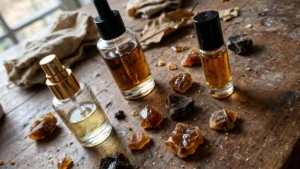
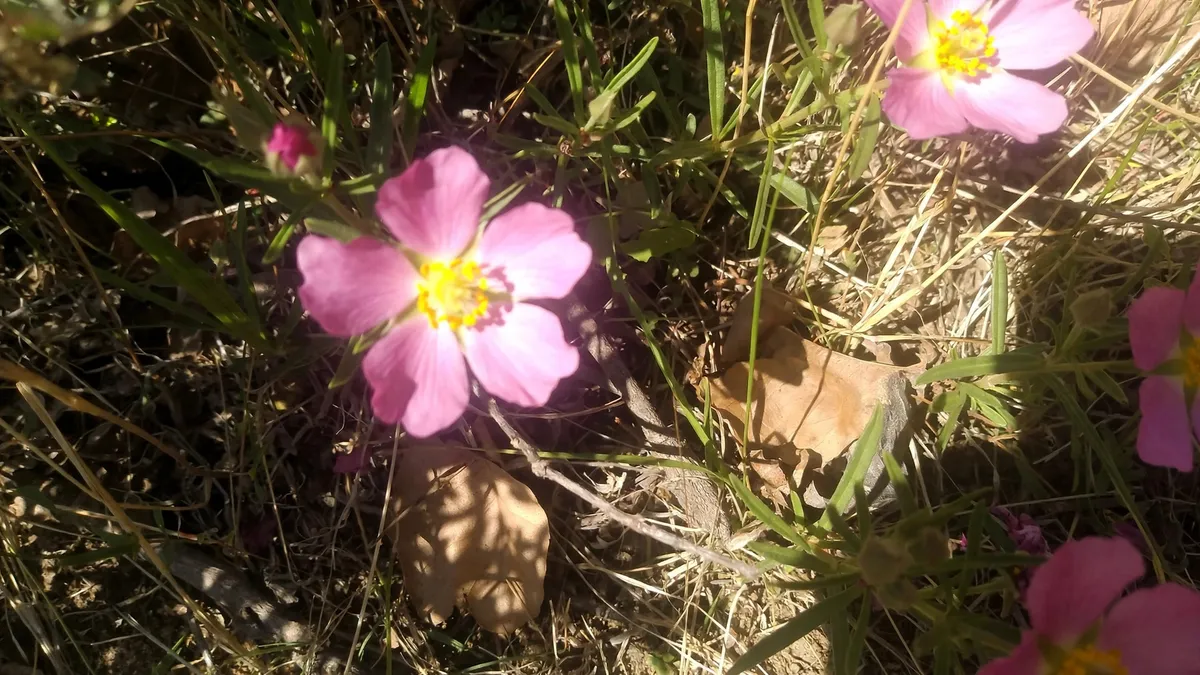
Labdanum is the sticky, dark resin exuded by the leaves and twigs of the rockrose, Cistus ladanifer, a hardy shrub that grows wild across the Mediterranean, especially in Spain, Portugal and southern France. The resin protects the plant from heat and drought, and it is intensely fragrant: dark, balsamic, leathery, with a sweetness that is closer to dried fruit than to sugar.
It is not the same thing as amber. Amber is an accord, a blend created by perfumers, and labdanum is usually its most important ingredient. When a perfume lists amber among its notes, it is very often labdanum doing the work, supported by vanilla, benzoin, tonka or styrax. Labdanum is also not the same as frankincense or myrrh, although the three are often used together. Frankincense is brighter and more citrus-like, myrrh is earthier and more bitter, and labdanum is the warmest and sweetest of the three.
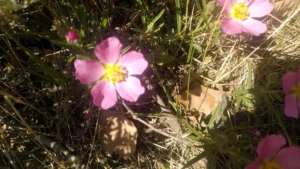
The rockrose itself is unremarkable to look at: a low, grey-green shrub with small white or pink flowers that last a single day. The magic is in the leaves, which are coated in a sticky, aromatic resin that smells of warm stone and dry herbs. Goats grazing among the shrubs would collect the resin in their beards, and ancient traders would comb it out and sell it. That is how labdanum entered perfumery, thousands of years before anyone distilled it.
How labdanum is made and what to look for
Today the resin is collected by boiling the leaves and twigs in water, which melts the resin off and leaves it floating on the surface, where it can be skimmed away. That raw material is then processed into two main forms. Labdanum absolute is extracted with a solvent and is the richer, more refined form, warm, sweet and complex. Labdanum resinoid is extracted with alcohol and is drier, woodier and more leathery. A perfume may use either, and the choice changes the character of the whole composition.

When you are choosing a labdanum perfume, look at which form the perfumer has used, if the brand says so, and look at what surrounds it. An absolute with vanilla and tonka will smell sweet and round. A resinoid with cedarwood and vetiver will smell dry and woody. Neither is better, but they are different perfumes, and knowing the difference saves you from buying a sweet amber when you wanted a dry one. If you enjoy resinous warmth in general, our myrrh perfumes are a useful comparison, because myrrh is earthier and more bitter than labdanum, and the contrast makes each note easier to recognise.
9 things to know about labdanum perfumes
Labdanum comes from the rockrose, not from amber
What it shows: Amber is a blend, not a single material, and labdanum is the resin that gives most amber accords their warmth, depth and staying power. What to consider: A perfume that lists amber without labdanum is usually built on synthetic amber materials instead, and it will smell cleaner and less rich. Best for: Anyone who wants to understand what they are actually smelling in an amber perfume. Material: Labdanum absolute, the refined extract. Price range: Around £130–£300 for a quality labdanum perfume. Standout feature: The single fact that explains most of amber perfumery.
It has been used since antiquity
What it shows: Labdanum was traded across the ancient Mediterranean, used in incense, medicine and perfume, and mentioned in texts from Egypt, Greece and Rome. What to consider: Ancient use does not mean ancient perfumes smelled like modern ones, because the methods and the blends were different. Best for: Lovers of perfume history and anyone who enjoys a note with a real past. Material: Raw labdanum resin, collected from goat beards and boiled leaves. Price range: Around £130–£300 for a quality labdanum perfume. Standout feature: One of the oldest continuously used perfume materials in the world.
The resin comes from the leaves, not the flowers
What it shows: The rockrose flower lasts a single day and has almost no scent, while the leaves are coated in the sticky, aromatic resin that perfumers want. What to consider: A perfume that claims a rockrose flower note is describing something else entirely, usually a fresh, green floral. Best for: Anyone who wants to read a note list accurately. Material: Leaf and twig resin, boiled and skimmed. Price range: Around £130–£300 for a quality labdanum perfume. Standout feature: The flowers are scentless, and the leaves carry all the fragrance.
Absolute and resinoid are different materials
What it shows: Labdanum absolute is solvent-extracted, rich, sweet and complex, while labdanum resinoid is alcohol-extracted, drier, woodier and more leathery. What to consider: A perfume will rarely say which one it uses, so you have to judge by smell: sweet and round means absolute, dry and leathery means resinoid. Best for: Anyone choosing between a sweet amber and a dry one. Material: Absolute for sweetness, resinoid for dryness. Price range: Around £130–£300 for a quality labdanum perfume. Standout feature: Two forms of the same resin, with two very different characters.
It is a fixative, which is why amber perfumes last so long
What it shows: Labdanum is a heavy, slow-evaporating material, so it anchors lighter notes and makes a perfume last eight to twelve hours on skin. What to consider: That longevity is a strength, but it also means a heavy application is hard to undo, and the perfume will still be there at bedtime. Best for: Anyone who wants a perfume that lasts a full day without reapplying. Material: Labdanum absolute, used as a base-note fixative. Price range: Around £130–£300 for a quality labdanum perfume. Standout feature: One of the most effective natural fixatives in perfumery.
It smells different at every stage of wear
What it shows: Labdanum opens dark and leathery, turns warm and balsamic in the heart, and finishes dry, ambery and skin-like after several hours. What to consider: Judging a labdanum perfume in the first five minutes will mislead you, because the best part arrives late. Best for: Patient wearers who judge a perfume on the drydown, not the opening. Material: Labdanum absolute, which evolves as lighter notes evaporate. Price range: Around £130–£300 for a quality labdanum perfume. Standout feature: A three-act structure in a single note.
It is the backbone of leather notes too
What it shows: Many leather perfumes use labdanum to create their dry, animal warmth, because the resin smells naturally leathery even before any other material is added. What to consider: A leather perfume built on labdanum will smell warm and smooth, while one built on birch tar or cade will smell smokier and sharper. Best for: Anyone who likes leather perfumes but finds them too smoky or harsh. Material: Labdanum resinoid, the drier, more leathery form. Price range: Around £130–£300 for a quality labdanum perfume. Standout feature: The reason so many leather perfumes smell warm rather than harsh.
Quality and origin change the smell
What it shows: Labdanum from Spain is warm and balsamic, while material from other regions can be drier, greener or more herbal, depending on soil and climate. What to consider: Natural materials vary from harvest to harvest, so two bottles of the same perfume can smell slightly different. Best for: Anyone buying a large bottle of a natural, resinous perfume. Material: Spanish labdanum absolute is the benchmark. Price range: Around £130–£300 for a quality labdanum perfume. Standout feature: A natural material that genuinely varies with its origin.
It pairs with almost every warm material
What it shows: Labdanum works with vanilla, tonka, benzoin, frankincense, myrrh, cedarwood, vetiver, sandalwood and spice, which is why it appears in so many different kinds of perfume. What to consider: That versatility means the same note can smell sweet, dry, smoky or leathery, depending on its partners. Best for: Anyone building a wardrobe of warm perfumes, because labdanum is the common thread. Material: Labdanum absolute with a partner note of your choice. Price range: Around £130–£300 for a quality labdanum perfume. Standout feature: The most versatile warm material in perfumery.
Labdanum vs other resin notes
Frankincense is the brightest of the resins, with a citrus-like lift and a clean, almost pine-like quality. It smells like incense smoke in a cold church, clear and high. Myrrh is earthier and more bitter, with a medicinal edge and a dry, dusty warmth. Labdanum is the warmest and sweetest of the three, with a leathery, balsamic depth that the other two do not have. Together they form a trio that has perfumed incense and perfume for thousands of years, and most great resinous perfumes use at least two of them.
The distinction matters when you are shopping, because a perfume that leads with frankincense will smell brighter and more transparent than one that leads with labdanum, even if both are called amber or oriental. If you want light and lift, look for frankincense. If you want warmth and depth, look for labdanum. If you want both, look for a perfume that uses the two together, which many of the best resinous perfumes do. Our frankincense perfumes are the natural companion to this guide, because the two notes are so often paired, and comparing them side by side is the fastest way to learn both.
Labdanum also differs from the synthetic amber materials that dominate cheaper perfumes. Synthetics such as Ambroxan are clean, mineral and long-lasting, but they lack labdanum’s warmth and sweetness. A perfume built on Ambroxan will smell modern and transparent. A perfume built on labdanum will smell warm, dark and human. Neither is better in absolute terms, but they are different experiences, and the word amber on a bottle will not tell you which one you are getting.
The caveats that matter
Labdanum is a natural material, and natural materials vary. The resin changes with the harvest, the region and the extraction method, and a perfume can be reformulated over the years, so a review from five years ago may not describe the bottle you buy today. That is normal, but it is worth knowing before you buy a large bottle on the strength of an old review, especially at the prices these perfumes command.
| Detail | What is known |
|---|---|
| Source | Resin from the leaves and twigs of the rockrose, Cistus ladanifer |
| Main forms | Absolute, rich and sweet, and resinoid, dry and leathery |
| What it smells like | Warm, leathery, balsamic and slightly sweet, with a dry ambery drydown |
| Longevity | Very long, usually 8 to 12 hours on skin, longer on fabric |
| Best season | Autumn and winter for rich ambers; dry labdanum works year-round |
| Who should start gently | Anyone new to resinous perfumes; start with one spray and wait an hour |
| What to avoid pairing at first | Heavy sweet gourmands layered on top, which can turn cloying fast |
| What it does not do | It does not smell light or fresh, and it will not suit every occasion or climate |
If you have sensitive skin or a known fragrance allergy, patch-test before wearing a new resinous perfume all day. Labdanum itself is not a common irritant, but amber compositions often contain many materials, and a full-day wear is a stronger test than a paper strip. If redness or itching appears, stop and try a simpler composition.
Checklist: choosing a labdanum perfume honestly
Use these checks before you buy, and again after an hour of wear.
- Decide sweet or dry first: vanilla and tonka push labdanum sweet, cedar and vetiver keep it dry.
- Test on skin, not paper, and wait at least an hour for the dry, ambery character to appear.
- Start with one spray: labdanum perfumes last eight hours or more, and a heavy hand is hard to undo.
- Check the season: rich ambers shine in cold weather, dry labdanum is easier in heat.
- Ask whether it is absolute or resinoid: sweet and round means absolute, dry and leathery means resinoid.
- Buy a sample first: natural resin varies, and reformulations happen, so test the bottle you will actually wear.
Frequently asked questions
What is a labdanum perfume?
A labdanum perfume is a fragrance built around labdanum, the warm, leathery resin of the rockrose shrub. It usually sits in the base notes, giving the perfume depth, warmth and longevity, and it is the main ingredient of most amber accords.
Is labdanum the same as amber?
No. Amber is a blend of materials, and labdanum is usually its most important ingredient, joined by vanilla, benzoin, tonka or styrax. When a perfume lists amber, labdanum is often the reason it smells warm and resinous.
Does labdanum last long on skin?
Yes, very long. Labdanum is a fixative, which slows evaporation, so most labdanum perfumes last eight to twelve hours on skin and even longer on clothes. One or two sprays is usually enough, and you can make it last longer still by applying it well, as our guide to making perfume last longer explains.
Is labdanum sweet or dry?
Both, depending on the form and the composition. The absolute is rich and sweet, the resinoid is dry and leathery, and the overall effect depends on what surrounds it: vanilla and tonka push it sweet, cedarwood and vetiver keep it dry.
Can I wear labdanum in summer?
Yes, if you choose a dry one. A resinoid-based labdanum with cedarwood or vetiver wears well in heat, because its dry, woody character does not turn cloying. Rich, sweet ambers are better saved for cold weather.
What is the difference between labdanum and frankincense?
Labdanum is warm, leathery and balsamic, while frankincense is brighter, more citrus-like and more transparent. Labdanum gives a perfume depth and warmth, frankincense gives it lift and light, and the two are often used together in resinous perfumes.
The bottom line
Labdanum is the quiet reason so many of the world’s most loved perfumes smell warm, deep and long-lasting. It is a resin from a humble Mediterranean shrub, used since antiquity, and it remains the heart of amber perfumery, the backbone of leather notes, and one of the most effective natural fixatives in a perfumer’s palette.
Learn to recognise it, and you will shop better: you will know why one amber smells sweet and another smells dry, why one lasts twelve hours and another fades by lunch, and which bottle is actually right for you. Start with a single spray, wait an hour, and judge it in the drydown. That is where labdanum does its best work.