



Some mornings you want a full face of makeup, and some mornings you want to look like yourself, only a little more rested. A tinted moisturizer was made for the second kind of morning. It is the lightest base product most people will ever own: a moisturizer first, with just enough pigment to even out skin tone and soften redness.
A tinted moisturizer is, exactly as the name says, a moisturizing cream that has a subtle tint. Its primary job is to hydrate the skin, and its secondary job is to add a sheer wash of colour. The finish is dewy and skin-like, the kind people describe as no-makeup makeup, because your freckles and natural texture still show through. Nothing is hidden; everything just looks a little more even.
This guide explains what it is, how it differs from foundation, BB cream, and CC cream, what is inside the tube, and which formulas suit which skin types.
Key takeaways
- A tinted moisturizer is a moisturizer with a small amount of pigment: sheer coverage, a dewy finish, and hydration as its main job.
- It offers the lightest coverage of any base product and will not conceal spots or strong redness on its own.
- Many formulas include SPF 15 to 30, but most people apply far less than the amount used to test that SPF, so it never replaces sunscreen.
- Choose by skin type: rich, creamy formulas for dry skin, oil-free gels for oily skin, and fragrance-free formulas for sensitive skin.
- Shade ranges are narrow compared with foundation, so matching your undertone matters more than the brand.
What is a tinted moisturizer, exactly?
A tinted moisturizer is a hybrid of skincare and makeup, with skincare doing most of the work. The base is a regular moisturizer: water, humectants such as glycerin and hyaluronic acid that draw water into the skin, and emollients such as squalane and plant oils that soften the surface. Into that base, the formula adds a small dose of pigment, usually iron oxides and titanium dioxide — the same pigments used in foundation, just in much smaller amounts.
The result behaves like a cream and looks like a whisper of foundation. Coverage is sheer, which means it evens out the overall tone without masking the skin underneath: a small blemish will still be visible, and redness will look calmer rather than gone. Wear time is typically four to six hours, and fingers are usually enough to apply it.
Tinted moisturizer vs foundation: what is the difference?
Foundation is engineered for one job: colour-matched coverage. It comes in a wide range of shades and undertones, offers buildable coverage from light to full, and is available in matte, satin, and dewy finishes. A good foundation gives you a noticeably more even canvas, covers blemishes and pigmentation, and lasts eight to twelve hours. It is the right choice for events, photography, and any day when your skin needs real help.
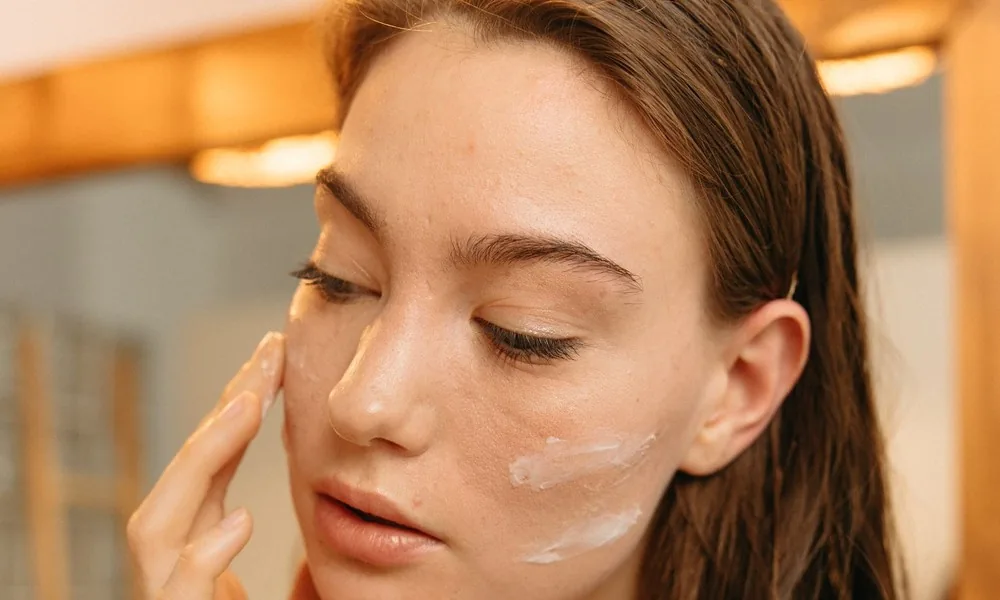
A tinted moisturizer is engineered for a different job: hydration with a hint of colour. Its shade range is narrow, often fewer than ten shades, which makes finding an exact match harder, particularly for very fair or very deep skin tones. Foundation needs a primer, a tool, and a careful blend to look like skin; a tinted moisturizer needs clean fingers and thirty seconds. Neither is better in absolute terms — the question is what your skin needs that day: coverage, or comfort with a little colour.
Tinted moisturizer vs BB cream vs CC cream
BB cream, short for beauty balm or blemish balm, sits one step up from a tinted moisturizer. It is a multi-tasking hybrid that combines a primer-like base, light-to-medium coverage, moisturizing ingredients, and often SPF. A BB cream covers more than a tinted moisturizer — small blemishes and mild redness — while still feeling lighter than foundation, and it typically lasts six to eight hours.
CC cream, short for colour-correcting cream, is the sibling aimed at colour problems rather than hydration. It uses colour-correcting pigments and light-diffusing particles to neutralize redness, sallowness, or dullness, and it usually offers light-to-medium coverage with a slightly drier, more matte finish than a BB cream. In practice the difference between BB and CC cream is narrower than the marketing suggests, and in many 2026 and 2027 lines the three categories blur together: several popular BB creams function almost identically to a tinted moisturizer with SPF added.
What is inside a tinted moisturizer?
The moisturizing half is familiar from any good face cream. Humectants come first: glycerin, hyaluronic acid, and panthenol all attract and hold water in the skin. Emollients are the softeners: squalane, jojoba oil, shea butter, and ceramides fill the tiny gaps between skin cells and help the barrier feel comfortable. If you want the full explanation of that moisturizing base, read What Is a Face Cream 2027.
The tinted half is simpler than it looks. Iron oxides provide the colour — yellows, reds, and browns blended to mimic skin tones — while titanium dioxide and zinc oxide add opacity, brighten the finish, and, in mineral formulas, double as UV filters. Some formulas add light-diffusing particles such as mica or silica, which scatter light and make pores and fine lines look softer without adding coverage.
Which tinted moisturizer suits your skin type?
Dry skin is where a tinted moisturizer shines most. Look for a creamy, emollient formula with hyaluronic acid, glycerin, and squalane, and a dewy finish that adds glow rather than clinging to dry patches. Apply it over your regular moisturizer on very dry days.
Oily and acne-prone skin needs the opposite: an oil-free, gel-based formula labelled non-comedogenic, which means it is formulated not to clog pores. A light dusting of translucent powder through the T-zone extends wear. Combination skin does best with a balanced formula and powder only where shine appears. Sensitive skin should choose fragrance-free formulas with short ingredient lists and patch-test on the jawline first. Mature skin wants hydration and a dewy finish, and should avoid heavy matte formulas.
Where a tinted moisturizer sits in your routine
Order matters, and it is simple physics: water-based formulas cannot push through an oil film, so the lightest products go first and the heaviest last. A tinted moisturizer sits near the end of a morning routine, after cleansing, serums, and moisturizer, and after sunscreen. The SPF number only holds at the thickness used in testing, roughly a quarter of a teaspoon for the whole face. Most people apply a pea-sized amount, far less than that, so the real protection is far below the printed number.
The safe rule is to treat the SPF in a tinted moisturizer as a bonus, not a plan. Apply a dedicated broad-spectrum sunscreen first, let it set for a few minutes, then apply the tinted moisturizer over it. At night, remove it before bed like any makeup. For formulas that combine tint and sun protection in one step, see Best Tinted Sunscreens 2027, and for the moisturizers that carry SPF, see Best SPF Moisturizers 2027.
Tinted moisturizer compared: coverage, finish, and use
| Product | Coverage | Finish | Main job | Best for | Typical wear |
|---|---|---|---|---|---|
| Tinted moisturizer | Sheer | Dewy | Hydrate with a hint of colour | Dry skin, no-makeup days | 4 to 6 hours |
| BB cream | Light to medium | Natural to satin | Everyday coverage plus skincare | Everyday wear, evening out tone | 6 to 8 hours |
| CC cream | Light to medium | Matte to natural | Colour-correct redness and dullness | Redness, sallowness, uneven tone | 6 to 8 hours |
| Foundation | Medium to full | Matte, satin, or dewy | Colour-matched coverage | Events, photography, full coverage | 8 to 12 hours |
| Plain moisturizer | None | Natural | Hydrate and protect the barrier | Every skin type, daily | All day |
| Tinted sunscreen | Sheer to light | Natural to dewy | Sun protection with a tint | Outdoor days, sensitive skin | 2 hours before reapplying |
| Concealer | Medium to full | Matte to satin | Spot-cover blemishes and dark circles | Targeted correction | 6 to 10 hours |
| Skin tint | Sheer to light | Skin-like, blurring | Light coverage with a modern finish | All skin types, everyday polish | 6 to 8 hours |
Choosing the right tinted moisturizer: a checklist
- Match your undertone, not just your depth: warm undertones suit golden and peachy tints, cool undertones suit pink and rosy tints.
- Test the shade on your jawline in daylight and wait ten minutes — some formulas darken as they dry.
- Check the first five ingredients: water, glycerin, or hyaluronic acid early means real hydration.
- Pick the texture for your skin type: creamy and rich for dry skin, oil-free gel for oily skin, fragrance-free for sensitive skin.
- Read the SPF as a bonus, not a plan: still wear a dedicated sunscreen underneath.
- Buy the smallest size first: half a shade off looks worse than no base at all.
Common tinted moisturizer mistakes
The most common mistake is expecting coverage the product was never designed to give. Layering a tinted moisturizer three times over a spot does not turn it into a concealer; it turns it into a thick, patchy layer that slides off by midday. A sheer base plus a small dot of concealer exactly where it is needed looks better and lasts longer. The second mistake is trusting the SPF number: independent assessments have found that a meaningful share of tinted and BB products have unbalanced UVA and UVB protection, so the printed number can oversell the real cover. Sunscreen first, tinted moisturizer second.
Frequently asked questions
Is a tinted moisturizer the same as a foundation?
No. A tinted moisturizer is a moisturizer with a small amount of pigment: sheer coverage, a dewy finish, and hydration as its main job. A foundation is a coverage product first, with a wide shade range and buildable coverage from light to full.
Can I use a tinted moisturizer instead of sunscreen?
No. Many list SPF 15 to 30, but that rating is measured at about two milligrams of product per square centimetre of skin, roughly a quarter teaspoon for the face. Most people apply far less, so the real protection is well below the label. Wear a dedicated sunscreen underneath.
Do I need moisturizer underneath a tinted moisturizer?
Often, yes. A tinted moisturizer hydrates, but it is a light moisturizer, and very dry skin usually still needs a proper cream underneath, especially in winter. Oily skin can often skip the extra layer. If your skin feels tight an hour after applying, add moisturizer underneath.
Can I wear a tinted moisturizer if I have oily or acne-prone skin?
Yes, with the right formula. Choose an oil-free, gel-based tinted moisturizer labelled non-comedogenic, and set the T-zone with a light translucent powder. Avoid heavy, creamy formulas and added fragrance.
How much tinted moisturizer should I use?
About a pea-sized amount for the whole face, dotted on the cheeks, forehead, nose, and chin, then blended outwards with clean fingers, a damp sponge, or a duo-fibre brush. Start with less than you think you need: sheer products are easy to build up and hard to take away.
Is a tinted moisturizer good for mature skin?
Usually, yes — it is one of the best base options for mature skin. The hydration, dewy finish, and light-diffusing particles flatter skin that has lost some natural glow, and sheer coverage does not settle into fine lines the way heavy matte foundation can. Avoid anything labelled matte or long-wear, which tends to look drying.
The bottom line
A tinted moisturizer is the simplest base product there is: a moisturizer with just enough pigment to make your skin look like a slightly better version of itself. It will not hide much, it will not last all day, and its SPF should never be your only sun protection. What it will do is hydrate, even out tone, and give you a dewy, skin-like finish in under a minute, with no tools and no skill required.
Choose it for the days your skin is already in good shape and you want comfort over coverage. Match the undertone in daylight, pick the texture for your skin type, wear sunscreen underneath, and keep a concealer nearby for the spots that need real help. The right tinted moisturizer is rarely the most expensive one — it is the one that disappears into your skin.
Note: This article is for general information only and is not medical advice. If you have a skin condition such as eczema, rosacea, or persistent acne, or if a product causes ongoing irritation, speak to a dermatologist before continuing use.


