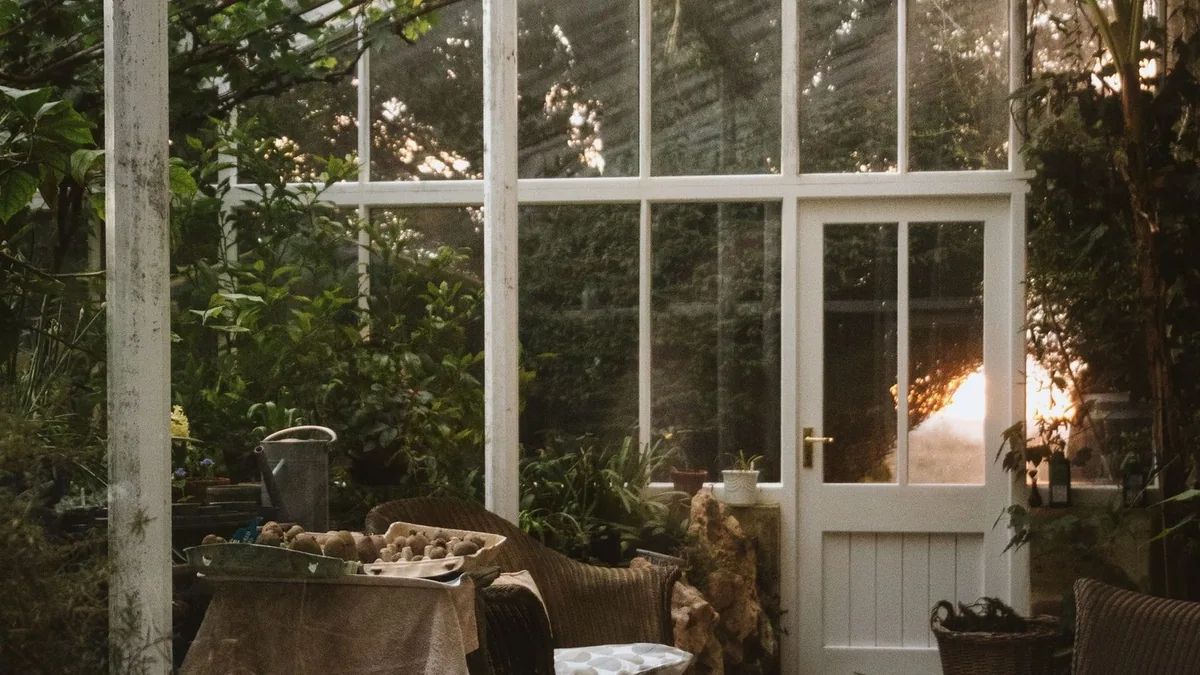

A luxury conservatory is a room made of light. Glass walls, a glass roof, and a garden on every side — that is the whole idea, and it is also the whole risk. Get the glass, the shade and the heating right, and you have the most loved room in the house: breakfast under a glass roof in February, long evenings among the plants in July, rain drumming overhead while you stay warm and dry.
The mistake most people make is choosing the furniture before choosing the building. A conservatory is not a living room with bigger windows. It is a glass structure, and everything in it answers to the sun: Decide what the room is for first, then let that decision choose the style, the glazing and the budget.
Unlike the sunroom in this series, which is a glazed living-room extension with a solid roof, a conservatory has a predominantly glazed roof — at least three quarters of it translucent — and glass walls on most sides. And unlike the garden room, which stands apart in the garden with solid insulated walls, a conservatory is attached to the house and lets the garden in.
Key takeaways
- A conservatory is defined by its glass roof: at least 75 percent of the roof and half of the walls must be glazed.
- Give the room one job — dining room, lounge, plant room or reading room — and size everything else around it.
- Glass is the budget: triple-glazed, argon-filled low-E units are the premium standard, and the roof glazing matters more than the walls.
- Shade and ventilation are not extras — without them, a glass room is unusable by mid-afternoon in summer.
- A luxury conservatory typically costs $80,000 to $350,000 or more, and can add 5 to 12 percent to a home’s value.
Give the Room One Job First
Start with a sentence, not a catalogue. “A dining room for eight, used every Sunday, all year.” “A quiet reading room full of plants.” That sentence decides the footprint, the roof and the budget.
Measure the job, not the garden. A breakfast table for two needs about 3 by 3 metres; a dining room for eight wants 4 by 4 metres; a lounge for four needs at least 3.5 by 4 metres. The luxury sunroom in this series is the room for everyday living; the conservatory is the room for light, plants and occasions.
Choose Your Conservatory Style
Style is not decoration — it is the shape of the roof, and the roof decides how much light the room gets and how it handles rain, snow and heat. Victorian conservatories have a faceted bay front, usually three or five sides, with a steep pitched roof. Edwardian conservatories are square or rectangular with a flat front, giving more usable floor for the same footprint — the practical choice for a dining table.
Gable-fronted conservatories rise to a high triangular front, throwing light deep into the room and giving tall plants room to grow. Orangeries sit at the luxury end: brick pillars, a solid perimeter with a central glass lantern roof, and the feel of a real room that happens to have sky overhead. The modern alternative is frameless structural glass: slim aluminium frames, floor-to-ceiling panels and almost no visible structure.
| Style | Best for | Typical cost | Light |
|---|---|---|---|
| Victorian | Period homes, dining, plants | $40,000–$120,000 | High, from all sides |
| Edwardian | Dining, everyday use | $35,000–$100,000 | High, even spread |
| Lean-to | Small gardens, low eaves | $25,000–$60,000 | Good, one direction |
| Gable-fronted | Tall plants, grand rooms | $45,000–$130,000 | Very high, deep reach |
| Orangery | Year-round living, kitchens | $80,000–$250,000 | High, from above |
| P-shape / T-shape | Two uses in one room | $60,000–$200,000 | High, varied |
| Modern frameless | Contemporary homes | $100,000–$350,000+ | Maximum |
| Glasshouse / bespoke | Collectors, statement rooms | $150,000–$500,000+ | Maximum |
The Glass Does the Work
Glass is the single largest cost in a conservatory and the single largest influence on whether the room is comfortable. The premium standard in 2027 is triple-glazed, argon-filled units with a low-E coating, reaching U-values of 0.6 to 0.8 — far better than the 2.8 of old standard double glazing. Low-E glass reflects heat back into the room in winter and keeps some of it out in summer.
The roof glazing matters more than the walls, because heat rises and the sun strikes the roof hardest. Specify solar-control glass for the roof: a coating that cuts solar gain while staying clear, so the room keeps its daylight without becoming an oven. Self-cleaning roof glass costs 15 to 20 percent more and is worth it on a roof nobody wants to climb. Aluminium frames are slim and almost maintenance-free; hardwood suits period houses but needs treatment; steel is slimmest and priciest. Insist on laminated glass overhead — if a roof pane ever breaks, it stays in place instead of falling.
Heating, Cooling and Ventilation
A conservatory that is freezing in January and stifling in July is not a room; it is a weather station. Design heating, cooling and ventilation together, before the glass is ordered, because retrofitting any of them is expensive and ugly. Underfloor heating is the luxury choice: invisible, even, and kind to plants, running at $15 to $25 per square foot. It warms the stone floor underfoot and takes the chill off the glass. A heat pump covers the coldest weeks; a small air conditioner handles the hottest afternoons.
Ventilation is the cheapest comfort you will ever buy. Hot air rises, so put opening roof vents at the highest point — at least two, on opposite sides if possible — and low opening windows or trickle vents at the bottom, so cool air flows in low and hot air escapes high. External shading beats internal shading every time: an external blind or retractable awning stops heat before it passes through the glass, while an internal blind only shades a room that is already hot.
Flooring That Survives Glass
The floor of a conservatory lives a harder life than any other floor in the house: direct sun all day, temperature swings of twenty degrees, wet feet, potting soil and the occasional dropped terracotta pot. Stone is the classic luxury choice — limestone, travertine or slate — cool underfoot in summer, warm over underfloor heating in winter, and it only looks better as it ages. Large-format porcelain tiles do the same job with less maintenance and more colour choice, and they will not stain if a plant pot leaks. Run the same floor from the house into the conservatory with no step, so the two rooms read as one.
Planting the Room
Plants are what make a conservatory a conservatory rather than a glass box. The room is a microclimate, so plant for it, not for the garden outside. Citrus trees — lemon, orange, kumquat — love the light and the winter shelter, and they reward you with scent and fruit. Palms, fiddle-leaf figs and banana plants give height and drama. Ferns, orchids and jasmine fill the lower layers and soften the hard lines of glass and frame.
Give plants what they need and they will do the decorating for you. Group them in odd numbers, in pots of different heights, and let one tall specimen anchor each corner.
Furniture and Lighting

Furnish lightly, because the room itself is the decoration. Two wicker or rattan armchairs, a small table and a reading lamp are enough for a reading room; a dining table and eight chairs are enough for a dining room. Choose materials that forgive the sun: rattan, wicker, teak, powder-coated metal and outdoor-grade fabrics.
Lighting should be warm and low. A lantern-style pendant hung from the ridge gives the room a focal point after dark; small table lamps and candles do the rest. Keep the light warm white, around 2700K, so the glass glows amber in the evening instead of glaring. The luxury garden room in this series needs the same discipline: light the people and the plants, not the ceiling.
Planning, Permits and the Build
Most conservatories in England are permitted development, meaning no planning application is needed — but only if the rules are met. The room must be single storey, not forward of the front of the house, no more than 4 metres high at the ridge (3 metres if within 2 metres of a boundary), and must not cover more than half the garden. Listed buildings, conservation areas, flats and homes that have already used their permitted development allowance all need full planning permission, so check before you draw anything.
The order of work is the same wherever you build. First, foundations and a dwarf wall if the design has one. Then the frame and the roof glass. Then glazing, electrics and heating. Then flooring, and only then planting and furniture. A small lean-to takes 6 to 10 weeks; a large bespoke conservatory takes 10 to 20 weeks from design to completion, and planning or permits add 6 to 10 weeks more. Budget honestly: a small conservatory of 9 to 12 square metres typically runs $25,000 to $60,000 fully installed; a medium room of 15 to 20 square metres runs $40,000 to $120,000; a large or luxury project of 25 square metres or more runs $80,000 to $350,000 and beyond. Get three like-for-like quotes, and keep 10 percent in reserve.
Your Conservatory Checklist
- Write the room’s one job in a sentence before you look at a single catalogue.
- Check planning rules and building regulations for your address before ordering glass.
- Specify triple-glazed, argon-filled low-E units with solar-control glass in the roof.
- Plan shade and ventilation with the glass: roof vents high, opening windows low, external blinds.
- Choose underfloor heating and a stone or porcelain floor that survives sun and soil.
- Get three like-for-like quotes, and keep 10 percent in reserve for surprises.
Frequently Asked Questions
What is the difference between a conservatory and a sunroom?
A conservatory has a predominantly glazed roof — at least 75 percent of it translucent — and glass walls on most sides. A sunroom has a solid roof with glazed walls, so it feels more like a normal room.
How much does a luxury conservatory cost?
A luxury conservatory typically costs $80,000 to $350,000 or more, depending on size, frame material and glazing. A small lean-to starts around $25,000 to $60,000; a hardwood orangery with triple glazing and underfloor heating runs $150,000 to $250,000; bespoke steel and frameless glass projects can exceed $350,000.
Do I need planning permission for a conservatory?
In England most conservatories are permitted development if they are single storey, under 4 metres high at the ridge, behind the front of the house and cover less than half the garden. In the United States, a conservatory is usually treated as an addition and needs a building permit.
How do I stop a conservatory getting too hot?
Shade outside the glass first — an external blind or retractable awning stops heat before it enters. Then ventilate: high roof vents to let hot air out, low windows to let cool air in, and a ceiling fan to keep air moving.
Can I use a conservatory all year round?
Yes, if it is specified for it: triple-glazed low-E glass, a thermally broken frame, underfloor heating and proper ventilation. A room built to that standard is comfortable in January and July.
Will a conservatory add value to my home?
A well-designed conservatory typically adds 5 to 12 percent to a home’s value, depending on quality, size and location. The return is strongest when the room is usable all year, matches the style of the house and is built with proper permissions
The bottom line
A luxury conservatory is a bet on light, and it rewards preparation. Decide the job, choose the style honestly, spend on the glass and the shade, heat the floor and furnish it lightly. Do that, and the room becomes the place everyone drifts to. Skip the planning, and you own a very expensive greenhouse. The same thinking applies to the luxury living room: comfort first, decoration second, and nothing that fights the room itself.
Note: costs and returns are typical 2027 ranges and vary by location, size and specification — treat them as a budgeting guide, not a quote, and confirm every figure with a local contractor before you commit.