

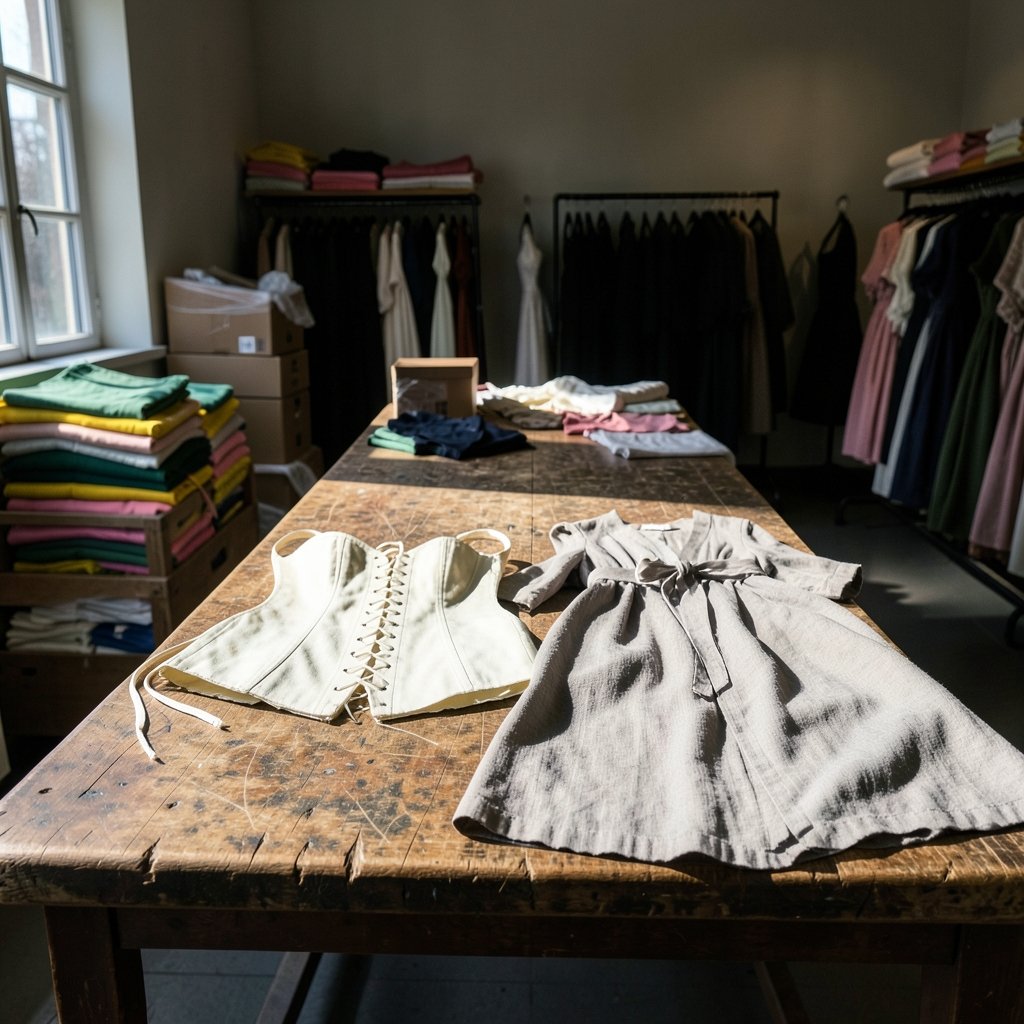
What happens to a wardrobe when the world tilts? That’s the story of 1910s fashion in a single question. In just ten years, women’s clothing went from a stiff, boned S-bend silhouette to a looser, calf-length line that could actually be walked in. Men’s suits shed a little starch. Skirts got narrow, then short, then practical. And by the time the decade ended, the rules that had governed dress for a generation were quietly broken.
The 1910s are often skipped over in fashion conversations. People jump from Edwardian lace to 1920s fringe and miss the messy, fascinating middle. That’s a mistake. The decade is where modern dressing begins, and understanding it makes everything that follows, including the 2026 fashion trends female crowd rediscovering dropped waists and column shapes, easier to read.
The silhouette shift: from S-bend to straight lines
At the start of the decade, the fashionable woman’s body was a construction project. The S-bend corset pushed the bust forward and the hips back, creating a pouter-pigeon profile that looked dramatic and felt miserable. Skirts were full, floors were swept, and movement was limited.
By roughly 1910 to 1914, that shape collapsed. The new silhouette was narrower and straighter, with a higher waist and a slimmer skirt. The change didn’t happen overnight, and museum catalogue dates for individual garments often vary by a year or two. But the direction is clear: the body was being un-engineered.
The hobble skirt and its strange fame
The hobble skirt, narrow at the hem and sometimes so tight that walking was genuinely restricted, is the decade’s most notorious garment. It peaked around 1910 to 1913. A popular story claims it was inspired by aviator Harriet Quimby, the first woman to fly across the English Channel in 1912, and that women copied her because she had to bind her skirt to keep it from flapping.
Treat that story as legend. It’s charming, it’s repeated everywhere, and it’s poorly documented. What’s more reliable is the basic fact: fashionable women wore skirts that made stairs a hazard, and some of them loved the drama of it. Fashion has always had a soft spot for clothing that looks amazing and functions badly. The 1910s just did it with more fabric.
Paul Poiret and the loosened waist
The designer most associated with the shift is Paul Poiret, who is credited with loosening the corseted waist and introducing narrow, high-waisted Directoire styles and harem-inspired designs between about 1906 and 1911. His influence was real and widely reported at the time.
The claim that Poiret single-handedly “abolished the corset” is contested by fashion historians, and it should be. No designer works alone. Dress reform movements, changing ideas about health and exercise, and simple commercial competition all pushed in the same direction. Poiret gave the change glamour and a name. He didn’t invent it from nothing.
What women actually wore, day to day

Runway history is fun, but most people didn’t live in couture. The everyday wardrobe of the 1910s was practical, layered, and built around a handful of pieces.
| Garment | Typical 1910s form | Notes |
|---|---|---|
| Day dress | One-piece, high waist, narrow skirt | Often dark or muted; cotton and wool common |
| Blouse (waist) | High-necked, long-sleeved, lace or cotton | Worn with separate skirts |
| Corset | Still worn, but longer and less extreme | Gradually losing the S-bend shape |
| Hat | Large brims early, smaller and closer later | Essential outdoors |
| Coat | Long, belted, often with a wide collar | Worn over everything |
| Stockings and boots | Dark stockings, laced or buttoned boots | Practical and sturdy |
The shirtwaist, a simple button-front blouse, was the workhorse of the decade. It was affordable, washable, and worn by office workers, factory hands, and middle-class women alike. If you want to understand 1910s fashion, look at the blouse, not the ball gown. The blouse is where ordinary life happened.
Men’s fashion: still buttoned up
Men’s clothing in the 1910s was formal by modern standards and changed far more slowly than women’s. The standard daytime look was a three-piece suit with a stiff collar, a tie, and a hat. Bowlers were common in town, boaters appeared in summer, and working men wore caps.
The soft-collared, unstructured menswear look that feels modern is usually dated to after the First World War. In the 1910s, a man’s collar was a small architectural feature, and it was meant to be stiff. Comfort was not the point. Correctness was.
There were small loosening signs. Suits got slightly less padded, and younger men experimented with cut and fabric. But the decade’s menswear story is mostly continuity, not revolution.
The First World War changes everything
The First World War (1914 to 1918) is widely credited with accelerating practical women’s dress. Skirts shortened to roughly calf length by 1915 to 1918. Cuts loosened. More women entered industrial work, and some wore trousers or overalls for the first time, not as fashion but as equipment.
Historians debate how much the war caused versus accelerated. Some argue pre-war trends already pointed toward shorter, looser clothing, and the war simply removed the resistance. That debate is worth holding in mind, because it applies to almost every “war changed fashion forever” claim you’ll read.
What’s not debatable is the result. By 1918, the floor-length skirt was gone from everyday life, and it didn’t come back.
Evening wear, tango dresses, and a little scandal
Evening dress was where the decade let loose. Social dances, especially the tango, became a craze around 1912 to 1914, and dance-friendly clothing followed. Slit skirts, draped panels, and “tango” styles made movement possible while still looking glamorous.
This is also where you see the decade’s personality. Daywear was cautious. Evening wear was playful. Women were testing how much freedom a garment could offer before someone wrote a letter to the newspaper about it. If that dynamic sounds familiar, it’s the same tension that runs through Italian luxury fashion today, where tradition and provocation share a runway.
Dress reform and the corset debate
The 1910s didn’t invent the argument about restrictive clothing. The Rational Dress movement and decades of dress-reform campaigning had already made the case that corsets and heavy skirts were bad for health. What changed in the 1910s was that the argument started winning in the mainstream.
Doctors, teachers, and writers pushed for lighter clothing. Sport and outdoor activity became more acceptable for women. Cycling, tennis, and swimming all demanded garments that could move. Fashion responded, slowly and then all at once.
The flapper look, that famous loose, short, boyish style, is generally dated to the 1920s, not the 1910s. But the 1910s built the runway for it. Without the hobble skirt collapsing into a walking skirt, there’s no 1920s bob-and-fringe moment.
Why the 1910s still matter to designers
Designers keep returning to this decade because it’s full of useful contradictions. It has structure and softness, modesty and provocation, tradition and rebellion. That mix is catnip for anyone building a collection.
The 2026 Fashion Trends Guide: What’s In, Out & Worth Wearing shows how much of this vocabulary is still in rotation: high waists, column silhouettes, long coats, and a renewed interest in dressing deliberately rather than casually. The 1910s are a reminder that “vintage-inspired” isn’t a single look. It’s a set of design problems that keep getting solved differently.
Illustrators have always understood this better than most. Angelica Hicks turns runway moments into sharp, funny drawings, and her work makes the point that a silhouette is a story. The 1910s silhouette told a story about women who wanted to move.
Practical tips for wearing 1910s style today
If you want to borrow from the decade without looking like a costume, the trick is to take one element, not the whole outfit.
- Start with the blouse. A high-necked, long-sleeved shirtwaist in cotton or silk works with modern jeans and looks intentional rather than theatrical.
- Choose a high-waisted skirt with a straight or gently tapered line. Skip anything that actually restricts your stride. The look is what matters, not the hobble.
- Use one period detail. A wide-brimmed hat, a laced boot, or a belted long coat is enough. Three at once tips into cosplay.
- Keep colors muted for day. Creams, navy, charcoal, and muted greens read as period without shouting.
- Check the fabric weight. Heavy wools and stiff cottons hold the shape. Flimsy synthetics collapse and make the silhouette look accidental.
The most common mistake is going too literal. A full 1910s ensemble, corset included, is a museum piece. A modern outfit with one clear 1910s gesture is style.
How the decade fits into the bigger fashion story
Fashion history is usually told as a series of dramatic breaks. The 1910s show that it’s more often a slow leak. Ideas that seemed radical in 1905 became normal by 1912 and invisible by 1918.
That pattern repeats constantly. The 2010s fashion athleisure streetwear Instagram rewrote rules moment looked like a sudden revolution, but it was the same mechanism: technology, work patterns, and social pressure reshaping what people are willing to wear. The 1910s had the war and the bicycle. The 2010s had the smartphone and the gym. Same story, different props.
For anyone tracking how trends move, the fashion trends 2026 conversation is worth watching alongside the 1910s. Both are moments when comfort and formality are renegotiating their relationship. Both produce clothing that looks simple and is actually the result of a long argument.
And if you’re curious how the decade gets packaged for a mass audience, the Barbie world tour book delivers fashion movie only hinted at is a useful case study in how period references get flattened, remixed, and sold back to us. The 1910s get that treatment constantly. They deserve better.
What the 1910s got right
The decade’s real legacy isn’t a specific garment. It’s the principle that clothing should let a person do what they need to do. That sounds obvious now. In 1910, it was a fight.
The 1910s didn’t finish that fight. The 1920s, the 1940s, and every decade since have picked it up again. But the 1910s are where the corset lost its grip, the skirt came off the floor, and the idea of practical fashionable clothing stopped being a contradiction.
Conclusion
The 1910s are the decade fashion forgot to celebrate. Sandwiched between Edwardian formality and 1920s flamboyance, they get treated as a transition rather than an event. That’s unfair. In ten years, the S-bend collapsed, the hobble skirt became a punchline, the war redrew the hemline, and women’s clothing became something a person could move in.
Look closely and the decade is still speaking. Every time a designer sends a high-waisted column dress down a runway, or a shopper chooses a blouse over a body-con top, the 1910s are in the room. Fashion’s most useful revolutions are rarely the loudest ones. They’re the ones that quietly change what feels normal. The 1910s did exactly that, and we’re still wearing the results.
Frequently asked questions
What was the defining feature of 1910s fashion?
The shift from a stiff, corseted S-bend silhouette to a straighter, looser line. Skirts narrowed early in the decade and then shortened during the First World War, and the high-waisted, narrow-skirted look replaced the full-skirted Edwardian shape.
Did the 1910s really end the corset?
Not entirely. Corsets were still worn through the decade, but they became longer and less extreme, and the most restrictive shaping faded. The idea that one designer abolished the corset is contested by historians. Dress reform, sport, and changing work patterns all contributed.
What was a hobble skirt?
A skirt that was extremely narrow at the hem, popular around 1910 to 1913, sometimes tight enough to restrict walking. The story that it was inspired by aviator Harriet Quimby is widely repeated but poorly documented, so it’s best treated as legend rather than fact.
How did the First World War change women’s clothing?
It accelerated changes already underway. Skirts shortened to roughly calf length by 1915 to 1918, cuts loosened, and more women wore trousers for industrial work. Historians debate how much the war caused versus sped up, but the practical result is clear.
What did men wear in the 1910s?
Three-piece suits, stiff collars, ties, and hats, usually bowlers in town and boaters in summer. The softer, less structured menswear look is generally dated to after the First World War, not during the 1910s.
Is 1910s fashion the same as flapper style?
No. The flapper look, with short hair, dropped waists, and beaded dresses, is generally dated to the 1920s. The 1910s set up the conditions for it by loosening silhouettes and shortening skirts, but the styles are distinct.














