


A dress could signal a revolution in the 1920s, and it did. Women traded corsets for loose tubes of fabric, chopped their hair into bobs, and danced the Charleston in hemlines that would have scandalized their mothers. 20s fashion changed more than style. It was a cultural earthquake stitched into silk, wool, and beads.
A century later, designers still raid that decade’s playbook. Drop waists reappear on runways, cloche hats return in millinery collections, and the phrase “Gatsby glamour” still sells party invitations. Understanding what actually happened in 1920s dress, and why, makes the revival far more interesting than a costume rack.
What Defined the Flapper Silhouette?
The word flapper was in use in Britain before 1920, but it became glued to the look around 1925 and 1926. The silhouette itself was a clean break from everything before it.
The key elements were simple:
- Dropped waistlines that sat at the hip rather than the natural waist
- Loose, tubular dresses that skimmed the body instead of shaping it
- Hemlines that rose from ankle length toward the knee across the decade
- Beading and fringe that moved with jazz-age dancing
- Cloche hats pulled low over the forehead
Notice what is missing: the corset. That absence is the whole story. A garment that had compressed women’s bodies for generations lost its grip, and the loose chemise dress made the change visible. Fashion historians debate how much credit belongs to any single designer, but the direction of travel is not in dispute. Comfort became fashionable, and once it did, there was no going back.
The Dropped Waist, Explained Simply
A dropped waist sounds like a flaw. In practice, it was a design trick. By placing the seam at the hip, dressmakers created a long, unbroken line from shoulder to thigh. The effect was boyish and modern, a deliberate contrast to the hourglass ideal of the previous generation.
This matters for anyone shopping vintage or sewing a reproduction today. A 1920s-style dress should feel slightly loose through the torso. If it hugs the ribs, it is not reading as authentic.
Chanel, Poiret, and the Fight Over Who Freed Women
Two names dominate any serious discussion of 1920s fashion, and they pull in opposite directions.
Paul Poiret is often credited with loosening the corset’s hold around 1906 to 1911, clearing space for the shapes that followed. Historians argue about how complete that “liberation” really was, since his own designs still restrained the body in other ways.
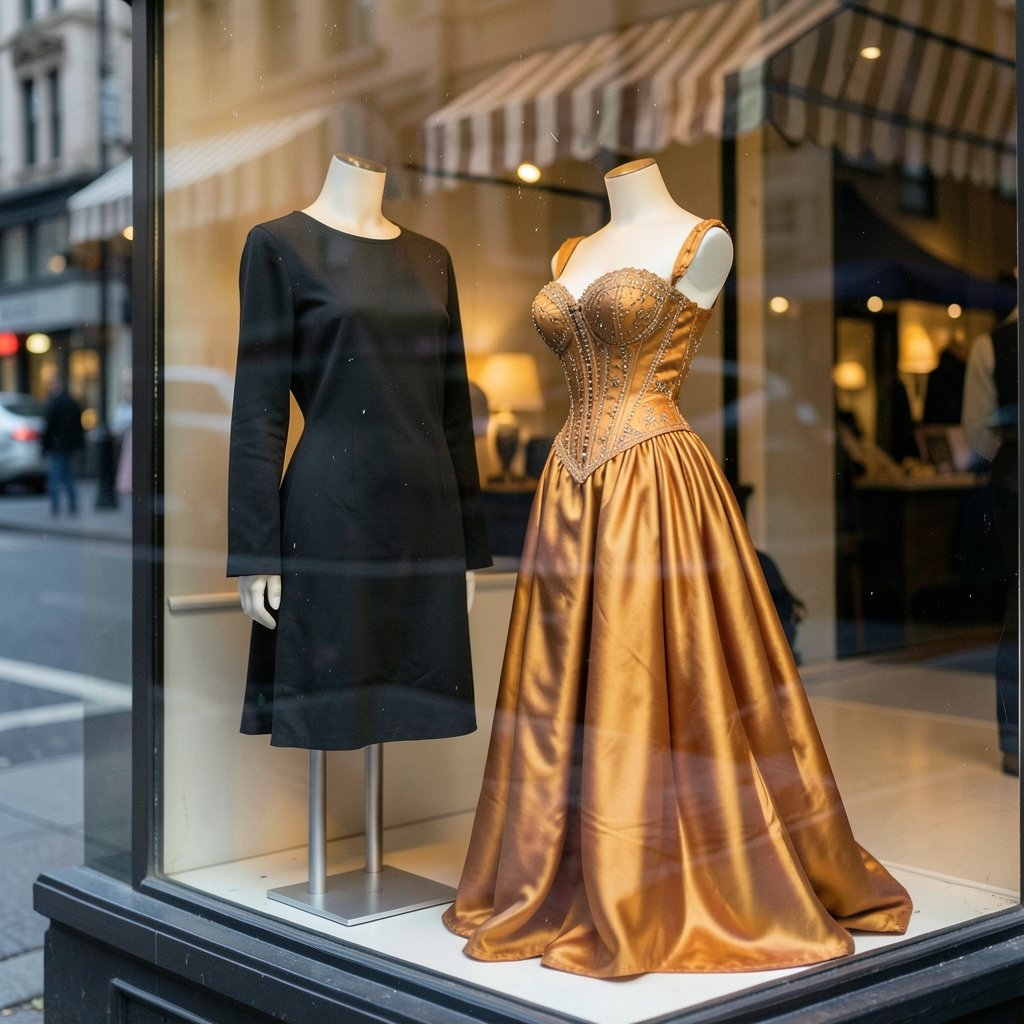
Coco Chanel pushed simplicity further. Her jersey sportswear made casual fabric respectable, and her little black dress became a phenomenon after Vogue described a Chanel design in 1926 as “the frock that all the world will wear.” That single line turned a plain black garment into a wardrobe staple that still exists.
The honest version of this story is messier than the marketing version. No one designer freed women. Mass production, department stores, changing work patterns, and a generation that wanted to move freely all pushed in the same direction. Chanel and Poiret were surfacing something already in the air, which is why their influence stuck.
For readers tracking how that legacy ripples forward, the through-line from 1920s simplicity to modern minimalism is hard to miss. The same instinct shows up in later decades, including the way 2010s fashion athleisure streetwear Instagram rewrote rules around comfort and self-expression. The 1920s got there first.
The Bob, the Shingle, and the Politics of Short Hair
Hair was fashion’s most personal battleground. The bob moved into the mainstream roughly between 1920 and 1925, helped along by dancer Irene Castle, who had popularized a short cut as early as 1915 to 1917, and by actress Louise Brooks, whose sleek dark bob became the era’s defining image.
The shingle went further, cut close at the nape and tapered at the sides. Together they did something no hat could: they changed how a woman’s head and neck looked in public.
Why did it matter so much? Because long hair had been a visible marker of femininity and respectability. Cutting it was a small daily act of defiance, and plenty of parents and employers hated it. Barbershops and salons suddenly served women in numbers they had never seen. The bob was practical, yes, but it was also a statement that a woman’s appearance belonged to her.
What Did Men Wear in the 1920s?
Men’s fashion moved more slowly, but it moved. The sack suit stayed popular, cut with a softer, less structured shoulder than earlier tailoring. Plus-fours became standard sportswear for golf and country weekends.
The most entertaining development was Oxford bags, very wide trousers that appeared at Oxford University around 1924 to 1925. The story goes that students adopted exaggeratedly wide legs partly to dodge rules banning knickerbockers. Whatever the true origin, the silhouette spread, and wide trousers entered the mainstream wardrobe.
The 1920s man also had more casual options than his father: knitwear, softer collars, and sportswear that crossed over into everyday dress. It was a quiet rehearsal for the casualization that would define the rest of the century.
How Jazz Age Culture Shaped the Wardrobe
Fashion never happens in a vacuum, and the 1920s prove it. Jazz music, dance halls, and a youth culture that wanted nightlife changed what clothes had to do.
A dress built for the Charleston needed to move. Beads and fringe caught the light and swung with the body. Sleeves shrank. Shoes got strappier. The whole outfit was engineered for motion, which is why static photographs of 1920s dresses often undersell them.
In Britain, the Bright Young Things, a set of wealthy young socialites, turned party-going into performance, dressing for themed gatherings and landing in the newspapers for it. F. Scott Fitzgerald’s The Great Gatsby, published in 1925, became the cultural touchstone most people now associate with the decade, even though it is fiction rather than a fashion record.
The Garçonne Look
One more term belongs in any 1920s glossary: garçonne. Taken from Victor Margueritte’s 1922 novel La Garçonne, it described an androgynous, boyish style that influenced women’s fashion through the mid-1920s. Flat chests, straight lines, short hair. The look borrowed from menswear without pretending to be menswear, and it gave the decade its most modern silhouette.
Ready-to-Wear and the Democratization of Style
Here is the part of the story that gets overlooked. The 1920s saw real growth in ready-to-wear clothing and department-store fashion. Instead of every garment being made to measure by a dressmaker, women could buy fashionable styles off the rack at a range of prices.
That shift changed everything downstream. Trends could spread faster. Middle-class women could participate in looks that once belonged to the wealthy. Copying became normal, and designers learned to live with it. The exact pace varied by country, but the direction was consistent across Europe and North America.
The same dynamic, sped up dramatically, is what makes modern trend cycles so frantic. If you want to see how fast the machinery now runs, it is worth comparing the 1920s department store to the 2026 fashion trends guide landscape, where micro-trends rise and die within a season.
Practical Tips for Wearing 1920s Style Today
Plenty of people want the look without the costume-party effect. Here is what actually works, and where people go wrong.
Start with one era-correct piece, not five. A cloche hat or a beaded drop-waist dress reads as 1920s on its own. Piling on pearls, a headband, a feather boa, and gloves pushes it into fancy dress.
Watch the proportions. The dropped waist only flatters when the dress is genuinely loose through the torso. Modern reproductions often tighten it for a contemporary fit, which flattens the silhouette.
Choose movement over shine. Fringe, beading, and lightweight fabrics that swing matter more than sparkle. The 1920s look was built for dancing.
Get the hair right, or don’t bother faking it. A slicked-back low bun or a pinned faux bob reads better than a wig. If you are committing to a bob, a stylist who understands the era’s shape will do more for you than any accessory.
Common mistake: treating 1920s fashion as uniformly glamorous. Daywear was often simple wool or cotton in practical cuts. Sequins belonged to evening, and only to some evenings.
A Quick Comparison: Then and Now
| Element | 1920s Original | Modern Revival |
|---|---|---|
| Waistline | Dropped to the hip | Often raised for a modern fit |
| Hemline | Rose from ankle to knee | Usually knee-length or shorter |
| Fabric | Wool, silk, cotton, beads | Synthetics, sequins, stretch blends |
| Hair | Bob or shingle, genuinely cut | Faux bobs and pinned styles |
| Purpose | Dance, daily wear, work | Parties, weddings, themed events |
The revival borrows the outline but rarely the practicality. That is fine, as long as you know which one you are buying.
Why the Decade Still Matters
Fashion history is full of dramatic moments, but the 1920s is one of the few where the change was structural rather than decorative. Women’s clothing got lighter, shorter, and looser in a single decade, and it never fully reversed.
That legacy shows up everywhere. The little black dress, the bob, the idea that clothes should let you move, the assumption that style is available at multiple price points: all of it traces back to this period. Even the current appetite for relaxed tailoring and sportswear-inflected dressing echoes the same argument about comfort and freedom.
If you want to see how designers keep mining this territory, look at how contemporary illustrators and brands treat archival references. The Angelica Hicks fashion illustrator turns runway moments into work that shows how a historical silhouette gets translated for a new audience, which is exactly what happened to 1920s shapes a century ago.
And the broader revival economy keeps growing. Searches around fashion trends 2026 regularly surface 1920s references, from drop waists to baroque beading, because the decade’s visual language is unusually easy to remix.
Conclusion
The 1920s did not invent modern fashion, but it came closer than any decade before it. Loose dresses, short hair, and accessible ready-to-wear gave women a wardrobe that matched the life they were actually living: working, dancing, driving, and refusing to be squeezed into shapes designed for someone else’s comfort.
That is why the flapper look survives. It is not nostalgia for a party. It is a reminder that when clothes finally let people move, the change tends to stick. Whether you are sewing a reproduction dress, shopping for a cloche, or just curious about where the little black dress came from, the 1920s rewards a closer look. The beads are pretty. The freedom behind them is the real story.
FAQ
What is 20s fashion known for?
It is best known for the flapper silhouette: dropped waistlines, loose tubular dresses, rising hemlines, cloche hats, and bobbed hair. The look was tied to jazz culture, dancing, and a broader shift toward comfort and freedom in women’s clothing.
When did the flapper look become popular?
The term flapper existed in Britain before 1920, but the look became widely associated with it around 1925 and 1926. Hemlines rose gradually across the decade rather than all at once, so exact dates vary by source.
Did Coco Chanel invent 1920s fashion?
No. Chanel was highly influential, particularly with jersey sportswear and the little black dress, which Vogue described in 1926 as “the frock that all the world will wear.” But the shift toward looser clothing came from many forces, including mass production, department stores, and changing social roles.
What was the garçonne look?
It was an androgynous, boyish style inspired by Victor Margueritte’s 1922 novel La Garçonne. It featured straight lines, flat chests, and short hair, and it influenced women’s fashion through the mid-1920s.
What did men wear in the 1920s?
Men largely wore the sack suit, cut with a softer shoulder than earlier tailoring. Plus-fours were common for sport, and Oxford bags, very wide trousers that appeared at Oxford University around 1924 to 1925, became a notable trend.
How can you wear 1920s style without looking like a costume?
Pick one era-correct piece, such as a cloche hat or a beaded drop-waist dress, and keep the rest simple. Make sure the dress is genuinely loose through the torso, favor fabrics that move, and skip the pile-on of pearls, feathers, and gloves.














