

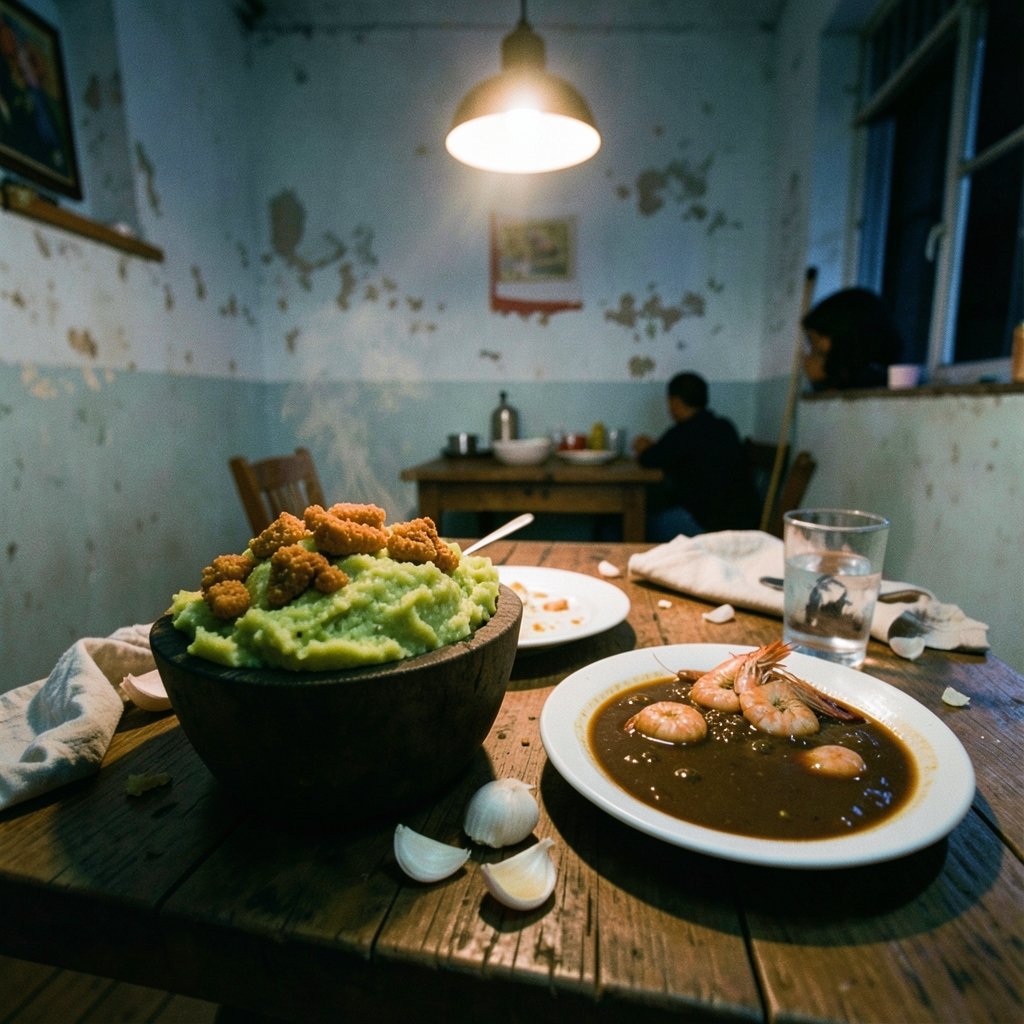
What makes a plate of mofongo worth the trip? It isn’t the plantain alone. It’s the garlic hitting the oil, the crackle of chicharrón, the way the mash soaks up the broth from whatever sits on top. And when you’re hungry and typing “best mofongo near me” into your phone, you want that plate, not a tourist version of it. This guide shows you how to search smarter, read a menu like someone who knows the dish, and avoid the most common mistakes people make when hunting for good Puerto Rican food in an unfamiliar city.
What Mofongo Actually Is, and Why That Matters When You Search
Mofongo is a Puerto Rican dish made from fried green plantains that are mashed with garlic and pork cracklings, then shaped into a mound or a bowl. It’s usually topped or stuffed with meat, seafood, or broth. It’s a staple of Puerto Rican cooking, and it shows up on menus from San Juan to the Bronx to Orlando.
The name is generally traced to the Kikongo word mfwenge-mfwenge, meaning “a great amount of something,” a nod to West and Central African influence on Puerto Rican food. That etymology is widely repeated, though it’s fair to treat it as commonly said rather than settled fact.
Why does the definition matter for your search? Because “mofongo” gets used loosely. Two dishes get confused with it all the time:
| Dish | What it is | How it’s served |
|---|---|---|
| Mofongo | Fried green plantains mashed with garlic and chicharrón | Shaped into a mound or bowl, topped or stuffed with meat, seafood, or broth |
| Mangú | Boiled green plantains mashed smooth, often with butter or oil | Typically a breakfast or side dish, not usually stuffed |
| Mofongo relleno | Mofongo hollowed out and filled | Stuffed with shrimp, chicken, steak, or vegetables |
If a restaurant’s “mofongo” arrives as a smooth, pale puree with no garlic punch and no crackling, you’ve probably been handed mangú with a different name. Knowing the difference is the fastest way to judge whether a kitchen actually cooks the dish or just lists it.
Read the Menu Before You Read the Reviews
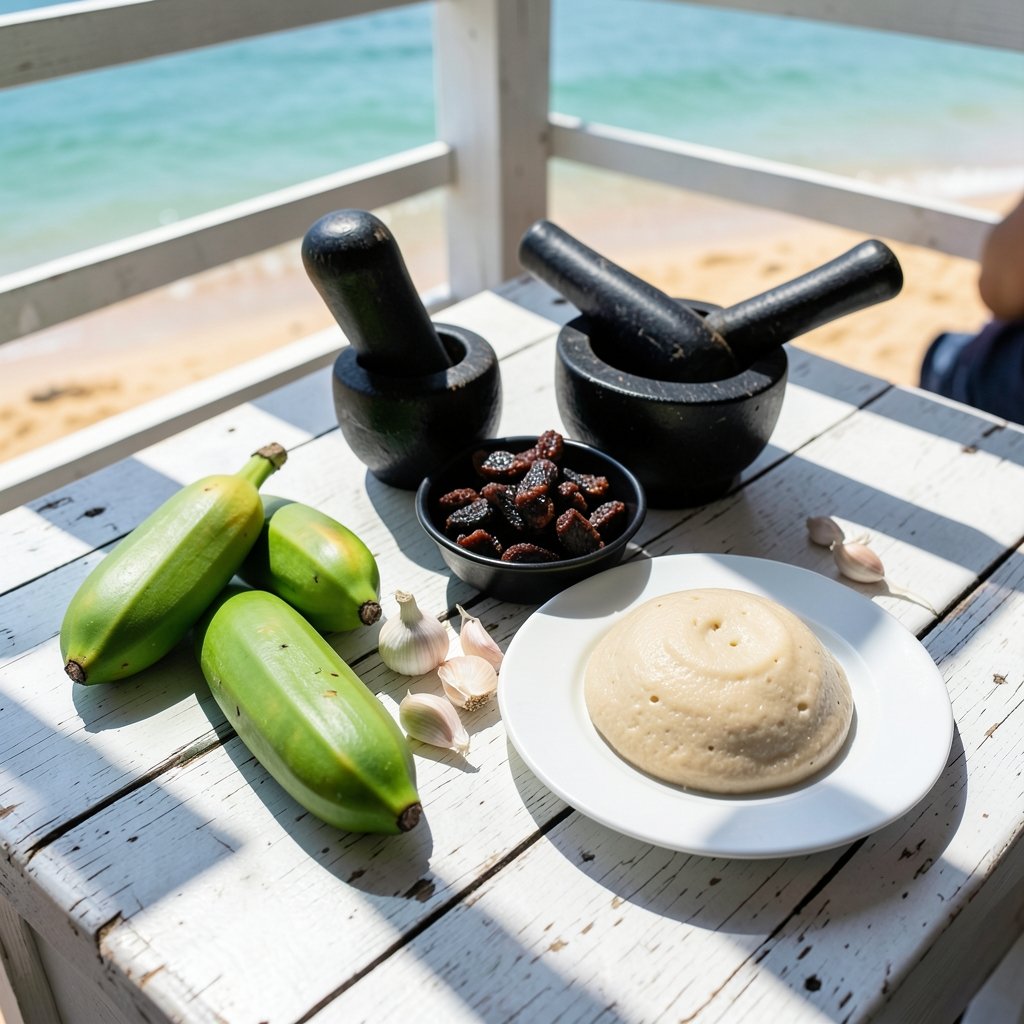
Here’s a habit that saves time: open the menu before you open the review tab. Reviews tell you about service and noise. The menu tells you whether the kitchen understands mofongo.
Look for these signals:
- Green plantains, stated plainly. Good places don’t hide the ingredient. If the description mentions tostones or green plantains, that’s a good sign.
- Chicharrón or pork crackling in the description. Traditional mofongo uses it. Some places offer a vegetarian version with olive oil or garlic oil instead, which is fine, but the default should be pork.
- A choice of toppings or fillings. Shrimp, chicken, steak, octopus, or a simple broth. A short, confident list beats a 40-item menu.
- Mofongo as its own section. When a restaurant gives mofongo its own menu section, it’s usually a signature dish, not an afterthought.
A red flag is a menu that lists mofongo only as a side or a “plantain mash” under appetizers. Another is a photo where the mound looks gray and dry. Mofongo should glisten a little from the garlic oil and hold together when you cut it.
How “Near Me” Search Actually Works
When you type “best mofongo near me,” the map app doesn’t rank restaurants by quality. It ranks by a mix of distance, relevance to your query, prominence, and whatever the app knows about your location. Results shift by device, by neighborhood, and over time. No single list is authoritative.
That has practical consequences. If you’re standing in a city center, your results will be dominated by places within walking distance, which may not be the best ones. A few adjustments help:
- Search by neighborhood instead of “near me.” Try “mofongo [neighborhood name]” to broaden the search while keeping it relevant.
- Search in Spanish. “Mofongo” plus “comida criolla” or “cocina puertorriqueña” sometimes brings up smaller family-run spots that English queries miss.
- Check the map layer as well as the list. Clusters of Puerto Rican restaurants often sit along one commercial strip. Zooming out shows them.
- Cross-check two apps. Different services weigh distance and reviews differently, so the top result isn’t always the same place.
This same logic applies to any local search. If you’ve ever tried to find a specific cuisine in a hurry, the approach behind Chinese restaurants near me find good one fast is worth borrowing: narrow by neighborhood, check the menu, then trust your eyes on the photos.
Where Mofongo Is Easiest to Find
Puerto Rican restaurants cluster in cities with large Puerto Rican populations. New York, Philadelphia, Chicago, Orlando, and the Springfield and Holyoke area of Massachusetts all have well-established communities and, predictably, strong Puerto Rican food scenes. That’s a demographic pattern, not a ranking, but it’s a useful starting point if you’re traveling.
Outside those areas, look in three places:
- Latin American groceries with hot counters. Small markets sometimes sell mofongo to go, and the quality can be excellent.
- Food trucks and casual counters. Lower overhead often means a kitchen focused on a handful of dishes done well.
- Puerto Rican or Caribbean festivals and community events. Temporary, but often the most authentic food you’ll find in a city without a dedicated restaurant.
If you’re planning a wider search and want to understand how clinic-style local searches are structured, the same principles of proximity and relevance apply in guides like Laser Hair Removal Near Me: How to Choose a Clinic — the mechanics of “near me” don’t change much by industry. For browsing more local-search breakdowns, this collection of laser hair removal near me articles shows how the same query pattern plays out across topics.
Judging Quality Once You’re Inside
Mofongo is a texture dish as much as a flavor dish. A few things separate a good plate from a great one, and you can check most of them in the first thirty seconds.
The mash should be coarse. You want small chunks of plantain, not a smooth paste. Over-mashing turns it gluey.
Garlic should lead. It’s the backbone of the dish. If the first bite tastes only of salt, the kitchen is hiding something.
The crackling should still crunch. Chicharrón mixed in too early goes soft. Good kitchens fold it in close to serving.
The top should add moisture. A dry mound with a dry topping is a chore to eat. Broth, stew, or a saucy protein fixes that.
It should be served hot. Mofongo sits heavy when it cools. Ask for it fresh if the plate arrives lukewarm.
One more practical tip: mofongo is dense. A full order is a meal, not a side. First-timers often order it plus a main and end up with more food than they can finish. Order one mofongo to share if you’re trying several dishes.
Common Mistakes People Make
Most disappointing mofongo experiences come down to a handful of avoidable errors.
- Trusting star ratings alone. A 4.9 from twelve reviews means less than a 4.3 from four hundred. Look for volume and recency.
- Ignoring the photos. User photos show real portions and real texture. Menu photos are styled. Sort by newest and look at the mofongo specifically.
- Ordering at the wrong time. Mofongo is best at lunch or early dinner, when the kitchen is turning out orders quickly and the plantains are fresh from the fryer.
- Skipping the questions. Asking “is the mofongo made with chicharrón?” tells you a lot about the kitchen’s confidence.
- Assuming every Latin restaurant has it. Cuban, Dominican, and Mexican menus rarely carry mofongo. Look for Puerto Rican specifically.
- Going only by delivery apps. Fried plantain travels poorly. Mofongo eaten twenty minutes after it’s packed is a different dish from mofongo eaten at the counter.
What to Expect to Pay
Prices vary widely by city and by topping. A plain mofongo with broth sits at the low end; a stuffed version with shrimp or octopus sits at the high end. Casual counters and food trucks are cheaper than sit-down restaurants, and tourist districts charge more for the same plate. Rather than chase a specific number, compare two or three nearby menus before you commit. The spread within one neighborhood is usually bigger than you’d expect.
A Note on Nutrition
Green plantains are a starchy food, and frying adds fat and calories. The exact numbers shift with the recipe and portion, so treat any single figure with suspicion. What’s consistent is the pattern: fried preparations are calorie-dense, and some versions are heavy on salt. If you’re watching either, ask for the mofongo with less salt, choose a broth-topped version over a fried-meat topping, and treat the plate as the main event rather than a side.
Conclusion
Finding the best mofongo near you isn’t about luck. It’s about knowing what the dish should be, reading the menu before the reviews, searching by neighborhood instead of by “near me,” and checking the texture on arrival. The best plate is rarely the top result in a map app. It’s usually the place with a short menu, a confident answer about chicharrón, and a dining room full of people who order the same thing every week. Start with the dish’s definition, narrow your search, and trust the first bite.
Frequently Asked Questions
What is mofongo made of?
Mofongo is made from fried green plantains mashed with garlic and pork cracklings, called chicharrón. It’s shaped into a mound or bowl and usually topped or stuffed with meat, seafood, or broth. Some kitchens offer a vegetarian version using olive oil or garlic oil instead of pork.
Is mofongo the same as mangú?
No. Mangú is made from boiled green plantains mashed smooth and is often served as a breakfast side. Mofongo uses fried plantains, is mashed coarsely with garlic and crackling, and is typically served as a main dish with a topping or filling.
Why can’t I find mofongo at every Latin restaurant?
Mofongo is specifically Puerto Rican. Cuban, Dominican, and Mexican menus usually don’t carry it. Search for Puerto Rican restaurants or comida criolla, and check Latin groceries with hot counters, which sometimes sell it to go.
How do I know if a restaurant’s mofongo is good?
Look for coarse texture rather than a smooth paste, a strong garlic flavor, crackling that still crunches, and a topping that adds moisture. It should arrive hot. Dry, gray, or gluey mofongo usually means it sat too long or was over-mashed.
Why do “near me” results show different restaurants on different apps?
Each map service ranks results using its own mix of distance, relevance, and prominence, and it weighs your location data differently. Results also change over time. That’s why cross-checking two apps and searching by neighborhood gives a fuller picture than relying on one list.
How much should I expect to pay for mofongo?
It depends on the city and the topping. A plain mofongo with broth costs less than a version stuffed with shrimp or octopus, and casual counters run cheaper than sit-down restaurants. Compare two or three menus in the same neighborhood before deciding.
One last note on timing: many Puerto Rican kitchens serve mofongo best at lunch, when the fryer is busy and batches are small. If you visit during a slow afternoon, ask whether the plantains are fried to order. A kitchen that says yes is usually worth the wait. And if you find a place you love, order it twice before you recommend it — consistency, not a single great plate, is what separates a neighborhood staple from a one-off. With that, you have everything you need: the definition, the texture test, the search strategy, and the questions to ask. Go find your plate.











