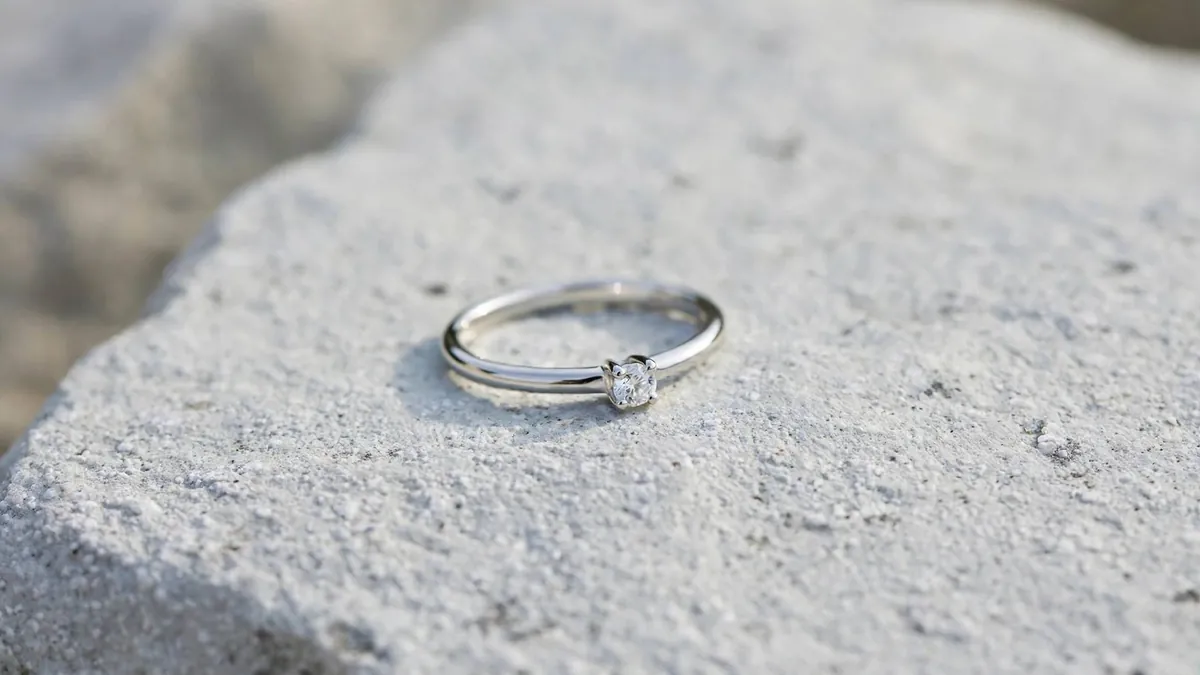
White gold is one of the most popular metals in modern jewellery, and also one of the most misunderstood. It looks cool and bright in the jeweller’s window, yet the metal underneath is not white at all, and the shine you fall in love with is a thin coating that wears away over time.
So what is white gold, really? It is real gold, mixed with pale metals to take the yellow out of it, and usually finished with a coating of rhodium. This guide explains what goes into it, what the carat and hallmark mean, why it needs re-plating, how it compares with platinum and yellow gold, and how to care for it.
Key takeaways:
- White gold is real gold alloyed with pale metals such as palladium, nickel or silver, then usually coated in rhodium.
- An 18-carat white gold ring contains exactly as much gold as an 18-carat yellow gold ring: 75 per cent.
- The bright white finish is a thin rhodium coating that wears away, so rings typically need re-plating every one to two years.
- Hallmarks 375, 585 and 750 mean 9, 14 and 18 carat gold, and in the UK any gold item weighing one gram or more must be hallmarked.
What is white gold?
White gold is a gold alloy, which means it begins as pure yellow gold and is blended with at least one white metal to change its colour. Pure gold is naturally yellow and too soft for everyday jewellery, so the blending whitens the metal while making it harder and more durable. The gold content is the same as any other gold of the same carat: an 18-carat white gold ring contains exactly as much gold as an 18-carat yellow gold ring.
What comes out of the alloy alone is not the bright white most people picture. Unplated white gold is a pale greyish yellow, closer to old pewter than to anything you would call white. The crisp, cold white seen in a jeweller’s window comes from a second step, a thin coating of rhodium, and understanding that two-step construction explains almost everything else about the metal.
What is white gold made of?
The exact recipe varies by maker and is rarely disclosed, but four metals do most of the work. Palladium is the premium option: a platinum-family metal, naturally white, excellent at bleaching gold and well tolerated by skin, which is why palladium white gold usually costs more. Nickel is the cheap and very effective option, whitening gold strongly and hardening it, though it is also the most common cause of contact allergy.
Silver softens the yellow without bleaching it aggressively, so it is usually part of a mix rather than the whole answer. Zinc and manganese play supporting roles, adjusting hardness, colour and how the metal behaves when it is worked. The higher the carat, the more gold the alloy contains, and the warmer its natural tone before plating, so 14-carat white gold usually looks whiter than 18-carat white gold before it is coated.
What do white gold carats mean?
Carat describes how much pure gold an alloy contains, and the scale is the same for white gold as for any other gold. Nine-carat gold is 37.5 per cent pure gold, 14-carat is 58.5 per cent, and 18-carat is 75 per cent. The remainder is the alloy metals that give white gold its colour and strength.
What is rhodium plating?
Almost all white gold jewellery sold at retail is electroplated with rhodium, a hard, brilliant, blue-white metal from the platinum family. The rhodium layer is extremely thin, usually well under a micron, yet it is what gives white gold its bright, mirror-white finish and hides the faint warm tint of the alloy beneath. When you look at a new white gold ring, you are mostly looking at rhodium.
Rhodium wears away with friction, so the plating does not last for ever. On a ring, the palm side and the edges usually show wear first, revealing slightly warmer metal underneath, while earrings and pendants keep their plating much longer because they rub against less. Many jewellers suggest a ring may need re-plating every 12 to 24 months, though the timing depends on how the piece is worn.
How do you read a white gold hallmark?
In the UK, white gold weighing one gram or more must carry a hallmark, a small stamp that guarantees the metal’s purity. The number in the hallmark tells you the gold content: 375 means 9 carat, 585 means 14 carat, and 750 means 18 carat. The stamp is usually found inside a ring band or on a clasp, and it is the most reliable way to confirm what you are buying.
The hallmark will not tell you which whitening metal the alloy contains, so it cannot answer a question about nickel. If you have sensitive skin, ask the seller directly whether the piece is nickel-based or palladium-based, and get the answer in writing. The absence of any hallmark is a warning sign: a genuine piece should carry one, and if it does not, professional testing may be needed to verify the metal.
White gold vs platinum vs yellow gold
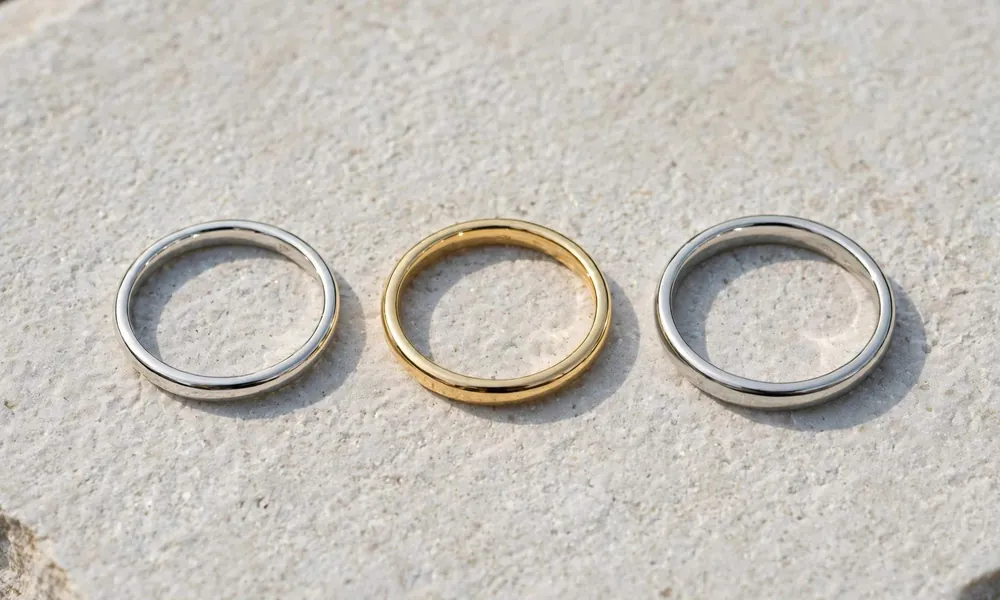
White gold, platinum and yellow gold are often compared because they are the three metals most commonly chosen for rings, yet they behave very differently. Platinum is naturally white all the way through, so it never needs plating, and it is denser and heavier than gold. That also makes it the most expensive of the three, and it develops a soft patina over time rather than wearing down to a warmer colour.
Yellow gold is the most traditional choice, warm in tone and easy to recognise, and its colour needs no coating at all. White gold sits between the two: it looks like platinum when new, at a lower price, but it needs regular re-plating to keep that look. For a diamond ring, white gold and platinum both make the stone look brighter, while yellow gold gives the whole piece a warmer, more classic feel. Our guide to the best lab-grown diamonds explains how to choose a stone to suit any of these metals.
| Metal | Colour | Upkeep | Best for |
|---|---|---|---|
| White gold | Bright white when plated, warm grey underneath | Re-plating every 1 to 2 years | A platinum look at a lower price |
| Platinum | Naturally white all through | Polishing to refresh the finish | Everyday rings, sensitive skin |
| Yellow gold | Warm yellow, no coating needed | Occasional cleaning and polishing | Classic style, low upkeep |
Does white gold contain nickel?
Some white gold does, and some does not. Nickel-based white gold is the original and most common formula, a blend of gold with nickel, copper and zinc. Nickel whitens gold very effectively and makes a hard alloy, which is ideal for rings that need to hold their shape. The drawback is that nickel is one of the most common causes of allergic contact dermatitis, and roughly one in eight people reacts to it.
Palladium-based white gold avoids the problem entirely, because palladium whitens gold well without the allergy concern, and many jewellers now choose it for customers with sensitive skin. The rhodium plating covers the alloy, so a nickel piece may cause no trouble while the coating is intact, but once the plating wears through, a sensitive wearer may react. It is always worth asking what your piece contains.
How do you care for white gold?
White gold needs little day-to-day care, but a few habits will keep it looking its best. Clean it with warm water, a mild soap and a soft brush, then rinse and dry it with a soft cloth. Keep it away from harsh chemicals, including chlorine and household cleaners, which can damage the plating and the metal beneath.
Store white gold separately from harder jewellery such as diamond rings, which can scratch it, and take rings off before gardening, cleaning, swimming or exercise. Watch for the first signs of wear, usually a faint yellowish tint on the palm side of a ring, and take the piece to a jeweller for re-plating before the wear becomes obvious. The same gentle routine suits any classic piece: our guide to the tennis bracelet shows how fine jewellery is best looked after.
Your white gold checklist
Work through this list before you buy or wear white gold.
- Check the hallmark: 375, 585 and 750 mean 9, 14 and 18 carat gold.
- Ask about nickel: choose palladium-based white gold if you have sensitive skin.
- Ask about re-plating: find out how often the piece will need it and what it costs.
- Choose the carat: 9 carat for everyday wear, 18 carat for more gold content.
- Compare the metals: white gold, platinum and yellow gold each suit different tastes.
- Clean it gently: warm water, mild soap and a soft cloth, nothing abrasive.
- Store it separately: keep it away from harder jewellery that can scratch it.
- Watch for wear: a yellowish tint on a ring means it is time for re-plating.
Frequently asked questions
Is white gold real gold?
Yes. White gold is real gold alloyed with pale metals such as palladium, nickel or silver. An 18-carat white gold ring contains exactly as much gold as an 18-carat yellow gold ring: 75 per cent. The rhodium coating on the surface does not change the gold content.
Why does white gold turn yellow?
White gold turns yellow when its rhodium plating wears away, revealing the pale greyish-yellow alloy underneath. This is normal, especially on rings, which rub against skin and surfaces every day. A jeweller can restore the bright white finish with a fresh rhodium plating.
How often does white gold need re-plating?
Many jewellers suggest a ring may need re-plating every 12 to 24 months, though it depends on how the piece is worn. Earrings and pendants keep their plating much longer because they rub against less. Re-plating is routine work and usually takes only a short visit to a jeweller.
Is white gold better than platinum?
Neither is better in every way. Platinum is naturally white all the way through and never needs plating, but it costs more and is heavier. White gold looks like platinum when new at a lower price, but it needs regular re-plating to keep that look. The right choice depends on your budget and how much upkeep you are happy with.
Can you wear white gold if you have a nickel allergy?
It depends on the alloy. Palladium-based white gold contains no nickel and is the safer choice for sensitive skin. Nickel-based white gold may cause a reaction once the rhodium plating wears through, so ask the seller which formula the piece uses before you buy.
The bottom line
White gold is real gold with a clever trick: pale metals take the yellow out, and a thin coat of rhodium gives it that bright, cold white you see in the window. The trick works beautifully, but it needs looking after, and the re-plating every year or two is simply part of owning the metal.
Your next step is simple: check the hallmark, ask whether the piece is nickel- or palladium-based, and ask what re-plating will cost. With those three answers in hand, you can choose between white gold, platinum and yellow gold with confidence, and pick the metal that suits the way you will actually wear it. For a sense of how white gold sits in a wider collection, our guide to the best place to buy gold and silver is a good place to start.