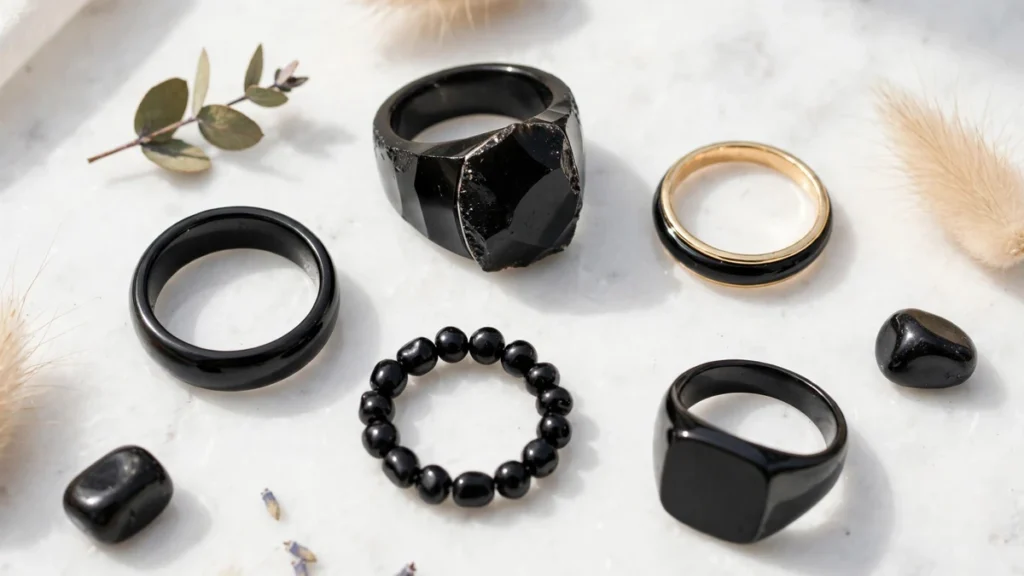
Obsidian is the most dramatic black stone in jewellery. It is not a crystal at all, but natural volcanic glass, formed when lava cools so quickly that it never has time to crystallise. The result is a stone with a deep, glossy black surface that catches the light like polished onyx, only darker and sharper. In a ring, obsidian reads as bold, modern and a little bit mysterious, which is why it keeps appearing in both high jewellery and contemporary collections.
The catch is that obsidian is glass, and glass is brittle. At 5 to 5.5 on the Mohs scale it is softer than most people expect, and unlike a crystalline gemstone it has no cleavage planes to absorb a blow. A sharp knock can chip it or crack it outright. That is why the setting matters so much: a bezel or halo protects the edges, while high prongs leave the stone exposed to exactly the kind of impact that damages it.
Below are nine obsidian rings worth considering in 2027, from a classic solitaire to beaded, sculptural and stacking styles. Each one is described by what it is good at, what to watch for, and who it suits best, so you can choose a ring you will actually enjoy wearing, not one that spends its life in a box because it feels too fragile.
Key takeaways
- Obsidian is natural volcanic glass at 5 to 5.5 on the Mohs scale, softer and more brittle than most people expect.
- Bezel or halo settings protect obsidian best, because they shield the stone’s edges from knocks that can chip or crack glass.
- Gold sheen, rainbow and snowflake obsidian are natural varieties; plain black obsidian is the most common and the most affordable.
- Black glass is the commonest imitation; real obsidian feels cool, has a vitreous lustre and often shows tiny flow lines under magnification.
- Obsidian has no proven healing properties and is not an investment stone, so buy it for its look and wear it with care.
What obsidian actually is
Obsidian forms when silica-rich lava erupts and cools in seconds, too fast for crystals to grow. The result is a natural glass, usually black, that is chemically similar to granite but structurally closer to a window pane. It has been used by people for thousands of years, first as blades and arrowheads because of its razor-sharp edge, and later as mirrors, beads and ornamental stones. The Aztecs polished it into mirrors; the Romans used it for jewellery and inlay.
Not all obsidian is plain black. Gold sheen obsidian has a golden shimmer that appears when the stone catches the light, caused by tiny gas bubbles aligned inside the glass. Rainbow obsidian shows bands of colour, usually purple, green and gold, from microscopic mineral inclusions. Snowflake obsidian has white, snowflake-shaped patches of cristobalite, a form of quartz, scattered through the black glass. Mahogany obsidian has reddish-brown swirls from iron oxide. Each variety looks quite different in a ring, and each commands a different price.
What makes obsidian tricky as a ring stone is purely physical. It is glass, so it is brittle. A knock that would only scratch a sapphire can chip an obsidian, and a hard blow can crack it. It is also sensitive to heat and to sudden temperature changes, though normal wear is not a problem. None of that makes it unwearable. It makes it a stone that needs the right setting and a little respect, which is what the rest of this guide is about.
How we chose these rings and what to look for
Look first at the setting. A bezel setting, where a rim of metal wraps around the stone, is the safest choice for obsidian because it protects the vulnerable edges. A halo setting offers similar protection. Prong settings can work for a ring worn occasionally, but high prongs leave the stone’s edges exposed, and a knock that would only scuff a harder stone can chip obsidian.

Look next at the stone itself. Good obsidian is a deep, even black with a high, glassy polish and no grey or cloudy patches. Hold it under a strong light and look for the variety you are paying for: gold sheen should show a clear golden shimmer, rainbow obsidian should show bands of colour, and snowflake obsidian should have crisp white patches. Be suspicious of stones that look too perfect, too uniform or too cheap, because black glass is a common imitation. Real obsidian feels cool to the touch, has a vitreous lustre, and often shows tiny flow lines under a loupe.
Finally, look at the metal and the price. Solid gold or sterling silver is worth paying for, because an obsidian ring is a piece you keep and re-polish, not a disposable trend buy. Plated base metal wears through quickly on a ring that is handled all day. Our guide to obsidian bracelets covers the same stone in a safer setting, and it is a useful comparison if you love the look but are unsure about wearing volcanic glass on your hand.
The 9 best obsidian rings of 2027
Tiffany & Co. Bead Pendant
What we like: A polished black obsidian bead set in a low, protective 18-karat yellow gold bezel, with the stone’s glassy surface left beautifully plain. The bead shape has no sharp edges to chip. What to consider: Premium price for a common stone, and the polished gold bezel will pick up fine scratches with wear. Stone: Natural black obsidian, bead cabochon. Setting: Bezel, 18-karat yellow gold. Best for: A timeless, understated statement ring. Price range: $1,200–$2,500.
This is the most considered obsidian ring in the roundup. The bead shape is the safest possible form for glass, and the low bezel is exactly what a brittle stone needs.
Cartier Bead Necklace
What we like: A bold ring built around a large black obsidian bead, set in 18-karat gold with a pavé diamond halo that protects the stone’s edges while making the black look deeper. What to consider: A large, tall ring that catches on clothing and is best kept for evenings. Stone: Natural black obsidian, large bead cabochon. Setting: Halo, 18-karat gold with pavé diamonds. Best for: Evening wear and collectors of statement jewellery. Price range: $2,000–$4,000.
The halo does real work here, not just decoration. It shields the obsidian’s edges, which is the single most useful thing a setting can do for volcanic glass.
David Yurman Pendant
What we like: Black obsidian set into Yurman’s signature cable design, with a twisted gold band that gives the ring a sculptural, handcrafted feel. The stone is a deep, even black with a high polish. What to consider: The cable texture can trap dirt around the stone, so it needs regular gentle cleaning. Stone: Natural black obsidian, round cabochon. Setting: Bezel with cable band, 18-karat gold or sterling silver. Best for: A designer piece with a distinctive silhouette. Price range: $500–$1,200.
Yurman’s cable band makes this ring recognisable from across a room. The bezel setting keeps the stone safe, which is the right call for a ring designed to be worn often.
Mejuri Bead Necklace
What we like: A smooth, polished obsidian bead in a slim gold vermeil band, at a price that makes the stone accessible. The bead shape shows off the glassy polish beautifully and has no sharp edges to chip. What to consider: Gold vermeil wears over time on a ring, and the stone is on the smaller side. Stone: Black obsidian, bead cabochon. Setting: Bezel, gold vermeil over sterling silver. Best for: A first obsidian ring and everyday styling. Price range: $130–$250.
Monica Vinader Pendant
What we like: A modern ring with a flat, polished black obsidian inlay set flush into a gold vermeil band. The flush setting protects the stone completely, and the shape is easy to wear with other rings. What to consider: The inlay is thin, so it cannot be re-polished many times, and vermeil will wear with daily use. Stone: Black obsidian inlay, flat. Setting: Flush inlay, gold vermeil over sterling silver. Best for: Stacking and everyday wear. Price range: $160–$300.
Missoma Gold Sheen
What we like: A gold sheen obsidian cabochon in a slim gold vermeil band, with a warm golden shimmer that appears as the stone moves. It is the most interesting stone in the roundup at an accessible price. What to consider: The sheen is only visible in good light, and vermeil wears with daily use. Stone: Gold sheen obsidian, oval cabochon. Setting: Bezel, gold vermeil over sterling silver. Best for: A ring with a hidden detail that rewards a closer look. Price range: $140–$260.
Maria Black Sculptural Pendant
What we like: An asymmetric, sculptural ring where the obsidian sits in an off-centre, organic-shaped setting in sterling silver. It looks modern and artistic rather than traditional. What to consider: The sculptural shape can snag, and the stone’s edges are partly exposed. Stone: Natural black obsidian, freeform cabochon. Setting: Partial bezel, sterling silver. Best for: A contemporary, artistic look. Price range: $180–$380.
Astrid & Miyu Bead Necklace
What we like: A neat ring with a round black obsidian bead surrounded by small cubic zirconia, in gold-plated sterling silver. It gives a high-jewellery look at a very accessible price. What to consider: Gold plating wears quickly on rings, and the stone is modest in size. Stone: Black obsidian, round bead cabochon. Setting: Halo, gold-plated sterling silver. Best for: A fashionable, affordable statement. Price range: $80–$160.
Thomas Sabo Rainbow Obsidian Pendant
What we like: A rainbow obsidian cabochon in a detailed sterling silver setting, with bands of purple and green that appear under strong light. It is the most unusual stone in the roundup and a genuine conversation piece. What to consider: The rainbow effect is subtle and needs good light to show, and the setting is busy. Stone: Rainbow obsidian, oval cabochon. Setting: Bezel, sterling silver. Best for: A collectible ring with a hidden colour story. Price range: $120–$240.
Which obsidian ring is right for you
If you want to wear obsidian every day, choose a low, flush or bezel-set ring with a small to medium stone. The Monica Vinader inlay and the Mejuri bead are the best options here, because their settings protect the stone and their profiles sit close to the finger. Avoid tall cocktail rings for daily wear, however beautiful they are, because height is what catches on things and chips glass.
If you want a statement piece for evenings and special occasions, go bigger. The Cartier bead ring and the Tiffany bead ring are designed for exactly that, and their settings are good enough to justify the price. A large obsidian worn occasionally will last for decades, because the damage comes from daily knocks, not from sitting in a jewellery box.
If you love the stone but are nervous about wearing glass on your hand, consider the same stone in a safer place. Our guide to obsidian necklaces shows how the glossy black looks even better on a pendant, where it is protected from knocks and visible all day. Many people end up owning both, and wearing the necklace daily and the ring for occasions.
The caveats that matter
Obsidian’s brittleness is the whole story. It chips and cracks under sharp impact, and those are not minor footnotes. An obsidian ring that is worn while doing housework, exercise or anything rough with your hands will eventually be damaged. The good news is that all of this is avoidable: take the ring off before manual work, keep it away from hard surfaces, and store it in a separate pouch so harder jewellery cannot scratch or chip it.
| Detail | What is known |
|---|---|
| Hardness | Mohs 5 to 5.5, softer and more brittle than most people expect |
| Best setting | Bezel, halo or flush inlay; high prongs leave edges exposed |
| Cleaning | Lukewarm water and a soft cloth; never ultrasonic or steam cleaners |
| What to avoid | Hard knocks, drops onto tile or stone, sudden heat, harsh chemicals |
| Real vs imitation | Real obsidian is cool to the touch with a vitreous lustre; black glass is the common imitation |
| Natural varieties | Gold sheen, rainbow, snowflake and mahogany are all natural obsidian |
| Who should skip it | Anyone who wants a ring they never have to think about or remove |
| What it does not do | No proven healing properties; not an investment stone |
There is one more honest point. Obsidian is glass, and glass does not forgive. A chip cannot be polished out the way a scratch on a harder stone can, because removing material changes the shape of the cabochon. That is why prevention matters more than repair: a good setting, careful wear and proper storage are the whole strategy, and they work.
Checklist: choosing an obsidian ring honestly
Use these checks before you buy, and again after a month of wear.
- Check the polish: it should be deep, glossy and even, with no grey or cloudy patches.
- Check the setting: bezel, halo or flush inlay protects the stone; high prongs do not.
- Check the variety: gold sheen, rainbow and snowflake should show their effect clearly in good light.
- Check the metal: solid gold or sterling silver is worth it; plated base metal wears through fast on a ring.
- Check the profile: a low, smooth ring knocks less and lasts longer than a tall one.
- Plan the care: lukewarm water and a soft cloth, no ultrasonic cleaner, and store it in its own pouch.
Frequently asked questions
Can I wear an obsidian ring every day?
You can, but only if the setting is protective and you are willing to take it off for manual work, exercise and cleaning. A low bezel or flush inlay ring will cope with daily wear far better than a tall cocktail ring. If you want a ring you never have to think about, obsidian is not the right stone.
Is obsidian suitable for an engagement ring?
It is a bold choice, but not a practical one for daily wear over decades. Obsidian is too soft and brittle for a ring that is never taken off, and a chip in an engagement ring is hard to live with. If you love the look, consider obsidian as a right-hand ring and choose a harder stone for the engagement ring itself. Our guide to engagement rings covers the stones that are built for a lifetime of daily wear.
How do I tell real obsidian from black glass?
It is genuinely hard, because obsidian is itself a natural glass. Real obsidian feels cool to the touch, has a vitreous lustre, and often shows tiny flow lines or small inclusions under a loupe. Black glass imitations are often too perfect, too uniform, and sometimes contain round bubbles. When in doubt, buy from a seller who identifies the stone and its variety in writing.
Can obsidian get wet?
Yes, briefly. Lukewarm water with a drop of mild soap is fine for cleaning, followed by drying with a soft cloth. What obsidian cannot handle is an ultrasonic cleaner, a steam cleaner, or prolonged soaking, all of which can stress the glass. It is far more water-tolerant than malachite, but it is still glass.
Does obsidian fade?
No. Obsidian’s black colour is stable and does not fade in sunlight. What can change is the polish: repeated knocks and abrasion dull the surface over time, which makes the stone look greyer and less glossy. A jeweller can re-polish it, as long as no chips need to be removed first.
Is an obsidian ring a good investment?
No. Obsidian is not rare, and its value comes from design and craftsmanship, not from the stone itself. Buy it because you love the deep black gloss and the story of volcanic glass, not because you expect it to appreciate. If you want jewellery that holds value, spend on the metal and the maker instead.
The bottom line
The best obsidian ring in 2027 is not the biggest or the most expensive. It is the one with a protective setting, a genuinely well-polished stone, and a profile that suits how you actually live. For daily wear, a low bezel or flush inlay ring in solid gold or sterling silver is the smart choice. For occasions, a bead or cocktail ring with a halo setting gives you the drama without leaving the glass defenceless.
Choose one ring, wear it with a little care, and take it off before manual work and housework. That is the honest way to enjoy obsidian: a stone whose beauty is entirely real, and whose fragility is entirely manageable, as long as you know what you are buying.