

Citizenship by investment is the fastest legal route to a second passport, and the best second passport programmes in 2027 are the five Caribbean nations, led by St Kitts and Nevis and Dominica, with Vanuatu and Türkiye as the main alternatives outside the region. If you want a second citizenship, start with the Caribbean five, compare their published minimum contributions and visa-free access, and apply only through a licensed authorised agent, because no legitimate programme accepts a direct application.
A second passport is not a purchase in the ordinary sense. The contribution funds government development programmes, the applicant must pass a background check on criminal history and source of funds, and the outcome is full citizenship, usually without any requirement to live in the country.
Key takeaways
- The Caribbean five are the established core of citizenship by investment in 2027.
- Published minimum contributions in 2026 ranged from $200,000 in Dominica to $250,000 in St Kitts and Nevis, excluding fees.
- Malta’s investment route to citizenship closed in 2025 after a European Court of Justice ruling, and there is no EU citizenship by investment programme left.
- Grenada is the only Caribbean programme whose citizens can apply for the American E-2 investor visa.
- Every legitimate programme requires a licensed authorised agent and a full due diligence check, and fees change often, so confirm the current position with each programme’s official unit.
What Citizenship by Investment Actually Is
Citizenship by investment allows a qualifying financial contribution to result in full citizenship of the country concerned, typically without any requirement to reside there before or after approval. The contribution takes one of three forms: a non-refundable donation to a state fund, a purchase of approved real estate, or in some cases a bond or business investment.
It is worth understanding what a second passport actually gives you. The main benefits are visa-free or visa-on-arrival travel to more countries, a second home and a plan B for your family. It does not give you the right to live and work in the European Union, and it does not remove your tax obligations in your home country.
Applications must be submitted through a licensed authorised agent rather than directly by the applicant, and every programme is administered by a dedicated government citizenship unit under specific national legislation. That structure is your first test of legitimacy: any person or website that offers to sell you a passport directly, without an agent and without due diligence, is not offering a real programme.
The Caribbean Five
The five Caribbean programmes are the established core of the industry. The published minimum non-refundable contribution for a single applicant was $200,000 or more across the five in 2026.
St Kitts and Nevis
St Kitts and Nevis runs the Caribbean’s longest-established programme, and its passport is the strongest of the five for travel, with visa-free or visa-on-arrival access to around 155 destinations. The published minimum contribution in 2026 was $250,000 for a main applicant or a family of up to four.
Dominica
Dominica is the lowest-priced of the five, with a published minimum contribution of $200,000 for a single applicant in 2026. It offers a straightforward donation or real estate route, and it is the best value choice if cost is the main consideration.
Grenada
Grenada is the only Caribbean programme that gives its citizens access to the American E-2 investor visa treaty, which makes it the clear choice for anyone whose plans include doing business in the United States. Its published minimum contribution in 2026 was $235,000.
Antigua and Barbuda
Antigua and Barbuda has the broadest family definition of the five, covering children, parents and in some cases siblings, with a published minimum contribution of $230,000 for a family of up to four in 2026. It is the only programme in the group with a residence requirement, five days within the first five years.
St Lucia
St Lucia is the youngest of the five programmes, with a published minimum contribution of $240,000 in 2026. It offers a donation or real estate route, and it suits applicants who want a well-run programme with a strong passport.
Beyond the Caribbean: Vanuatu and Türkiye
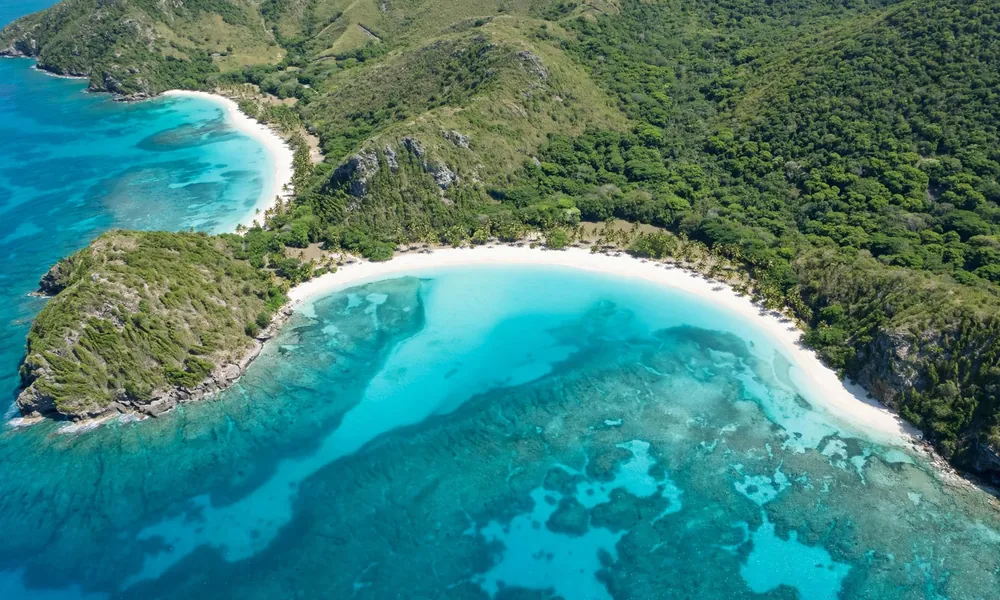
Outside the Caribbean, two programmes dominate the conversation. Vanuatu, a Pacific island nation, has the lowest published minimum of any major programme, at $130,000 in 2026, and one of the fastest timelines, often measured in weeks rather than months. Its passport opens fewer destinations than the Caribbean five, and its programme has faced scrutiny over due diligence. Island life has its own practicalities, and our guide to choosing a yacht covers the boating side of a Caribbean base.
Türkiye offers a different kind of route: citizenship through a property purchase of $400,000 or more, held for three years, or through a deposit, bond, fund or capital route of $500,000. It is the largest and most populous country to offer citizenship by investment, and its passport gives visa-free or visa-on-arrival access to around 113 destinations.
Other programmes exist, including Nauru and São Tomé and Príncipe, but they are smaller, newer and less tested, and their passports open far fewer destinations. For most applicants, the choice is between the Caribbean five, Vanuatu and Türkiye.
What Malta’s Closure Changed
Malta was the only citizenship-by-investment programme inside the European Union, and its closure changed the market more than any other single event. The European Court of Justice ruled on 29 April 2025 that granting citizenship in exchange for investment was contrary to EU law, and Malta’s route closed in July 2025. There is now no EU citizenship by investment programme, and no EU passport can be bought through investment.
The ruling also put pressure on the Caribbean programmes. The European Commission has called for the Caribbean programmes to be phased out by 1 June 2028 if they are to keep visa-free access to the Schengen area, and the five have responded by tightening their rules and strengthening due diligence. Schengen access is the benefit most applicants value, and a trip to Paris is often the first use of it; our guide to the best restaurants in Paris is a useful starting point for that first visit.
Malta now operates only a discretionary merit-based route to citizenship, with no fixed investment amount, and it is not a citizenship-by-investment programme in any meaningful sense. Anyone offering an EU passport for investment in 2027 is offering something that does not exist.
How to Choose the Right Programme
Start with the passport’s job. If travel freedom matters most, compare visa-free access and choose the strongest passport you can afford, which in the Caribbean is St Kitts and Nevis. If the United States matters, Grenada is the only Caribbean choice with E-2 treaty access. If family matters, Antigua and Barbuda’s broad definition may suit you best. Some applicants also weigh how a second passport fits a wider plan for protecting wealth, and our guide to the best place to buy gold and silver covers one of the oldest ways families have done that.
Then check the practicalities. How long does the programme take, and can you wait? What documents will you need, and can you prove the source of your funds? Does the programme require any residence, and can you meet it? Each programme publishes its rules, and a licensed agent should walk you through them.
Finally, consider the country’s stability and reputation. A passport is a long-term asset, and its value depends on the country behind it staying stable, well regarded and visa-free in the places that matter to you. Read the programme’s own publications before you decide.
The Risks and Red Flags
The biggest risk is change. Programmes raise their minimum contributions, tighten their rules and lose visa-free access, and a passport bought for one purpose may not serve it in five years. The European Commission’s 2028 deadline for the Caribbean programmes is the clearest example.
The second risk is fraud. Red flags include anyone offering a passport without due diligence, anyone who asks for payment in cryptocurrency to an anonymous wallet, and anyone offering an EU passport for investment. Legitimate programmes are slow, bureaucratic and expensive.
The third risk is personal. A second citizenship can complicate your tax position, your banking and your travel, and it can create obligations you did not expect. Take independent legal and tax advice in your home country before you apply, and do not rely on the selling agent for that advice.
The Best Second Passport Programmes Compared
| Programme | Published minimum, 2026 | Best for |
|---|---|---|
| St Kitts and Nevis | $250,000 | Strongest Caribbean passport |
| Dominica | $200,000 | Lowest cost of the five |
| Grenada | $235,000 | US E-2 visa access |
| Antigua and Barbuda | $230,000 | Broadest family cover |
| St Lucia | $240,000 | Well-run, lower profile |
| Vanuatu | $130,000 | Speed and low cost |
| Türkiye | $400,000 property | A foothold in a major country |
Your Second Passport Checklist
- Decide what the passport must do: travel, business, family, or all three.
- Compare the published minimum contributions and the visa-free access of each programme.
- Use only a licensed authorised agent, and check their credentials with the programme’s official unit.
- Confirm the current rules, fees and timelines directly with the official unit before you commit.
- Prepare proof of source of funds and expect a full due diligence check.
- Take independent legal and tax advice in your home country before you apply.
- Budget for government, due diligence and agent fees on top of the contribution.
Frequently Asked Questions
What is the best second passport programme in 2027?
For most applicants, St Kitts and Nevis is the best choice, with the strongest Caribbean passport and the longest-established programme. Dominica is the best value, Grenada is the best choice for US business access, and Vanuatu is the fastest and cheapest route.
How much does citizenship by investment cost?
Published minimum contributions in 2026 ranged from $130,000 in Vanuatu to $250,000 in St Kitts and Nevis, excluding government, due diligence, processing and agent fees.
Can I still buy an EU passport through investment?
No. Malta’s investment route closed in July 2025 after the European Court of Justice ruled that it was contrary to EU law, and there is no EU citizenship by investment programme.
How long does citizenship by investment take?
It varies by programme and by the complexity of your application. Vanuatu is the fastest, often measured in weeks, while the Caribbean programmes typically take several months from a complete application to a decision.
Do I have to live in the country to get its passport?
Usually not. Most citizenship by investment programmes have no residence requirement before or after approval. Antigua and Barbuda is the exception in the Caribbean, with a requirement of five days within the first five years.
Do I have to give up my current citizenship?
No. None of the programmes in this guide require you to renounce your existing citizenship, and most applicants hold two or more passports. Check the rules of your home country, since some countries do not allow dual citizenship.
The Bottom Line
The best second passport programme in 2027 is the one whose passport does the job you need, at a cost you can afford. For most applicants that means the Caribbean five, and for most of them it means St Kitts and Nevis, Dominica or Grenada.
Take your time, verify everything with the programme’s official unit, and take independent advice before you commit. A second passport is a long-term decision.
Please note: this article is general information only and is not legal, financial or tax advice. Citizenship by investment rules, fees and visa-free access change often, and they vary by nationality and personal circumstances. Confirm the current position with each programme’s official citizenship unit and take independent legal and tax advice before making any decision or payment.