Best Luxury Bath Products Brands: 7 Names Worth the Splurge in 2027
The best luxury bath products brands turn an ordinary evening soak into something deliberate and restorative. A well-made bath oil or a soak that genuinely helps you unwind is not about showing off a label. It is about formulas that perform and scents that linger without overwhelming the room. At luxury prices, a product has to earn its place on the shelf, and the seven brands here do that consistently.
Luxury bath care differs from luxury skincare because the product is used in larger amounts and rinsed away, so value per use, skin compatibility, and scent strength matter as much as the name on the bottle. A bath oil that needs half the bottle per soak is not luxurious, however beautiful the packaging. The brands below balance sensory pleasure with genuine care for skin, and their best products are the ones people repurchase for years rather than try once.
This guide covers seven brands across a range of prices and philosophies, from apothecary-style Australian body care to French heritage houses and English spa labels. Some suit sensitive skin, others suit fragrance lovers. Use the profiles, caveats, and checklist to match a brand to your bathroom, your skin, and your budget.
Key takeaways
- Luxury bath brands earn their price through concentrated formulas, skin-friendly bases, and quality oils.
- Aesop, L’Occitane, and Susanne Kaufmann are the strongest all-rounders, covering wash, soak, and moisturise.
- Jo Malone London and Diptyque are the picks for fragrance-led bathing, with scents that linger without feeling heavy.
- Cowshed and Molton Brown offer the best entry points, with gift sets and smaller sizes for testing a scent first.
- Caveat: luxury pricing does not guarantee sensitive-skin suitability, so patch-test any new soak or oil first.
What this guide covers
This guide focuses on brands whose bath ranges are a serious part of their identity, not a side line. Every brand here makes at least three bath categories well: bath oils and soaks, shower gels, hand care, or body moisturisers. Brands with only one novelty bath product are not included.
Prices vary widely. At the top end, a single bath oil can cost as much as a week of groceries; at the more accessible end, a shower gel from Molton Brown or Cowshed costs roughly the same as two high-street equivalents. The guide explains what you get for the extra money at each level. If you bathe daily, a good bath oil matters more than a decorative candle; if you mostly shower, a great body wash and post-shower cream matter more than an expensive soak you rarely use. A full-body skincare routine that runs from neck to toe pairs naturally with the brands here, because the same principles apply: cleanse gently, avoid over-stripping, and seal in moisture while skin is still slightly damp.
How we chose
We started with more than thirty bath brands sold by department stores, pharmacies, and the brands’ own shops, then narrowed the list by range depth, formula quality, scent construction, and longevity. We also looked at ingredient transparency, sensitive-skin options, and whether packaging is refillable or recyclable.
Customer loyalty mattered too: every brand here has products people buy again and again and frequently give as gifts. We weighed that alongside bottle size, cost per use, and whether the brand sells trial sizes for testing a scent at home.
We did not rank these brands in a strict order, because the right choice depends on what you want from a bath. Each profile explains what the brand does best and what to watch out for.
What to look for
Look first at the base: a bath oil should be built on plant oils such as sweet almond, jojoba, or grapeseed rather than mineral oil, and a body wash should cleanse without leaving skin tight or squeaky. Next, look at the scent: quality bath fragrance is layered, with top, heart, and base notes that develop in warm water, rather than a single note that fades in minutes. Then consider the practical details: a pump beats a wide-necked jar, a concentrated formula that needs only a capful per bath is better value than a dilute one, and refills cut long-term cost by a third. Finally, if you are sensitive, fragrance-free options matter more than any scent story, and a patch test is always worth the day it takes.
1. Aesop
Aesop, founded in Melbourne in 1987, built its name on apothecary-style formulations and a deliberately restrained look. Its bath range is small but focused: the Geranium Leaf Body Cleanser, the A Rose By Any Other Name body wash, and a handful of bath oils and soaks that share the same botanical, slightly herbal character. The scents are grown-up and understated, with geranium, rosemary, and cedarwood doing most of the work. Refills and large-format bottles make the per-use cost more reasonable than the shelf price suggests.
What We Like: refined, unisex scents that never smell synthetic; gentle cleansing bases; refills and large sizes that improve value.
What to Consider: the scent range is narrow and herbal, so lovers of florals or gourmand notes may find it too restrained.
2. L’Occitane en Provence
L’Occitane, founded in Provence in 1976, is the most complete bath brand in this guide. Its ranges cover lavender, almond, shea, verbena, and immortelle, and each scent comes as a shower gel, bath foam, hand cream, and body lotion, which makes layering easy. The Almond Shower Oil is the signature product: a silky oil that turns to a soft milk on contact with water and leaves skin noticeably softer, even before moisturiser. Prices sit at the more accessible end of luxury, with refills available in many shops.
What We Like: the widest scent choice here; the Almond Shower Oil is genuinely excellent; good value, especially in gift sets.
What to Consider: some ranges are more heavily fragranced than others, so sensitive skin should start with shea or almond.
3. Jo Malone London
Jo Malone London, founded in 1994, is the fragrance-first choice in this guide. Its bath range is built around the colognes that made the brand famous: Lime Basil & Mandarin, Peony & Blush Suede, Wood Sage & Sea Salt, and English Pear & Freesia. The bath oils, shower gels, and body crèmes are designed to layer with the matching cologne, so the scent you wear out of the bath is the one you carry through the day. The bath oils are light and carry the fragrance well in warm water without leaving a greasy film on the tub.
What We Like: the best fragrance layering system in luxury bath care; bath oils that scent the water beautifully; elegant, gift-ready packaging.
What to Consider: the price per millilitre is high, especially for the bath oils; the scents are the point, so anyone who prefers unscented products should look elsewhere.
4. Diptyque
Diptyque, the Parisian house founded in 1961, brings the same care to bath products that it brings to its candles. The range is smaller than Jo Malone’s, but the scents are distinctive: Eau Rose, Do Son, Tam Dao, and Philosykos all translate well from candle to shower gel and body lotion. The shower oils and bath foams are lightly textured and carry the fragrance in a softer, more diffused way than a cologne does. Its hand washes are a good entry point: used daily, they make an ordinary hand wash feel considered.
What We Like: sophisticated, unusual scents that feel distinct from mainstream bath brands; excellent hand washes and shower oils.
What to Consider: the bath range is smaller and pricier than rivals, with fewer soak and oil options; try the smaller sizes first.
5. Susanne Kaufmann
Susanne Kaufmann, founded in Austria in 2003, is the most treatment-led brand in this guide. Its bath oils, bath salts, and body oils are built around alpine botanicals and a spa philosophy that treats bathing as part of a wider wellness routine. The Bath for the Senses range and the Oil Bath line are made for long soaks, with plant oils and herbal extracts chosen for relaxation and skin comfort rather than fragrance alone. The formulas are rich and concentrated, and the brand is unusually transparent about ingredients and sourcing.
What We Like: concentrated, spa-grade formulas; a genuine focus on relaxation and skin care rather than scent alone.
What to Consider: the highest price per use in this guide for some products; availability is narrower than the bigger brands.
6. Cowshed
Cowshed, founded in England in 1998, brings a country-house spa feeling to the bathroom. Its ranges are organised by mood rather than by single notes: Relax, Invigorating, Grumpy, and Cow Pat are the best known, each with its own blend of essential oils. The bath and shower gels, bath oils, and body butters are made with plant oils and butters, and the scents are herbal and honest rather than sweet or powdery. Prices are moderate, gift sets are generous, and the mood-based naming makes choosing easy.
What We Like: mood-based ranges that make choosing simple; honest essential-oil scents; fair prices and generous gift sets.
What to Consider: the scents are more herbal and less polished than Jo Malone or Diptyque; some ranges are quite strongly scented for very sensitive skin.
7. Molton Brown
Molton Brown, founded in London in 1971, is the classic English bath house of this guide and holds a Royal Warrant for its products. Its ranges are built around single, memorable scents: Orange & Bergamot, Black Peppercorn, Rhubarb & Rose, and Coastal Cypress & Sea Fennel. The Fine Liquid Hand Wash and the Bath & Shower Gel are the signature formats, sold in large sizes that make them practical for daily use. The shower gels lather well, the hand washes are a pleasure to use, and the scents are confident without being overwhelming.
What We Like: memorable, well-built scents; excellent hand washes and shower gels; large sizes and good value.
What to Consider: the bath oil and soak selection is smaller than the shower range; some scents are quite bold, so test before committing to a large bottle.
Background
The modern bath house tradition comes from the grand hotels and spas of the nineteenth century, where a bath was a treatment in itself, with oils, salts, and herbal infusions chosen for relaxation and skin care. Brands such as Molton Brown and L’Occitane grew out of that tradition, while Aesop and Susanne Kaufmann brought a more ingredient-led approach.
The range has widened in the last twenty years: where a luxury bath once meant a bar of soap or a bottle of bath oil, it now covers shower oils that turn to milk, bath soaks with magnesium and seaweed, and body crèmes for damp skin. The best brands have kept the core idea: a bath product should make the water better, not just smell nice for a few minutes. Storage matters too: natural oils can go rancid in heat and light. Knowing how to store skincare so it stays effective applies just as much to bath oils and soaks as to face creams: keep bottles out of direct sun, close caps tightly, and use a product within the period printed on the label after opening.
Luxury bath products also make reliable gifts, because they are personal without being risky. A hand wash, bath oil, or shower gel in a well-chosen scent is easier to give than a fragrance or a face cream, and every brand here sells gift sets designed for exactly that. A luxury gift under $1,000 does not have to be a single expensive object; a beautifully packaged bath set often lands better than a larger, less personal present.
The caveats that matter
Before you buy, it is worth knowing where luxury bath products can disappoint. The table below sets out the most common issues and what to do about them.
| Caveat | Who it affects | What to do |
|---|---|---|
| Strong fragrance | Sensitive skin, migraine sufferers | Choose shea, almond, or fragrance-free lines; patch-test first |
| High cost per use | Daily bathers, large households | Pick concentrated oils; buy refills or large sizes |
| Slippery tub | Anyone using bath oils | Add oil to running water; rinse the tub after use |
| Short shelf life | Slow users, gift buyers | Check the open-jar symbol; store away from heat and light |
| Essential-oil allergies | People with plant sensitivities | Read the full ingredient list, not just the front label |
| Scent fades fast | Buyers expecting lasting fragrance | Layer wash, oil, and moisturiser in the same scent |
| Packaging waste | Environmentally minded buyers | Choose brands with refills and recyclable glass |
| Counterfeit sellers | Online bargain hunters | Buy from the brand or an authorised retailer |
Checklist
- Decide whether you bathe or shower most often, and spend the most on the product you will actually use every day.
- Pick one scent family first, such as herbal, floral, citrus, or woody, and test it in a small size before buying the full bottle.
- Check the ingredient list for anything you know irritates your skin, and patch-test a new soak or oil before a full bath.
- Work out the cost per bath, not just the bottle price, by dividing the price by the number of uses the brand suggests.
- Look for refills, large sizes, and gift sets, which cut the per-use cost by a quarter or more.
- Store oils and soaks away from heat and direct sunlight, and keep caps closed so the scent and formula stay stable.
FAQ
Are luxury bath products worth the price?
They can be, when the formula is concentrated and the scent is built from quality oils. A bath oil that needs only a capful per bath delivers real value over months of use. A product that is mostly water, fragrance, and packaging does not, so check the ingredient list and the suggested dose first.
Which luxury bath brand is best for sensitive skin?
The shea and almond ranges from L’Occitane are the safest starting points here, because their formulas are gentle and their ingredient lists are short. Susanne Kaufmann is also a good option, although its essential-oil blends should still be patch-tested. Avoid heavily fragranced bath oils until you know how your skin reacts.
What is the difference between a bath oil and a bath soak?
A bath oil is a blend of plant oils that disperses in warm water and leaves a light moisturising film on the skin. A bath soak is usually a salt or powder base, often with magnesium or seaweed, that dissolves in the water to relax muscles and soften skin. Oils suit dry skin and short soaks; salts suit longer baths and tired muscles.
How much bath oil should I use per bath?
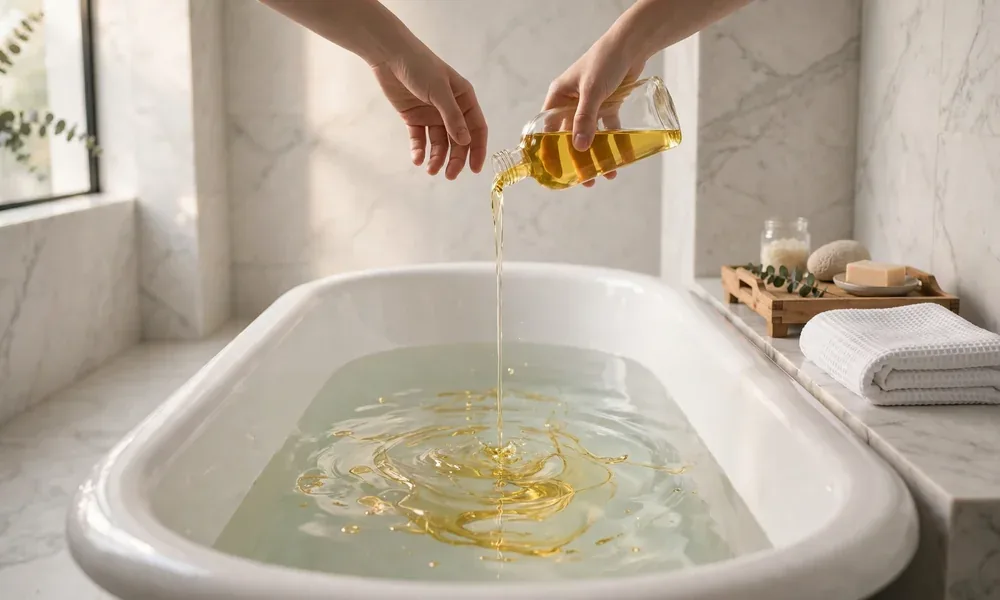
Most luxury bath oils are designed for one to two capfuls, or about a tablespoon, per full bath. Using more mainly wastes product and leaves the tub slippery. Add the oil to running water so it disperses evenly, and rinse the tub afterwards.
Can I layer bath products from different brands?
Yes, as long as the scents do not clash. A neutral wash pairs well with a stronger bath oil, and a plain moisturiser works over any soak. Keep one product as the lead scent and let the others stay quiet.
Do luxury bath products expire?
Yes. Most bath oils and soaks last six to twelve months after opening, and natural oils can turn rancid sooner in heat or sunlight. Check the open-jar symbol on the packaging, and replace anything that smells off or has changed colour or texture.
The bottom line
The best luxury bath products brands make an ordinary bath feel like a small ritual without demanding a complicated routine. Aesop and Susanne Kaufmann lead on formula quality, L’Occitane and Cowshed lead on value and range, and Jo Malone London and Diptyque lead on fragrance. Molton Brown rounds out the list with dependable daily products that are easy to live with and easy to gift.
Start with one product you will use often, in a scent you already like, and buy the smallest size that lets you test it properly. If it earns a second purchase, explore the rest of the range and consider a refill. A good bath brand is not the one with the most beautiful bottle on the shelf, but the one whose bottle is empty because you kept reaching for it.
Meet Our Experts
This guide was prepared by our beauty editorial team, including a senior beauty editor and a skincare writer who cover bath, body, and fragrance. Product selection is based on published ingredient information, brand history, range depth, and long-standing customer reputation.
Why Trust BrassSmile
BrassSmile covers beauty, lifestyle, and luxury with the same standard for every guide: specific products, honest trade-offs, and prices discussed in plain terms. We do not accept payment for placement in our brand guides, and we name the caveats alongside the praise so readers can make a decision that fits their skin, their bathroom, and their budget.
Sources
Brand histories and product information come from the brands’ own published materials: Aesop, L’Occitane en Provence, Jo Malone London, Diptyque, Susanne Kaufmann, Cowshed, and Molton Brown. General background draws on published beauty coverage from Byrdie, Vogue, Elle, and Harper’s Bazaar.