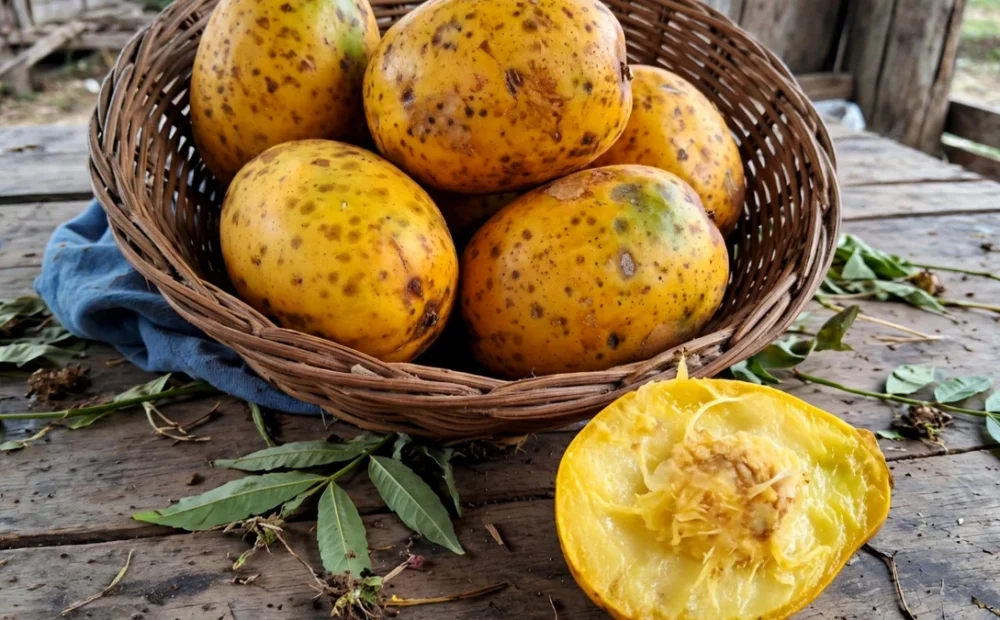
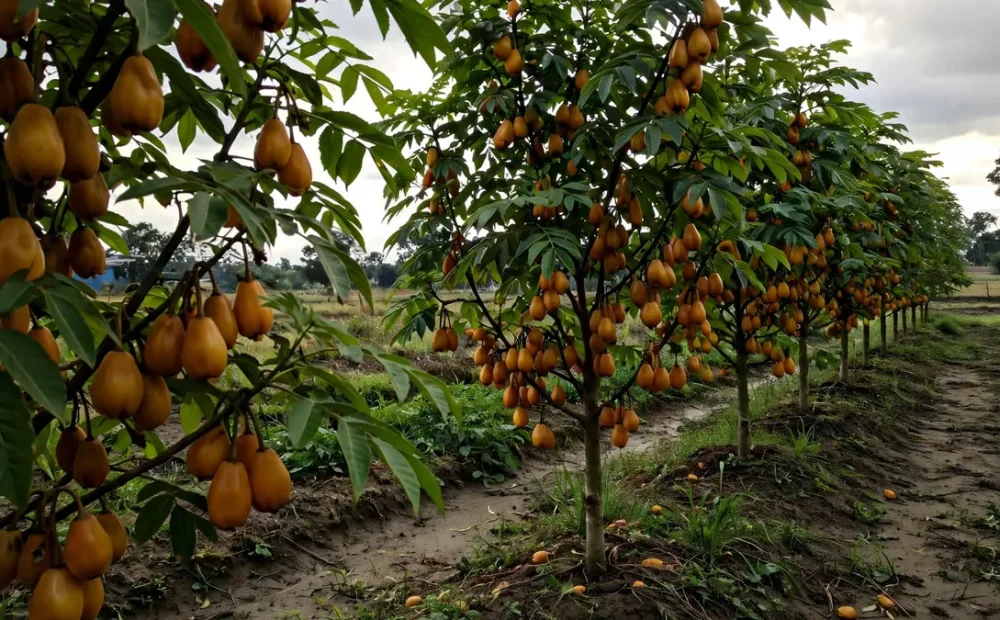
Biribá is a fruit with a deadline. It turns yellow in the wet season, softens within a day, and cannot be packed, posted, or saved for later. Planning a trip around it means planning around the trees: when they fruit, how the farm checks them, and what happens on the days the fruit is scarce. Get those three things right and the rest of the trip falls into place.
This guide walks through the planning in nine steps, from choosing a river town to packing for the return journey. It is written for travellers who have never visited an Amazon farm, and it assumes nothing about the roads, the boats, or the weather. Every step is a decision you can make at home, before you spend a cent.
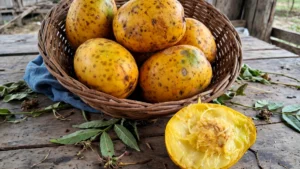
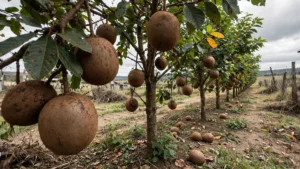
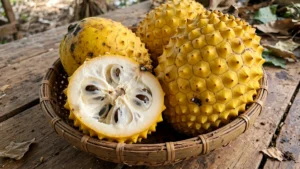
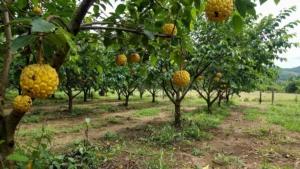
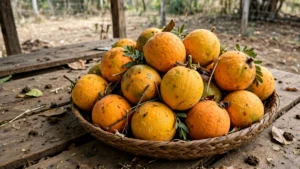
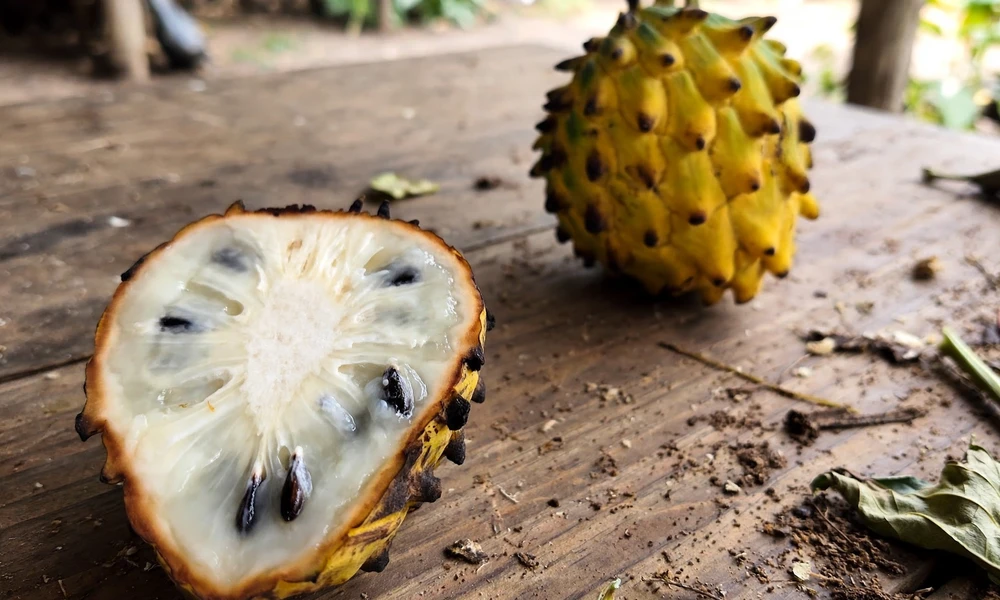
The fruit at the centre of it is Rollinia mucosa, an Amazon tree with broad leaves and a round yellow fruit covered in soft blunt spines. Inside is a creamy white pulp, sweet with a lemony tang, eaten fresh with a spoon. It is not soursop, cherimoya, or araticum, and the steps below keep it that way, because a farm that knows its own trees is the first sign of a trip worth taking.
Key takeaways
- Biribá ripens in the wet months, roughly December to March, and a ripe fruit softens within a day.
- Pick the river town first, then the farm, because the lift from town shapes the whole trip.
- Get the full price in writing before you pay, including the boat or car, the meals, and the walks.
- Tell the farm about gluten before you book, so the kitchen can plan around shared pans and flour.
- Biribá flesh contains no wheat, but shared farm kitchens handle flour, so the gluten note belongs in the booking, not at the table.
What a biribá farm escape actually is
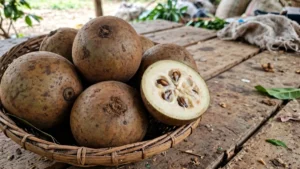
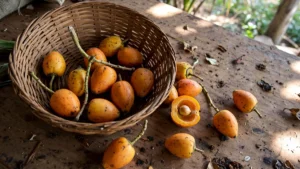
A biribá farm escape is a short stay on a working Amazon farm where the fruit sets the rhythm of the day. You arrive by boat or by road, sleep in a farmhouse or a small lodge, and spend the mornings walking the trees with a guide who checks which fruit has turned yellow overnight. The fruit is picked, carried back in a lined basket, and opened at the table while it is still firm enough to spoon.
The rest of the day is the forest and the river: a swim, a trail, a meal cooked from what the farm grows. The biribá itself appears in more than one form, fresh at breakfast, blended into juice at lunch, and churned into ice cream when the morning pick is generous. Nothing about the stay is hurried, except the fruit, and that hurry is the point.
It is not a resort with a fruit theme, and it is not a day trip from a city hotel. A real farm escape puts you on land where the trees grow, with a host who picks them, and the difference shows in the first hour. If the farm cannot show you its trees, it is not a farm escape, whatever the brochure says. The best proof is simple: ask to see the orchard on the first morning, and watch whether the host walks you to real trees or to a single showpiece by the gate.
How to plan the trip, and what to ask first
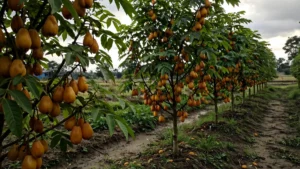
Begin with the fruit, not the flight. Ask the farm when its biribá trees are fruiting, how many trees it has, and what the harvest looks like on your dates. A farm with a dozen trees in full season can feed a table every morning. A farm with two trees and a hopeful calendar cannot, and it should say so.
Then ask about the practical things: the lift from the nearest town, the price in full, the room, and the kitchen. The lift matters most, because most farms sit a boat ride or a long drive from town, and the last stretch is where Amazon trips most often go wrong. A farm that arranges the lift, quotes it in writing, and confirms the return is a farm that has done this before. That single habit, a written lift with a named driver and a meeting point, saves more trips than any other piece of planning.
Finally, ask about gluten and allergies in the same message as the booking, not on arrival. Biribá flesh has no wheat, but farm kitchens bake bread, fry with shared oil, and use the same boards for everything. A kitchen that hears the note early can set a pan aside. A kitchen that hears it at the table cannot.
The 9 steps to a biribá farm escape
Let the river town choose your farm
What to do: Choose the town with the best flights and the shortest onward journey, then look for farms within a day of it. What to avoid: Picking a farm first and discovering the town behind it has one flight a week. Best For: First-time visitors who want the trip to start smoothly. Time Needed: An evening of research. Standout Tip: Belém and Manaus have the easiest arrivals, and the farms around them are used to guests who have never been to the Amazon.
The town decides the cost of the trip more than the room does, because the boat or car from town is often the most expensive single item.
Time your visit to the fruiting weeks
What to do: Ask the farm which weeks its trees are fruiting, and book inside that window. What to avoid: Trusting a fixed calendar, because the rains shift the season every year. Best For: Travellers who want to taste the fruit at its best. Time Needed: One message to the farm, and a week of patience for the answer. Standout Tip: The wet months, roughly December to March, are the usual window, but the farm knows its own trees better than any guidebook.
A farm that answers with what the trees look like today, rather than a date on a calendar, is a farm worth trusting.
Ask how the fruit is picked and opened
What to do: Ask who picks the fruit, how it is carried, and whether guests join the morning walk. What to avoid: A farm that serves the fruit without showing you the trees it came from. Best For: Curious travellers who want the harvest, not just the plate. Time Needed: Ten minutes in the booking message. Standout Tip: A lined basket and a short carry are the signs of a farm that handles soft fruit properly.
The picking is half the experience, and a farm that hides it is hiding the reason you came.
Nail down the full price in writing first
What to do: Ask for the bed, the meals, the walks, and the lift in one written quote, with no extra charges at checkout. What to avoid: A price that covers the room and leaves the boat, the guide, and the food as extras. Best For: Anyone travelling on a fixed budget. Time Needed: One email, and a day to compare. Standout Tip: The lift is the line most often left out of the quote, so ask for it by name.
A written quote protects both sides, and a farm that will not write one down is a farm to walk away from.
Sort the lift out before the room
What to do: Confirm the boat or car from the nearest town, including the return, before you pay for the stay. What to avoid: Arriving in town with no onward transport and a farm that assumes you have a car. Best For: Travellers without their own vehicle. Time Needed: One phone call or message. Standout Tip: Ask for the driver’s name and a meeting point, not just a promise that someone will come.
The lift is the part of the trip that strands people, and it is the easiest part to lock down in advance.
Pack boots, a rain shell, and a dry change
What to do: Pack light boots, a rain shell, long sleeves, and a bag that keeps the fruit dry on the walk back. What to avoid: White clothes, open sandals, and a suitcase that cannot handle a muddy path. Best For: Anyone who wants to enjoy the walk instead of enduring it. Time Needed: An hour of packing the evening before. Standout Tip: The harvest walk starts at dawn, when the fruit is cool and the paths are still soft from the night rain.
Farmhouses vary widely on drying space, so a second dry set of clothes is worth more than a second pair of shoes.
Give the harvest a whole day of its own
What to do: Keep one whole day free for the trees, the kitchen, and the tasting, with nothing else booked. What to avoid: Squeezing the harvest into a half hour before checkout. Best For: Travellers who came for the fruit. Time Needed: A full day, from dawn to dinner. Standout Tip: The best tastings happen at midday, when the morning pick has been opened and the ice cream is churned.
A day built around the harvest is the difference between visiting a farm and staying on one.
Try the pulp fresh, juiced, and frozen before you buy
What to do: Try the fruit fresh with a spoon, then as juice, then as ice cream, before deciding what to take home. What to avoid: Buying jars and bags before you have tasted the fresh fruit. Best For: Food lovers and anyone tempted by the farm shop. Time Needed: One lunch. Standout Tip: Fresh is the test: if the fresh fruit is good, the juice and ice cream will be good too.
Farms sell juice and ice cream for the road because the fresh fruit does not travel, and tasting all three tells you which one is worth your money.
Save the final morning for the town market
What to do: Leave the final morning open for the town market, then head for home. What to avoid: A tight departure that leaves no room for a delayed boat. Best For: Travellers who like to bring something home. Time Needed: A morning. Standout Tip: The market sells the fruit’s neighbours, dried nuts and river fish, which travel far better than biribá itself.
A slow last morning is also the best insurance against a river that runs late.
Which biribá region fits your trip
Belém and Manaus suit newcomers, with easy flights and short harvest walks. Santarém and Macapá suit travellers who want water with their forest: big rivers, beaches, and a slower rhythm. Porto Velho and Rio Branco suit the determined: longer roads, deeper forest, and the most old-style harvests on the list.
Boa Vista, Palmas, and Araguaína lie on the drier edge of the biribá range, where the land opens into savanna and planted groves. These are the stays to choose when dense jungle feels like too much, or when you want a pool and a proper bed after the walk. The fruit is the same, but the light, the food, and the pace are different, as the soursop farm escape guide in another forest shows.
If you like this kind of farm stay, the cherimoya farm escape guide follows the same pattern in a different forest, with a green scaly fruit and custardy flesh. The questions stay the same; only the tree is different.
The caveats that matter
Biribá is a soft fruit, and that is the first thing to keep in mind. A ripe fruit bruises when dropped, squeezed, or carried in a hard basket, and a bruised fruit softens within hours. A farm that handles the harvest gently, with lined baskets and short carries, has done this many times before.
| Detail | What is known |
|---|---|
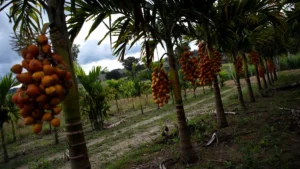
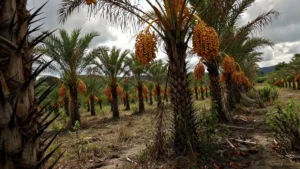
| Tree | Rollinia mucosa, an Amazon tree with wide leaves and a round crown |
| The fruit | Round yellow fruit with soft blunt spines and creamy white pulp, eaten fresh |
| Best season | Wet months, about December to March, when the fruit turns yellow |
| Not the same as | Soursop, cherimoya, and araticum, each a different tree and fruit |
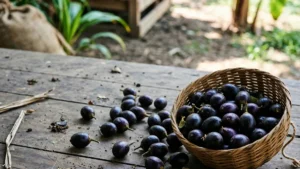
| Seeds | Dark and hard, left uneaten, spoon the pulp around them |
| Gluten note | The flesh has no wheat, though shared kitchens handle flour |
| What to ask first | How many trees there are, who picks, what the price covers, how lifts run |
| What it does not do | It keeps badly and travels worse, so eat it where it grows |
The season is the second thing to respect. Biribá ripens when the rains arrive, not when your holiday begins, and a farm that promises a full harvest in the driest weeks is promising something beyond its control. Ask what the farm does when the fruit runs short: a good one moves the day to the forest, the river, and the kitchen, and still gives you a stay worth the fare.
Checklist: planning a biribá farm escape honestly
Use these checks before you pay, and again the week before you travel.
- Check the trees: ask how many biribá trees grow on the farm and whether the harvest walk reaches them.
- Check the season: confirm the fruit is turning yellow on your dates, and ask what the farm does when it runs short.
- Check the price: get bed, meals, walks, and lifts down in writing, with nothing extra added at checkout.
- Check the kitchen: tell the farm about gluten when you book, not when you arrive.
- Check the lift: sort the boat or car from the nearest town, return included, before you fly.
- Check the room: ask about fans or air conditioning, mosquito screens, and hot water, since farmhouses differ a great deal.
Frequently asked questions
How many nights does a biribá escape need?
Three nights is the honest minimum: one to arrive and settle, one full day for the harvest, and one for the river and the market. Two nights works if the lift is short, but a delayed boat can eat the whole harvest day.
Must I walk the harvest with a guide?
Yes, and the farm will provide one. The guide knows which fruit has turned overnight, which paths are firm, and how to carry the soft fruit without bruising it. Walking alone means missing the ripe fruit and finding only the ones that turned yesterday.
What should I wear on a biribá farm?
Light boots, long sleeves, and a rain shell, with a dry set of clothes for the evening. The walk starts at dawn, when the paths are soft from the night rain, and the fruit is carried back in a basket, not in your hands.
Can I buy biribá products to take home?
Juice and ice cream travel better than the fresh fruit, and most farms sell both. The fresh fruit softens within a day, so buy the pressed juice for the road and eat the fresh pulp on the farm.
Do children enjoy a biribá farm trip?
Older children usually love the harvest walk and the tasting at the table, though the fruit is soft and the forest paths are uneven. Find out how long the walk runs and how rough the ground gets before bringing small children, and keep them beside the guide.
What happens when the rain lasts all week?
Ask the farm what it does on wet days before you book. A good farm shifts the day to the kitchen, the river, and the covered veranda, and still serves the fruit that was picked between showers. Our araticum farm escape guide covers the same question, because rain is part of every Amazon trip.
The bottom line
The best biribá farm escape in 2027 is not the grandest lodge or the cheapest room. It is the farm with real trees on its own land, a harvest you can join, a kitchen that opens the fruit the day it is picked, and a price covering the whole trip. Belém and Manaus give the gentlest first taste, while Rio Branco and Porto Velho suit travellers chasing the deepest forest.
Pick your river town first, match your dates to the fruit, and book the lift with the room. Do that, and the fruit will take care of the rest: a dawn walk, a spoonful of creamy pulp under the trees, and a forest that tastes different once you know what is ripening in it.