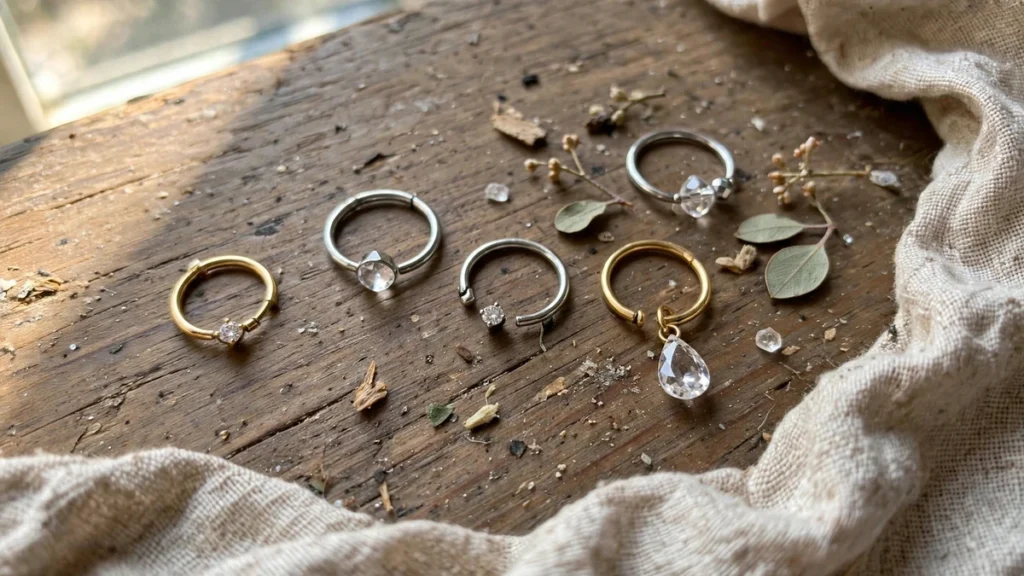
Diamond vs Crystal Nose Hoops 2027: 9 Comparisons That Matter
A diamond nose hoop and a crystal nose hoop can look almost identical in a shop window. Both catch the light, both sit neatly in a nostril piercing, and both come in the same gold and silver settings. The difference only shows itself over time: in how the stone holds its sparkle, how it copes with daily wear, and how much of your money you will ever see again if you sell it on.
That is what this guide is for. Diamonds are natural or lab-grown stones with real resale value and a hard surface that resists scratches. Crystals, usually cubic zirconia or glass, are far cheaper, often brighter at first glance, and easy to replace when they dull. Neither is the wrong choice. The right choice depends on your budget, how often you will wear the hoop, and whether you want a keepsake or a fashion piece.
Below are nine comparisons that matter in 2027.
Key takeaways
- Diamonds cost far more than crystals, but they keep their sparkle for years and hold some resale value.
- Crystals are brighter at first and cost a fraction of the price, yet they scratch and dull with daily wear.
- A diamond hoop suits everyday wear and special occasions alike, while a crystal hoop is best for trying a style before committing.
- Both stones need the same basic care, but a crystal hoop needs replacing far sooner than a diamond one.
- A cheap setting can irritate skin whatever stone sits in it.
What diamond and crystal nose hoops actually are
A diamond nose hoop is a thin ring, usually in gold, platinum or titanium, set with one or more diamonds. The stones can be natural, mined diamonds, or lab-grown diamonds, which are chemically the same stone made in a laboratory and usually cost less. What you are paying for is the stone and the setting that holds it.
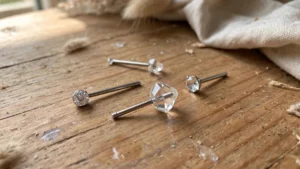
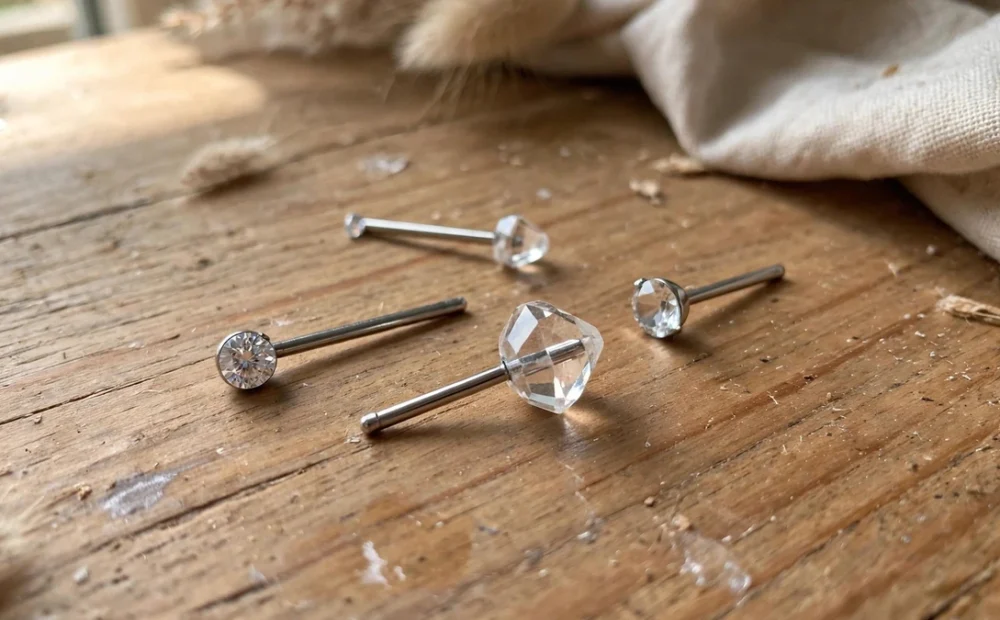
A crystal nose hoop looks the same at a glance, but the stone is not a diamond. Most crystal hoops use cubic zirconia, a manufactured stone designed to imitate diamond, or cut glass. Cubic zirconia is clear, bright and cheap to make, which is why it appears in so many fashion hoops.
The two stones also behave differently on the skin. Diamonds are the hardest natural material, so they resist the tiny scratches that come from clothes, hair and everyday handling. Cubic zirconia is much softer, so it picks up fine scratches over months of wear, and those scratches are what make an older crystal hoop look dull.
How we chose these comparisons and what to look for
Look first at the stone itself, not the metal around it. A small, well-cut diamond in a plain gold hoop will outshine a large, poorly cut crystal in a fancy setting, because the cut is what decides how light moves through the stone. With crystals, ask whether the stone is cubic zirconia or glass, because the two are not the same quality at all.

Look next at the setting and the metal. A stone is only as secure as the claws or bezel holding it, and a hoop that loses its stone in the first month is a bad buy at any price. Solid gold, platinum and implant-grade titanium are the safest metals for a piercing that is worn all day, while plated base metal can flake and irritate the skin. Our guide to gold jewellery for everyday wear explains why solid gold is worth the extra cost when a piece sits against the skin for hours at a time.
Finally, look at the price in context. A crystal hoop that costs very little is easy to replace, which is a real advantage if you like changing styles. A diamond hoop costs far more, but it is a piece you can keep for years, hand down, or sell.
The 9 comparisons that matter in 2027
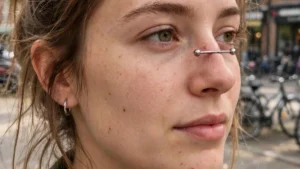
First impressions and how they look on the face
What we like: A diamond hoop has a quiet, white sparkle that reads as expensive without shouting about it, and it looks the same from every angle. A crystal hoop is often brighter at first, with a rainbow flash that catches the eye across a room.
What to consider: Best For: Diamond for understated elegance; crystal for bold, noticeable sparkle. Material: Diamond in solid gold or platinum; cubic zirconia in gold, silver or plated metal. Price Range: Diamond hoops from around £150 to £2,000 and above; crystal hoops from around £10 to £120. Standout Feature: The diamond’s steady white fire against the crystal’s bright rainbow flash.
Sparkle in daylight vs evening light
What we like: Diamonds sparkle steadily in both daylight and soft evening light, because they return light evenly.
What to consider: In dim, warm evening light a crystal can look flat and grey, while a diamond still holds a clean white glint. Best For: Diamond for evening wear and low light; crystal for bright days and parties. Material: Diamond, natural or lab-grown; cubic zirconia or cut glass. Price Range: Diamond hoops from around £150 to £2,000 and above; crystal hoops from around £10 to £120. Standout Feature: The diamond keeps its sparkle after dark, while the crystal needs bright light to shine.
Warmth against skin tone
What we like: A diamond’s white sparkle suits every skin tone, and it looks especially clean against warm and deep skin, where it stands out without competing with the skin. A crystal’s bright flash suits fair and cool skin well, and a warm-toned crystal can soften a pale complexion.
What to consider: Best For: Diamond for all skin tones; crystal for fair and cool skin tones. Material: Diamond in yellow, white or rose gold; crystal in gold or silver settings. Price Range: Diamond hoops from around £150 to £2,000 and above; crystal hoops from around £10 to £120. Standout Feature: The diamond’s neutral white light, which flatters every complexion.
Everyday wear and durability
What we like: Diamonds are the hardest stone you can wear in a nose hoop, so they shrug off the knocks, hair tangles and pillow friction that come with daily wear.
What to consider: Crystals are far softer, so they scratch. After a few months of daily wear, a crystal hoop often looks cloudy even when it is clean, because the surface is covered in fine marks. Best For: Diamond for daily wear; crystal for occasional wear and special occasions. Material: Diamond, hardness 10 on the Mohs scale; cubic zirconia, hardness around 8. Price Range: Diamond hoops from around £150 to £2,000 and above; crystal hoops from around £10 to £120. Standout Feature: The diamond’s scratch resistance, which is what keeps it looking new year after year.
Care, cleaning and upkeep
What we like: Both stones clean the same way, with warm water, a drop of mild soap and a soft brush, and both benefit from a quick wipe after wearing.
What to consider: No amount of cleaning restores a scratched crystal. Once the surface is marked, the dullness is permanent, and the only fix is a new stone or a new hoop. Best For: Diamond for low-maintenance owners; crystal for people happy to replace pieces regularly. Material: Diamond in a secure claw or bezel setting; cubic zirconia in a claw or glue setting. Price Range: Diamond hoops from around £150 to £2,000 and above; crystal hoops from around £10 to £120. Standout Feature: The diamond’s ability to be cleaned back to new, again and again.
Comfort and weight on the face
What we like: Both stones are light at the small sizes used in nose hoops, and a well-made hoop of either type is comfortable all day.
What to consider: Comfort depends far more on the hoop’s gauge, diameter and finish than on the stone. A rough edge or a heavy setting will irritate a piercing whatever stone it holds, so try the hoop on before you judge it. Best For: Either stone for all-day comfort, provided the hoop fits well. Material: Diamond or crystal set in smooth, polished gold, platinum or titanium. Price Range: Diamond hoops from around £150 to £2,000 and above; crystal hoops from around £10 to £120. Standout Feature: A smooth, well-finished hoop, which matters more for comfort than the stone itself.
Cost for one hoop and for a collection
What we like: A crystal hoop lets you build a collection in every colour and style for the price of one small diamond hoop. A diamond hoop, bought once, can be the only hoop you need.
What to consider: The cost gap is large. A single diamond hoop can cost ten to twenty times a crystal one, and a collection of diamond hoops is a serious investment. Best For: Crystal for building a varied collection cheaply; diamond for one lasting piece. Material: Lab-grown diamond for a lower diamond price; cubic zirconia for the lowest price of all. Price Range: Diamond hoops from around £150 to £2,000 and above; crystal hoops from around £10 to £120. Standout Feature: The crystal’s freedom to experiment, against the diamond’s one-piece-for-years value.
Matching outfits and other jewellery
What we like: A diamond hoop goes with everything, from a plain white shirt to evening dress, because its sparkle is neutral and never competes with the rest of your outfit.
What to consider: Mixing a diamond hoop with cheap fashion jewellery can make the fashion pieces look cheaper by comparison, while mixing a crystal hoop with fine jewellery can make the crystal look like the odd one out. Best For: Diamond for formal and mixed fine jewellery; crystal for casual and fashion-led outfits. Material: Diamond in gold or platinum; crystal in gold, silver or plated settings. Price Range: Diamond hoops from around £150 to £2,000 and above; crystal hoops from around £10 to £120. Standout Feature: The diamond’s neutrality, which lets it sit comfortably beside any other piece you own.
Keeping it afterwards: resale and keepsake value
What we like: A diamond hoop keeps some of its value, especially in a solid gold or platinum setting with a certified stone, and it can be handed down as a keepsake.
What to consider: Resale is not a refund. Even a good diamond hoop usually sells for less than you paid, and a lab-grown diamond resells for less than a natural one. Best For: Diamond for keepsakes and gifts; crystal for trend-led pieces you will not keep. Material: Natural diamond with certification for the best resale; lab-grown diamond for a lower entry price. Price Range: Diamond hoops from around £150 to £2,000 and above; crystal hoops from around £10 to £120. Standout Feature: The diamond’s lasting value as a piece worth keeping, not just wearing.
Which nose hoop is right for you
If you wear a nose hoop every day and want one piece that lasts, a diamond hoop is the honest choice. It costs more up front, but it will not dull, it will not need replacing, and it will still look like a fine piece in five years. Our guide to the best nose rings for women covers the same thinking for the wider nose-ring family, including how hoop diameter changes the look on different faces.
If you are trying hoops for the first time, or you like changing your look often, start with a crystal hoop. It lets you test the size, the metal colour and the amount of sparkle you actually enjoy, without spending diamond money on a style you may not keep. Many people end up owning both: a crystal hoop for experimenting, and a diamond hoop for the days that matter.
The middle ground is a lab-grown diamond hoop. It gives you a real diamond, with the same hardness and sparkle as a natural one, for noticeably less money. It will not resell as well as a natural diamond, but if you plan to keep it, that barely matters.
The caveats that matter
Neither stone suits every situation. A fresh piercing should not carry a heavy or ornate hoop of any kind until it is fully healed, and a piercer can tell you when it is safe to change jewellery. People with metal sensitivities should choose implant-grade titanium or solid gold, because the metal, not the stone, is usually what causes irritation.
| Detail | What is known |
|---|---|
| Hardness | Diamond scores 10 on the Mohs scale; cubic zirconia scores around 8, so it scratches more easily |
| Sparkle over time | Diamonds keep their sparkle for years; crystals dull as fine scratches build up |
| Price | Diamond hoops from around £150; crystal hoops from around £10 |
| Resale value | Diamonds hold some value, especially certified natural stones; crystals have none |
| Best metal | Solid gold, platinum or implant-grade titanium for all-day, skin-friendly wear |
| Who should start with crystal | First-time hoop wearers, and anyone who likes changing styles often |
| Who should choose diamond | Daily wearers who want one lasting piece, and anyone buying a keepsake |
| What neither stone fixes | A poor fit, a rough finish, or a metal that irritates your skin |
Be careful with claims that sound too good. A hoop sold as a diamond for the price of a crystal is almost certainly not a diamond, and a seller who will not say whether a stone is natural, lab-grown or cubic zirconia is a seller to walk away from.
Checklist: choosing between diamond and crystal honestly
Use these checks before you buy, and again before you pay for a second hoop.
- Check the stone type in writing: natural diamond, lab-grown diamond, cubic zirconia, or glass.
- Check the metal stamp: solid gold, platinum or titanium, not plated base metal for daily wear.
- Check the setting: claws or a bezel that hold the stone firmly, with no wobble when you touch it.
- Check the fit: the right gauge and diameter for your piercing, with room for the hoop to move slightly.
- Check the sparkle in daylight, not just under shop lights, before you decide.
- Check the return policy, so you can try the hoop at home and return it if it does not suit you.
Frequently asked questions
Can you tell a diamond nose hoop from a crystal one by looking?
Often not at a glance, especially with a small stone. A trained eye can spot the difference in how light moves through the stone, and a jeweller can test it in seconds.
Is a lab-grown diamond a real diamond?
Yes. A lab-grown diamond is chemically and physically the same stone as a mined diamond, made in a laboratory instead of in the ground. It is harder and longer-lasting than any crystal, and it usually costs less than a natural diamond of the same size.
How long does a crystal nose hoop last?
With occasional wear, a cubic zirconia hoop can look good for a year or more. With daily wear, expect visible dulling within a few months, as fine scratches build up on the softer stone.
Do diamond nose hoops need special cleaning?
No. Warm water, a drop of mild soap and a soft brush are enough, followed by a rinse and a gentle pat dry.
Which stone is better for sensitive skin?
The stone matters less than the metal. Choose implant-grade titanium or solid gold for the hoop itself, and the stone becomes a secondary question. Our guide to pearl necklaces for women makes the same point about metal choice, because a necklace clasp sits against the skin in the same way a hoop does.
Should I buy a diamond hoop as a gift?
Yes, if you know the wearer’s piercing size and metal preference, because a diamond hoop is a lasting gift that can be kept for years.
The bottom line
The honest answer is that both stones are good, for different people. A diamond nose hoop is the better buy if you wear a hoop every day, want a piece that keeps its sparkle for years, and like the idea of owning something with lasting value. It costs more, but you pay once, and you wear it for a long time.
A crystal nose hoop is the better buy if you want to experiment, change your look often, or try hoops for the first time without a big outlay. Choose the stone that matches how you actually wear jewellery, not the one that sounds most impressive, and you will be happy with either.