Best Garnet Nose Rings 2027
Garnet is the stone for people who want colour without noise. It is deep, warm and quietly rich, a red that reads as wine rather than fire, and on the nose it draws the eye without demanding it. A garnet nose ring suits almost every skin tone, pairs easily with gold and with silver, and looks as right at a family dinner as it does at an evening out. It is one of the most wearable coloured stones in nose jewellery, and one of the easiest to live with.
The catch is that not all garnets are equal. A good garnet is clear, evenly coloured and well cut, so it catches light instead of swallowing it. A poor one looks flat and dark, almost black in indoor light, and no amount of pretty metal will save it. The setting matters too. A garnet in a thin, flimsy prong will loosen over time, and a garnet in a heavy bezel can look dull if the stone is small. This guide sorts the difference out for you.
Below are nine garnet nose rings worth considering in 2027, from a classic gold stud to a deep red hoop and a vintage-style piece. Each one is described by what it is good at, what to watch for, and who it suits best, so you can choose with your face in mind, not just a pretty picture.
Key takeaways
- Garnet is a deep red stone that suits most skin tones and works with both gold and silver settings.
- Look for a clear, evenly coloured stone with a good cut, so it catches light instead of looking flat and dark.
- Gold warms garnet up and suits warm skin, while silver and white gold keep it cool and crisp.
- A secure prong or bezel setting matters more than size, because a loose stone is lost stone.
- No garnet nose ring suits a fresh piercing, and a stone that looks almost black indoors is usually a poor cut, not a deep colour.
What garnet nose rings actually are
A garnet nose ring is a nose piercing fitted with a garnet, the deep red birthstone of January. Garnets are a family of minerals, and the red almandine and pyrope varieties are the ones most often set in nose jewellery. The stone is hard enough for daily wear, at 6.5 to 7.5 on the Mohs scale, which means it resists scratching from everyday contact, though it is not as hard as sapphire or diamond and deserves a little care.
What makes garnet special on the nose is its colour. It is a dark, wine-red that flatters warm, olive and deep skin tones beautifully, and gives fair skin a striking, deliberate accent. Unlike a bright ruby, which can look loud on a small piercing, garnet is muted and grown-up.
Garnet nose rings come in the usual styles. A stud with a small round or oval garnet is the most common and the easiest to wear. A hoop with a garnet charm or a garnet-set bead suits people who want movement. A screw or L-shaped pin with a garnet end is a discreet option for a healed nostril piercing. The stone is usually small, between 2 and 4 millimetres, because a large garnet on the nose can look heavy and can catch on clothing.
How we chose these garnet nose rings and what to look for
Look first at the stone. A good garnet should show its red clearly in daylight, not just under a shop lamp. Hold it up to a window if you can. If it looks almost black, the stone is either too dark or too poorly cut to return light. A well-cut garnet has facets that sparkle as you turn it, even when the stone is small. Clarity matters too. Small inclusions are normal in garnet, but a stone that looks cloudy or milky will never sparkle, whatever the setting.
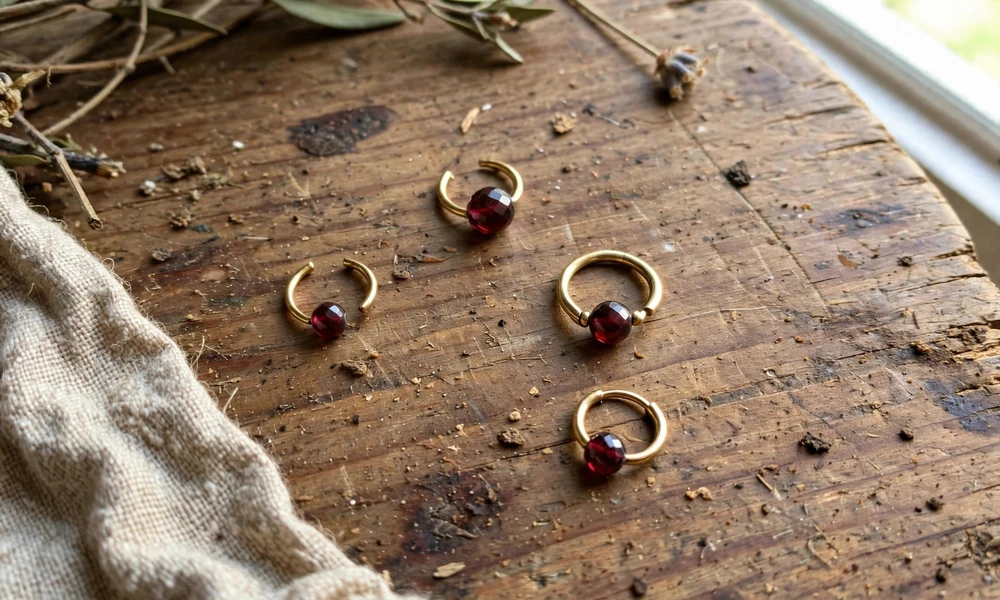
Look next at the metal and the setting. Solid gold, gold-filled and implant-grade titanium are the safest choices for a healed piercing. Gold warms garnet and suits warm and olive skin. Silver and white gold keep the red cooler and suit fair and cool skin. Check the setting by touch. The prongs should be even and smooth, with no sharp edges, and the stone should not wobble when you press it gently. Our guide to gold jewellery for everyday wear explains why solid gold holds up better than plated metal for pieces you wear daily.
Finally, look at the size and the gauge. A 20-gauge post is the most common for a nostril piercing, and a 2 to 3 millimetre stone is the sweet spot for most faces. A bigger stone can work on a larger nose or for evening wear, but for daily wear it can feel heavy and catch on scarves and towels. Buy from a seller who states the gauge, the metal and the stone size clearly, and who offers a return policy in case the fit is wrong.
The 9 best garnet nose rings of 2027
The Classic Gold Garnet Stud
What we like: A small round garnet in a solid gold four-prong setting, warm, timeless and easy to wear every day. What to consider: Premium price for solid gold, and the stone is small, so it suits people who prefer subtle jewellery. Best for: Everyday wear and warm skin tones. Material: Solid gold with a natural garnet. Price range: About £80 to £250. Standout feature: A classic setting that never dates.
This is the garnet nose ring to buy first if you want one piece that does everything. The gold warms the red of the stone, the four prongs hold it securely, and the size is small enough to wear to work and to dinner alike.
The Deep Red Garnet Hoop
What we like: A slim gold hoop with a single garnet bead that moves as you do, catching light with every turn of the head. What to consider: Hoops catch more easily on fabric than studs, so it needs a little more care. Best for: Evening wear and people who like movement in their jewellery. Material: Gold-filled hoop with a garnet bead. Price range: About £40 to £120. Standout feature: The bead slides and catches light as you move.
The Silver Garnet Stud
What we like: A cool, crisp garnet in a polished silver setting, with the red of the stone standing out sharply against the pale metal. What to consider: Silver tarnishes and needs occasional cleaning, and it is softer than gold. Best for: Fair and cool skin tones. Material: Sterling silver with a natural garnet. Price range: About £25 to £70. Standout feature: The sharp contrast between cool silver and deep red.
The Vintage-Style Garnet Nose Ring
What we like: A garnet in an antique-style setting with milgrain detail and a slightly ornate frame, full of character. What to consider: The detailed setting can trap dirt and needs gentle cleaning, and the style is not for minimalists. Best for: People who love vintage jewellery and statement pieces. Material: Gold or silver with a natural garnet. Price range: About £60 to £180. Standout feature: Milgrain edging and an old-world feel.
The Tiny Garnet Pin
What we like: A very small garnet, about 2 millimetres, on a slim pin, barely there until the light catches it. What to consider: The stone is small, so the colour is subtle, and it can be easy to lose if it comes loose. Best for: Minimalists and first-time coloured-stone wearers. Material: Implant-grade titanium with a garnet end. Price range: About £20 to £55. Standout feature: A whisper of red that only shows in the light.
The Garnet and Diamond Accent Nose Ring
What we like: A garnet centre stone flanked by two tiny diamonds, which lift the red and add sparkle without overpowering it. What to consider: The most expensive piece in this list, and the small diamonds need careful cleaning. Best for: Special occasions and people who want one standout piece. Material: Solid gold with garnet and diamonds. Price range: About £150 to £400. Standout feature: Diamonds that make the garnet glow.
Diamonds and garnet are a classic pairing. The white sparkle next to the deep red makes both stones look better, and this is the piece to reach for when you want your nose ring to be the jewellery, not just an accessory.
The Rose Gold Garnet Stud
What we like: Garnet in rose gold, a soft, romantic combination that flatters warm and neutral skin tones. What to consider: Rose gold contains copper, so it is not the best choice for very sensitive skin. Best for: Warm and neutral skin tones and romantic styling. Material: Rose gold with a natural garnet. Price range: About £70 to £200. Standout feature: The pink-gold metal softens the deep red stone.
The Garnet Bezel Nose Ring
What we like: A garnet set in a smooth bezel, a rim of metal that wraps the stone completely, so it is secure and snag-free. What to consider: A bezel can make a small stone look smaller, and it shows less sparkle than a prong setting. Best for: Active lifestyles and people who want maximum security. Material: Gold or titanium with a bezel-set garnet. Price range: About £50 to £160. Standout feature: A smooth, snag-free setting that holds the stone firmly.
The Oval Garnet Nose Ring
What we like: An oval garnet, slightly longer than it is wide, which elongates the look of the nose and suits most face shapes. What to consider: Oval stones can look uneven if the cut is poor, so check the symmetry before you buy. Best for: People who want a slightly different shape from the usual round stud. Material: Gold with an oval natural garnet. Price range: About £65 to £190. Standout feature: An oval cut that flatters the line of the nose.
Round studs are everywhere, and an oval garnet is a quiet way to be different. The shape draws the eye along the nose rather than across it, which suits longer faces especially well.
Which garnet nose ring is right for you
Start with your skin tone. Warm and olive skin looks best with garnet in yellow or rose gold, because the warm metal picks up the warmth in both the stone and the skin. Fair and cool skin often looks better with garnet in silver or white gold, where the contrast makes the red stand out. If you are not sure, hold a gold and a silver piece against your face in daylight and see which one makes your skin look healthier. Our roundup of the best nose rings for women covers the same question for other stones, and the rule holds for garnet too.
Think next about your lifestyle. If you wear a nose ring every day and you are active, a bezel-set stud or a tiny pin is the sensible choice, because it will not catch or loosen. If you mostly wear jewellery for evenings and occasions, a hoop or a diamond-accent piece will give you more drama. If your skin is sensitive, choose implant-grade titanium or solid gold, and avoid plated metal, which can flake and irritate a piercing.
Finally, think about size. A 2 to 3 millimetre stone is the most versatile size for a nose ring, visible enough to show the colour but small enough to wear anywhere. A larger stone makes a statement, but it also draws more attention to the piercing itself, which is not what everyone wants. Buy the size you will actually wear, not the size that photographs best.
The caveats that matter
Garnet is a hard-wearing stone, but it is not indestructible. It can chip if it is knocked against a hard surface, and a chipped garnet loses its sparkle quickly. Take your nose ring out, or at least be careful, when you are doing anything rough with your hands near your face, and store it in a soft pouch rather than loose in a bag with other jewellery.
| Detail | What is known |
|---|---|
| Best stone quality | Clear, evenly coloured red garnet that shows its colour in daylight |
| Hardness | 6.5 to 7.5 on the Mohs scale, hard enough for daily wear with care |
| Best metals | Solid gold, gold-filled, sterling silver, implant-grade titanium |
| Most versatile size | 2 to 3 millimetres for the stone, 20 gauge for the post |
| Who should avoid it | Anyone with a fresh, unhealed piercing, or very sensitive skin with rose gold |
| Cleaning | Warm soapy water and a soft brush, never ultrasonic cleaners at home |
| When to replace it | If the stone chips, the prongs loosen, or the setting tarnishes badly |
| What it does not do | It does not suit every outfit, and a dark garnet can look almost black indoors |
If your piercing is not fully healed, do not wear a garnet nose ring yet. A new piercing needs a simple, smooth piece in implant-grade titanium or solid gold, and a gemstone setting with prongs can irritate healing tissue and trap bacteria. Wait until the piercing is fully healed, usually six months or more for a nostril, before switching to a garnet piece. If you notice redness, swelling or discharge after changing jewellery, switch back to a simple piece and speak to your piercer.
Checklist: buying a garnet nose ring honestly
Use these checks before you buy, and again when the piece arrives.
- Check the colour in daylight: it should read as deep red, not black or brown.
- Check the stone is secure: press it gently, it should not wobble in its setting.
- Check the metal: solid gold, gold-filled, sterling silver or implant-grade titanium, not plated base metal.
- Check the gauge and size: 20 gauge and a 2 to 3 millimetre stone suit most nostril piercings.
- Check the finish: prongs should be smooth, with no sharp edges that can scratch skin.
- Check the returns: buy from a seller who accepts returns, in case the fit or colour is wrong.
Frequently asked questions
Does garnet suit every skin tone?
Almost. Its deep red flatters warm, olive and deep skin tones especially well, and gives fair skin a striking accent. Very pale skin can find a dark garnet looks heavy, in which case a smaller stone in silver or white gold is a better choice.
Can I wear a garnet nose ring every day?
Yes, once your piercing is fully healed. Garnet is hard enough for daily wear. Choose a bezel or a secure prong setting, and take it out for rough activities or when it might catch on clothing.
How do I clean a garnet nose ring?
Soak it in warm water with a drop of mild soap, then brush gently with a soft toothbrush and rinse. Dry it fully before wearing. Avoid ultrasonic cleaners and harsh chemicals, which can damage the stone and the setting.
Is garnet better in gold or silver?
It depends on your skin. Gold warms garnet up and suits warm and olive skin, while silver and white gold keep it cool and suit fair and cool skin. Both are good choices, so pick the metal you already wear most. A pearl necklace in the same metal can help you see which tone suits you best.
Will a garnet nose ring fade over time?
No. Garnet is a stable stone and its colour does not fade in sunlight or with wear. What can change is the metal around it, especially silver, which tarnishes, and plated metal, which wears away. The stone itself will keep its colour.
What size garnet should I choose for a nose ring?
For most faces, 2 to 3 millimetres is the sweet spot. It shows the colour clearly without looking heavy. Larger stones, 4 millimetres and above, make more of a statement and suit evening wear or larger features.
The bottom line
The best garnet nose ring in 2027 is the one that shows its colour in daylight, sits securely in a setting that suits your skin, and is a size you will actually wear every day. For most people that means a small round garnet in solid gold or silver, at 2 to 3 millimetres, with a secure prong or bezel setting. It is a quiet, grown-up piece of jewellery that adds warmth to the face without shouting.
Choose the stone first and the setting second. Check the colour in daylight, check the metal, and buy from a seller who will take it back if the fit is wrong. A good garnet nose ring will last for years, and its deep red will look as good in five years as it does on the day you buy it.