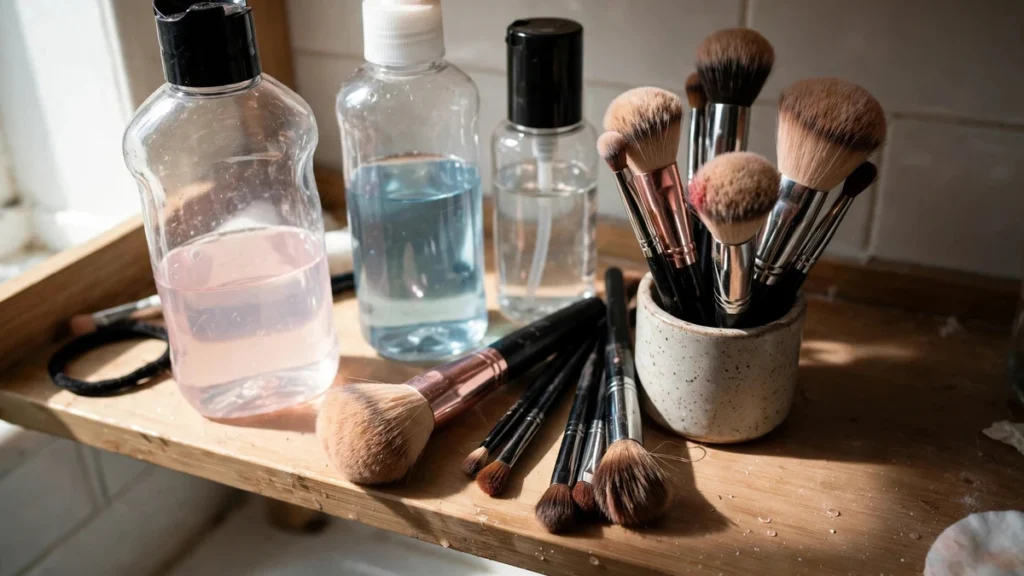
Dirty makeup brushes are the quiet weak link in an otherwise careful routine. They hold old foundation, powder, oil and skin cells, and every time they touch your face they move that residue back onto your skin. The result is patchy blending, muddy colour, breakouts that seem to come from nowhere, and brushes that wear out years before they should.
A good brush cleaner fixes that in minutes. The right formula lifts pigment and oil out of the bristles without drying them, keeps the shape intact, and dries fast enough that a brush is ready to use again the same day. The wrong one leaves a soapy film, strips natural hair, or loosens the glue that holds the bristles in the ferrule.
Below are nine makeup brush cleaners worth considering in 2027, from a professional quick-clean spray to a gentle solid soap for deep cleaning. Each one is described by what it does well, what to watch for, and who it suits best, so you can match the cleaner to the brushes you actually own.
Key takeaways
- Clean brushes blend better, apply colour more truly, and last longer than brushes left dirty for weeks.
- Quick-clean sprays are for daily surface cleaning between uses, while soaps and shampoos are for a proper weekly deep clean.
- Natural-hair brushes need a gentler, conditioning formula, while synthetic brushes tolerate stronger cleansers.
- Rinse with the bristles pointing down and dry brushes flat or upside down, so water never pools in the ferrule.
- No cleaner rescues a brush with shedding bristles, a cracked handle, or glue that has already loosened, and a cleaner that leaves a film or a strong smell is a sign to switch.
What a makeup brush cleaner actually does
A brush cleaner does two jobs at once. It dissolves the makeup sitting in the bristles, and it removes the oil and skin cells that build up with every use. Pigment, especially long-wear foundation and waterproof liner, clings to bristles and changes how the next product applies. A clean brush picks up the right amount of product and lays it down evenly. A dirty one drags, streaks, and wastes product.
The second job matters just as much. Brushes are warm, damp, and full of organic residue after use, which is exactly the environment where bacteria grow. That is why dermatologists and makeup artists alike recommend regular cleaning, and why a brush that smells stale or feels stiff is telling you it is overdue. Cleaning is not only about performance. It is about keeping something that touches your face every day hygienic.
Not all cleaners work the same way. A spray cleaner evaporates quickly and is meant for a fast clean between clients or between colours. A liquid shampoo or solid soap needs water and a rinse, and it cleans deeper. Knowing which one you are buying, and when to use it, is the difference between brushes that stay soft for years and brushes that go stiff and scratchy within months.
How we chose these cleaners and what to look for
Look first at the format and how you will use it. If you wear makeup daily and switch shades often, a spray cleaner that dries in a minute is the most useful tool you can own. If you clean your brushes once a week, a liquid shampoo or a solid soap gives a deeper clean for less money per wash. Many people keep both: a spray for daily touch-ups and a soap for the weekly wash.
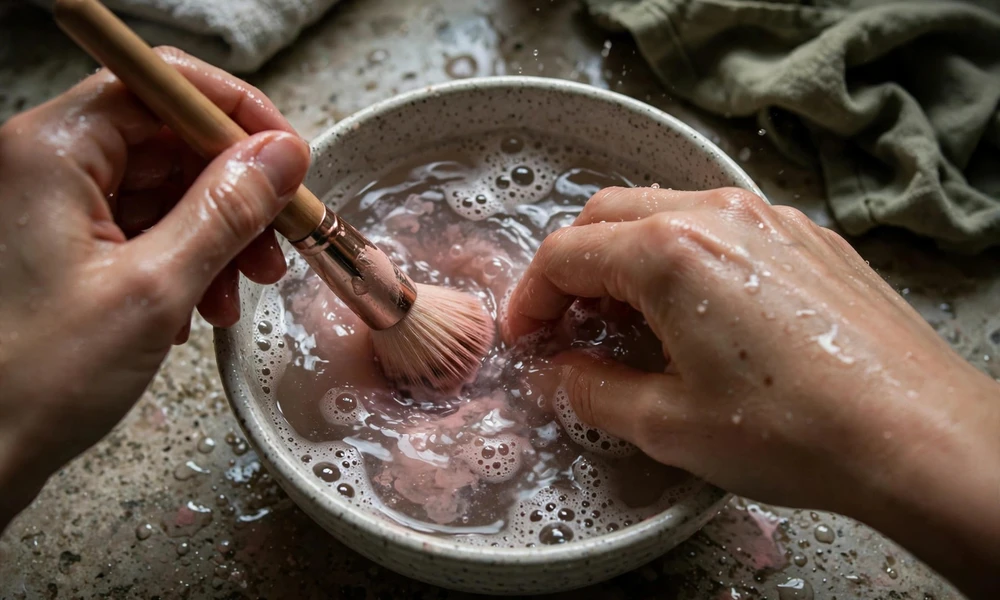
Look next at the formula. Gentle, conditioning cleansers suit natural-hair brushes, which dry out and frizz if stripped. Synthetic brushes are tougher and can handle stronger, faster-acting formulas. Fragrance-free options are safer for sensitive skin and for brushes used around the eyes. If a cleaner leaves a slippery or sticky film after rinsing, it is not rinsing clean, and that residue will end up on your face.
Finally, look at value honestly. A small bottle of a premium spray can cost as much as a large bottle of a basic shampoo, but it lasts far longer because you use a few drops at a time. Price per use matters more than price per bottle. Our guide to the best makeup brushes explains why the brush itself deserves the same care, because a good brush is an investment, and a cleaner is what protects it.
The 9 best makeup brush cleaners of 2027
Cinema Secrets Makeup Brush Cleaner
What we like: A professional quick-clean liquid that dissolves even long-wear foundation and waterproof liner in seconds, dries almost instantly, and leaves no residue behind. A little goes a long way.
What to consider: It has a noticeable solvent scent while it dries, and it is stronger than a gentle daily shampoo, so it suits spot cleaning rather than soaking. Best for: Daily quick cleans and switching colours. Material: Liquid, citrus-based solvent. Price range: Mid-range. Standout feature: Dries in under a minute with no rinsing.
This is the cleaner makeup artists reach for between clients, and it earns its place in a home kit too, especially if you wear long-wear or waterproof formulas.
Beautyblender Blendercleanser Solid
What we like: A solid soap that lathers well, lifts foundation and cream products out of dense sponges and brushes, and rinses clean without leaving a film.
What to consider: It needs water and a few minutes, so it is a deep-clean tool rather than a quick fix, and the solid bar needs a dry spot to live in. Best for: Weekly deep cleans of sponges and dense brushes. Material: Solid soap bar with a silicone cleaning pad. Price range: Mid-range. Standout feature: The built-in textured pad speeds up cleaning.
If your foundation brush or sponge is the hardest thing you own to clean, this is the most satisfying option on this list.
Sigma SigMagic Brushampoo
What we like: A liquid shampoo made specifically for brushes, with a gentle lather that cleans thoroughly without stripping natural hair or dulling synthetic fibres.
What to consider: It is a rinse-out shampoo, so it takes longer than a spray, and a little overuse can leave brushes needing a second rinse. Best for: A regular weekly wash of a full brush set. Material: Liquid shampoo, conditioning formula. Price range: Mid-range. Standout feature: Designed to keep bristles soft after repeated washing.
A straightforward, purpose-built shampoo that does exactly what it promises, and a good default choice if you want one deep-clean product.
MAC Brush Cleanser
What we like: A classic spray cleaner that removes colour quickly, evaporates fast, and is gentle enough for daily use on both natural and synthetic brushes.
What to consider: It is a surface cleaner, not a deep clean, so it does not replace a weekly wash, and the bottle is small for the price. Best for: Daily cleaning between colours and uses. Material: Liquid spray, alcohol-based. Price range: Mid-range. Standout feature: Fast-drying and safe for daily use.
This has been a backstage staple for years because it works quickly and reliably. Keep it on your vanity for the cleans you do most often.
Real Techniques Brush Cleansing Gel
What we like: An affordable gel that lathers into a deep clean, works well on dense foundation brushes, and rinses away without leaving bristles stiff.
What to consider: It needs a proper rinse and drying time, so it is not a same-minute solution, and very stubborn waterproof pigment may need a second pass. Best for: Budget-friendly weekly deep cleans. Material: Liquid gel cleanser. Price range: Under ten pounds or dollars. Standout feature: Strong cleaning power at a low price.
Proof that a good brush cleaner does not need a luxury price. This is the best value deep-clean option here.
Sephora Collection Daily Brush Cleaner
What we like: A no-rinse spray that cleans surface makeup in seconds, with a light scent and a fine mist that does not soak the brush.
What to consider: Like all sprays, it cleans the surface rather than the core of the brush, so a weekly wash is still needed. Best for: Quick daily cleans and travel. Material: Liquid spray, no-rinse formula. Price range: Under ten pounds or dollars. Standout feature: Small, travel-friendly bottle.
An easy, inexpensive spray to keep beside your makeup bag, and a good habit-builder if you are new to cleaning your brushes regularly.
e.l.f. Daily Brush Cleaner
What we like: A very affordable spray that removes powder and cream colour quickly, dries fast, and is gentle enough for everyday use.
What to consider: It is less effective on heavy long-wear foundation than a stronger solvent cleaner, and it is a surface clean only. Best for: Everyday powder and blush brushes on a budget. Material: Liquid spray, no-rinse formula. Price range: Under ten pounds or dollars. Standout feature: The lowest price on this list for a daily spray.
If price has been the reason you skip brush cleaning, this removes the excuse. It is a capable daily spray for very little money.
Dr. Bronner’s Pure-Castile Liquid Soap
What we like: A plant-based liquid soap that cuts through oil and pigment effectively, dilutes well so a bottle lasts months, and works on brushes, sponges and hands alike.
What to consider: It is a general soap, not a brush-specific formula, so it can feel drying on very fine natural hair if used undiluted, and it needs thorough rinsing. Best for: A multi-purpose, low-cost deep clean. Material: Liquid castile soap, plant-based oils. Price range: Under ten pounds or dollars. Standout feature: One bottle cleans brushes, sponges and more.
A practical, economical choice that many makeup artists use at home. Dilute a few drops in water and it handles even stubborn foundation brushes.
Clinique Makeup Brush Cleanser
What we like: A fragrance-free, allergy-tested formula that cleans thoroughly without irritating sensitive skin, and leaves bristles soft rather than stripped.
What to consider: It is gentler than a solvent cleaner, so very stubborn waterproof makeup may need extra time, and it costs more than basic soaps. Best for: Sensitive skin and brushes used around the eyes. Material: Liquid cleanser, fragrance-free. Price range: Mid-range. Standout feature: Fragrance-free and allergy-tested.
If your skin reacts easily, or your eye brushes are the ones you clean most, this is the safest-feeling cleaner on the list.
Which brush cleaner is right for your brushes
Start with what your brushes are made of. Natural-hair brushes, usually goat, squirrel or sable, have a cuticle that can dry out and frizz if stripped by a harsh cleanser. They do best with a gentle, conditioning shampoo or a mild solid soap, and they should never be soaked for long. Synthetic brushes, usually taklon or nylon, are tougher. They handle stronger sprays and faster cleaners without damage, and they dry more quickly.
Next, match the cleaner to the makeup you wear. Powder and blush brushes only need a light clean, and a spray is enough most days. Foundation, concealer and cream blush brushes hold far more product, and they need a real wash with soap and water at least once a week. Eye brushes used with waterproof liner or cream shadow sit in between, and a quick spray after each use keeps pigment from building up.
Finally, think about how often you will actually clean. The best cleaner is the one you will use. A spray on your vanity gets used daily. A shampoo in a cupboard gets used when you remember. If you are building the habit, start with a spray for daily use and a soap for the weekly wash, and the rest takes care of itself. Luxury brush brands make brushes that can last for years, but only if the cleaning routine matches the quality of the brush.
The caveats that matter
Brush cleaners are simple products, but a few mistakes undo their benefit. The most common is getting water into the ferrule, the metal band that holds the bristles. Water loosens the glue, the bristles shed, and the brush is ruined. Always hold the brush with the bristles pointing down while rinsing, and never leave a brush soaking upright in a cup of water.
| Detail | What is known |
|---|---|
| How often to deep-clean | Foundation and cream brushes weekly; powder brushes every one to two weeks |
| How often to quick-clean | After each use for eye brushes; daily for brushes that switch colours |
| Best format for daily use | A no-rinse spray that dries in under a minute |
| Best format for a deep clean | A liquid shampoo or solid soap with water and a rinse |
| Natural-hair brushes | Use a gentle, conditioning formula and never soak for long |
| Synthetic brushes | Tolerate stronger cleansers and dry faster |
| What ruins a brush | Water in the ferrule, soaking upright, and harsh scrubbing |
| When to replace a brush | When bristles shed, splay permanently, or feel scratchy after cleaning |
Another mistake is using too much product. A few drops of shampoo or a couple of sprays are enough. Excess cleaner is harder to rinse out, and residue left in the bristles transfers to your skin and changes how makeup applies. Rinse until the water runs clear and the bristles feel clean, not slippery.
Checklist: cleaning your brushes honestly
Use these checks before you buy a cleaner, and again after your first week of using it.
- Check the format: a spray for daily use, a soap or shampoo for the weekly deep clean.
- Check the formula: gentle and conditioning for natural hair, stronger is fine for synthetic.
- Check the rinse: water should run clear and bristles should feel clean, not slippery or sticky.
- Check the drying: reshape bristles, lay brushes flat or hang them bristles down, never upright in a cup.
- Check the smell: a clean brush should smell of nothing; a stale or sour smell means it needs a deeper wash.
- Check the shedding: a few loose hairs after a wash is normal, but steady shedding means the brush is failing.
Frequently asked questions
How often should I clean my makeup brushes?
Foundation and cream brushes should be deep-cleaned weekly, and powder brushes every one to two weeks. Eye brushes benefit from a quick spray clean after each use, because pigment builds up fast on small, dense bristles.
Can I use regular soap to clean my brushes?
A gentle liquid soap works, but a brush-specific cleaner is safer for natural hair and rinses more cleanly. Avoid harsh dish soap or antibacterial hand soap for regular use, as they can strip and dry out bristles over time.
Do I need to rinse after using a spray cleaner?
No. No-rinse sprays are designed to evaporate, taking dissolved makeup with them. Wipe the brush on a clean tissue or towel after spraying, and let it dry for a minute before use.
Why do my brushes feel stiff after cleaning?
Stiffness usually means cleaner residue is left in the bristles, or the brush dried upright with water in the ferrule. Rinse more thoroughly, reshape the bristles, and dry the brush flat or hanging bristles down.
Can dirty brushes really cause breakouts?
They can contribute. Brushes collect oil, dead skin and bacteria, and pressing that mixture onto your face daily can irritate skin and worsen breakouts, especially for acne-prone skin. Regular cleaning is one of the simplest habits for clearer skin.
How long should a good makeup brush last?
With regular cleaning and proper drying, a quality brush can last several years. Replace it when bristles shed constantly, splay permanently, or feel scratchy even after a thorough clean. A clean brush that still performs badly has simply reached the end of its life, and no cleaner will bring it back.
The bottom line
The best makeup brush cleaner in 2027 is the one that fits your routine. A quick spray for daily use and a gentle soap for the weekly wash cover almost every brush and every budget, and the combination costs less than a single new foundation brush. Start with those two, clean your foundation brushes weekly, and your brushes will blend better, last longer, and treat your skin more kindly.
Choose one cleaner from this list, use it this week, and pay attention to how your makeup applies afterwards. The difference is usually obvious within a day, and once you feel it, cleaning your brushes stops being a chore and becomes part of the routine itself. For a full look to practise on, our guide to a soft glam makeup look is a good place to start.