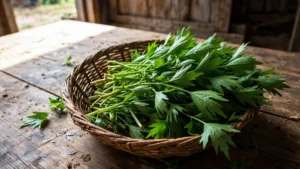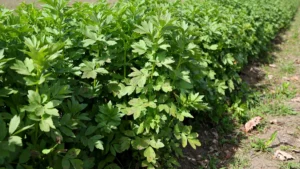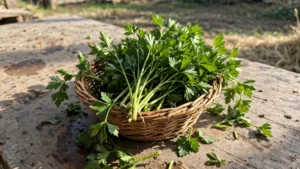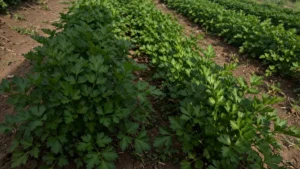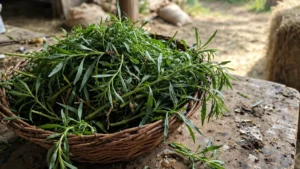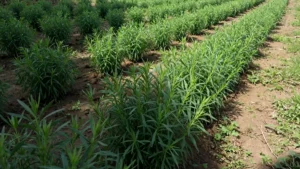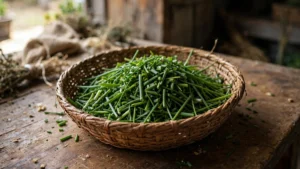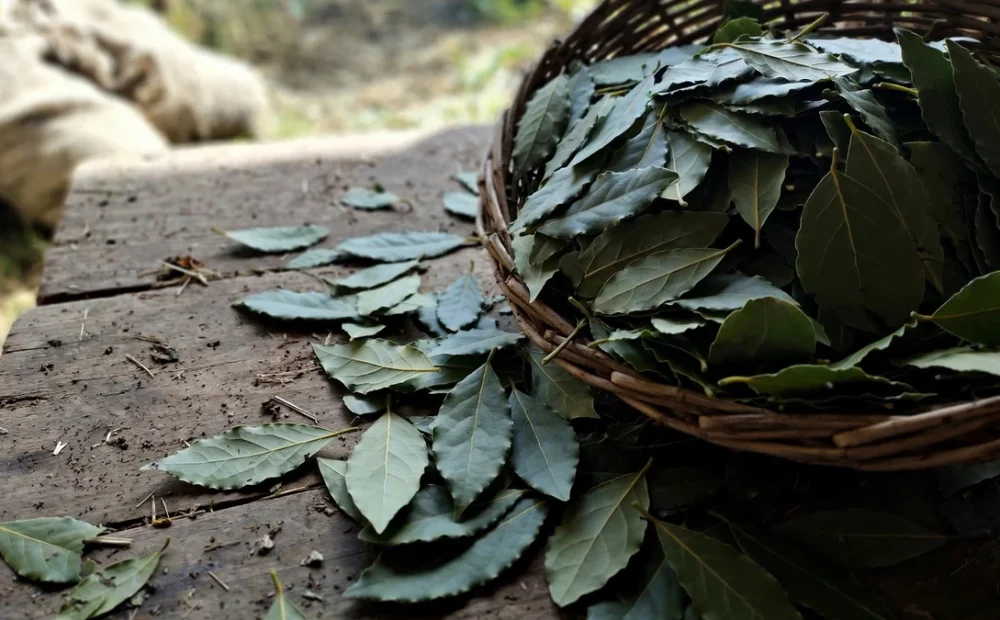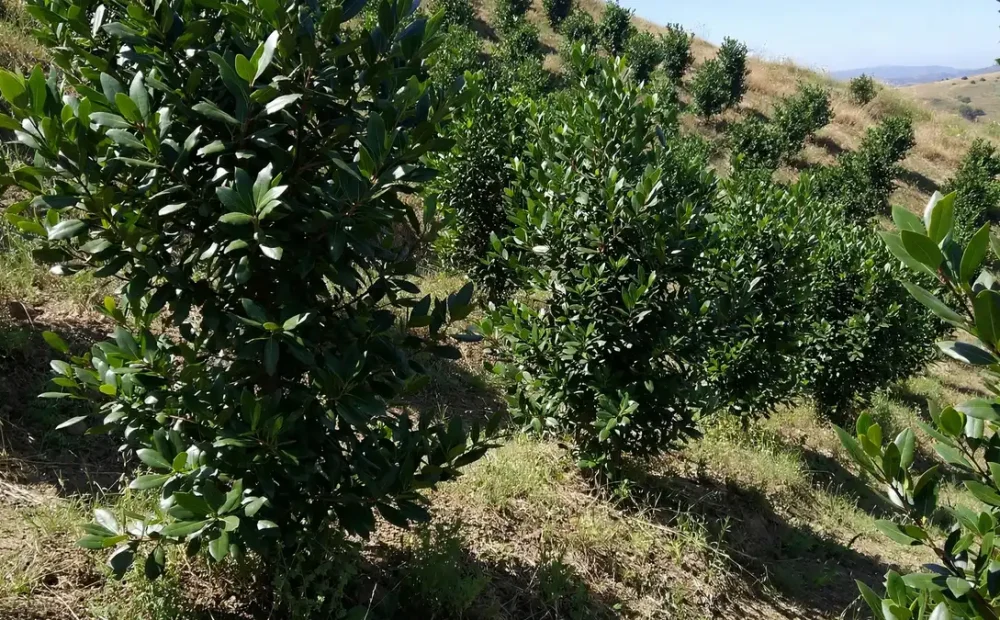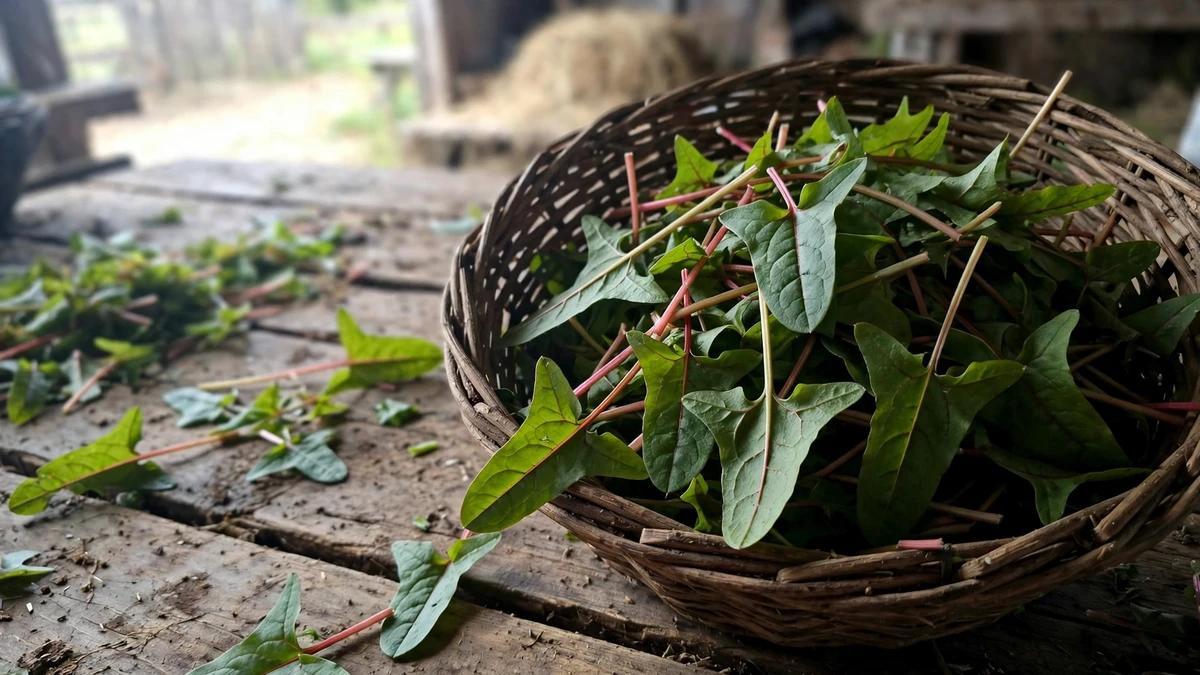
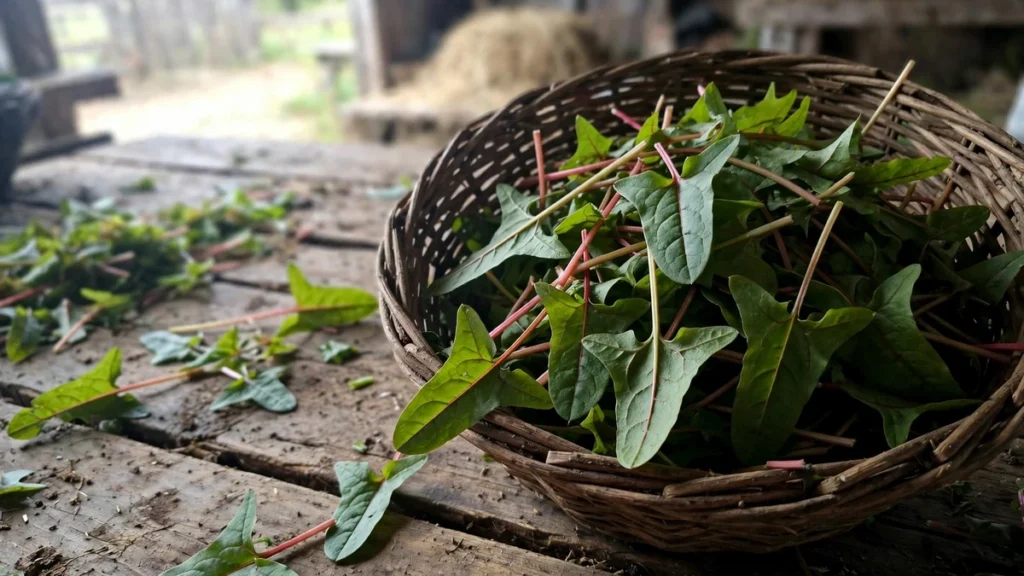
A sorrel farm escape is a short working holiday built around one leaf and one pot. You arrive while the beds are still lush and green, spend a morning picking young leaves with a basket, and spend the afternoon at the stove, watching the leaves wilt into a bright green soup. For a few days you work beside the people who grow the herb, learn how it is picked and cooked, and find out what to do with it once it is in your own kitchen.
It runs nothing like a beach holiday. The picking follows the plant, not the calendar, and the tenderest leaves sit in a window of a few weeks in spring, before the flower stalks rise and the flavour turns bitter. Hold a window, stay loose by a few days, and let the farm name the picking day.
The nine steps below take you from choosing a sorrel to carrying the soup recipe home. They suit a first trip to County Clare and a longer journey to Orkney, and they assume you have never picked sorrel before.
Key takeaways
- A sorrel farm escape follows the picking week, not the calendar, so hold a window and let the farm name the day.
- Pick your sorrel first: garden for sharp soup and sauces, French for a milder leaf in salads and omelettes.
- Pick after the morning dew has lifted, before the flower stalks rise, and cook the leaves the same day.
- Cooked sorrel keeps its lemon tang, so a spoonful of soup goes further than a handful from the bed.
- Sorrel bolts fast in summer heat, so a hot week can move your dates by a fortnight.
What a sorrel farm escape involves
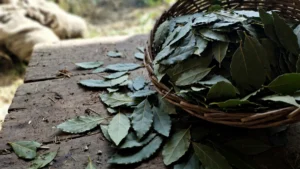
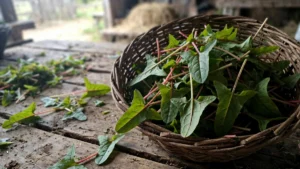
A sorrel farm escape usually runs three to five nights. You sleep in a farmhouse room or a stone cottage, take breakfast with the farm family, and spend your mornings in the beds. The picking session is the heart of it: an hour or two with shears, a basket, and the farm’s grower showing you which leaves to take.
Sorrel is picked by hand, leaf by leaf, and one morning fills several baskets. You will get mud on your boots and sorrel juice on your fingers. The parsley farm escape we covered needs the same kit.
Evenings are the reward. The farm cook turns the morning’s leaves into soup, and the table is where the trip makes sense: sorrel soup with cream, salmon with sorrel sauce, eggs from the farm’s hens with a handful of chopped leaf. Dinner is when the growers open up; the finest tales arrive with the second glass.
How to plan it, and what to ask first
Begin by deciding which sorrel you want to meet. Garden sorrel is the sharp, lemony leaf, large and arrow-shaped, a kitchen-garden staple. French sorrel is smaller and milder, with shield-shaped leaves and a softer tang. Each grows in different places and is picked at different times, so the choice sets your destination and your dates.
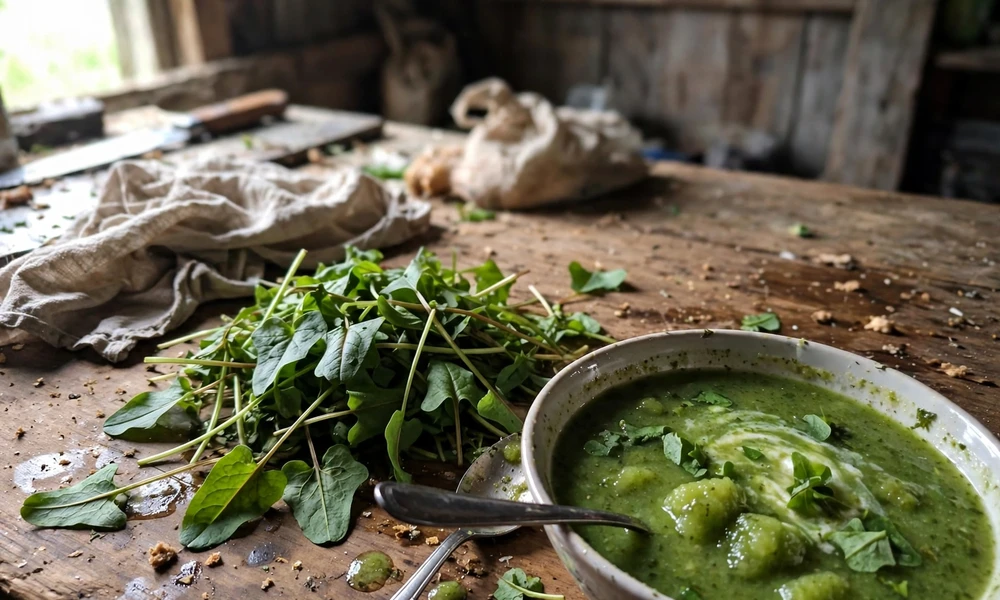
Put four questions to the farm before any money changes hands. When does the picking week fall, and how fixed is that window. How many guests stay at once: a small party can pick together, but a crowd cannot. What the price covers: some farms charge the cooking lesson separately. And how the kitchen copes with what you eat and what you avoid. The chives farm escape we covered works on the same pattern.
Book travel you can move. Good farms shift your stay free of charge, though your airline may charge for the change. Choose a ticket you can change.
The 9 steps to plan a sorrel farm escape
Choose between garden and French sorrel first
Garden, French, and wood sorrel share a name and almost nothing else. Garden sorrel is Rumex acetosa, a large plant with arrow-shaped leaves and a sharp lemon tang. French sorrel is Rumex scutatus, smaller and milder, with shield-shaped leaves. Wood sorrel is Oxalis acetosella, a woodland plant with clover-like leaves. Taste all three at home for a week, then pick the flavour you want to meet in person.
What to do: Buy garden and French sorrel at a market, cook a soup with each, and choose the one to travel for. What to avoid: Booking a farm because the photos are pretty, then discovering it grows a sorrel you never cook with. Best for: A first trip when you know which flavour you want. Time needed: A week of cooking at home beforehand. Standout tip: If you cannot find French sorrel at home, start with the youngest garden sorrel you can find.
Book only once the picking week is fixed
Sorrel is picked when the leaves are young and tender and the flower stalks have not yet risen, and that moment comes after the spring rain has done its work. A hot spell can send the plants into flower in days, so good farms watch the forecast, name a window a few weeks ahead, and confirm the day a few days before. Wait until the farm names that window before paying.
What to do: Ask for the picking window in writing, and confirm the farm will move your stay free if the heat shifts it. What to avoid: Non-changeable flights booked before the farm names its week. Best for: Travellers able to move by a few days. Time needed: One email, then a week of waiting. Standout tip: Farms on wet Atlantic ground, like the Clare beds, are the safest bet for fixed dates.
Take leaves, leave the crown to regrow
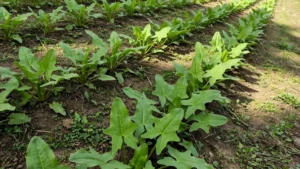
The first picking lesson matters more than any other part of the trip. Take a leaf just above the crown, while the plant is still young and the leaves are soft. Once the flower stalks rise, the leaves below them turn tough and bitter, and the plant stops making new leaves worth picking.
What to do: Cut above the crown and leave at least half the leaves on the plant. What to avoid: Pulling a whole plant out by the roots, or stripping one plant bare. Best for: Your first morning among the beds. Time needed: An hour beside the grower. Standout tip: Chew a small leaf first; a bright lemon tang means it is ready.
Taste the soup on your first evening
Every sorrel farm has a pot from the day before, and the first evening is the time to taste it. Cooked sorrel keeps its lemon tang, and the soup tells you what the farm’s leaf tastes like once the heat has done its work. Taste the soup first, and the raw leaf will fall into place.
What to do: Ask the cook to serve the first dinner from the farm’s own pot, then taste it beside the raw leaf. What to avoid: Judging the herb on the raw leaf alone; the soup is where the flavour sits. Best for: The first evening, while the farm still feels new. Time needed: A single dinner. Standout tip: Ask how long the farm simmers its soup; a short, gentle cook keeps the tang bright.
Let one bed run to seed for next year
Sorrel flowers are small rust-red spikes, and the bees work them hard. A good farm never picks every plant: it leaves a bed to flower at the edge of the garden, so the bees can work and the farm has seed. Walk the bed late in the afternoon, when the bees are busiest, and watch the seed set.
What to do: Ask the grower which beds are left to flower, and walk them as the day ends. What to avoid: Picking into the flowering bed because it looks full; those plants are the bees’. Best for: Anyone keen to grasp the whole farm, not only the kitchen. Time needed: Half an hour at dusk. Standout tip: Sorrel seed keeps for years; a packet from the farm shop is a good souvenir.
Pick late, after the morning damp has gone
Sorrel is best picked once the dew has lifted and the sun is still low, when the leaves are dry and the tang is brightest. Pick too early, while the leaves are still wet, and the baskets turn soggy and the leaves bruise. Pick at midday in a hot climate and the leaves wilt while the work turns hard. Rise early, wait for the dew to lift, and pick before the heat arrives.
What to do: Set an early alarm, wait until the leaves feel dry, and pick before ten. What to avoid: Wet leaves in the morning or limp leaves at midday; either spoils the soup. Best for: Hot-climate farms like the Ticino terraces and the Azores beds. Time needed: An hour in the morning. Standout tip: A dry, breezy morning is the finest picking weather there is.
Mud boots and a raincoat, nothing fancy
A sorrel farm is a wet farm in the hills, and the packing list is practical. Light layers for cool mornings and warm afternoons, a wide hat, waterproof boots that can take mud and rain, and clothes you do not mind marking. Pack a notebook, a jar for the dried leaves, and sun cream. The beds are damp, so long sleeves are worth wearing.
What to do: Pack for mud, rain, sun, and the kitchen. What to avoid: Open shoes among the beds, white clothes on a picking morning, and a suitcase of outfits you will never wear. Best for: The night before you travel. Time needed: Half an hour of packing. Standout tip: A bandana keeps rain and sorrel juice out of your eyes while you pick.
Cook the soup with the farm cook
On cooking day, follow your leaves from the bed to the pot. The cook washes the leaves, strips them from the stalks, wilts them in butter, and simmers them into soup with stock and cream. A short, gentle cook keeps the lemon tang bright; a long, hard boil dulls it.
What to do: Go to the kitchen with the cook, watch the washing and the wilting, and taste the soup beside the raw leaf. What to avoid: Boiling your own sorrel hard at home; the heat dulls the tang. Best for: Mid-trip, once the plant feels known. Time needed: Half a day. Standout tip: A spoonful of cream at the end softens the sharpness without hiding it.
Stock up on seed and sauce at checkout
Fresh sorrel wilts in a suitcase, but the farm’s soup recipe travels well and keeps its tang. Buy a packet of seed from the farm shop, with a bottle of the farm’s sorrel sauce if they make one, and a jar of honey from the flowering bed. Write the recipe down, keep it dry, and cook with it through the winter.
What to do: Buy seed, sauce, and honey from the farm shop, and ask the cook to write the soup recipe for you. What to avoid: Packing armfuls of fresh sorrel for the flight home; it will be black and limp by landing. Best for: Checkout morning, before you drive away. Time needed: Twenty minutes among the farm shop shelves. Standout tip: Ask the grower how they store their seed; the method counts for more than the variety.
Picking the right season and region
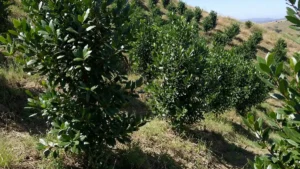
Sorrel is a cool-weather herb, so the season follows rain and sun. In the Atlantic north the window is late spring into summer, from May in Clare to July in Orkney. In the Azores the window is long, because the ocean climate keeps the plants growing. The plants return every year in cool places, so farms there can name their weeks with more confidence than a basil farm can.
Choose your region by your sorrel first and your calendar second. If you want garden sorrel and the classic flavour, go to County Clare in June or Snowdonia in July. If you want a village herb and a traditional table, go to West Flanders or Cantabria. If you want a mild climate and a late summer, go to Ticino or the Azores. The lemongrass farm escape we covered follows the same pattern.
Watch the forecast, not the brochure wording. A hot spell can set a crop into flower early, a drought can make the leaves tough, and a storm can close a mountain road for a day. Check the forecast before you travel, and be ready to shift your picking day.
The caveats that matter
A sorrel farm escape is a working holiday, and it is not for everyone. Mornings begin early, the work is physical, and you sleep in a farmhouse, not a hotel. If you want a spa, pool service, and a late breakfast, book a resort and visit a sorrel farm for a day instead.
| Detail | What is known |
|---|---|
| Best trip length | Three to five nights, with two or three mornings in the beds |
| Best time to pick | Morning, once the dew lifts, while the leaves are young and tender |
| What flowering does | Leaves turn tough and bitter, and the plant stops making new leaves |
| Heat risk | A hot spell can send the plants into flower and cut the picking window short |
| What to pack | Light layers, a hat, waterproof boots, long sleeves, a notebook, and a jar |
| Dietary needs | Tell the farm in advance; sorrel is gluten-free but kitchens are shared |
| What to bring home | Seed, sorrel sauce, and honey; fresh leaves wilt on the flight |
| What it does not do | It will not turn you into a chef, and it will not settle next year’s dates |
Mention an oxalate limit when you book, not when you arrive. Sorrel is rich in oxalic acid, and the picking sessions, the cooking, and the tasting are all handled in close quarters with sorrel soup on the table most days. A short message before you book lets the host shape the meals around your needs.
Checklist: before you book a sorrel farm escape
Use these checks before you book, and again the week before you travel.
- Check the variety: ask which sorrel the farm picks in your week, garden or French.
- Check the picking window: get the dates in writing.
- Check the group: a small party keeps the picking fun.
- Check the price cover: do meals, classes, and market visits sit inside it or cost extra.
- Check the food rules: raise what you eat and avoid before handing over money.
- Check your travel: book a changeable ticket and arrive a day early.
Frequently asked questions
Does a sorrel farm work if you eat gluten-free?
In most cases, yes, provided the farm hears about it before you arrive. Sorrel itself has no gluten, and farms can usually keep a board and a pot aside. Small kitchens baking bread in the same room cannot promise no cross-contact, so ask directly before paying.
How far ahead should you book a sorrel farm stay?
Book the farm as soon as it names its picking window, usually a few weeks ahead, and book travel you can move. The popular farms in County Clare and Snowdonia fill June weeks in advance.
What goes in the bag for sorrel country?
Light layers, a wide hat, waterproof boots, long sleeves, sunscreen, a notebook, and a jar to carry leaves home in. Leave white linen at home; the beds throw up mud.
Do sorrel farms welcome children?
Most do, if the children are old enough to follow instructions among the beds. Picking uses shears, the kitchen uses heat, and the days start early, so farms usually set a minimum age near eight or ten.
What should you carry home from a sorrel farm?
Seed, the farm’s sorrel sauce, and a jar of honey from the flowering bed. Fresh sorrel wilts on a flight, but seed and sauce keep their flavour.
What does a week on a sorrel farm cost in total?
From around $65 a night in County Clare to $380 a night in Orkney, before flights. Add a changeable ticket plus the farm shop, and a week typically costs a few hundred dollars at the low end and a few thousand at the high end.
The bottom line
A sorrel farm escape works when you choose the variety first, book the picking window rather than a fixed day, and arrive ready to pick in the morning and cook in the afternoon. County Clare is the classic, Orkney the adventure, and the Azores the long season.
Pack light, tell the farm about your dietary needs, and carry home seed and sauce rather than fresh leaves. The flavour you remember will be the soup you seasoned with the farm’s own pot.