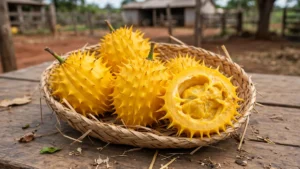
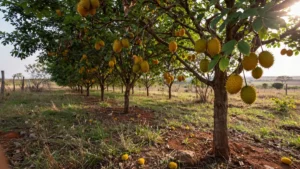
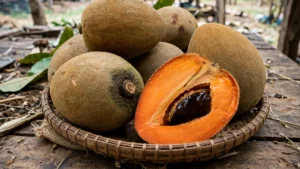
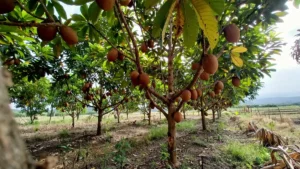
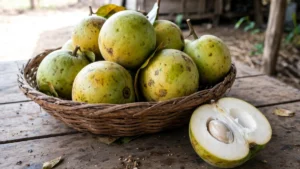
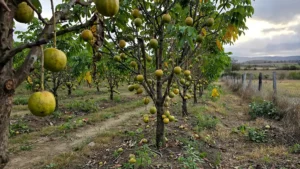
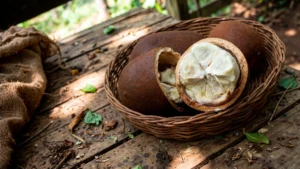
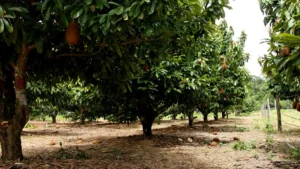
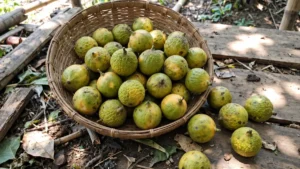
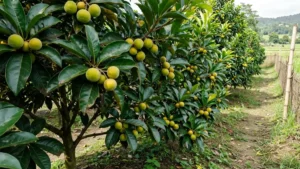
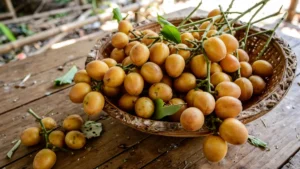
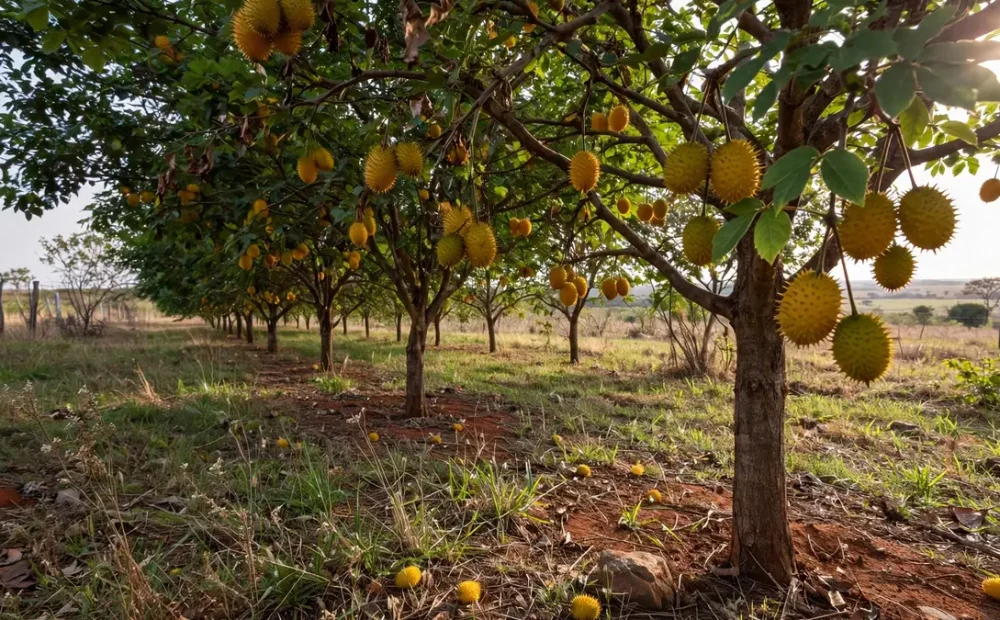
An ackee farm escape is a holiday built around a single rule: the pod decides when you eat. The red pod splits open on the tree, the creamy arils show, and only then is the fruit ready. Plan the trip around that rule and the rest falls into place — the farm, the kitchen, the cooking lesson, and the saltfish that goes with it.
The fruit is Jamaica’s national dish and a West African staple, and the farms that grow it are small, working places, not resorts. A good escape puts you on one of those farms for a few days, walking the rows in the morning and cooking what opened overnight. This guide walks through the nine steps that make that trip work.
Read it in order, and write to the farm before you pay anything. The farms that answer plainly about pods, prices, and wheat are the ones worth booking.
Key takeaways
- Time the trip around the pods: ackee ripens in flushes, and the farm should confirm opening pods on your dates, not just that it is open.
- Only pods that split open on the tree are eaten, and only after proper cooking; never force a closed pod open.
- Jamaica and West Africa are the two homes of ackee, and each gives a different trip — Jamaica for the national dish, Ghana and Nigeria for the forest-belt farms.
- Put the cooking session, the meals, and the transfer in the booking in writing, because each is often billed apart.
- People with a wheat allergy should flag it in the first message, because farm kitchens bake bread each morning and flour travels easily.
What planning an ackee farm escape means
Planning an ackee farm escape means planning around a fruit that ripens on its own schedule. The pods open when they are ready, not when you arrive, so the trip is really about choosing the right weeks, the right farm, and the right questions to ask before you pay.
An escape is different from a resort holiday in one clear way: the farm is the attraction. The trees are the view, the kitchen is the restaurant, and the host is the guide. You will spend your mornings under the trees and your afternoons in the kitchen, and the evenings are quiet.
That is the charm, and also the risk. A farm that is honest about its pods, its prices, and its kitchen is a joy; one that is vague about all three will waste your money. Our guide to planning a breadfruit farm escape follows the same idea: get the facts in writing before the photographs win you over.
How to plan, step by step
Work through these nine steps in order, and do not pay until step seven is settled. Each step has one job, and skipping one usually costs money later.
Step 1: Let the pod-opening weeks set your dates
What to do: Ask the farm which weeks its pods are opening, and pick dates inside that window. Jamaica bears across much of the year, with the heaviest flushes after the rains, while Ghana and Nigeria fruit through the warm season. What to avoid: Booking a fixed date without asking about the pods, and arriving to find the trees bare. Best for: Travellers able to shift their dates by a week or two. Time needed: Half an hour of messages with the farm. Standout tip: Ask for a photograph of the trees taken this week, not last year.
Step 2: Choose between Jamaica and West Africa first
What to do: Choose the country first, because the trip is different in each. Jamaica gives you the national dish, saltfish, and the hills of St. Elizabeth; Ghana and Nigeria give you forest-belt farms and stews. What to avoid: Comparing farms in two countries at once, and choosing on price alone. Best for: Travellers who know whether they want the Caribbean or West Africa. Time needed: An evening of reading. Standout tip: Pick the country whose food you already love, and the farm will follow.
Step 3: Learn how the farm spots a ripe pod
What to do: Ask plainly how the farm decides a pod is ready, and who does the picking. A good farm will say the pod must split open on the tree, and that only the crew gathers the arils. What to avoid: A farm that says guests can pick whatever they like, or that closed pods are fine. Best for: Travellers who want to eat safely and learn the real routine. Time needed: Ten minutes in your first message. Standout tip: If the farm cannot explain its ripeness rule, do not book it.
Step 4: Put the cooking session in the booking, in writing
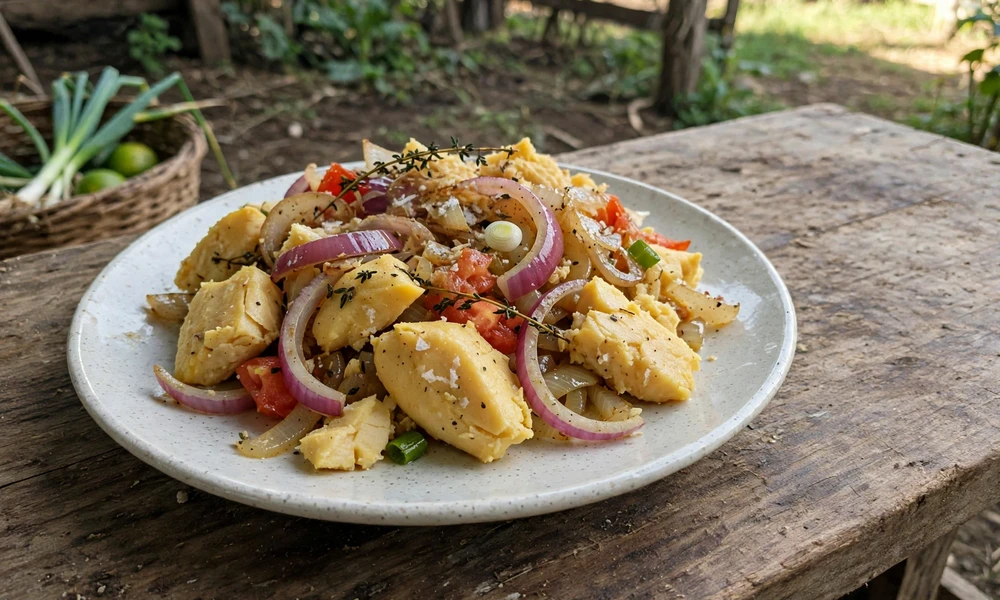
What to do: Book the cooking session as part of the stay, in writing, with the price and the time. The session is the point of the trip: the host shows you how the arils are cleaned, boiled, and fried with saltfish. What to avoid: Assuming the session is included, and finding it billed separately on arrival. Best for: Food lovers who want to cook, not just watch. Time needed: Fifteen minutes to confirm by email. Standout tip: Ask whether you cook your own plate or only watch the host.
Step 5: Work out the saltfish question ahead of arrival
What to do: Ask whether saltfish is included, what it costs, and whether the farm can cook a version without it. Some guests want the classic dish; others want the arils on their own. What to avoid: Arriving to find the saltfish is an extra charge, or that there is no alternative. Best for: Travellers with a fish allergy or a vegetarian diet. Time needed: Five minutes of planning before you book. Standout tip: Tell the farm your diet before you book, not at the table.
Step 6: Put your gluten-free needs in the booking from the start
What to do: Tell the farm in writing that you need gluten-free food, and ask how the kitchen keeps flour away from your plate. Ackee carries no gluten, but the bread baked each morning does. What to avoid: Mentioning it at breakfast, when the bread is already on the table. Best for: Travellers with coeliac disease or a wheat allergy. Time needed: Five minutes in the first note you send. Standout tip: Ask the farm to name one safe dish it can cook every day.
Step 7: Lock in the airport transfer ahead of paying
What to do: Book the transfer from the airport before you pay for the stay, and get the price in writing. Most ackee farms sit an hour or more from the nearest airport, and a taxi on arrival costs far more. What to avoid: Landing with no car booked, and paying whatever the first driver asks. Best for: Travellers landing late or bringing children. Time needed: Twenty minutes to confirm the car and the price. Standout tip: Ask the farm for the driver’s name and phone number before you fly.
Step 8: Pack shoes and layers for mud, rain, and hot sun
What to do: Pack light clothes, a rain jacket, and shoes with grip, because the rows are uneven and the rain comes fast. Bring a hat, repellent, and a small bag for the kitchen. What to avoid: Packing only sandals and a beach bag, and slipping on a muddy path. Best for: Travellers who plan to walk the rows every morning. Time needed: An evening of packing. Standout tip: Pack a second pair of shoes, because the first will be muddy by noon.
Step 9: Carry the recipe home; the fresh arils will not travel
What to do: Ask the host for the recipe before you leave, written down, with the saltfish timings and the seasoning. Fresh arils spoil within a day, so the recipe is the souvenir that lasts. What to avoid: Trying to carry fresh arils home, and finding them spoiled at the airport. Best for: Travellers who cook at home. Time needed: Ten minutes on the final morning. Standout tip: Photograph the host’s hands while she cleans the arils, and the recipe will make sense later.
What the trip costs, honestly
The room is only part of the bill. On most ackee farms the nightly rate covers the room and breakfast, while the cooking session, the transfer, and the saltfish are priced apart. A stay that looks cheap on the listing can turn dear once those extras are added, so ask for the full figure before you pay.
Expect the cheapest farm stays near $65 a night and the dearest near $380, with most falling in the middle. The cooking session usually runs $25 to $60 a person, the airport transfer $40 to $120 each way, and a full-day market trip with the host around $50. Get each one in writing, and check whether the price is per person or per room. Our guide to planning a jackfruit farm escape breaks down the same kind of costs, and the pattern holds: the farms that list every charge plainly are the ones run with care.
Paying is part of the planning too. Many of these farms are small family places that take cash or a bank transfer, and card machines are rare once you leave the towns. Bring small bills for the market, the farm gate stall, and tips, and settle the big bill by transfer before you leave rather than at the gate. Tipping is modest and always welcome: a little for the cook, a little for the driver, and a little for the guide who walks the rows with you. Agree the tip in your head before you arrive, so you are not working it out at the table. If the farm asks for a deposit, pay it by transfer and keep the receipt, because a deposit handed over in cash at the gate is hard to prove later.
When to go, and how long to stay
Go when the pods are opening, and stay three or four nights. One night is too short to learn the cooking, and a week is too long unless you plan to work the rows. Three nights gives you two cooking mornings, one market trip, and a day to rest.
For a first trip, Jamaica in the weeks after the rains is the simplest choice: the farms are used to guests, the fruit comes for much of the year, and the kitchen serves it with every meal. Our guide to the plantain farm escape says the same in its own way: choose a farm that cooks its crop every day, and the holiday largely runs itself.
The shoulder weeks are worth a look if your dates are flexible. The pods still open, the farms are quieter, and the host has time to teach rather than rush. The trade-off is weather: a shoulder week can bring a wet spell that splits pods before the kitchen is ready, so ask the farm what the last fortnight looked like. A farm that answers honestly about a wet week is a farm you can trust with the rest.
Travelling with children changes the shape of the trip. Pick a farm with a fenced garden and a host who is used to small guests, and keep the mornings short: one hour under the trees, then breakfast, then rest. Children should only eat what the farm serves, and they should stay with a guide under the trees, since a closed pod looks like a toy and must never be picked. Mention the children’s ages in your booking message, and ask which rooms sit closest to the kitchen, so the walk at night is short.
The caveats that matter
Ackee is a generous fruit, but the trip around it needs care. The pods ripen when they please, the farms are far from the nearest town, and a stay that will not say what is fruiting is a stay to skip.
| Detail | What is known |
|---|---|
| Best time to visit | Warm months while pods are splitting; the window shifts by country |
| How ripe fruit looks | The pod opens by itself on the branch, showing creamy arils and black seeds |
| The safety rule | Eat only ripe ackee that opened on its own and was cooked well; leave closed pods alone |
| How long to stay | Three or four nights, with two cooking mornings and one market trip |
| Who should go | Unhurried travellers, keen cooks, and families with older children |
| Who should think twice | Anyone chasing nightlife, fast service, or a packed daily schedule |
| Transfers | Often an hour or more from the closest airport; arrange the lift before you arrive |
| What is not guaranteed | Opening pods on your dates; the crop answers to weather, season, and the tree |
Ackee itself has no gluten, yet bread is baked in the farm kitchen each morning, so learn how the cooks keep flour off your plate. Arils are soft and spoil fast, so eat them the day they are picked and take the recipe home instead of fresh fruit. Before you pay, think through the practical side if you have a health condition, are expecting, or travel with small children: the nearest clinic, the last spray date, and whether little feet can manage the paths.
Checklist: planning an ackee farm escape honestly
Go through these checks before you pay, then again in the week before you travel.
- Check the pods: ask whether they will be opening on your dates, not just whether the farm is open.
- Check what is covered: tree walk, cooking session, meals, and transfers, and which ones cost extra.
- Check the drive: how long is the airport run, and will the farm send a car?
- Check the room: which way does the window face, trees or garden, and is there shade, a fan, or air conditioning?
- Check the farming: ask how large the fields are, whether they are organic, and when they were last sprayed.
- Check recent reviews: find guests who visited in the same season you plan to travel.
Frequently asked questions
Which weeks suit an ackee farm visit best?
The weeks when the pods are opening. Jamaican trees bear for much of the year, with the heaviest flushes after the rains. Ghana and Nigeria fruit through the warm season, while Florida picks while the Caribbean farms rest.
Can I eat ackee raw?
No. Ackee is only eaten fully ripe, after the pod has opened on the tree, and after proper cooking. Never eat a closed pod, and never eat the fruit raw. Eat only what the farm serves you.
Do I need to book the cooking session in advance?
Yes, and in writing. The session is often billed apart from the room, and the farm needs to know how many guests are cooking. Book it with the stay, not on arrival.
Is ackee safe for children?
Yes, when it is fully ripe and cooked by the farm. Children should only eat what the farm serves, and they should stay with a guide under the trees. Mention the children’s ages when you book.
What should I pack for an ackee farm?
Light clothes, a rain jacket, and shoes with grip. Bring a hat, repellent, and a small bag for the kitchen. Pack a second pair of shoes, because the rows are muddy after rain.
What should a gluten-free traveller ask before booking an ackee farm?
Raise it in your first message. The arils have no gluten on their own, and the rice dishes are usually safe. The risk is the morning bread, so ask how the farm keeps flour off your plate.
The bottom line
An ackee farm escape suits travellers who like their food to come from the tree beside them, and who are happy to let the pods set the day. The fruit is creamy, the season is generous, and the best stays pick it, serve it fresh, and turn the rest into saltfish without fuss.
Plan it in order: the season first, the country second, the farm third — and get the cooking session, the transfer, and the wheat question settled in writing before you pay. Do that, and the trip mostly takes care of itself.