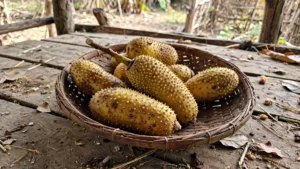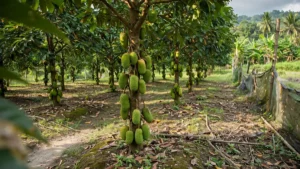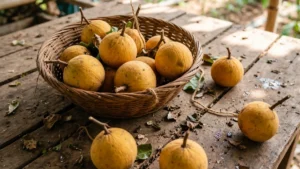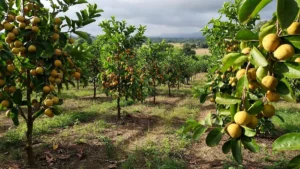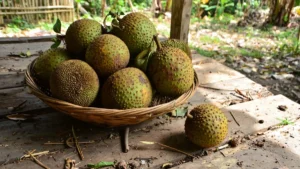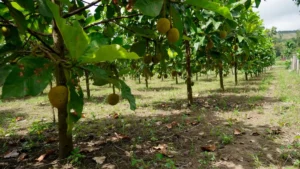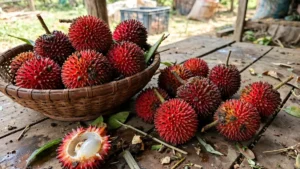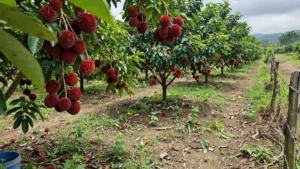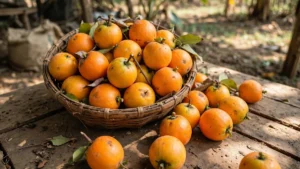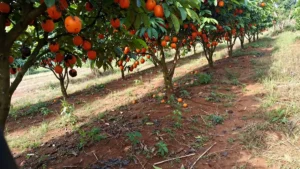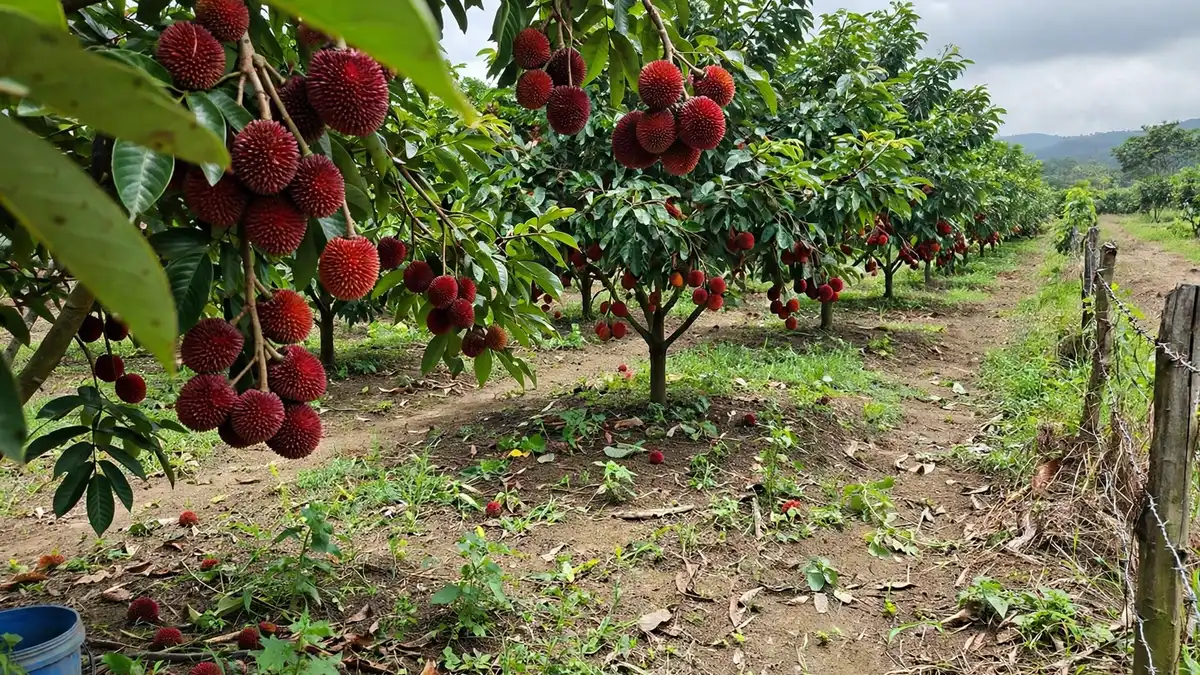
Pulasan is the fruit you have to be told about before you ever taste it. It hangs in heavy red clusters, each ball armoured in a thick, leathery rind, and it looks at first glance like a rambutan that lost its hair. Crack the shell with your thumbs and the flesh inside is pale, glossy, and sweeter than its spiky cousin, slipping clean off the seed in a way rambutan never quite manages. It is the quiet fruit of the Malaysian orchard, and the farms that grow it are quiet places too.
A pulasan farm stay runs on the fruit’s own clock. The trees fruit once a year, the harvest lasts a few short weeks, and the best fruit never travels far — it is eaten under the tree, or stewed into jam in the farm kitchen the same afternoon. Come in the picking weeks and you will eat pulasan at every meal; come a week late and you will hear about the harvest you missed.
Nine pulasan farm retreats follow, from the hills of Penang to a grove in Queensland. Each one is weighed for its good points, its weak points, and the traveller it suits best, with honest prices and the details that matter before you book.
Key takeaways
- Pulasan ripens once a year, and the picking window lasts only a few weeks — fix the dates before you book anything else.
- The fruit’s thick rind means it travels better than rambutan, but the best eating is still under the tree, the morning it is picked.
- Farm kitchens stew pulasan into jam, syrup, and sorbet; ask what the kitchen is cooking before you choose a stay.
- Rooms facing the orchard go first, and the farms are small, so book the picking weeks early.
- Tell the farm in writing about wheat or gluten before you arrive, and confirm which dishes are cooked without it — cross-checking matters more than any menu promise.
Why Pulasan Deserves a Farm Stay of Its Own
Pulasan grows in the shadow of rambutan, and that is exactly why a farm stay suits it. The two fruits share a family, but pulasan keeps its own character: a thicker skin that splits with a thumb, flesh that parts from the seed without a fight, and a sweetness that runs deeper, closer to grape than to the tart snap of its hairy relative. You cannot learn that from a market stall in an afternoon. On the farm you watch the clusters ripen over days and taste the difference a single morning makes.
The farms themselves are small, family-run places, and that smallness is the point. There is no lobby and no programme. The host walks the rows at dawn, the cook works with whatever the trees gave that morning, and the day bends around the harvest. A pulasan stay is for travellers who want the orchard to set the pace, and who are happy to trade polish for a basket of fruit that was on the branch an hour ago.
9 Pulasan Farm Retreats Worth the Trip

1. Penang Hill Orchards, Malaysia
The Penang hills hold the oldest pulasan orchards, terraced into red soil above the strait, and the farm has grown the same trees for three generations. Rooms are plain timber cabins with wide verandas, and the host walks guests through the rows each morning with a basket and a parang.
What We Like: The dawn picking walk is the real thing, led by a host who knows every tree, and the jam-making session in the afternoon is hands-on rather than a demonstration.
What to Consider: The cabins are simple, with fans rather than air conditioning, and the hill road is steep.
Best for: Travellers who want the orchard at dawn and a host who talks fruit all day. Style: Timber cabins with wide verandas above the terraces. Price range: $65–$95 a night, breakfast laid on. Standout feature: Jam-making with the morning’s surplus fruit.
2. Pahang Valley, Malaysia
Pahang’s valley floor is hot, flat, and generous, and the pulasan trees here grow tall and wide, dropping shade over the whole farm. The stay is a converted plantation house with deep verandas and a long dining table where every meal is shared.
What We Like: The kitchen treats pulasan as an ingredient, and the shared table means you eat with the family.
What to Consider: The valley heat is heavy by midday, and the farm sits a long drive from the nearest town, so bring what you need.
Best for: Food lovers who want pulasan cooked, not just picked. Style: A converted plantation house with deep verandas. Price range: $95–$125 a night, farm breakfast served at the long table. Standout feature: Pulasan tarts from the farm oven.
3. Johor Coast, Malaysia
Johor’s coast is where pulasan meets the sea breeze, and the farm here keeps its orchard behind a row of casuarina trees that break the wind. The rooms are whitewashed cottages with outdoor showers, and the picking runs later into the morning here because the sea air keeps the fruit cool.
What We Like: The sea breeze stretches the picking morning, and the beach supper with pulasan sorbet is the most relaxed meal on this list.
What to Consider: The cottages are a short walk from the orchard through sand, and the boat trip depends on the weather.
Best for: Travellers who want orchard mornings and sea air in the same day. Style: Whitewashed cottages behind the casuarina windbreak. Price range: $125–$160 a night, breakfast and dinner folded in. Standout feature: Beach supper with pulasan sorbet.
4. Sarawak River, Borneo
Sarawak’s river farms are reached by boat, and this one sits on a bend where the water runs slow and the pulasan trees grow wild at the edges of the orchard. The stay is a timber longhouse on stilts, with rooms that open onto a shared veranda above the river.
What We Like: The boat arrival sets the tone, and the ladder picking is the most old-fashioned harvest on this list.
What to Consider: The longhouse is reached only by boat, the rooms are basic, and the river rises after rain, so check the season before you book.
Best for: Travellers who want a river journey and a harvest done the old way. Style: A timber longhouse on stilts above the river. Price range: $160–$195 a night, dinner on the house. Standout feature: Ladder picking with baskets lowered on ropes.
5. Sabah Highlands, Borneo
Sabah’s highlands are cooler than the coast, and the pulasan here ripens a week or two later than the lowland farms, which stretches the season for travellers who miss the first burst.
What We Like: The later ripening stretches the season, and the highland air makes the picking walks comfortable.
What to Consider: The road up is winding and slow, and the lodge books out early in the picking weeks, so reserve well ahead.
Best for: Travellers who missed the lowland burst and want cooler air. Style: A small hillside lodge above the terraces. Price range: $195–$230 a night, all three meals on the table. Standout feature: Orchard honey at breakfast.
6. Sumatra Foothills, Indonesia
Sumatra’s foothills grow pulasan on slopes so steep the rows run like staircases, and the farm is a plantation with a guesthouse at its heart. The picking is done by the farm crew, and guests join the morning round with baskets, learning to judge ripeness by the depth of the red and the give of the rind.
What We Like: Joining the crew’s morning round teaches ripeness better than any tasting.
What to Consider: The slopes are steep and the paths turn to mud after rain, so bring sturdy shoes and a rain layer.
Best for: Travellers who want to work alongside the crew, not just watch. Style: A plantation guesthouse at the heart of the rows. Price range: $230–$265 a night, meals folded in. Standout feature: Morning rounds with the picking crew.
7. Java Highlands, Indonesia
Java’s highlands are the coolest stop on this list, and the pulasan orchard here sits among tea gardens and vegetable plots, with mist in the mornings and clear air by noon. The stay is a Dutch-era farmhouse with thick walls and a garden full of herbs, and the host is a retired agronomist who can talk for an hour about a single tree.
What We Like: The retired agronomist host is the best teacher on this list, and the pulasan syrup is worth the trip on its own.
What to Consider: The mornings are misty and cool enough for a layer.
Best for: Travellers who want the science of the fruit as well as the taste. Style: A Dutch-era farmhouse among tea gardens. Price range: $265–$300 a night, full board, no extras. Standout feature: Pulasan syrup from the farm kitchen.
8. Mindanao Hills, Philippines
Mindanao’s hills hold the most generous pulasan trees, heavy with clusters so thick the branches bend, and the farm harvests more fruit in a week than some farms manage in a season. The stay is a modern lodge with a pool and a long dining room, and the host runs a small processing shed where the surplus becomes jam, dried fruit, and wine.
What We Like: The processing shed is the most complete on this list.
What to Consider: The lodge is the most polished stop here, and the price reflects it; the hills are also the wettest stop, so pack for rain.
Best for: Travellers who want to see the fruit kept, dried, and bottled. Style: A modern hillside lodge with a pool. Price range: $300–$340 a night, everything on the bill. Standout feature: The processing shed and its pulasan wine.
9. Queensland Grove, Australia
Queensland’s grove is the farthest pulasan has travelled from Malaysia, planted by a grower who carried seed across the sea and spent a decade coaxing the trees to fruit in Australian soil. The stay is a Queenslander house on stilts with wide verandas, and the picking season here runs opposite to the Malaysian one, which makes it the answer for travellers who missed the northern harvest.
What We Like: The opposite season rescues a missed Malaysian trip.
What to Consider: The price is the highest on this list, and the grove is small, with only a handful of rooms, so it fills fast.
Best for: Travellers who missed the northern season and want the sweetest fruit. Style: A Queenslander house on stilts with wide verandas. Price range: $345–$380 a night, everything on the bill. Standout feature: The opposite-season harvest.
What to Look for in a Pulasan Farm Stay
The first thing to check is the trees themselves. A good pulasan farm grows more than one variety, because the fruit ripens in waves and a single variety gives you a single week. Ask the host how many varieties stand in the orchard and when each one ripens. The second thing is the kitchen. Pulasan is at its best eaten fresh, but a kitchen that cooks with it — jam, syrup, sorbet, tarts — turns a picking trip into a food trip, and the farms that do it well are the ones worth the higher price.
The third thing is the room. Pulasan farms are small, and the rooms facing the orchard are few, so ask which way the window faces before you book, and whether the room catches the morning sun or the afternoon heat. A room over the rows is worth more than a larger room facing the road. And the last thing is the host. The best pulasan stays are run by growers, not managers, and a host who walks the rows with you at dawn will teach you more in an hour than a week of reading.
Planning Your Pulasan Farm Escape
Start with the season, not the destination. Pulasan ripens once a year, and the window shifts with the rains, so write to the farm and ask when the clusters are turning red before you book flights or rooms. The rambutan farms of Penang fruit on a similar calendar, and their hosts will tell you the same thing: the dates matter more than the price, and a week late means bare branches. Once the farm confirms the picking weeks, book the room, then the flights.
Pack light and pack for the orchard. Sturdy shoes for muddy rows, a light rain layer, a hat for the midday sun, and a bag for the fruit you carry home. Tell the farm in writing about wheat or gluten before you arrive, and ask which dishes the kitchen can cook without it — the farms on this list are used to the question, and the good ones will answer plainly. The lychee orchards of Guangdong run on the same small-farm rhythm, and the same rule holds: the earlier you ask, the better the answer.
Pulasan at a Glance
| Detail | What is known |
|---|---|
| Botanical name | Nephelium mutabile, a close relative of rambutan |
| Fruit | Round, thick red rind, pale sweet flesh that slips off the seed |
| Origin | Malaysia, grown across Southeast Asia and northern Australia |
| Season | Once a year, a few short weeks, shifting with the rains |
| Best eaten | Fresh under the tree, or stewed into jam and syrup |
| Stays on this list | Nine farms, from $65–$95 to $345–$380 a night |
| Rooms | Small farms, few rooms, orchard-facing rooms go first |
| Wheat and gluten | Tell the farm in writing before you arrive and confirm dishes |
Your Pulasan Packing Checklist
- Sturdy shoes for muddy orchard rows and steep terraces
- A light rain layer for afternoon showers in the hills
- A wide hat and sunscreen for the midday sun between the rows
- A cloth bag for the fruit you carry back from the picking walk
- A written note of any wheat or gluten needs for the farm kitchen
- Cash for farm-gate jam, syrup, and dried fruit to take home
Frequently Asked Questions
When is pulasan in season?
Pulasan ripens once a year, and the window lasts a few short weeks. The exact dates shift with the rains, so write to the farm and ask when the clusters are turning red before you book anything.
How is pulasan different from rambutan?
Pulasan wears a thick, smooth red rind with no hairs, while rambutan is covered in soft spines. The flesh is sweeter and slips clean off the seed, where rambutan clings. The longan groves of Guangdong are a different family altogether, but the comparison holds: pulasan is the quieter, sweeter cousin, and the farms that grow it are quieter places too.
May I pick the fruit myself?
At most farms, yes, provided you go with a guide and ask before you set off. The clusters bruise at a touch, so the host will show you how to cut them cleanly and which ones are ripe. Some farms pick only with the crew, so ask when you book rather than assuming.
Is pulasan safe for a wheat-free diet?
The fruit itself is naturally free of wheat, and most farm kitchens can cook without it. The risk is cross-contact in a small kitchen, so tell the farm in writing before you arrive, name the dishes you want, and confirm them again when you sit down. The farms on this list are used to the question.
How many nights does a pulasan stay need?
Three nights is the sweet spot. The first morning you learn the orchard, the second you pick with confidence, and the third you eat the fruit the kitchen has turned into jam. A single night is too short, and a week is more than most small farms can host.
What should I pack for a pulasan farm?
Sturdy shoes, a rain layer, a hat, and a cloth bag for fruit. The rows are muddy after rain and steep on the terraces, so leave the smart shoes at home. Bring cash for the farm shop, and a written note of any dietary needs for the kitchen.
The Bottom Line
Pulasan is the fruit for travellers who have already eaten rambutan and want the next thing. The farms are small, the season is short, and the best fruit is eaten under the tree on the morning it is picked. Pick a farm whose kitchen cooks with the fruit, book the picking weeks, and let the orchard set the pace.
Of the nine stays here, the Penang hills are the best first trip, the Queensland grove is the answer if you missed the season, and the Sarawak longhouse is the one you will still be talking about years later. Whichever you choose, write to the farm first, ask when the clusters turn red, and go while the fruit is on the branch.