A pupunha escape starts with a date, not a destination. The peach palm fruits in a window that moves with the rains, and the farms are small enough that the best weeks are gone months before the bunches ripen. Travellers who begin with the room and work backwards usually discover the problem at the airport: a lovely grove, a warm welcome, and no fruit in the pot.
The planning that works runs in a single direction. First the ripening window, agreed with the farm in writing. Then the farm itself, then the room, then the way in, then the food. Each choice narrows the next one, and by the time you reach the kitchen, the trip is already shaped around a week when the palms are heavy.
What follows is that sequence, step by step, with the details that make the difference between a smooth stay and a long journey to an empty grove. You will find how to reach a farm with no road, what to carry into a spiny grove, and how to get the kitchen to cook around wheat before you sit at its table.
Key takeaways
- Start with the ripening window, then the farm, then the room: the fruiting weeks decide whether the trip works.
- Pupunha farms take four to twelve guests, and the ripe weeks are booked months ahead.
- The way in is part of the booking: river boats and rough roads take hours, and the farm should be waiting at the far end.
- Count the room, meals and walks as one price, and keep flights and transfers on a separate line.
- Write wheat or gluten into the first message to the farm, before any money changes hands, so the kitchen can plan; and keep pupunha apart from tucumã in your mind, a different palm whose orange pulp is eaten fresh, not boiled.
What the escape looks like day to day
A pupunha escape is a short stay on a working peach palm grove, usually three to five nights, built around the fruit and the table. You sleep in a plain room a short walk from the rows, eat food cooked from the grove and the garden, walk the harvest in the cool of the morning, and spend the afternoons on the river or in a hammock. Nobody hands you a schedule when you arrive. The heat, the fruit and the river set the pace, and the farm holds to it.
Mornings belong to the harvest. The walk begins early, while the air is still cool, and the grower shows how a bunch is judged ready, how the pole brings it down, and how the spines on the stems are walked around rather than grabbed. Back at the kitchen, the fruit goes into the pot, and the late morning turns into the meal the day leans towards: warm pupunha, salt, and coffee at a long table. Afternoons are slow on purpose, because the heat punishes anything else, and evenings return to the table, with fish, fruit and talk.
The order that works
Order is the whole skill here. The ripening window comes before everything, because a pupunha farm without ripe fruit is a pleasant grove with nothing to cook. Ask the farm for its fruiting dates for the year you travel, and have the answer in writing before you look at rooms or flights. The window moves with the rains and the region, so a week that worked last year can be a week early this year.
With the season fixed, pick the farm, then the room, then the way in, then the food. That chain keeps every later choice inside a week when the fruit is ripe, a farm with a free room, and a transfer that runs on the day you arrive. A buriti escape is arranged the same way, and the travellers who enjoy it most are the ones who let the season set the calendar.
The nine steps below run in that chain, one after another. Every step names the action, the mistake to skip, and a small tip for getting it right the first time, so you can work down the list and reach a farm that is ready for you, in a week when the bunches are heavy.
Nine steps, in order
Get the ripening window in writing first
What to do: Write to two or three farms for their ripening dates for your year, lay the answers side by side, and choose a week that sits inside the overlap. What to avoid: Paying for a flight and then hoping the bunches will be ready. Best for: Anyone crossing a continent for this fruit. Time needed: An afternoon of messages. Standout tip: Keep the dates in writing, so a shift in the season leaves you with proof, not a memory.
Find out what the kitchen cooks in your week
What to do: Ask the farm which pupunha dishes it will cook in your week, and on how many days the fruit reaches the table. What to avoid: Taking it for granted that the fruit appears at every meal. Best for: People who came for the cooking as much as the grove. Time needed: One brief message, most farms replying within a day. Standout tip: Ask whether the fruit is boiled, mashed, and cooked into a dish, so you know the kitchen uses it properly.
Pick a room looking over the rows
What to do: Ask for a room that faces the grove, with a veranda or a window opening onto the rows, and check the bed and the fan. What to avoid: Accepting the cheapest room without asking which way it looks. Best for: Early risers and light sleepers, who hear the grove wake up. Time needed: Ten minutes, folded into the booking message. Standout tip: Rooms at the end of the row tend to be quieter and catch the evening air.
Arrange the way in before the flights
What to do: Ask the farm how guests arrive, how long the boat or the road takes, and who waits for you at the far end, then pick a flight with slack built in. What to avoid: Reaching the gateway city late and finding the boat already gone. Best for: Anyone travelling by river, which is most of these farms. Time needed: One message plus a look at flight times. Standout tip: Spend the night before in the gateway city when the transfer relies on a morning boat.
Send the allergy note with the booking, not after it
What to do: Put wheat, gluten, or any allergy into the first booking message, in plain words, before any payment. What to avoid: Raising it for the first time when the food is already on the table. Best for: Anyone who cannot eat gluten, and parents travelling with a child who cannot. Time needed: Two sentences, inside the booking message. Standout tip: Ask what the farm will cook instead of wheat bread, so the substitute is a real plan.
Pack for wet ground and sharp stems
What to do: Carry closed, light shoes with grip for the grove, a hat, and a dry bag for anything a boat could splash. What to avoid: Open sandals among the spines and the wet ground. Best for: Everyone on the harvest walk, which should be every guest. Time needed: A single evening of packing. Standout tip: Bring a second pair of shoes, so a soaked morning does not spoil the afternoon.
Save a morning for the harvest
What to do: Hold one whole morning for the harvest walk, with nothing arranged after it until lunch. What to avoid: Wedging the harvest between a transfer and a boat trip. Best for: First-time visitors, who will want to ask questions and take pictures. Time needed: A morning kept clear in your plan. Standout tip: Choose your second morning, when you know the farm, over your first, when you are still tired from the journey.
Keep the last morning for the shop
What to do: Keep the final morning free for the farm shop, where preserves, oils and palm hearts are sold, and buy what you can carry home. What to avoid: Waiting until the last hour before the boat, when the shop may be shut. Best for: Anyone who wants to carry the flavour home. Time needed: About an hour, on the morning you leave. Standout tip: Ask what keeps well on the journey, because boiled fruit does not, and preserves do.
Ask for the bill while the host is still there
What to do: Ask for the bill the evening before departure, read the transfers and extras line by line, and pay while the host is still there to answer. What to avoid: Finding an extra charge on the boat, with nobody to ask. Best for: Anyone with the transfer in the rate, and anyone who ordered extras. Time needed: A quarter of an hour, the evening before you go. Standout tip: Pay the way the farm prefers, and hold the receipt until you are home.
The fruit, the palm, and the season
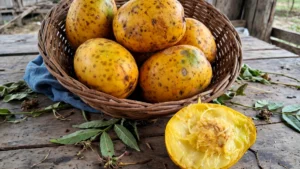
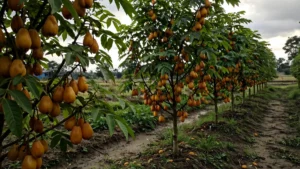
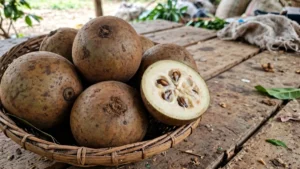
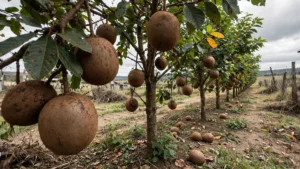
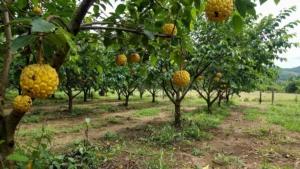
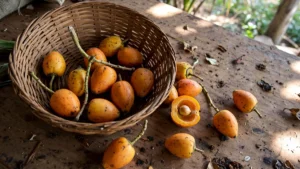
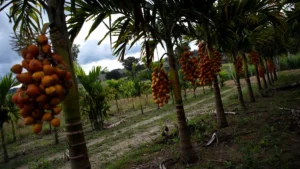
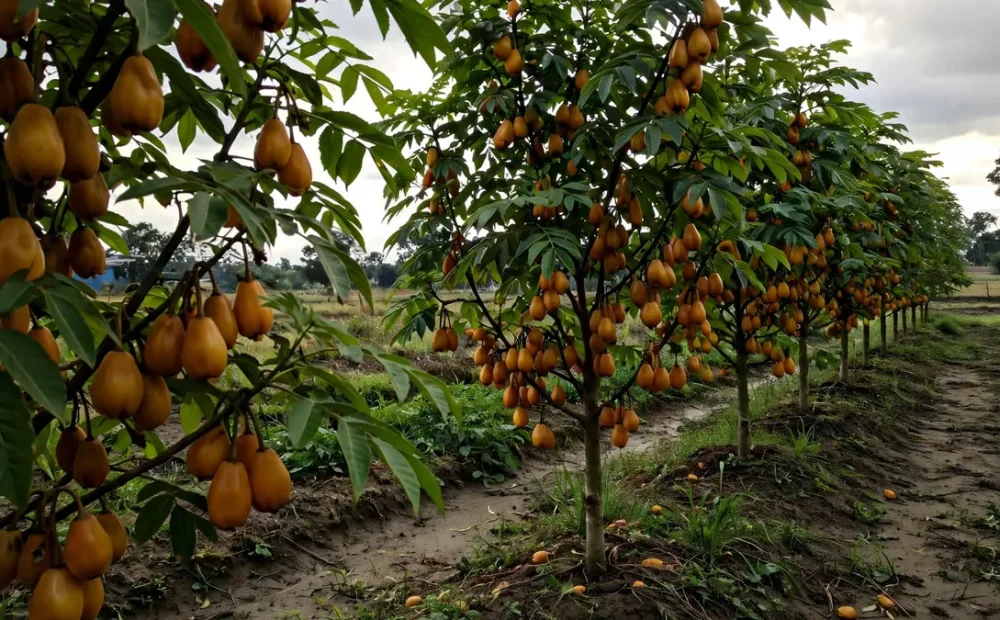
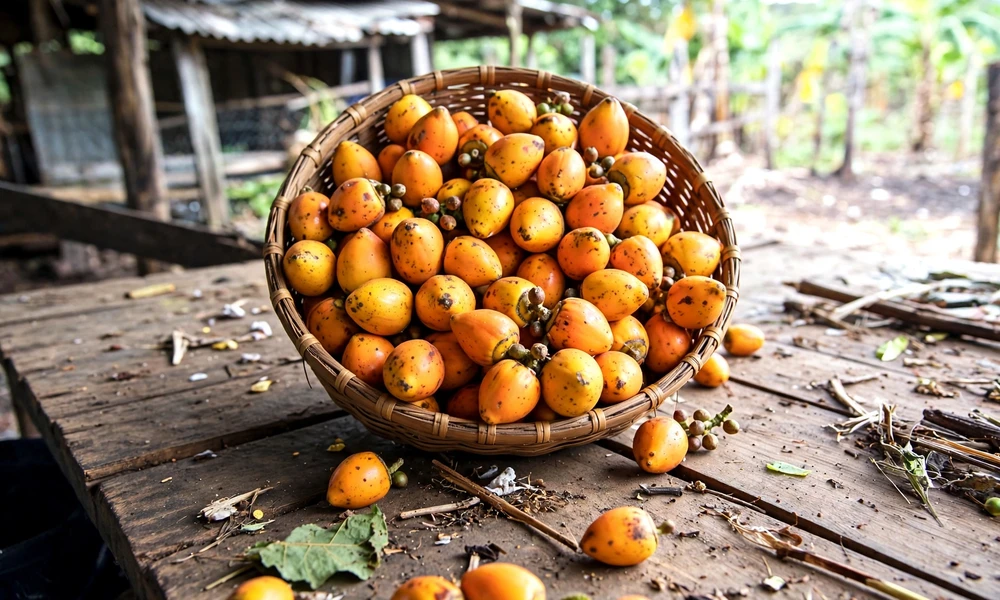
Pupunha grows on Bactris gasipaes, the peach palm, a palm that rises in clusters of several stems from a single base, with spines along the stems and crowns that carry heavy bunches of round fruit. The fruit turns a warm orange-yellow as it ripens, and under the thin skin sits dense starchy flesh around one seed. The flesh carries a great deal of vitamin A, which is why the fruit counts in Amazon diets beyond its flavour, and it is boiled in salted water before anyone eats it. The best-known serving is the warm split fruit with salt at breakfast, but farms also mash it, stir it into soups, and fold it into sweets across a stay.
The season is the part to respect. The palms fruit inside a window that moves with the rains, and the window is not the same in Manaus, Belém and Porto Velho, so a date that suits one region can be a month early in another. That is why the first step here is to ask the farm rather than the calendar, and why a farm that answers with exact weeks earns more trust than one that promises fruit all year round.
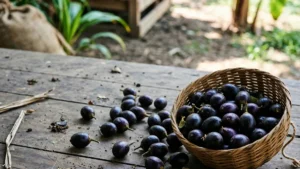
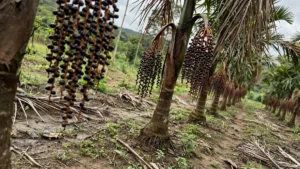
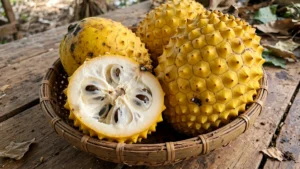
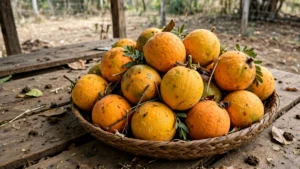
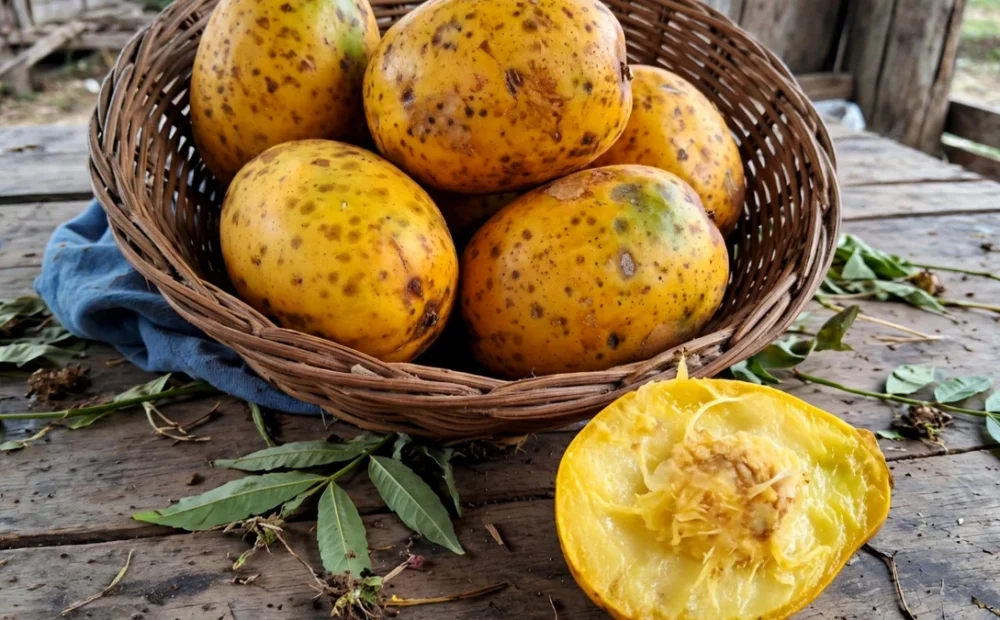
One difference matters before you book. Pupunha is not tucumã, even though both are Amazon palms with orange fruit and both appear in markets and at farm tables. The peach palm, Bactris gasipaes, grows in clusters and gives a starchy fruit that is boiled with salt before eating. Tucumã, Astrocaryum aculeatum, is a tall single-trunked palm with black spines, and its dense pulp is eaten fresh and pressed into sandwiches. When a farm’s pictures show one palm and its words promise the other, ask which one it really grows. A trip built around acai is different again, with a small dark berry and another kitchen entirely, so the same question belongs there too.
Caveats worth knowing
The caveats for a pupunha escape are practical, and a little planning removes all of them. The season decides the trip, the cooking decides what you can eat, the spines decide how you move in the grove, and the transfer decides whether you arrive at all. None of these is a reason to stay home. Each is a reason to plan in the order this guide lays out.
| Detail | What is known |
|---|---|
| Decision to make first | The fruiting weeks, agreed with the farm in writing before anything else |
| Length of stay | Three nights at least; five lets the farm’s rhythm settle in |
| Getting there | Often by boat, sometimes by rough road; the farm should meet you at the far end |
| What to carry | Closed shoes with grip, a hat, a dry bag, and a second pair of shoes |
| Food to mention early | Wheat, gluten, and any allergy, written into the first booking message |
| The palm itself | Bactris gasipaes, clustered stems, spiny, heavy orange-yellow bunches, rich in vitamin A |
| What the price holds | Usually room, meals and walks; flights and transfers are usually separate |
| What it is not | Not tucumã: a different palm species, with fruit that is boiled, not eaten fresh |
A last point is worth saying plainly. Raw fruit is not food until it has been boiled, spiny stems are not handrails, and the harvest pole belongs to the grower. Closed shoes, a guide beside you, and a little patience on the walk keep the trip easy. The farms know their palms, and guests who walk with the guide come home with better pictures and no scratches.
Checklist before you pay
Work down these checks in order, and hold the deposit until the first three are done.
- Have the fruiting dates in writing from the farm for the year you travel.
- Settle the room, the bed, and which way it faces, inside the same message as the booking.
- Put wheat, gluten, or any allergy into the booking message before any money is paid.
- Arrange the transfer first, then choose a flight that leaves room for the boat or the road.
- Pack closed shoes, a hat, a dry bag, plus a second pair of shoes for damp mornings.
- Ask for the bill the evening before you go, and pay it while the host is still there.
Frequently asked questions
When should I book a pupunha farm?
As soon as the farm has confirmed its fruiting dates. The ripe weeks go months ahead, because the farms are small and the season is short. Three to six months ahead is a sound window, and sooner is better for the smallest family farms.
What does pupunha taste like?
Warm, dense and starchy, with a gentle nutty flavour between a roast chestnut and a sweet potato. Boiled with salt, it fills you up, which is why a small bowl at breakfast lasts through the morning harvest walk.
What sets pupunha apart from tucumã?
They share only the broad picture: both grow on Amazon palms and both carry orange fruit. The palms themselves are different species, with different fruit, different flesh and different places in the kitchen. Pupunha comes from Bactris gasipaes, a clustered palm whose starchy fruit is boiled with salt before eating, while tucumã comes from Astrocaryum aculeatum, a tall spiny-trunked palm whose dense pulp is eaten fresh and pressed into sandwiches.
Can I go if I cannot eat gluten?
Yes, when the farm knows ahead of time. The fruit carries no gluten, but bread usually sits beside it on the table, and the kitchen works with flour every day. Put the wheat note in the booking message, and ask what the farm will cook instead, so the substitute is arranged rather than improvised.
How do I get to a farm with no road?
By boat, arranged by the farm. Ask how long the ride lasts, what time the boat leaves, and who waits for you at the landing. Come to the gateway city the day before when the boat leaves in the morning, and carry a dry bag for the ride.
What is worth carrying home from the farm shop?
Preserves and palm hearts keep well on the journey, and they are made on the farm from its own harvest. Boiled fruit does not travel, so enjoy it at the table and take the jars home. A guarana escape finishes the same way, with the shop on the last morning and the good jars selling first.
The bottom line
Planning a pupunha escape comes down to five choices in the right order: the fruiting weeks, the farm, the room, the way in, and the food. Get the season in writing, choose a farm that grows its own fruit, take a room that looks over the palms, leave room for the boat, and tell the kitchen about wheat in the booking message. Everything after that, from the shoes to the shop, follows from those five.
Three nights is the honest minimum, five is better, and the second morning is the one to hold for the harvest. Arrive ready to walk among spiny stems, eat the fruit warm from the pot at a long table, and spend your afternoons doing very little. That is the trip, and it deserves proper planning.